300,000 March in London for Gaza as Media Focuses on Parliament Square Arrests
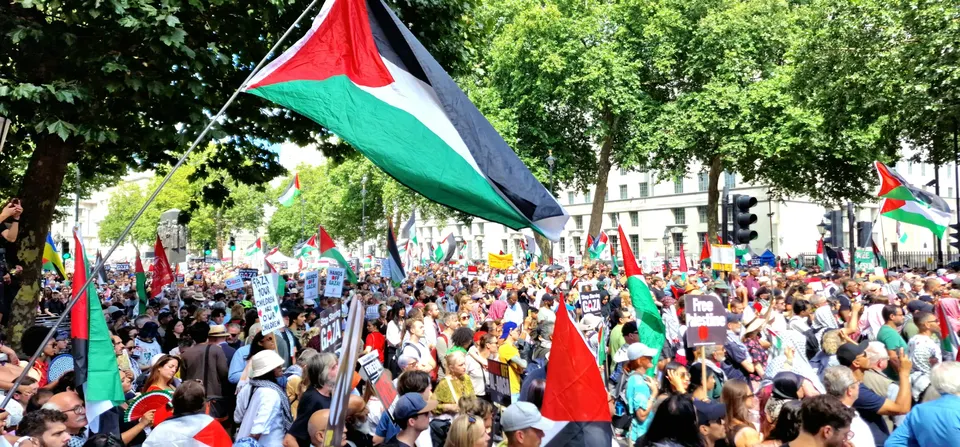
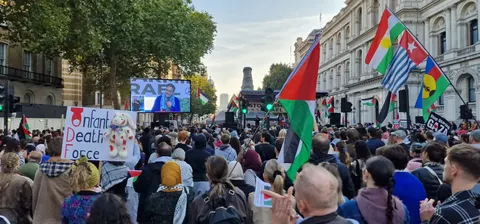
Central London was brought to a complete standstill today as an estimated 300,000 people marched in one of the largest pro-Palestinian demonstrations in British history, demanding an end to what organisers called the deliberate starvation of civilians in Gaza.
The protest, stretching from Russell Square to Whitehall and ending outside 10 Downing Street, saw entire arteries of the capital frozen with human traffic. Many drew parallels with the huge pro-Palestinian march in Sydney just six days earlier on 3 August, when police estimated attendance at over 90,000, but organisers and independent observers put the figure closer to 300,000—matching today’s London turnout.
Yet, despite the scale, much of the mainstream media devoted its headlines to a separate protest in Parliament Square, where police made mass arrests of hundreds of people displaying support for the proscribed activist group Palestine Action.
A River of Protest for Gaza
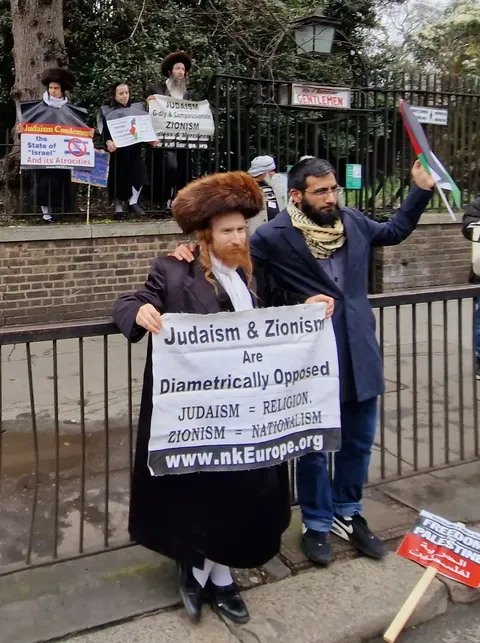
Organised by the Palestine Solidarity Campaign alongside trade unions, faith groups, and grassroots organisations, the march drew participants from across the country: students, healthcare workers, pensioners, artists, and families with children.
Chants of “Stop the genocide!”, “Let Gaza live!” and “End the blockade!” echoed off government buildings, with banners demanding justice for Gaza’s civilians. Many protesters carried placards referencing recent UN warnings that starvation is being used as a weapon of war in the enclave.
“It’s not complicated,” said Leila Ahmed, a nurse from Manchester marching with her two children. “Starving civilians is a war crime. We’re here to tell our government to stop enabling it.”
Speakers Call for Cultural and Political Action
The rally outside Downing Street featured speeches from prominent voices. Daniel Perry, the Australian performer who raised a Palestinian flag during a concert at the Sydney Opera House—a moment that went viral worldwide—received a thunderous reception. His act, which triggered a wave of cultural boycotts and inspired artists to cancel performances in Israel, has become a touchstone of the global solidarity movement.
Perry, an outspoken advocate for Palestinian rights since the Sydney protest, told the London crowd:
“Art is meant to speak truth to power. If you perform in Israel today, you perform on a stage built over rubble. Every artist has a choice, and our choice must be justice.”
Journalist and activist Owen Jones also addressed the gathering, condemning the UK government’s continued arms exports and diplomatic cover for Israel’s Gaza campaign.
“If 300,000 people on the streets can’t make them listen,” he said, “then we have to keep marching until they have no choice.”
Linking the Protest to Gaza’s Hunger Crisis
The London march was energised by global outrage over mounting evidence that Gaza’s hunger crisis is not the by-product of war, but a deliberate state policy. Recent investigations, including one published by Great Reporter, have detailed allegations of intentional contamination of food aid entering Gaza.
The report cites laboratory tests shared by Dr. Muhammad Hammed, a Gaza-based physician, revealing aflatoxin B1—a highly carcinogenic mycotoxin—in beans and legumes distributed as aid, and oxycodone, a potent narcotic, in flour sacks. With Israel’s military controlling all aid entry points, Hammed argues the contamination cannot be accidental.
Humanitarian lawyers say if these allegations are proven, the practice could constitute a breach of the Biological Weapons Convention and a war crime under the Geneva Conventions. The report also highlights repeated killings at militarized aid distribution sites, where civilians are sometimes shot with silencers to avoid attracting attention. Since late May, Gaza’s Media Office reports, 1,655 people have been killed and 11,800 injured while trying to obtain food.
Starvation as a Weapon of War
Gaza requires 600 trucks of food and fuel daily to meet minimal needs. Over the past ten days, just 850 trucks have entered—14% of that requirement—while 22,000 trucks remain stuck at Israeli-controlled crossings. The UN reports that since March, 197 people, over half of them children, have died from starvation.
One of the most shocking cases this week was 17-year-old Ataf Abu Hatar, a local sports champion, who died weighing just 55 pounds. Doctors say hospital occupancy rates in Gaza have reached 300%, with critical shortages of anesthesia and blood meaning treatable injuries often become fatal.
Journalists are also victims of the crisis. Iman Hillis, a Gaza reporter, described being so malnourished that “a task that once took two hours now takes four days.”
Media Silence and Alleged Suppression
Despite the march’s unprecedented turnout, television networks and major newspapers gave minimal space to the protest itself. Instead, front pages and evening bulletins featured footage of police detaining supporters of Palestine Action in Parliament Square.
Activists claim this was not accidental. Several organisers alleged that the Israeli embassy in London actively pressured news desks to limit coverage of the humanitarian march, steering the narrative toward a “law-and-order” frame rather than public opposition to Gaza’s starvation.
“We’ve seen this before,” said one campaigner. “Arrests get magnified, the humanitarian story gets buried.”
Parliament Square Takes the Spotlight
The separate Parliament Square protest was staged in defiance of the government’s July 2025 proscription of Palestine Action under the Terrorism Act 2000. Supporters displayed the group’s logo and chanted slogans—now criminal offences—before being confronted by large numbers of police.
Between 200 and 365 people were arrested, including four on suspicion of assaulting officers. The government defends the ban, citing the group’s direct actions against arms companies supplying Israel. Critics call it a dangerous precedent that criminalises dissent and shields UK complicity in alleged war crimes.
Two Protests, Two Narratives
For many in London today, the contrast in coverage was telling. The march represented a broad, peaceful call to end a humanitarian catastrophe. The Parliament Square protest became a spectacle of confrontation and arrest. Only one made the headlines.
“This is how narratives are managed,” said activist and author Tariq Younis. “The media give airtime to the arrests, not the suffering in Gaza or the massive public outcry here. It keeps the humanitarian issue off the front page.”
A Growing Disconnect
Today’s events underscored a widening gap between public mobilisation for Palestine and how that movement is represented—or erased—in mainstream discourse.
While the Parliament Square arrests will dominate tomorrow’s headlines, the real story for hundreds of thousands of marchers remains Gaza: a besieged population being starved, and a British public unwilling to stay silent.
As the crowd outside Downing Street dispersed into the warm August night, Ahmed, the nurse from Manchester, summed up the mood:
“We will keep marching until the blockade ends. And if the media won’t tell the truth, we will.”