‘Nobody Dares Challenge the Israelis’: Kiriakou’s Claims and the American Shield Over Israel
The former CIA officer’s allegations of intimidation and political pressure raise a question with direct consequences for Gaza: how far is Washington willing to hold its ally accountable?
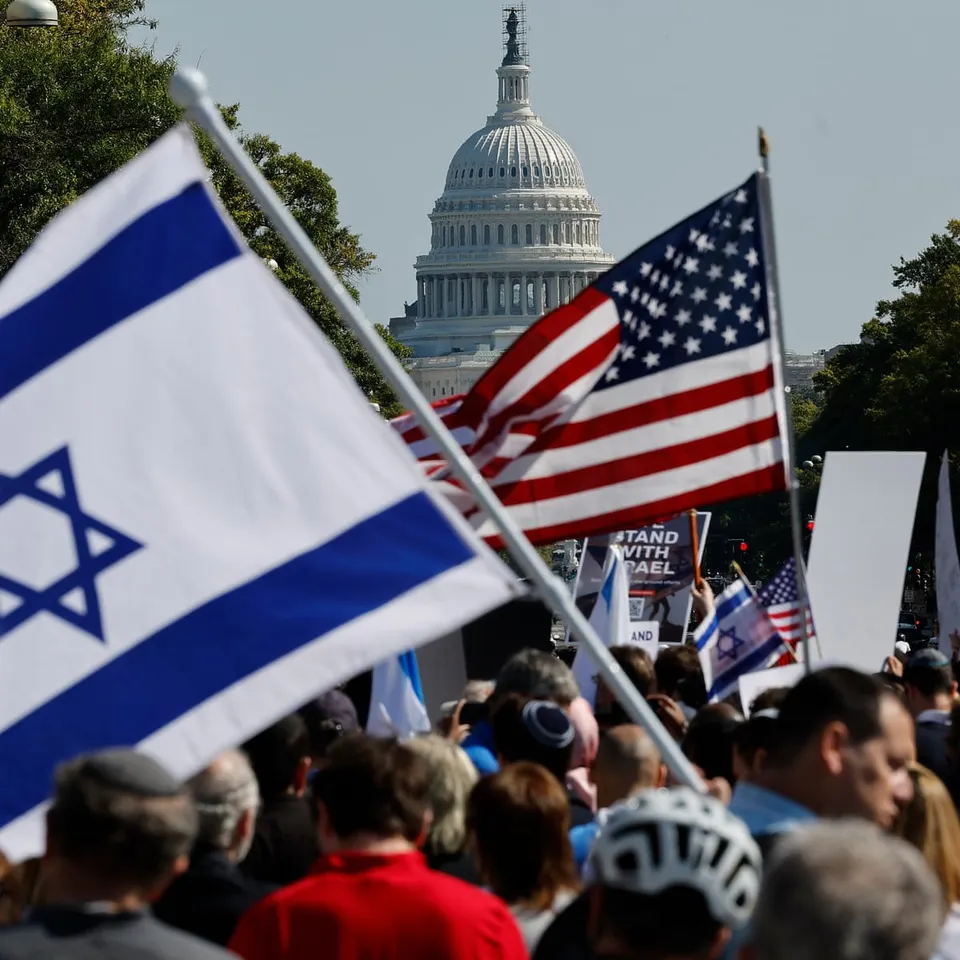
American support for Israel is sustained through weapons funding, diplomatic protection and political organisation. For Palestinians in Gaza, the consequences are measured in the conditions under which they live — and in whether those responsible for their suffering face meaningful scrutiny.
John Kiriakou argues that fear sustains that support. The former CIA officer alleges Israeli intimidation of American personnel and electoral pressure on politicians are tolerated in Washington.
He spoke on 17 September 2026 at Integrity Media’s Independent Journalism Awards, during a panel moderated by Glenn Greenwald and also featuring civil liberties lawyer Jenin Younes. A circulating excerpt concentrates on Israel and the United States.
Kiriakou served in the CIA from 1990 to 2004, working in analysis and counterterrorism, and later worked for the Senate Foreign Relations Committee. He became publicly associated with exposing CIA torture after confirming the agency’s use of waterboarding in a 2007 television interview. In 2013, he received a 30-month prison sentence after pleading guilty to identifying a covert officer to a journalist. His supporters regard the prosecution as retaliation for speaking out; the offence of conviction concerned disclosure of the officer’s identity.
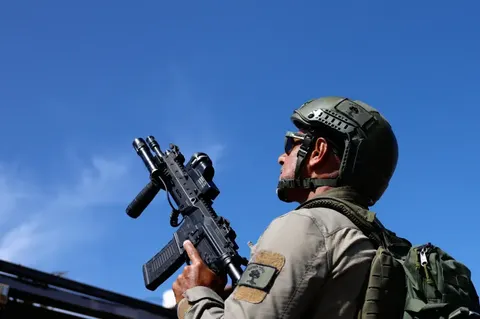
His most disturbing account concerned former CIA colleagues in Jerusalem: intruders allegedly rearranged their furniture, defecated in their toilets and, on another occasion, cut off their dog’s tail. He attributed the intimidation to Israeli intelligence. He also relayed a US Navy SEAL’s account of interference with his laptop and a hotel-room incident involving a towel smeared with faeces.
On domestic politics, Kiriakou said an unnamed Texas state senator had proposed an honorary day for him, then abandoned it. The explanation, he recalled, was: “AIPAC killed it.” He described the lobby’s reach as extending through state capitals and city councils.
These accounts rely on unnamed contacts. The published remarks supply no documents identifying perpetrators or confirming the Texas intervention; Kiriakou’s former position does not establish his allegations.
The broader question of political influence can, however, be examined against a public record. Campaign expenditure is disclosed, military assistance is budgeted and American votes at the United Nations are recorded. Those records provide firmer ground for assessing how Israel’s relationship with Washington affects Gaza.
AIPAC — the American Israel Public Affairs Committee — openly campaigns to strengthen the alliance. Its website describes helping elect supportive Democrats and Republicans and defeating opponents of the relationship. It says its members and donors are American, and that it is neither directed nor funded by the Israeli government. Its stated argument is that cooperation with Israel strengthens US security.
That distinction matters. A domestic lobbying organisation and a foreign intelligence agency have different powers, structures and legal responsibilities. Evidence of successful lobbying cannot establish responsibility for an alleged intelligence operation. Nor does documenting influence justify treating American decision-makers as passive: presidents and members of Congress make choices for which they remain accountable.
The electoral spending is nevertheless substantial. In the 2024 Democratic primary between Jamaal Bowman and George Latimer in New York, AIPAC’s affiliated super PAC, United Democracy Project, spent almost $9.9 million opposing Bowman and nearly $4.8 million supporting Latimer. Bowman lost. In Missouri, it spent more than $5.2 million against Cori Bush and another $3.3 million supporting Wesley Bell, who defeated her. Both defeated incumbents were outspoken critics of Israel’s conduct in Gaza.
A super PAC can raise and spend unlimited sums on independent advocacy for or against candidates, but cannot donate those funds directly to their campaigns. These expenditures therefore need to be distinguished from direct campaign contributions. The results also cannot establish that Israel policy alone decided either contest.
For other politicians, however, heavily financed primary challenges can create a powerful incentive to avoid becoming the next target. The practical question is whether that prospect discourages scrutiny of arms transfers or civilian harm, even when constituents are demanding it.
The campaigning does not always advertise its foreign-policy purpose. An ABC investigation published in August 2026 described AIPAC-linked advertisements focused on domestic issues rather than Israel. The report also showed the limits of the organisation’s influence: Abdul El-Sayed defeated Haley Stevens in Michigan’s Democratic Senate primary despite more than $30 million in spending by AIPAC and its affiliates backing Stevens.
Public attitudes have shifted markedly. A Pew Research Center survey conducted in March 2026 and published in April found that 60 per cent of American adults viewed Israel unfavourably, up from 53 per cent the previous year. Among Democrats and Democratic-leaning independents, the figure was 80 per cent. Such polling measures attitudes towards Israel; it does not, by itself, establish support for a particular arms embargo or sanctions policy.
Congressional dissent is also real. On 30 July 2025, 27 senators backed advancing a resolution opposing a proposed weapons export to Israel. Seventy voted against, and the motion failed. The vote challenges any literal suggestion that nobody in Washington objects, while illustrating how far objections were from becoming a binding restriction.
For Gaza, the decisive issue is whether criticism changes the supply of military support and the protection afforded to Israeli leaders. Expressions of concern have limited force when the institutions capable of attaching consequences decline to do so.
The financial relationship was built over successive administrations. The Obama administration’s 2016 memorandum of understanding pledged $38 billion in military assistance for the fiscal years 2019–2028, subject to congressional appropriations. Its annual framework is $3.8 billion: $3.3 billion in Foreign Military Financing and $500 million for missile defence. The agreement was designed to support long-term acquisitions, including advanced aircraft, and to maintain Israel’s military advantage.
That is a durable policy commitment. It gives Washington a substantial role in sustaining Israeli military capabilities, and makes American decisions about conditions, suspension and oversight central to any serious discussion of accountability.
Diplomatic protection is equally visible. On 18 September 2025, the United States vetoed a Security Council resolution demanding a ceasefire in Gaza, the release of those held by Hamas and other groups, and the lifting of restrictions on humanitarian aid. All 14 other council members voted in favour. Washington argued that the text failed to condemn Hamas or recognise Israel’s right to defend itself.
Whatever the stated rationale, the institutional effect was clear: the American veto prevented the council from adopting demands supported by every other member. It demonstrated how Washington can shield its ally even when isolated within that body.
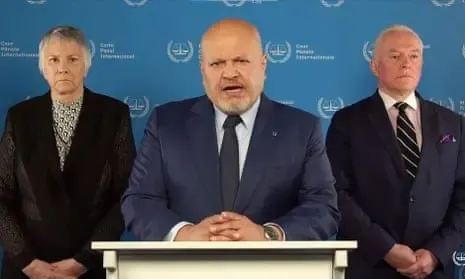
The United States has also used sanctions against the International Criminal Court. President Donald Trump’s executive order of 6 February 2025 explicitly objected to the court’s arrest warrants for Benjamin Netanyahu and former defence minister Yoav Gallant. It authorised financial and entry restrictions, presenting the court’s actions as a threat to American and allied sovereignty. The warrants concern alleged war crimes and crimes against humanity in Gaza; they are not convictions.
On 9 October 2026, the US Treasury escalated that policy by adding the ICC itself to its sanctions list. A general licence permits transactions needed to maintain or wind down operations until 7 April 2027; other licences cover specified communications, pension and detainee-related activities. The designation places the institution, as well as previously targeted individuals, within the American sanctions regime.
For Palestinians seeking accountability, that is a consequential choice. The United States is applying economic pressure to the institution pursuing cases against Israeli leaders. The dispute concerns who may investigate alleged crimes, and whether an alliance can protect officials from a process that other countries are expected to respect.
The gravity of the underlying allegations is well established. In September 2025, the UN’s independent Commission of Inquiry concluded that Israel had committed genocide in Gaza, identifying four of the five acts covered by the Genocide Convention and finding evidence of genocidal intent. Israel rejected the report as biased and disputed its evidence. The commission’s findings were an investigative conclusion, distinct from a judgment by an international court.
The civilian emergency continues. OCHA’s humanitarian report dated 2 October 2026 described daily airstrikes in densely populated areas, overcrowded displacement sites and persistent restrictions on critical supplies. It warned that funding shortages would reduce food assistance, while shortages of spare parts and equipment were undermining water production. Its water and sanitation partners estimated that 74 per cent of the population relied on trucked drinking water.
These conditions give the debate over American influence a concrete meaning. The questions are whether weapons transfers carry enforceable conditions, whether aid access can be secured, and whether legal investigations can proceed without those conducting them becoming sanctions targets.
Kiriakou’s allegations warrant scrutiny, including scrutiny of his evidence. The documented policies already demand an answer from Washington. American officials can decide how military assistance is provided, how their UN veto is used and whether to obstruct international accountability. For Gaza’s civilians, the measure of a changing relationship will be what those officials do with that power.
Sources and attribution
Kiriakou’s remarks and event context: Full Integrity Media panel recording; Integrity Media’s event announcement; Russell Mokhiber’s account and quoted remarks.
Kiriakou’s background: Biographical account; US Justice Department sentencing record, 25 January 2013; Government Accountability Project’s account of his imprisonment.
Lobbying and elections: AIPAC’s stated mission and position; FactCheck.org analysis of United Democracy Project spending; ABC investigation, 9 August 2026.
Public opinion and congressional dissent: Pew Research Center survey, 7 April 2026; US Senate roll-call vote 454, 30 July 2025.
Military assistance and diplomatic protection: 2016 White House memorandum of understanding factsheet; UN account of the 18 September 2025 veto; UN News report on the veto and US explanation.
US sanctions against the ICC: Executive order, 6 February 2025; Treasury designation of the ICC, 9 October 2026; Treasury General Licence 13 and its transition period.
Gaza and international findings: Reuters explanation of the UN inquiry and Israel’s response, 18 September 2025; OCHA humanitarian report dated 2 October 2026.