'This Manufactured Human Catastrophe Must End': Riyad Mansour Demands Action on Gaza at Emergency Security Council
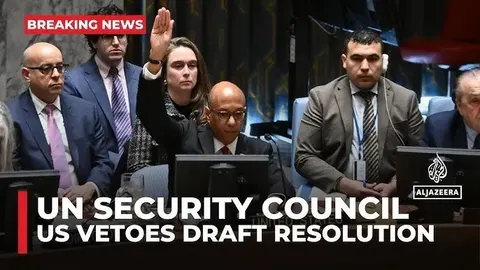
In an emergency Security Council session at UN Headquarters in New York on Thursday, Palestinian Permanent Observer Riyad Mansour delivered a searing indictment of Israel's conduct in Gaza, challenging the international body to move beyond rhetoric and take decisive action to end what he called a "manufactured human catastrophe."
The emergency meeting was requested by ten elected Security Council members — Bahrain, Colombia, Democratic Republic of Congo, Denmark, Greece, Latvia, Liberia, Pakistan, Panama, and Somalia — with support from China, France, Russia, and the United Kingdom. It came amid mounting international alarm over the humanitarian situation in Gaza, where over 70,000 Palestinians have been killed since the conflict began, according to Palestinian officials.
A Pattern of Dismissiveness
As Mansour took the floor to deliver his impassioned plea, Israel's Ambassador to the United Nations, Danny Danon, was notably consistent in his ambivalence. Israeli delegates have developed a pattern of refusing to listen to Palestinian representatives during Security Council sessions — a practice that has drawn growing criticism from other diplomats and UN officials.
Danon, who has pursued a confrontational approach throughout his tenure, has made a habit of visibly ignoring Mansour when the Palestinian representative addresses the council. In numerous Security Council sessions, Danon has been observed keeping his eyes fixed downward on his phone, scrolling and tapping throughout the entirety of Mansour's remarks — a demonstrative dismissiveness that has become a recurring feature of his attendance.
This pattern of behavior reflects a broader confrontational stance that Danon has adopted since his return as Israel's UN envoy. In November 2024, he successfully challenged a UN art exhibition titled "Peace Flags," which featured collaborative quilts created by children and community groups from around the world. Danon publicly protested the display, calling it a "disgrace" and accusing the UN of hypocrisy. The specific point of contention was a quilt panel that featured a watermelon-shaped map of Israel — without the West Bank or Gaza — alongside the Palestinian flag and the phrases "From the River to the Sea" and "Will be Free." He posted a video on social media denouncing what he called the "hateful imagery" that he believed erased the State of Israel. Following his complaint, the UN confirmed that the entire quilt containing the controversial panel was removed and replaced with other works.
Danon's confrontational style has also led to several open verbal clashes with other representatives. In May 2026, a Security Council debate devolved into a shouting match between Danon and Mansour. Danon broke from his prepared remarks to demand that Mansour condemn "acts of terrorism." Mansour shot back, "Shame on you for killing Palestinian children!" After being called to order, Danon continued to press Mansour, stating, "'I condemn all acts of terrorism': one sentence you cannot say. Shame on you for that."
Increasingly unhinged, in June 2026, Danon became embroiled in a furious shouting match with UN official Vanessa Frazier. At a meeting to mark the International Day for the Elimination of Sexual Violence in Conflict, Danon was demanding the resignation of another UN official, Pramila Patten. When Frazier attempted to raise a point of order, Danon shouted over her, yelling, "No, you be quiet! Because I am speaking now!" He then asserted, "We are a member state, and you work for the U.N., and you will be quiet now. You will be quiet, you and your shameful report."
Against this backdrop of institutional tension and dismissiveness, Mansour delivered his address — a speech that, like so many before it, went unheard by the very delegation it most directly addressed.
'We Know What Needs to Be Done'
Mansour opened his remarks by thanking the council members who requested the emergency session, as well as Under-Secretary-General for Humanitarian Affairs Tom Fletcher and civil society representatives who briefed the meeting. He highlighted the plight of two humanitarian workers — Dr. Hussam Abu Safiya, who he said was abducted by Israel and remains in solitary confinement, and Wasim El Maghari from the Palestine Red Crescent, who was taken by armed militias operating in areas under Israeli control.
"Madam President, all of us here know what needs to be done," Mansour declared. "If you want to listen very closely to all of your statements, you know exactly what needs to be done. We have known that for years."
He listed the legal frameworks governing the conflict — international law, international humanitarian law, UN resolutions, and provisional orders from the International Court of Justice — and posed a direct challenge to the council:
"The question is, are you going to act? If you know what needs to be done, you don't need an invitation to implement what you articulate in your statements and in the consensus that we listen to."
'Trying to Reason with This Israeli Government Will Clearly Not Work'
Mansour pointed to Israel's actions since the beginning of the conflict, including its listing for "grave breaches against Palestinian children" and "sexual violence perpetrated against Palestinians." He cited the destruction of over 90% of buildings in Gaza, including hospitals and schools, and the denial of electricity, water, and waste management services to the civilian population.
"We also know Israel has no intention of abiding by these rules," he said. "It has a horrific and unmatched record in the number of children killed, UN personnel killed, humanitarian workers killed, medical personnel killed, journalists killed."
He noted that Israel has preferred "to attack the critics rather than end its grave breaches," citing recent decisions to end contacts with the UN Secretary-General and, more recently, with the EU High Representative.
"So, unfortunately, trying to reason with this Israeli government will clearly not work. They take note of what you say and your position, and they continue breaching international law and making the life of the Palestinian the hell that we are living."
A Fragile Ceasefire and Continuing Death
Mansour acknowledged that the ceasefire secured through mediation — including by President Trump and regional partners — had initially saved lives. But he said the killing has continued despite the agreement.
"Palestinians in Gaza thought they had survived and their ordeal had come to an end. But the killing continued. Israel has killed over 1,000 Palestinians since the ceasefire entered into force, including over 250 children and 120 women. Parents continued to lose their children and children continued to lose their parents."
He questioned whether the international community was pursuing a permanent ceasefire or simply accepting "a continuous fragile ceasefire" while the war continues "according to the wishes of the leaders of Israel."
'Engineered Suffering' at the Rafah Crossing
Mansour described the humanitarian situation in stark terms, challenging the council to recognize the deliberate nature of the suffering:
"Denying humanitarian access and manufacturing a permanent humanitarian crisis is unacceptable under any pretext. Denying medicine, shelter, water, forcing families to live in makeshift tents amidst the rubble, the sewage, the garbage, and the rodents can never be justified."
He pointed to the Rafah crossing, where aid and shelter sit just kilometers away from desperate civilians:
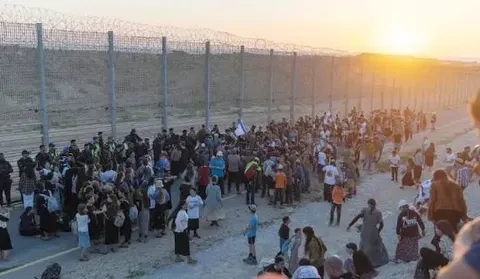
"There is decent temporary shelter available a couple of kilometers away from those who desperately need it. It's just on the other side of the Rafa Crossing. There is life-saving aid. There is medicine there almost within grasp and yet beyond reach. If that is not engineered suffering, what is it? It is by design. It is not a natural accident. It is premeditated."
'No Occupation, No Annexation, No Displacement'
Mansour reminded the council of resolution 2803's fundamental principles — no occupation, no annexation, no displacement — and accused Israeli leaders of openly confessing their intentions to the contrary.
"Israel leaders cannot stop themselves from confessing publicly. These remain their goals. Starting from Netanyahu himself, who gleefully ordered his army to annex 70% of Gaza before a cheering audience. The humanitarian catastrophe is being prolonged to achieve these goals. Displace the people and annex the land."
He described the situation as "taunting and tormenting of 2 million Palestinians" and insisted that "Israel does not have a right of life and death over them, over us."
A Final Plea
In his closing remarks, Mansour reminded the council of the human toll — "2 million people who have endured an atrocity and an atrocious assault and a genocide for 3 years, including 1 million children."
"Many with life-altering injuries. All having lost family members. They could not mourn. All displaced. Countless of them having experienced starvation. One in every four Palestinian children in Gaza is still projected to face acute malnutrition this year. Our people are being denied even the most elementary health care, education, access to water, and sanitation."
He concluded with a direct appeal to the Security Council:
"These are people. We are people. These are families. These are lives. These are children. They thought they were saved. They are still barely surviving. There is no excuse for this manufactured human catastrophe. Ending it should be unconditional. It is not linked to any other element of the plan and it should not rely on the will or whims of the Israeli government, who has manufactured it in the first place. It is an international responsibility. It is your responsibility as the body of the United Nations responsible for the maintenance of international peace and security. It is your responsibility and an international responsibility to bring it to an end and to bring it to an end now."
"Palestinians in Gaza have waited long enough, suffered far too much, and cannot be asked to wait any longer."
Full remarks by Riyad Mansour, Permanent Observer of the State of Palestine to the United Nations, delivered June 18, 2026, at UN Headquarters in New York:
"Madam President, allow me at the outset to thank the 10 elected members of the Security Council, Bahrain, Colombia, Democratic Republic of Congo, Denmark, Greece, Latvia, Liberia, Pakistan, Panama, and Somalia for requesting this emergency meeting on the humanitarian situation in Gaza, as well as China, France, Russia, and the United Kingdom for supporting this request. Allow me also to thank the presidency for convening this emergency meeting. I also wish to thank USG Fletcher for his briefing and relentless efforts, and through him, the humanitarian community in Palestine, which has been a primary target of Israel's attacks. I want to mention two humanitarians today. Dr. Hussam Abu Safiya, who was abducted and detained by Israel and remains in solitary confinement. And Wasim El Maghari from the Palestine Red Crescent, who was abducted by armed militias operating in areas under Israeli control, and whose fate remains unknown. We hold Israel responsible for their lives. Allow me also to thank Ms. Khalidi, Bushra Khalidi, from Oxfam for her outstanding briefing, and through her, all civil society organizations, Palestinian and international, who continue mobilizing to address the suffering of the Palestinian population despite Israel's attacks and restrictions.
Madam President, all of us here know what needs to be done. If you want to listen very closely to all of your statements, you know exactly what needs to be done. We have known that for years. These demands are rooted in international law, in IHL, and obligations of the occupying power, in UN resolutions, in the provisional orders of the ICJ, and lie at the heart of the humanitarian principles and mission. The question is, are you going to act? If you know what needs to be done, you don't need an invitation to implement what you articulate in your statements and in the consensus that we listen to.
We also know Israel has no intention of abiding by these rules. It has now been listed for its grave breaches against Palestinian children, for the sexual violence perpetrated against Palestinians. It has a horrific and unmatched record in the number of children killed, UN personnel killed, humanitarian workers killed, medical personnel killed, journalists killed. And in this regard, we salute the courage and the principled position of the Secretary-General for taking these steps. It has destroyed over 90% of buildings in Gaza. President Trump denounced the same policy of knocking down entire buildings in Lebanon. It destroyed the hospitals and the schools and denied electricity, water, and waste management and starved an entire civilian population. And facing criticism from its unlawful actions, it prefers to attack the critics rather than end its grave breaches. We have seen it in Israel's decision to end contacts with the UN Secretary General a few weeks ago and today with the EU High Representative. So, unfortunately, trying to reason with this Israeli government will clearly not work. They take note of what you say and your position and they continue breaching international law and making the life of the Palestinian the hell that we are living.
Madam President, we have pushed for a cease-fire for over two years and finally President Trump and the mediators with the support of the region and the international community were able to secure a cease-fire after over 70,000 Palestinians were killed. Most of them were children and women. This cease-fire agreement saved countless lives. Palestinians in Gaza thought they had survived and their ordeal had come to an end. But the killing continued. Israel has killed over 1,000 Palestinians since the ceasefire entered into force, including over 250 children and 120 women. Parents continued to lose their children and children continued to lose their parents. So, what will be done for Israel to actually and finally ceasefire? What could be done in order to implement the first item on resolution 2803 and the 20-point action plan of President Trump? Do we have a permanent ceasefire? Or we have a continuous fragile ceasefire and the war is continuing according to the wishes of the leaders of Israel.
The fact that we must still state the following self-evident truths illustrates the depth of this tragedy. Denying humanitarian access and manufacturing a permanent humanitarian crisis is unacceptable under any pretext. Denying medicine, shelter, water, forcing families to live in makeshift tents amidst the rubble, the sewage, the garbage, and the rodents can never be justified. Collective punishment is prohibited and it should not be allowed at all and those who conduct such illegal criminal behavior should be held to account. There is decent temporary shelter available a couple of kilometers away from those who desperately need it. It's just on the other side of the Rafa Crossing. There is life-saving aid. There is medicine there almost within grasp and yet beyond reach. If that is not engineered suffering, what is it? It is by design. It is not a natural accident. It is premeditated.
Madam President, a key element of resolution 2803 was its three fundamental — you know, paragraph number three — which states no occupation, no annexation, no displacement. Israel leaders cannot stop themselves from confessing publicly. These remain their goals. Starting from Netanyahu himself who gleefully ordered his army to annex 70% of Gaza before a cheering audience. The humanitarian catastrophe is being prolonged to achieve these goals. Displace the people and annex the land. Goals that are being pursued in Gaza and the West Bank including East Jerusalem.
Madam President, this taunting and tormenting of 2 million Palestinians has to stop. Israel does not have a right of life and death over them, over us. Nor can they continue living in this hell until Israel feels it is enough. Everything Israel does is to make Gaza unlivable. The United States, the United Nations, third states, and third parties should not be in a constant negotiation with Israel over getting life-saving assistance to those who desperately need it. A negotiation in which every step forward is undermined by endless conditions, delays, and procedural obstacles.
Madam President, allow me, at the end, to remind everyone who are speaking of 2 million people who have endured an atrocity and an atrocious assault and a genocide for 3 years, including 1 million children. Many with life-altering injuries. All having lost family members. They could not mourn. All displaced. Countless of them having experienced starvation. One in every four Palestinian children in Gaza is still projected to face acute malnutrition this year. Our people are being denied even the most elementary health care, education, access to water, and sanitation. These are people. We are people. These are families. These are lives. These are children. They thought they were saved. They are still barely surviving. There is no excuse for this manufactured human catastrophe. Ending it should be unconditional. It is not linked to any other element of the plan and it should not rely on the will or whims of the Israeli government who has manufactured it in the first place. It is an international responsibility. It is your responsibility as the body of the United Nations responsible for the maintenance of international peace and security. It is your responsibility and an international responsibility to bring it to an end and to bring it to an end now. Palestinians in Gaza have waited long enough, suffered far too much, and cannot be asked to wait any longer. Thank you, Madam President."