Global Sumud Flotilla Sails Toward Gaza as Israel Threatens Another High Seas Confrontation
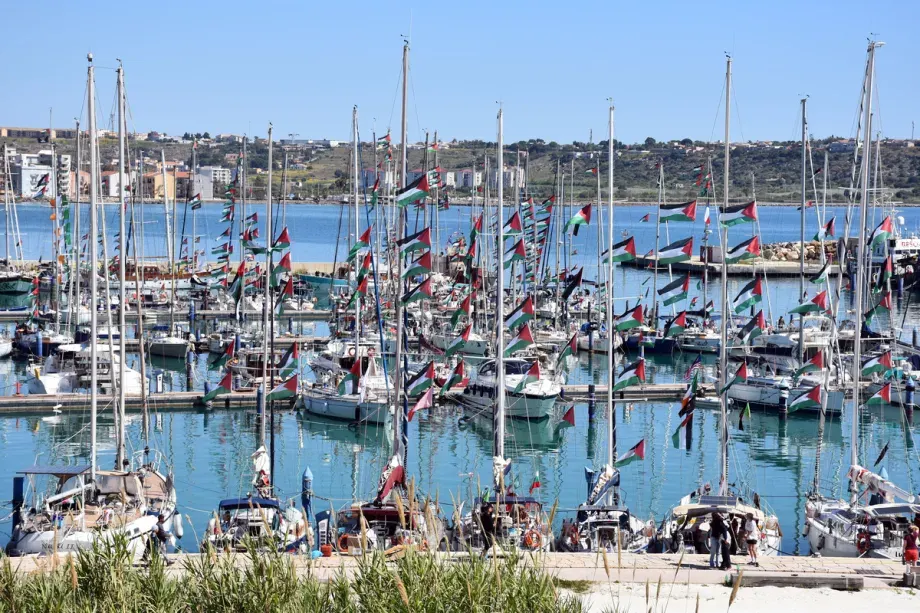
The boats left in waves – from Turkey, from Spain, from Italy, nearly sixty in the final push out of Italian ports this week – until close to a hundred vessels, by the organisers' fullest count, were strung across the Mediterranean with their bows pointed at Gaza. Aboard them: medical supplies, food, legal observers, medics, parliamentarians, journalists, and the political message Israel has spent fifteen years trying to sink.
The Global Sumud Flotilla is no longer a gesture. What began as symbolic maritime challenges to the blockade – a boat here, a headline there – has become a coordinated civilian campaign across multiple ports and flags, and it is treated as such by the state it is sailing towards.
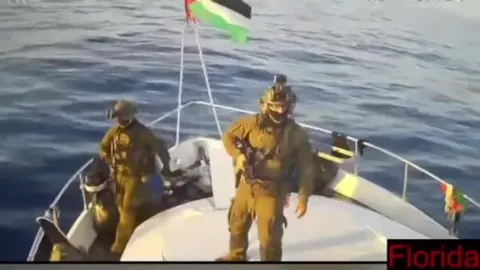
Israel's defence minister, Israel Katz, has signed an order targeting the flotilla's fundraising, alleged a Hamas connection, claimed the mission violates United Nations resolutions and undermines the settlement efforts promoted by the Trump administration, and warned that Israeli counterterrorism law may be used to seize the vessels and everything aboard them. Israeli reporting describes the options under consideration: boarding the ships at sea, or dropping forces onto their decks from the air.
The organisers' stated aims are simpler: break the blockade, deliver the aid, open a safe humanitarian corridor, and raise the cost for the governments and corporations that keep Gaza sealed.
For Gaza, the flotilla is aid and visibility. For Israel, it is a direct challenge to the blockade. For everyone else, it is a test with a long history behind it: whether international law, humanitarian access and freedom of navigation still mean anything when the civilians invoking them are Palestinians, or those acting in solidarity with them.
A Fleet Built From Earlier Defeats
The current Global Sumud Flotilla did not emerge in isolation. It is the product of a year of escalating civilian maritime resistance, repeated Israeli interceptions and growing anger over the failure of governments to force open meaningful aid access to Gaza.
In June 2025, Israel seized the British flagged aid vessel Madleen roughly 60 nautical miles off Gaza's coast. The ship, part of the Freedom Flotilla Coalition, carried baby formula, rice, desalination equipment and basic medical supplies. Climate activist Greta Thunberg, who was aboard, described the seizure as a kidnapping in international waters and insisted that the real story was not the detention of activists but the genocide, starvation and dehumanization of Gaza.
That seizure had the opposite effect Israel intended. Instead of deterring activists, it helped trigger a wider wave of civil resistance. The Madleen became a symbol of the blockade's absurdity: a state presenting baby formula, rice and desalination tablets as a security threat.
The Hind Rajab Foundation later filed a war crimes complaint with the Metropolitan Police War Crimes Unit in Britain, naming Israel's elite naval unit Shayetet 13 and Vice Admiral David Saar Salama. The complaint alleged violations of the Geneva Conventions Act, the International Criminal Court Act, the UK Criminal Justice Act and the principle under the United Nations Convention on the Law of the Sea that ships in international waters fall under the jurisdiction of their flag state.
The legal argument was simple. The Madleen was British flagged. If a military force boarded it in international waters, that was not merely a dispute with activists. It was an armed attack on the jurisdiction of the flag state.
The British government avoided that conclusion. Prime Minister Keir Starmer and Foreign Secretary David Lammy issued weak statements but declined to treat the seizure as a violation of international law or British sovereignty. Critics argued that Britain was quick to denounce piracy when committed by adversaries but unwilling to name it when committed by Israel.
That silence helped shape the current flotilla. Organizers learned that the ships themselves were not enough. They needed scale, publicity, legal preparation, multiple flags, multiple ports and a broader political shield.
Baby Milk, Not Bullets
By September 2025, the Sumud Flotilla had adopted a sharper message: baby milk, not bullets.
The phrase captured the central contradiction of the blockade. Israel claimed to be stopping security threats. The activists said they were carrying infant formula, bandages, antibiotics, water filters and food staples. The mission was built around the idea that the contents of the cargo hold told the truth more clearly than any government statement.
The word Sumud means steadfastness in Arabic, and the flotilla used that concept not only as a name but as a political identity. For Palestinians, sumud has long meant refusing to be uprooted, erased or broken. At sea, it became a way of turning small boats into a visible challenge to one of the most heavily militarized blockades in the world.
The September mission was attacked rhetorically before it was threatened militarily. Israel's Diaspora Affairs Ministry alleged that the flotilla had links to Hamas and the Muslim Brotherhood. Israeli ministers amplified the claims and presented the convoy as terror linked propaganda disguised as aid.
Flotilla organizers rejected those accusations as a familiar tactic. Every attempt to break the siege, they argued, is branded terrorist because the alternative would be to admit that Israel is using military force to stop civilians from delivering basic humanitarian goods.
The campaign to stop the flotilla also became physical. Activists reported suspected drone attacks on vessels in Tunisian waters, an earlier drone strike that damaged the Freedom Flotilla vessel Conscience near Malta, communications jamming, intimidation by drones and shadowing by patrol craft.
Yet the flotilla regrouped and kept moving.
By then, the operation had become much more than a single boat. Nearly 50 civilian vessels were strung across the central Mediterranean, with several hundred participants aboard and additional boats expected to join from Italy and the Greek islands. The current 2026 mission has taken that model further, with a larger and more decentralized structure involving departures from several countries and estimates ranging from nearly 60 ships currently en route to claims of a flotilla of up to 100 vessels.
The Global Shield Around the Flotilla
One of the most important lessons from the previous Sumud mission was that scale changes the political calculation.
Earlier Gaza flotillas could be isolated. A handful of boats could be dismissed as fringe activism, intercepted, towed to Ashdod and forgotten. The 2010 Mavi Marmara raid shocked the world, but Turkey was largely left to rage alone while other governments retreated into formulaic statements. Later flotillas in 2015 and 2018 were also intercepted with limited diplomatic consequence.
The Sumud model has tried to change that by building what supporters describe as a global shield.
In previous reporting, 16 states were identified as having publicly declared the mission civilian, lawful and humanitarian, warning that attacks in international waters or illegal detention could trigger accountability. Those countries included Spain, Ireland, Slovenia, South Africa, Brazil, Colombia, Mexico, Turkey, Qatar, Oman, Indonesia, Malaysia, Pakistan, Bangladesh, the Maldives and Libya.
That mattered because the passengers were not merely individual activists. They were citizens of states that would have to decide whether to defend them. If Israel boarded or attacked the vessels, it would be acting not only against campaigners but against the nationals, and in some cases the flagged vessels, of multiple governments.
The same logic is even more powerful now. The current flotilla's size makes it harder to stop quietly. It also makes any interception more complex. Dozens of vessels spread across the sea cannot be dealt with as easily as a single high profile ship. Each boat carries cameras, flags, satellite trackers and witnesses. Each boarding risks another set of images, another legal complaint, another diplomatic confrontation and another reminder that the blockade is enforced not by legal persuasion but by force.
This is why the cargo is not the only issue. The cameras matter. The flags matter. The presence of parliamentarians, medics, journalists and internationally known activists matters. They turn the sea into a courtroom, a broadcast studio and a protest line at the same time.
The Mikeno Breakthrough
The most important precedent for the current voyage is the October 2025 Mikeno breakthrough.
On October 2, 2025, the Mikeno, a civilian vessel carrying essential aid, was tracked entering Gaza's territorial waters as part of the Global Sumud Flotilla. Its Automatic Identification System tracker showed the vessel inside Gaza's waters before the signal froze. Radio calls went unanswered and livestream cameras cut out.
For Gaza, that frozen dot on a map had enormous meaning. It suggested that the blockade, presented by Israel as absolute and permanent, could be breached.
The Mikeno sailed with a flotilla of more than 40 boats and around 500 passengers, including doctors, parliamentarians, climate activists and lawyers. They carried food staples, water filters and medicine. Brazilian congresswoman Luizianne Lins, who was aboard one of the vessels, described the mission as a legal and moral act against the blocking of civilian aid.
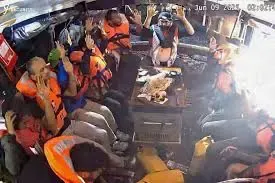
Israeli forces moved against the flotilla on the evening before the reported breakthrough. Warships surrounded vessels, spotlights cut across the water, and orders were issued for crews to switch off engines. At least 21 vessels were reportedly towed to Ashdod, while contact with others was lost. Passengers later described being sprayed with liquid, blinded by lights and forced at gunpoint to power down.
Flotilla organizers accused Israel of targeting the largest ships and most recognizable figures first, including vessels carrying Greta Thunberg and other prominent participants. They argued that the aim was not simply to stop boats but to control the narrative.
Yet the Mikeno changed that narrative. Even if only briefly, it became a symbol of rupture. The blockade, organizers said, was not destiny. It could be challenged. It could be broken.
That is one reason the current 2026 flotilla is so significant. It is not sailing into an abstract confrontation. It is sailing in the wake of a vessel that many supporters believe proved the blockade can be pierced by civilian courage, coordination and persistence.
From Mavi Marmara to Sumud
The history of Gaza flotillas is a history of repeated civilian attempts to expose the blockade by forcing Israel to choose between allowing aid through or using military force against unarmed ships.
In 2010, the Mavi Marmara, part of the Freedom Flotilla, was stormed by Israeli commandos in international waters. Ten activists were killed and dozens were injured. The raid triggered global outrage and a diplomatic crisis with Turkey, but the blockade remained.
In 2011, Freedom Flotilla II was blocked before most vessels could even reach international waters. In 2015, the Marianne of Gothenburg, a Swedish trawler carrying solar panels and aid, was intercepted and towed to Ashdod. In 2018, four boats including Al Awda attempted to breach the blockade. Israeli forces boarded the vessels, passengers reported violence, and the aid was confiscated.
In 2025, the Mikeno became the first vessel in 15 years to be tracked inside Gaza's waters, turning a symbolic challenge into a moment of apparent physical breach.
The current flotilla builds on every stage of that history. From Mavi Marmara, activists learned the cost of Israeli force. From the blocked 2011 missions, they learned how governments can strangle a flotilla before it leaves port. From 2015 and 2018, they learned how easily small convoys can be isolated. From Madleen, they learned that even a single vessel can become a global symbol if its cargo exposes the cruelty of the blockade. From Mikeno, they learned that persistence can create moments Israel cannot fully control.
The 2026 flotilla is therefore not merely larger. It is more historically informed.
The Law of the Sea and the Flag State Argument
The legal question surrounding the flotilla is central to the story.
Former British diplomat and international law specialist Craig Murray has argued that there is no general right to intercept civilian vessels on the high seas. In international waters, the law that applies aboard a vessel is the law of the state whose flag it flies. An attack by a military ship on that vessel is therefore, in legal terms, an attack on that flag state's jurisdiction.
That argument matters because Sumud vessels have flown the flags of multiple countries, including Britain, Ireland, Norway, Turkey and Canada in previous missions. If Israeli forces seize such vessels in international waters, the issue is not only the treatment of activists. It is the violation of sovereign jurisdiction.
Murray described the 2025 seizure of around 40 humanitarian vessels as an unprecedented scale of what he called effective piracy. He argued that when a state attacks and seizes foreign flagged civilian vessels on the high seas, the act is not a minor maritime dispute but an act of aggression against the countries whose flags those ships fly.
Israel answers with the language of blockade. It claims the naval blockade of Gaza is lawful and necessary for security. Critics respond that even if naval blockades can be lawful in some armed conflicts, they cannot be used to starve civilians, prevent humanitarian relief, impose collective punishment or continue indefinitely without regard to proportionality.
The San Remo Manual on International Law Applicable to Armed Conflicts at Sea is often cited in this debate. It permits blockades only under strict conditions and prohibits blockades whose purpose or effect is to starve civilians or deny essential relief. Critics of Israel's blockade argue that Gaza's long term isolation fails those tests.
That legal dispute will become urgent if Israel boards the current flotilla in international waters. The vessels are not warships. Their passengers are civilians. Their cargo is described by organizers as medical supplies and humanitarian aid. If they are intercepted, detained and diverted to Israeli ports, the event will renew the argument that Israel is not enforcing law but violating it.
The Criminalization of Compassion
The consequences of flotilla activism have not ended at sea.
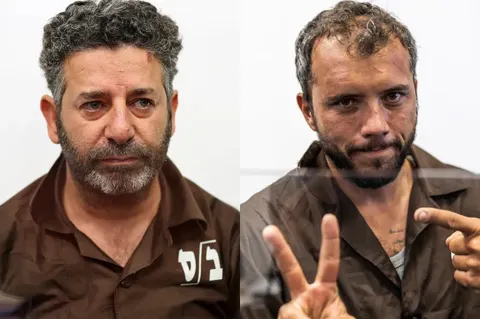
The case of British journalist and activist Sarah Wilkinson showed how the repression followed participants home. Wilkinson joined the Global Sumud Flotilla as part of a civilian effort to deliver aid to Gaza. After Israeli forces intercepted the mission, she was detained in Israel, deported and then arrested by UK police at Heathrow Airport under the Terrorism Act.
Supporters described the case as the criminalization of compassion. Their argument was that Britain failed to protest when a British citizen was abducted in international waters by a foreign military, but moved against her when she returned home.
Wilkinson said her participation was motivated by conscience, not political allegiance. She described the mission in simple terms: food, medicine and dignity for people the world had abandoned.
Her case fits a broader pattern in Britain, where journalists and campaigners on Gaza have faced counterterrorism questioning, raids or device seizures. Richard Medhurst, Asa Winstanley and Craig Murray have all appeared in previous reporting as examples of how Palestine related journalism and activism have increasingly been treated as security matters.
The relevance to the current flotilla is clear. Participants face not only the risk of Israeli interception, detention and deportation, but also possible legal consequences when they return to countries whose governments have aligned themselves with Israel's framing of Palestinian solidarity.
That makes the flotilla not only a challenge to Israel's blockade but a challenge to Western states that increasingly treat humanitarian action for Gaza as suspect.
Italy, Spain and the Mediterranean Pressure Point
Previous reporting also showed how flotilla politics can force European governments to act.
In September 2025, Italy and Spain sent naval protection toward the Sumud flotilla after public pressure surged across Europe. Italy's decision followed major protests and a general strike involving more than 75 municipalities, with dockworkers in Genoa, La Spezia, Livorno and Trieste slowing or blocking arms related shipments to Israel. Spain quickly followed with its own naval deployment, while Ireland came under pressure to do the same.
That episode marked a shift. Some European governments that had long allowed Israel wide freedom of action were suddenly confronted by citizens aboard civilian aid boats, mass protests at home and the risk of being seen as passive while their nationals were seized at sea.
The current flotilla may force a similar test. If Israel moves to board dozens of vessels from multiple countries, the issue will land not only in Israeli military briefings but in European parliaments, foreign ministries, trade unions and streets.
Israel can seize a ship. It cannot so easily contain the political reaction if the seizure becomes a symbol of government complicity.
Gaza's Humanitarian Reality
The flotilla's urgency rests on Gaza's humanitarian reality.
The enclave has endured years of blockade and more than two years of catastrophic war. By the time the boats sailed, more than 72,000 Palestinians had been killed in Israeli attacks since October 7, 2023, more than 20,000 of them children. Israeli forces have killed more than 818 Palestinians since the ceasefire, including more than 300 children, women and elderly people.
Aid organizations continue to describe conditions as catastrophic. Médecins Sans Frontières has warned of massive needs and ongoing Israeli restrictions on humanitarian aid. Gaza still faces shortages of food, clean water, electricity and healthcare. The argument made by flotilla organizers is that official aid channels are not delivering enough, fast enough, or freely enough.
Israel says aid can enter through established mechanisms. Palestinians and humanitarian organizations say those mechanisms remain inadequate and subject to Israeli control. The flotilla challenges that control directly.
In this sense, the boats are not only carrying supplies. They are carrying an accusation: that the official humanitarian system has failed because it allows the occupying power to decide when and how relief reaches the occupied and besieged population.
Why This Flotilla Matters More Than Earlier Ones
The 2026 flotilla matters for five reasons.
First, its scale is different. Earlier missions involved a handful of boats or a single high profile vessel. This convoy involves dozens of ships, with claims of a broader 100 boat mobilization. That makes interception more complicated and visibility harder to suppress.
Second, its organization is more decentralized. Boats have left from several countries and joined in stages. This reduces dependence on one port, one flagship or one moment of confrontation.
Third, it comes after the Mikeno breakthrough. Supporters now have a recent example of a vessel apparently entering Gaza's waters, however briefly, and that memory changes morale.
Fourth, the legal argument has sharpened. The flotilla is not simply asking for sympathy. It is forcing questions about the law of the sea, flag state jurisdiction, blockade law, humanitarian relief and the duty to prevent genocide.
Fifth, the political environment has changed. Israel's war on Gaza has produced global outrage, mass protests, genocide proceedings, accusations from human rights bodies and growing anger at Western governments. The flotilla sails into a world where Israel is more isolated than it was in 2010 and where every act of force is recorded, streamed, archived and litigated.
Israel's Dilemma
Israel now faces a dilemma of its own making.
If it allows the flotilla to reach Gaza, even partially, it risks weakening the blockade and proving that maritime access can be reopened by civilian pressure. If it intercepts the convoy, it risks producing another global spectacle of soldiers boarding civilian vessels carrying medical supplies, baby formula and aid.
If it uses force, the comparison with the Mavi Marmara will be immediate. If it detains passengers, the comparison with Madleen, Handala and the 2025 Sumud seizure will be immediate. If it seizes vessels in international waters, the Craig Murray flag state argument will return. If it mistreats detainees, the Sarah Wilkinson and Greta Thunberg controversies will return. If it confiscates aid, the central moral question will return: why is Israel afraid of baby milk, bandages and medicine?
The flotilla's power lies precisely there. It forces Israel to reveal the blockade in action.
A blockade can be described in bureaucratic language when it is discussed in ministries. It looks very different when masked commandos board civilian boats under floodlights and drag away doctors, journalists, parliamentarians and aid workers.
A Line in the Water
The Global Sumud Flotilla is now more than a convoy. It is a line in the water.
On one side is a state determined to preserve control over Gaza's coastline and aid routes. On the other is a civilian movement arguing that when governments fail to stop starvation, siege and mass killing, ordinary people have a right and duty to act.
Previous flotillas have been stopped, seized, assaulted, delayed, sabotaged and criminalized. Yet each attempt has fed the next. The Mavi Marmara created a memory of sacrifice. The Madleen created a symbol of piracy and baby formula. The September Sumud mission created the language of a global shield. The Mikeno created a memory of breach. The Sarah Wilkinson case exposed how repression can follow activists home. The current flotilla brings all those threads together.
It sails with food and medicine, but also with history.
Whether it reaches Gaza or is intercepted before arrival, the mission has already succeeded in forcing the question the blockade was designed to bury: who has the right to decide whether a besieged civilian population receives aid?
For Israel, the answer remains military control. For the flotilla, the answer is international law, human conscience and direct civilian action.
As the vessels move eastward, the Mediterranean has again become the stage for a confrontation between armed power and moral persistence. The boats may be small, but the issue they carry is enormous. If Gaza's coast remains sealed even to civilian ships carrying medicine and baby milk, then the blockade is not a security measure. It is a system of punishment.
That is why the flotilla matters.
It may deliver aid. It may be seized. It may become another legal case, another diplomatic scandal, another image of Israeli force against unarmed civilians. But like every flotilla before it, it has already done something Israel cannot prevent.
It has made the siege visible again.