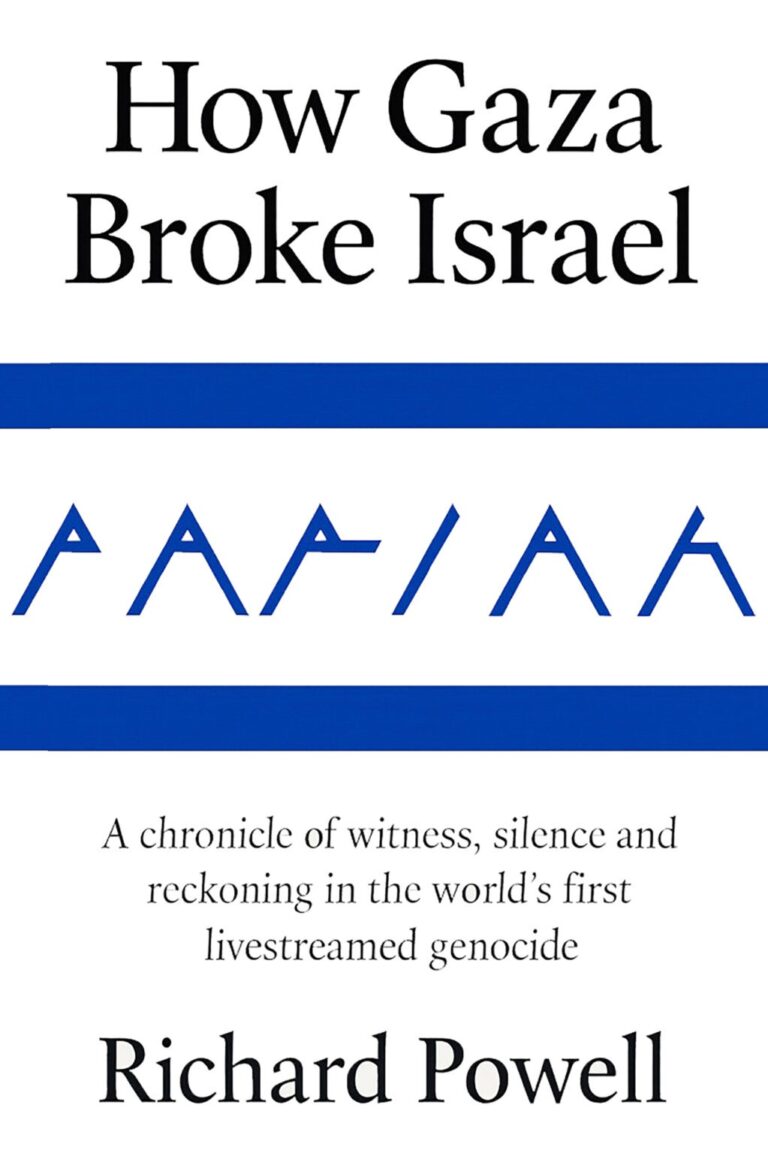
In the days following its release, Pariah: How Gaza Broke Israel by journalist Richard Powell has triggered a level of engagement rarely seen around a work of contemporary political writing. Readers are not simply reviewing the book. They are interrogating it, verifying it, citing it, teaching it, distributing it and, in many cases, responding to it on a deeply personal level…
Having been made available by the author for free download via pariahbook.com, the book has spread rapidly through online networks, often shared via torrent and mirrored across platforms. It is also available in hardcopy via Videowire Publishing on Amazon and from booksellers such as Barnes and Noble. One user put it bluntly: “Documentation is resistance.” Another added, “I’ll seed this for as long as I can.” The act of distribution itself has become part of the conversation, with readers treating the book not just as something to consume, but something to preserve and circulate.
What distinguishes the response is its seriousness. This is not passive readership. It is active engagement with evidence, law, history and lived experience.
The legal reaction is among the most striking. A commenter identifying as a human rights lawyer wrote, “I’ve already cited this book in an amicus brief. It’s gaining traction in legal circles.” Another added, “This book will be used in court cases. The documentation is meticulous.” A third framed it in even broader terms: “This is the kind of documentation that will matter for future tribunals.”
Much of that response centres on the book’s framing of what it calls “structures that made mass civilian death inevitable.” For legally minded readers, this language resonates directly with genocide law. “That’s a classic genocide definition under the Convention,” one wrote. “The book will be cited in future ICC proceedings, mark my words.”
There is also pushback from within the same space. “Intent is hard to prove. The book may help but it’s not a legal brief,” one reader cautioned. But even that critique reinforces the point. The reply came quickly: “Documentation like this can be evidence of dolus eventualis.” The debate is not whether the book matters legally, but how.
That same seriousness carries into academia. A journalism professor wrote, “The exclusion of foreign press from Gaza is a major story. This book’s account is essential reading for my students.” Another academic responded, “I’ll add it to my syllabus if it’s well-sourced.”
Students are already incorporating it into their work. “I’m adding this to my dissertation bibliography. The AIPAC section alone is worth the read,” wrote one PhD candidate. Another reader studying sociology noted, “The concept of ‘livestreamed genocide’ is significant for sociology of media.” A psychology student added that the book would serve as a primary source for research into “vicarious trauma.”
The intellectual framing has not gone unnoticed. “The prologue’s final lines echo Hannah Arendt’s banality of evil,” one reader observed. Another noted that the book has “literary merit beyond documentation.” A political science reader described its core argument linking funding and policy as “a testable hypothesis.”
The book is also moving into classrooms beyond universities. A history teacher wrote, “I’m going to use excerpts in my high school class. Students need to understand modern genocide.” When challenged, the response was firm. “Teaching about genocide is not political. It’s history.” A professor echoed that sentiment, while an academic librarian asked about licensing, noting plans to add the book to a university collection.
The discussion has also entered political space. One commenter identifying as a British MP wrote, “I’ll be referencing this in parliament.” Others reported sharing the book with elected representatives. The implication is clear. Readers are positioning the book not just as analysis, but as material for formal political discourse.
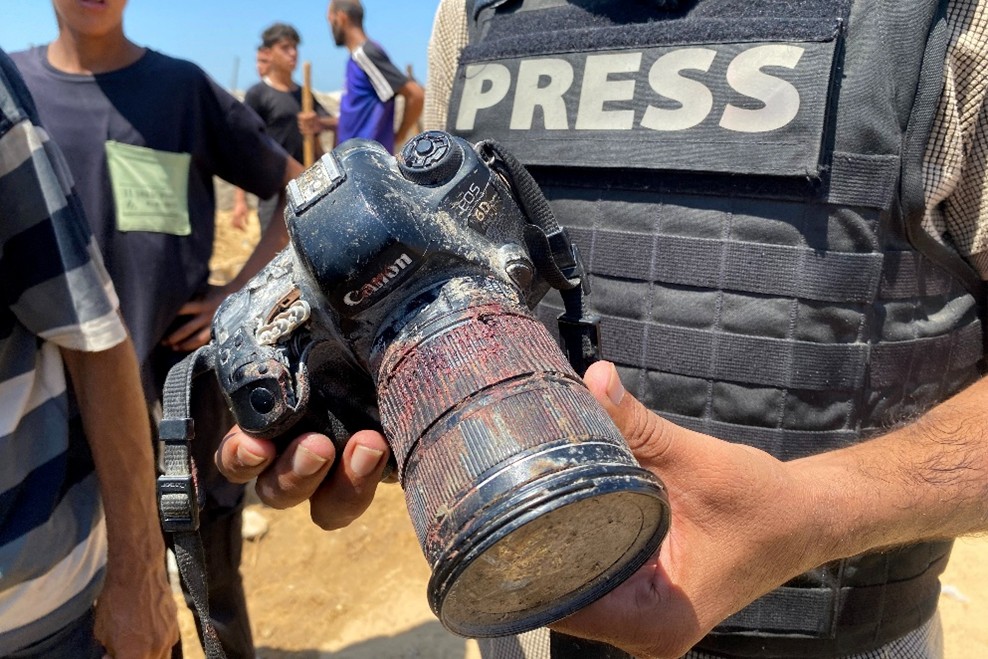
Journalists and media professionals have responded with particular intensity. One former foreign correspondent wrote, “We were not allowed into Gaza. This is the first war where the press was locked out.” They added, “The author is correct that Palestinian journalists became the only witnesses.” Another journalist with decades of experience described it as “one of the most comprehensive accounts I’ve seen.”
This theme runs through much of the discussion. The idea that Palestinian journalists became the primary chroniclers of the war resonates deeply. “The world must see,” one reader wrote, echoing a line highlighted in the book. Another pointed to Wael al-Dahdouh. “His story alone should wake people up.”
For many, this is not abstract. It is personal. One commenter wrote, “My cousin was a journalist in Gaza. He was killed in an airstrike. The world didn’t care. This book is for him.” Another added, “I read the prologue… the part about Palestinian journalists being the primary chroniclers is heartbreaking.”
Several readers who claim direct experience of Gaza responded in similar terms. A doctor wrote, “What is described is accurate… The world did not stop the bombs.” A humanitarian worker added, “The conditions described are understated if anything.” An engineer described repeated infrastructure strikes. “They targeted water, electricity, and sewage plants repeatedly.”
These responses are reinforced by others working in data and verification. One reader wrote, “I’ve analyzed the book’s source links… It’s verifiable.” Another initially skeptical reader returned to say, “The book has a massive bibliography and links to source documents. Impressive.”
The question of evidence is inseparable from the question of style. Many readers comment on how readable the book is. “I’m not usually into political books but this reads like a thriller,” one wrote. Another replied, “That’s by design. The author is a journalist.” The accessibility appears to expand the audience, allowing complex material to reach beyond academic or specialist circles.
At the same time, that stylistic choice has prompted debate. “Every claim cross-referenced but no footnotes. That’s a red flag,” one reader argued. Others defended the approach. “He explains the style is narrative integration but evidentiary foundation is forensic.” The tension between readability and formal academic structure becomes part of the discussion itself.
The political sections of the book, particularly those dealing with U.S. funding, have drawn some of the strongest reactions. “1.95 million to McConnell, 1.87 million to Cruz… That’s not about national security. It’s about donor control,” one reader wrote. Another added, “Track AIPAC’s data is solid… they all got paid and they all delivered weapons.”
Others approached it more analytically. “Lawmakers who receive the most pro-Israel funding deliver the most reliable political outcomes. That’s a testable hypothesis.” Even readers who questioned the conclusions acknowledged the data itself. “That’s not even controversial. It’s FEC data.”
The book’s examination of narrative control has also resonated. Readers point to its breakdown of hasbara techniques. “He deconstructs the ‘human shields’ claim with IDF documents,” one wrote. Another concluded, “Even the best PR can’t spin dead children.”
Technology is another point of focus. The reporting on AI-assisted targeting systems, particularly one referred to as Lavender, has unsettled readers. “The documentation of AI use in targeting is chilling,” one wrote. Another simply responded, “Wow.”
But perhaps the most revealing responses come from Israeli readers themselves.
One commenter identifying as a former IDF soldier wrote, “I served in the IDF reserves in Gaza. I have seen things that contradict the official narrative.” They added, “This book might be painful to read but I think it’s necessary for my own reckoning.” In a follow-up, they wrote, “I haven’t spoken publicly before. This book’s existence makes me feel less alone.”
Other Israeli voices expressed similar views. One peace activist wrote, “It’s painful but true. We Israelis need to confront what our government did.” The reply was immediate. “You’re a traitor.”
The response came back calmly. “I love my country, which is why I want it to be moral.”
An Israeli historian wrote, “This book aligns with new historiography.” They were dismissed as “a disgrace to academia.” Their reply was direct. “Academia is about truth, not nationalism.”
Elsewhere, an Israeli reader objected to the title, calling it offensive. Another responded, “I think it means morally broke.” An Arab citizen of Israel wrote, “I want accountability but I also fear for my country’s future.”
Even more personal was the comment from a mother of an IDF soldier. “I fear for his soul. This book might help me understand what he went through.”
These exchanges show a deeper dynamic. The book is not only being read as external criticism. It is provoking internal debate, and in some cases, moral reckoning.
The response is global. A South African reader wrote, “We see parallels with apartheid.” A German historian added, “We have a responsibility to remember.” A Palestinian American commenter, whose family lost seventeen members, wrote, “I cannot bring myself to read it yet, but I am grateful that someone is documenting.”
Readers from across the Middle East, Europe, and beyond expressed similar sentiments. “We know war. This book is necessary,” one wrote. Another added, “We stand with Gaza. This book helps spread the truth.”
The book is also being taken up institutionally. Readers mention using it in theses, dissertations, and coursework. Others speak of translating it, archiving it, or distributing it through alternative networks. One librarian asked about licensing. Another user mirrored it on decentralized platforms. The sense is that the book is being actively preserved.
There is criticism, often blunt. Some dismiss the book as biased or politically motivated. Others reject its use of the term genocide. A hostile commenter called it “antisemitic trash.”
But even these responses tend to engage the book directly. As one reader countered, “The book does mention Hamas but focuses on Israeli actions. Both can be true.”
Across all of these reactions, one idea keeps returning. This book exists to document.
“This is the kind of documentation that will matter for future tribunals.”
“Documentation is resistance.”
“The world must see.”
Judging by the response so far, many readers believe that Pariah: How Gaza Broke Israel by Richard Powell does exactly that. And that its significance may lie not just in being read, but in what happens after.