

In a year dominated by headlines about cutting-edge AI models and next-generation chips, one of the most consequential developments in the technology sector passed with surprisingly little attention. On March 17, 2026, IBM quietly closed its $11 billion acquisition of Confluent—a move that analysts say could reshape the foundations of enterprise artificial intelligence.
While much of the media spotlight has focused on companies like Nvidia and the race to build faster GPUs or more powerful AI models, IBM’s acquisition points to a deeper shift in where the real battleground of AI may lie: not in the models themselves, but in the infrastructure that feeds them.
The Missing Layer in AI: Real-Time Data
For years, AI development has centered on training increasingly sophisticated models—systems like ChatGPT, Gemini, and Claude. Yet, as industry experts note, even the most advanced model is only as effective as the data it receives.
Inside many large organizations, that data remains fragmented, delayed, and siloed. Information is often updated in batches—hourly, daily, or even weekly—leaving AI systems to operate on outdated inputs.
Confluent addresses this fundamental limitation. Built on Apache Kafka, originally developed at LinkedIn, its platform enables continuous, real-time data streaming across enterprise systems. The result is a unified flow of live information—what some analysts describe as the “nervous system” of modern digital infrastructure.
The scale of adoption underscores its importance. More than 6,500 enterprises rely on Confluent, including approximately 40% of Fortune 500 companies. Firms such as BMW, Michelin, and Ticketmaster use the platform to manage everything from manufacturing data to global inventory and high-volume ticket transactions in real time.
IBM’s Strategic Play
IBM’s acquisition—priced at $31 per share, representing a 34% premium—signals a deliberate strategy. Rather than chasing the most visible elements of the AI boom, the company is positioning itself to control the underlying infrastructure that powers enterprise AI.
“Transactions happen in milliseconds, and AI decisions need to happen just as fast,” said IBM Senior Vice President Rob Thomas, summarizing the rationale behind the deal.
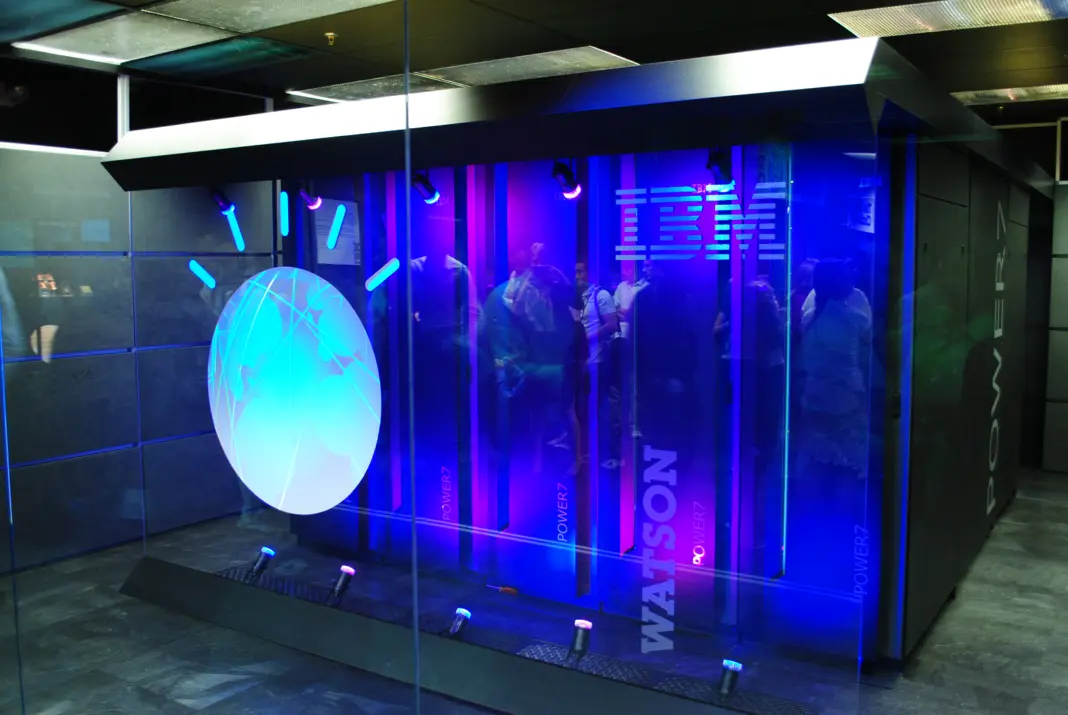
IBM already possesses key components of the enterprise AI stack, including its WatsonX platform and hybrid cloud capabilities. What it lacked was a best-in-class system for delivering real-time, governed data across complex corporate environments. Confluent fills that gap.
Industry observers have drawn parallels to IBM’s 2019 acquisition of Red Hat, a deal that initially received muted coverage but later became central to the company’s hybrid cloud strategy. If history repeats, Confluent could serve as the backbone of IBM’s AI ambitions.
A Shift in the AI Battlefield
The acquisition also reflects a broader evolution in the AI industry. The years 2023 and 2024 were defined by competition over chips and model size. But analysts increasingly view 2025 and beyond as the era of infrastructure—where data pipelines, governance layers, and real-time processing become the decisive factors.
Owning the systems that deliver data to AI models may prove just as powerful as owning the models themselves.
According to projections from the International Data Corporation (IDC), more than one billion new applications could emerge by 2028, many powered by autonomous AI agents that depend on continuous streams of live data. Confluent’s platform sits directly at the center of that ecosystem.
Competitive Tensions and Open-Source Questions
IBM’s move also introduces new dynamics in the competitive landscape. Both Amazon and Microsoft offer managed services built on Apache Kafka. With IBM now owning Confluent—the leading commercial entity behind Kafka—its rivals may find themselves dependent on infrastructure indirectly controlled by a competitor.
IBM has pledged to maintain openness, pointing to its stewardship of Red Hat and other open-source assets. However, the balance between supporting the open-source community and monetizing an $11 billion investment remains uncertain.
This tension is particularly relevant for the global developer ecosystem built around Kafka. Confluent has long acted as its primary commercial steward. Under IBM, questions arise about governance, licensing, and the future direction of the platform.
Rebuilding IBM’s Identity
For years, IBM has been viewed as a legacy technology company struggling to remain relevant in a rapidly evolving industry. Yet behind the scenes, it has been assembling a comprehensive enterprise stack: Red Hat for hybrid cloud, HashiCorp for infrastructure automation, and now Confluent for real-time data streaming.
Taken together, these components suggest a coherent strategy. Rather than competing in the consumer-facing AI race dominated by startups and big tech giants, IBM is positioning itself as the industrial backbone of enterprise AI—the operating system behind the scenes.
It may not be glamorous, but it is foundational.
A Story Hiding in Plain Sight
The muted reaction to IBM’s acquisition reflects a broader tendency in technology coverage: an emphasis on visible breakthroughs over structural shifts. GPUs, chatbots, and headline-grabbing model releases capture public attention. Data pipelines and enterprise infrastructure rarely do.
Yet, as this deal demonstrates, the future of AI may depend less on what models can do—and more on how effectively they are fed.
IBM’s $11 billion bet suggests that the real power in the AI era may lie not in building intelligence, but in controlling the flow of information that makes intelligence possible.
And in that quiet but critical domain, the company may have just secured one of the most strategic assets in the industry.