
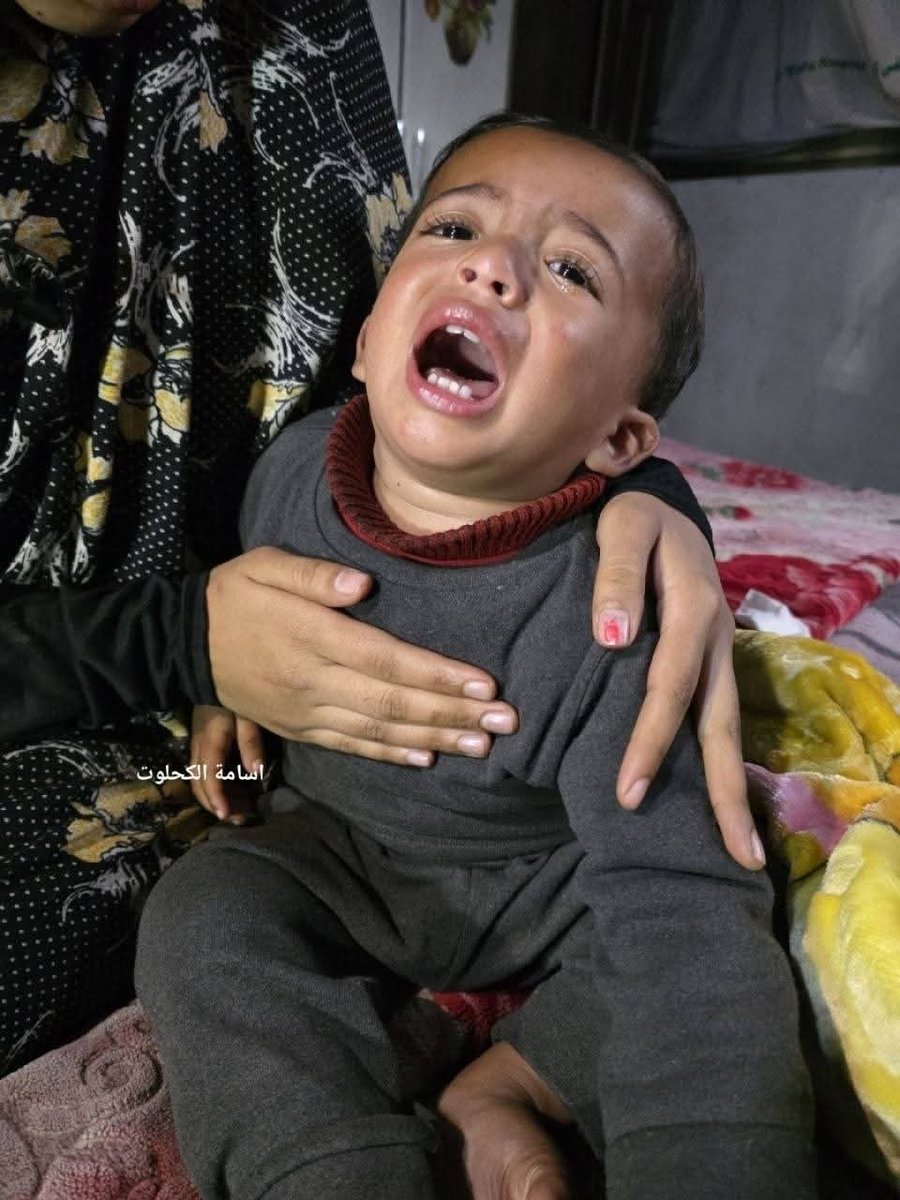

A disturbing allegation emerging from central Gaza has intensified scrutiny of Israel’s conduct in the occupied territory, after reports that Israeli soldiers tortured an 18-month-old Palestinian child in front of his father, an act that, if verified, would mark one of the most extreme cases of abuse documented since the war began in October 2023.
According to reporting by Al Jazeera and Palestine TV, the child, Karim Abu Nassar, was detained alongside his father near the al-Maghazi refugee camp. Witnesses say Israeli troops ordered the father, Osama Abu Nassar, to leave the child on the ground before taking him to a nearby checkpoint, where he was stripped and searched.
What allegedly followed has triggered international outrage.
Eyewitnesses claim soldiers then abused the toddler in front of his father in an attempt to force a confession. Footage recorded by Gaza-based journalist Osama Al-Kahlout shows visible injuries on the child’s legs, which his mother says include a cigarette burn and a puncture wound inflicted with a nail.
The child was reportedly released after approximately 10 hours via the International Committee of the Red Cross, though the organization has not publicly commented on the case. The Israel Defense Forces has also not issued a statement.
While the specific allegations remain unverified by independent investigators, the case has rapidly gained traction, both because of its shocking nature and because it aligns with a growing body of evidence pointing to widespread abuse of Palestinian detainees.
From Allegation to Pattern
The reported use of cigarette burns, one of the most visceral details in the Karim case, is not without precedent.
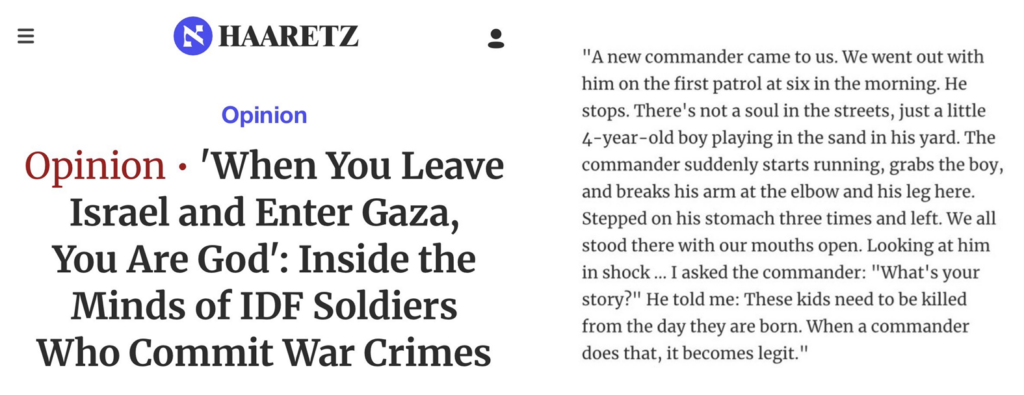
Investigations into the Israeli-run Sde Teiman detention facility have documented similar methods. A 14-year-old detainee held at the camp told investigators he was beaten, restrained, and burned with cigarettes during interrogation. That testimony forms part of a wider body of evidence collected by human rights groups indicating that minors are routinely subjected to physical and psychological abuse in Israeli custody.
Data compiled by rights organizations suggests that the majority of detained Palestinian children experience some form of physical violence, including beatings, stress positions, and invasive searches. While such cases typically occur within formal detention settings, the methods described in the Karim case closely mirror those previously documented.
More broadly, the use of coercion to extract confessions, sometimes involving pressure on family members, has also been reported in multiple investigations. In this context, the alleged torture of a child in front of his father, while extreme, follows a recognizable logic of psychological intimidation.
Inside Israel’s Detention System
Mounting evidence from journalists, medical professionals, and even Israeli whistleblowers has painted a deeply troubling picture of detention conditions since October 2023.
Reports from the Sde Teiman facility describe prisoners held in cages, blindfolded and shackled for extended periods, with limited access to food, water, or medical care. Whistleblowers have alleged routine beatings and neglect, while independent reporting has documented severe injuries among detainees, including broken ribs, punctured lungs, and trauma consistent with sexual assault.
In one widely reported case, a detainee was hospitalized with life-threatening internal injuries after alleged abuse by guards. The case drew international attention not only because of its severity but because video evidence emerged, one of the rare instances in which alleged abuse was partially captured on camera.
Human rights organizations, including Israeli groups, have described the system as one of “institutionalized abuse,” while the Office of the United Nations High Commissioner for Human Rights has warned of “widespread and systematic” torture.
A System Under Legal Scrutiny
The allegations come as Israel faces mounting legal pressure on the international stage.
A recent report by Francesca Albanese concludes that torture has become an integral component of Israel’s system of control over Palestinians. Drawing on hundreds of testimonies, the report documents a range of abuses including electrocution, sexual violence, sleep deprivation, and the use of dogs.
The report goes further, suggesting that these practices may meet the threshold for genocide under international law, a claim that echoes arguments made in the ongoing case at the International Court of Justice, where South Africa has accused Israel of violating the Genocide Convention.
At the same time, the International Criminal Court has issued arrest warrants for Israeli Prime Minister Benjamin Netanyahu and former Defense Minister Yoav Gallant over alleged war crimes and crimes against humanity, including the use of starvation as a weapon of war.
Outrage and Uncertainty
The Karim Abu Nassar case has been amplified by political figures and advocacy organizations, including U.S. Congresswoman Rashida Tlaib and the Council on American-Islamic Relations, which described the allegations as a “revolting moral outrage” and called for an end to U.S. military aid to Israel.
Yet key questions remain unanswered.
There has been no independent forensic verification of the child’s injuries, no official investigation by international bodies, and no response from Israeli authorities. In a conflict where access is limited and narratives are fiercely contested, establishing definitive facts can take weeks or months, if it happens at all.
A Disturbing Continuum
Whether ultimately confirmed or not, the allegations involving Karim Abu Nassar sit within a broader, well-documented pattern of abuse.
From cigarette burns inflicted on teenage detainees to severe beatings, sexual violence, and deaths in custody, the evidence accumulated over the past two years points to a system in which violence against prisoners is not incidental but recurrent.
What sets this case apart is not the method, but the victim.
If verified, the torture of an 18-month-old child would represent a profound escalation, pushing an already alarming pattern of abuse into territory that even seasoned investigators and observers would struggle to comprehend.
For now, the case remains an allegation. But in the context of mounting evidence, it is one that demands urgent scrutiny.
Jewish-US orthopedic surgeon Mark Perlmutter, who worked in Gaza, recounted that Israeli soldiers took two Palestinian children, tied their hands behind their backs, & buried them alive at Nasir hospital… their cries muffled by the dirt poured over them.pic.twitter.com/RfGy5F8raF
— Ragged Trousered Philanderer (@RaggedTP) March 23, 2026