‘The World Thinks Gaza Is Fine Now’: Fundraisers Warn of a Ceasefire That Starved Donations
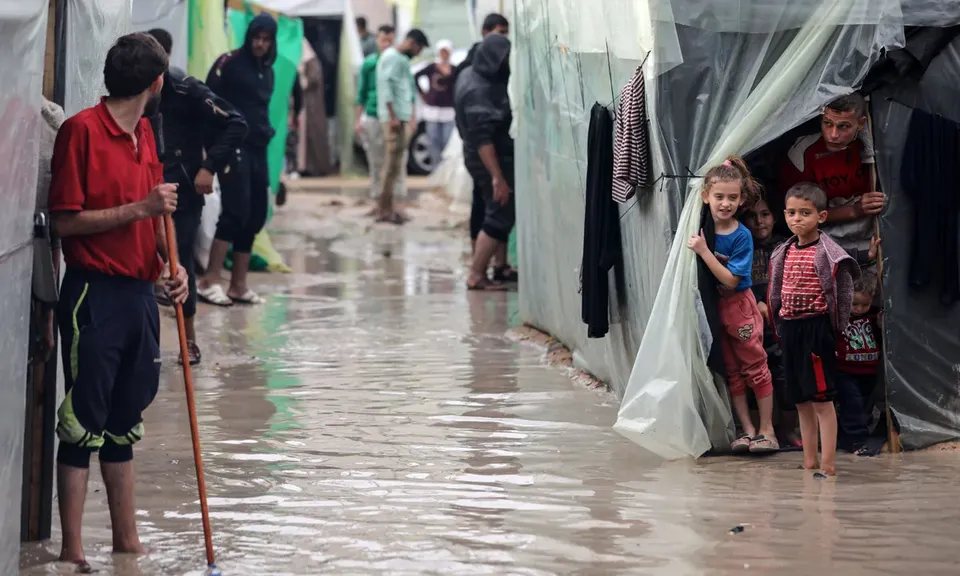
When the rain came to Deir al-Balah, the water went straight through the canvas.
In the crowded plot where ten families shared a cluster of tents, 28-year-old Ahmed al-Deeb watched the floor of his shelter turn to mud and sewage. For months, his extended family of 14 – including a sick two-year-old niece – had survived on a small mutual-aid fund run by strangers abroad.
In September, that fund raised nearly $3,000 – enough to cover the $300 in tent “rent” demanded by a local landlord and still buy lentils, pasta and medicine. In October, after a ceasefire took effect in Gaza, the donations collapsed to about $300. By mid-November, barely $150 had arrived.
“I cannot even start describing to you how bad it is,” Deeb said. If he can’t find $400 for a bomb-damaged flat in Gaza City this month, the landlord will throw the family out. “If I don’t pay, the landlord will evict me.”
Deeb’s story is being repeated across the Gaza Strip, where fundraisers say a ceasefire has not ended the crisis – only the urgency with which much of the world sees it.
A ‘catastrophic’ drop in giving
Fundraisers collecting for Palestinian civilians report a dramatic fall in small donations since the ceasefire.
Megan Hall, an organiser based in Australia, runs 95 mutual-aid campaigns across social media – each linked to specific families inside Gaza. Since early 2024, she has raised more than $200,000, sending money for food, medicine and rent directly to displaced Palestinians. During the height of Israel’s bombardment, she could reliably send around $5,000 a week.
In October, across all 95 campaigns combined, she raised just over $2,000.
“The drop in donations is catastrophic,” Hall said. “It feels like with the so-called ‘ceasefire’ the world thinks Palestinians don’t need our help any more.”
Other small organisers have seen similar declines across dozens of campaigns.
Larger humanitarian operations have noticed the same pattern. Gaza Soup Kitchen – a grassroots group that feeds about 10,000 people daily – recorded a 51% drop in donations from September to October. Oxfam has also reported a decline, while Save the Children UK says income from its social-media fundraising for Gaza is down by roughly a third.
The needs, however, are rising.
Ceasefire in name, not in reality
For many donors abroad, the ceasefire announced in October signalled a turning point: a halt to the daily images of fireballs over Gaza City and a slowdown in media coverage. Some appear to have concluded the emergency is over.
Inside Gaza, the picture is entirely different.
Humanitarian assessments show that more than 70% of Gaza’s population – nearly 1.9 million people – are now confined to areas exposed to rain, strong winds and coastal storms, with little functioning infrastructure.
The UN estimates that around 2,000 tonnes of food should be entering Gaza every day. Current deliveries remain far below that target, with only a portion of border crossings open and strict limitations on the flow of supplies. Aid agencies describe the trickle as “a drop in the ocean” compared with the devastation left by two years of attacks.
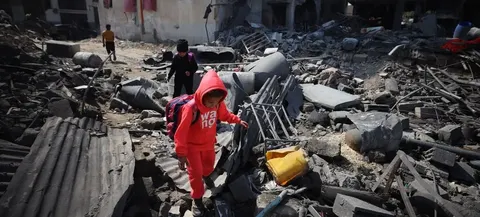
Officials say that while bombing has slowed, life on the ground remains “almost unlivable.” Most of Gaza is in ruins; sewage plants, hospitals, homes and schools are either destroyed or operating at minimal capacity. Families are trapped in rubble-strewn neighborhoods, surrounded by unexploded ordnance, unable to rebuild or relocate.
Even during the ceasefire period, Israeli airstrikes have continued, killing dozens in some incidents. For civilians, the sense of safety promised by the ceasefire has never materialised.
Winter storms in a strip of tents
The timing of the donation collapse could not be worse.
The 2025–26 winter is expected to bring heavy rainfall, strong winds and coastal storm surges to a territory where housing, sewage systems and electricity grids have been destroyed. Recent storms have already flooded tent settlements in Gaza City and the central region, displacing families yet again.
Aid workers describe children “sleeping on bare ground” in clothes soaked with sewage water after tents were inundated. Flooded latrines, contaminated drinking water and lack of warm clothing have created perfect conditions for outbreaks of illness.
For Deeb’s family, some food has become available in markets, but prices remain high and choices limited. They survive mostly on lentils and pasta. They have not received formal humanitarian aid in eight months; their only support comes from the shrinking stream of mutual-aid transfers from abroad.
“Mutual aid has kept people alive for two years,” Hall said. “Now going into winter, and having been displaced so many times, many don’t even have winter clothing or blankets.”
Aid at the border: money raised, help denied
Even when fundraisers succeed in gathering money, getting help into Gaza remains extremely difficult.
In the early weeks of the ceasefire, dozens of shipments of food, water, medical supplies and shelter materials were denied entry. Some $50 million worth of humanitarian aid was left stuck at crossings or in warehouses, according to NGOs. Many rejections cited bureaucratic “unauthorised” status or restrictions imposed by Israeli authorities.
Although Israel agreed to allow 600 aid trucks per day into Gaza under the ceasefire, the actual number entering has often been closer to one hundred. Aid groups say that the gap between promised and delivered assistance has forced families to rely even more heavily on informal mutual-aid networks – the same networks now suffering a collapse in funding.
Earlier this year, Israeli leaders ordered further reductions in certain aid flows even as famine warnings intensified. At that time, nearly a million Palestinians were already facing severe food insecurity, with more than 70% of Gaza’s buildings damaged and sewage overflowing into streets.
Humanitarian agencies say these restrictions amount to the deliberate obstruction of life-saving supplies – an act they argue breaches international humanitarian law.
Mutual aid under siege
Against this backdrop, small mutual-aid funds have become a lifeline – but also a target of systemic pressures.
Organisers abroad have described a constant struggle against black-market inflation, exploitative brokers who demand high fees to convert digital money into cash, and the physical risks faced by their contacts on the ground. Some merchants inflate prices to unaffordable levels during shortages, knowing desperate families have no alternative.
Earlier in the year, campaign organisers accused major fundraising platforms of freezing or blocking funds raised for Gaza. Meanwhile, digital rights groups have documented what they say is widespread algorithmic suppression of pro-Palestinian content across social media – from content takedowns to dramatic reductions in visibility.
For fundraisers, this means their campaigns are often hidden from new audiences, trapped inside the same small circles of activists who are themselves running out of money.
Donor fatigue and the cost-of-living squeeze
Fundraisers insist that politics, censorship and platform bias only explain part of the decline. After two years of constant footage of bombardment, many small donors are simply exhausted.
Hall says she and other volunteers have spent down their own savings and taken desperate steps to keep families afloat. “I’ve been selling my furniture to pay one family’s rent,” she said.
In the UK and across Europe, a prolonged cost-of-living crisis – rising rents, energy prices, food costs and interest rates – has left working-class households with little left to give. In the US, government shutdowns and payment delays have added further financial strain.
Large NGOs often have access to wealthy donors and institutional grants. Mutual-aid operations, however, rely almost entirely on small contributions from ordinary people – and are far more vulnerable to economic downturns.
Save the Children UK says that when media coverage decreases, social-media fundraising becomes far less cost-effective. Once marketing campaigns fail to break even, charities scale them back – creating a self-reinforcing cycle in which less coverage leads to fewer donations and fewer donations reduce visibility even further.
‘Between life and death’
For people in Gaza, the financial calculations unfolding in London, Sydney or Chicago feel painfully distant.
Locals describe winter in Gaza as “a cruel test,” where families live in roofless apartments, tents or the shells of destroyed buildings. Children fall asleep in damp clothes, surrounded by rubble. Water is scarce. Electricity is unavailable. Disease spreads quickly.
Save the Children has described many families as “between life and death” even a month after the ceasefire, trapped in uninhabitable neighbourhoods and unable to move due to constant shortages, flood damage and unexploded munitions.
Deeb’s family made the agonising decision to leave the tent settlement in Deir al-Balah and return to Gaza City, hoping to find a damaged but solid room to keep out the winter wind. They have found one. What they have not found is the $400 a month demanded by the landlord.
If the mutual-aid fund continues to shrink, Deeb says, his family will be back on the street – or in a tent that may not survive the next storm.
A crisis at risk of being forgotten
From afar, Gaza since October can look like a story winding down: a ceasefire, a lull in headline coverage, political negotiations taking centre stage.
Inside Gaza, aid workers and families describe a second phase of catastrophe: a territory where bombs have been replaced by hunger, disease and freezing rain; where infrastructure is shattered; where shelters are collapsing; and where the world appears to have stopped looking.
“The world thinks Palestinians don’t need help any more,” Hall said. “But for the families we support, this is the hardest part.”
Whether the world listens now may determine not only how many Gazans survive this winter, but how long the fragile ceasefire itself can hold in a strip where desperation rises as fast as the floodwaters.