The Cameras Are Coming: Israel’s Information War Collides With the Ruins of Gaza After Five to 13 Hiroshimas
Two years after the 7 October 2023 attacks, the Gaza Strip has become one of the most heavily bombarded territories in modern history. Open-source conflict monitors, humanitarian organisations, and satellite-analysis teams all indicate that Israel’s military campaign has deployed an extraordinary volume of explosive force across a densely populated civilian area under siege, with humanitarian consequences now visible from orbit. For the first time since late October 2025, international journalists are preparing to enter Gaza. Israel — acutely aware of what those cameras may capture — is scrambling to choreograph the encounter.
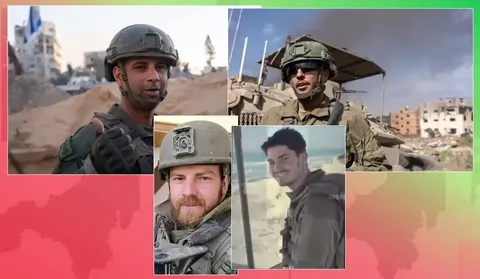
According to reporting in Yediot Ahronot on 28 October 2025, officers convened to discuss how to handle foreign media access. The plan includes distributing “informational materials,” escorting reporters along controlled routes, and pairing them with influencers and “experts” to explain why entire districts were flattened. Officials have been rehearsing arguments since late 2023: the block was a tunnel network; the home belonged to a “terrorist family”; children pulled from rubble were “Hamas children.”
The underlying message is clear: the devastation is self-inflicted.
Yet scale defies narrative.
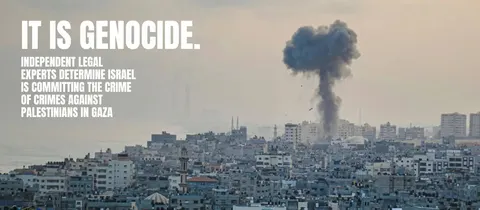
A bombardment measured in Hiroshimas
Independent munitions researchers estimate that between 70,000 and 200,000 tonnes of explosive ordnance have been dropped, fired, or detonated in Gaza between October 2023 and September 2025. For perspective, the atomic bomb dropped on Hiroshima on 6 August 1945 had a blast-yield equivalent of roughly 15,000 tonnes of TNT.
Even conservative estimates translate to five Hiroshima-equivalents. The upper range approaches thirteen.
Military analysts emphasise that the comparison refers strictly to blast energy, not nuclear radiation. But applied across 365 km², the analogy conveys a brutal truth: this was not merely urban combat — it was systematic pulverisation.
Districts erased, not damaged
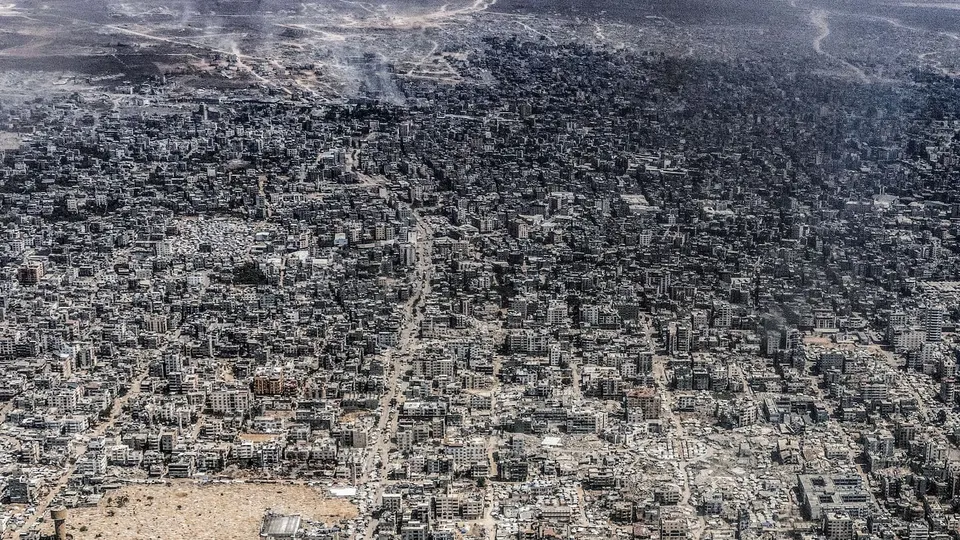
Satellite damage mapping by UNOSAT released 12 February 2024, and updated again in April 2025, found that around 66–70% of structures in Gaza are damaged or destroyed. Entire neighbourhoods in Gaza City, Jabalia, Khan Younis, and the north have been reduced to rubble.
De-mining experts warn it could take over a decade merely to make the terrain safe enough to begin rebuilding. Unexploded munitions embedded in collapsed concrete pose generational risks. UN food-security monitors report that 95% of agricultural land is now unusable due to cratering, bulldozing, or contamination.
Urban-planning scholars note that no modern conflict has paired such explosive density with such confinement. Comparisons with Aleppo, Mosul, or Sana’a fail not because they were less destructive — but because their scale diffused over vast geography.
Casualties buried beneath rubble — literally
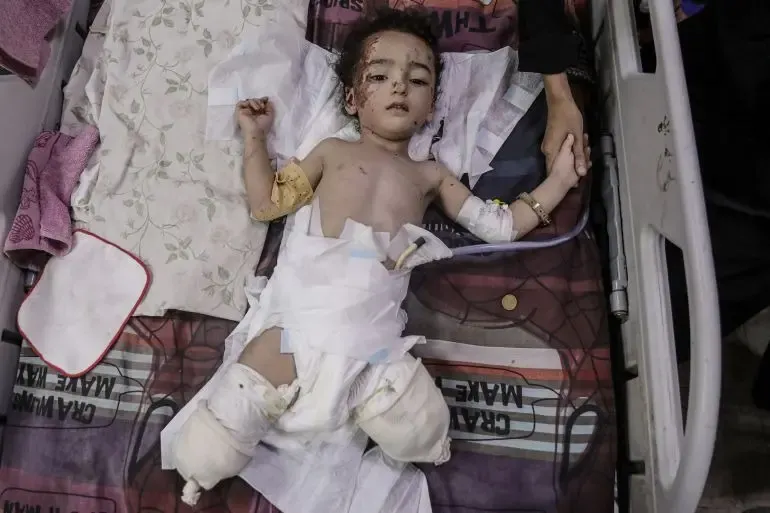
By October 2025, casualty tallies reported by Gaza’s Ministry of Health — historically consistent with U.N. and U.S. intelligence reviews — exceeded 60,000 fatalities and 145,000 injured. Thousands more remain missing under collapsed buildings. Civil defence teams estimated 10,000 bodies trapped beneath rubble by March 2024; by Autumn 2025, that estimate had doubled.
International medical teams stress that indirect deaths — untreated infections, dehydration, chronic illness, exposure — are not counted. Nor are infants who starved as formula dried up and fuel to boil water was cut.
The scars are not just physical. They are genealogical.
A population displaced without refuge
By December 2023, more than 1.9 million people — roughly 90% of Gaza’s population — had been displaced, many multiple times as bombardment patterns shifted. UN rapporteurs described this in January 2024 as “forced mass displacement without refuge.”
Evacuation orders pushed civilians from one district to the next, only for those districts to be bombed days later. People followed arrows on leaflets, only to find nothing on the other side of the blast crater.
Sealed by land, sea, and law
Gaza was already isolated under a blockade since 2007. But on 9 October 2023, Israel’s defence minister announced a “complete siege”: “No electricity, no food, no fuel.” Rafah, on Gaza’s southern border with Egypt, was frequently closed and heavily restricted throughout late 2023 and 2024. The western coast remained under naval enforcement.
Under international humanitarian law, siege starvation of civilians is prohibited. So is indiscriminate bombardment. So is the denial of escape routes.
Israel did all three simultaneously, then argued legality through leaflets and phone calls.
The targeting and silencing of journalism
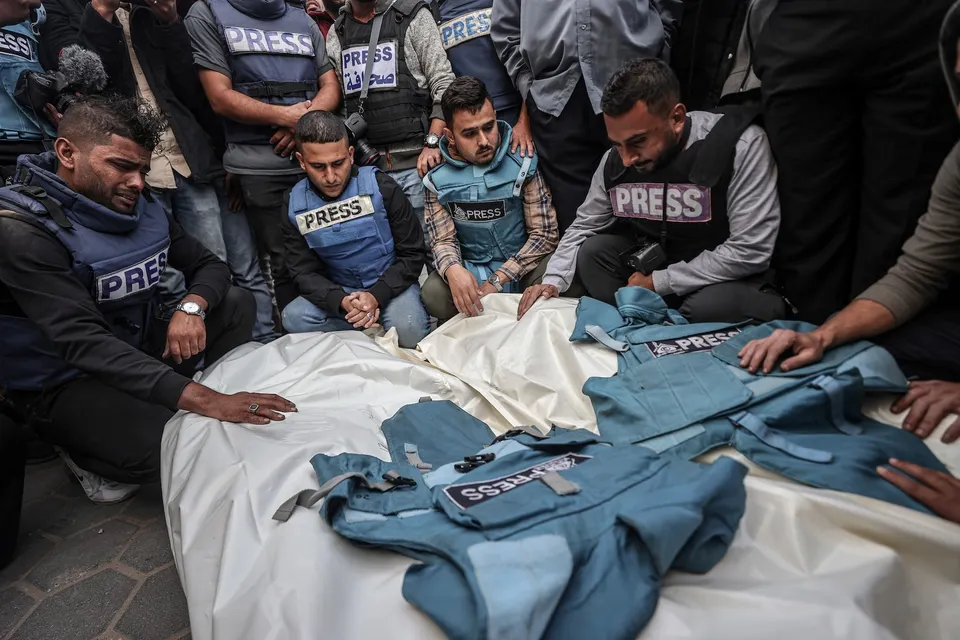
Between 7 October 2023 and October 2025, more than 170 Palestinian journalists and media workers were killed — the deadliest conflict on record for the press. On 15 November 2023, correspondents marked “PRESS” were killed in southern Gaza. On 7 January 2024, an airstrike killed journalist Hamza al-Dahdouh, broadcasting hours earlier from a civilian zone. On 10 January 2024, journalist Mustafa Thuraya died after publicly disclosing coordinates to avoid targeting.
In the occupied West Bank, journalists were shot at on 22 October 2023, 9 February 2024, and 6 July 2025, equipment seized, and crews detained during raids in Jenin, Tulkarem, and Nablus.
UNESCO called Gaza a “killing field” for journalists. The International Federation of Journalists referred evidence of targeted strikes to the International Criminal Court in late 2024.
Under the Geneva Conventions, journalists are civilians.
Suppressing the aerial view
In March–April 2024, reporters flying on humanitarian airdrop missions — flights Israel was not aboard — filmed Gaza’s destruction from above. Israeli officials contacted broadcasters requesting that the footage not air.
On 6 April 2024, Britain’s Channel 4 News aired it anyway.
Thousands of contiguous buildings were gone. Streets had no corners. What remained looked not damaged, but negated.
Why tunnels became the excuse
Israeli officials responded to criticism throughout late 2023 by pointing to tunnels. But on 22 November 2023, former prime minister Ehud Barak acknowledged that Israel had constructed some of the original subterranean infrastructure decades earlier.
Moreover, Israel spent years blocking the entry of concrete, rebar, and heavy equipment — then blamed Gaza for not building civilian bomb shelters.
You cannot ban the material required to protect children, then frame their deaths as negligence.
Democracy by emergency decree
On 1 April 2024, the Knesset passed the Foreign Broadcaster Restriction Law — widely dubbed the “Al Jazeera Law.” Within 48 hours, Al Jazeera’s Jerusalem bureau was raided. Equipment was seized. Broadcasts blocked.
The ban was extended in June 2024. Renewed in January 2025. Proposed for permanence in September 2025.
Emergency, repeated long enough, becomes constitution.
Allies chosen in panic
In early 2024, British anti-Muslim agitator Tommy Robinson — who emerged from fascist hooliganism — was hosted on a hasbara tour by the Ministry of Diaspora Affairs. Photos circulated in February 2024, sparking disbelief across European pressrooms. This was not a PR blunder. It was an identity reveal.
Israel cannot claim liberal democracy while selecting allies who menace Muslims on London pavements.
An identity crisis on camera
The generational impact is permanent. Young people online saw shredded children on their screens every morning for months. They archived the images. They stitched them into timelines. They live-translated survivors’ screams.
Even if TikTok vanishes, the memory cannot.
Ben-Gurion was wrong. The young do not forget.
Now the cameras arrive
In late October 2025, Israel’s High Court gave the government 30 days to justify why foreign press access should remain blocked. That deadline expires in late November.
Hence the sudden panic:
pamphlets, escorted tours, influencer briefings, maps pointing to alleged tunnel shafts.
But rubble is not rhetorical. Smell is not rhetorical. Absence is not rhetorical.
When journalists step onto Gaza’s crushed districts in November–December 2025, they will witness:
• debris that hides entire families
• weeds growing through collapsed towers
• children’s bedrooms ossified into ruin
• a silence that smells of decomposition
No talking points can survive proximity.
The PR war is over — permanently
Israel lost the moral narrative in December 2023, when families livestreamed their deaths.
It lost again in April 2024, when Rafah burned days after the ICJ ordered restraint.
It lost again in August 2024, when videos of skeletal infants surfaced.
It lost again in January 2025, when censorship powers were renewed.
A state cannot bomb the credibility of its witness and claim innocence.
A future measured in decades
The World Bank’s October 2025 damages estimate exceeds $50 billion for physical reconstruction alone. That does not cover prosthetics, orphan care, trauma therapy, groundwater contamination, or lost education. Aid agencies warn that cognitive development for an entire generation may be permanently impaired.
Children who survive will inherit amputated childhoods.
After erasure, evidence
Gaza did not experience a single atomic detonation. But measured in aggregate explosive energy across one of the most densely populated places on Earth, the comparison reveals something essential:
This is among the most intense bombardments ever inflicted on a civilian population in the 21st century.
Two years on, its physical scars are visible from space. The human scars — psychological, familial, cultural — will take longer to detect, and longer still to heal.
Now the cameras are coming.
History follows with them.
And history is not interested in pamphlets.
It is interested in evidence.