AP and Reuters Journalists Killed in Gaza Hospital Strike: Israel’s Denials Collide with Evidence of Systematic Targeting
The strike came without warning, but not without precedent. Shortly after 10 a.m. Gaza time on Monday, a Reuters live broadcast from the roof of Khan Younis’s Nasser Medical Complex suddenly froze. The feed — operated by veteran Reuters cameraman Hussam al-Masri — cut to black just as a suicide drone slammed into the fourth floor of the hospital, killing him instantly.
Minutes later, as journalists and medics rushed to help, a second strike followed — this time from a tank shell — tearing through the stairwell and killing more of those who had come to rescue their colleagues. In the chaos, bloodied press vests and shattered cameras were scattered among the rubble, grim symbols of a media corps that has been systematically targeted since Israel’s war on Gaza began nearly two years ago.
At least 21 people were killed in the attack, including six journalists and several medics, according to Gaza’s Ministry of Health. Among the dead were some of the most familiar faces in Gaza’s press community: Mariam Abu Daqqa, a 33-year-old freelance journalist working for the Associated Press and The Independent Arabic; Reuters cameraman Hussam al-Masri; Mohammed Salama, a photographer with Al Jazeera; Ahmed Abu Aziz, of the Quds Feed Network and Middle East Eye; and Moaz Abu Taha, known for his documentation of Gaza’s worsening hunger crisis. Hours later, in a separate strike in Khan Younis, Palestinian correspondent Hassan Douhan, also an academic, was killed.
The Nasser attack is now counted as one of the most devastating single incidents for international media in Gaza — a turning point that rights groups say exposes a deliberate Israeli policy: the systematic elimination of witnesses.
“Not Anonymous Casualties”
“These were not anonymous casualties — they were accredited reporters working for the world’s leading news agencies,” said Sherif Mansour, Middle East coordinator at the Committee to Protect Journalists (CPJ). “The world must not allow their deaths to be brushed aside as collateral damage.”
Footage captured moments before the second strike shows another Reuters cameraman, badly wounded, screaming as colleagues tried to carry him down the stairs. Emergency crews, visibly marked and operating in daylight, were themselves caught in the blast. One rescuer was killed.
The symbolism was stark: reporters and medics — the two professions internationally protected under the Geneva Conventions — were both cut down in a single strike on one of Gaza’s last partially functioning hospitals.
The Human Stories Behind the Names
For Gaza’s battered press corps, the loss of Mariam Abu Daqqa is especially painful. One of the few women still reporting from the frontlines, she had evacuated her 12-year-old son Gaith to the United Arab Emirates when the war began, hoping to reunite when it was safe. In her final weeks, she focused on documenting child malnutrition and the collapse of Gaza’s healthcare system. “She was a true hero, like all of our Palestinian colleagues in Gaza,” wrote Abby Sewell, an AP editor, after news of her death broke.
Reuters’ al-Masri was known for his meticulous live coverage. His camera lens had become, for many outside Gaza, one of the few windows into the war. His live feed was cut at the moment of impact, turning his final assignment into a chilling testimony of the dangers Palestinian journalists face daily.
For Mohammed Salama, the Al Jazeera cameraman, the tragedy was doubly cruel. He had been planning his wedding with fellow journalist Hala Asfour. The network accused Israel of “a clear intent to bury the truth” by eliminating its staff.
Moaz Abu Taha, remembered tearfully by Nasser’s head of pediatrics, was not known for politics but for his quiet documentation of starvation and malnutrition. “He never talked about politics,” the doctor said. “He was innocent. He only wanted to show the suffering of our children.”
Ahmed Abu Aziz succumbed to his wounds later. He had worked with multiple outlets, including Middle East Eye, covering daily bombings and the worsening humanitarian crisis.
Hospitals as Newsrooms — and Battlefields
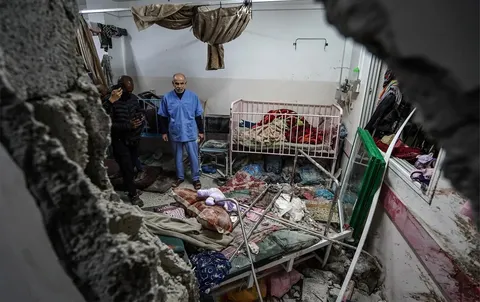
Hospitals in Gaza have long been more than medical centers; they are hubs for journalists desperate for power, internet, and safety. Nasser, Gaza’s largest critical-care provider, was operating at 300 percent over capacity before Monday’s attack.
“Hospitals are legally protected spaces,” said Liz Or, head of humanitarian protection at Medical Aid for Palestinians, who was inside Nasser when the first explosion struck. “We have never seen Hamas operating from these facilities. What we have seen is the deliberate targeting of healthcare staff and, increasingly, journalists.”
Her team rushed to the surgical unit after the blast. “We saw staff covered in blood, people pulled from rubble, the wounded flooding in,” she recalled. “Every day we see the system dismantled — not by accident, but by design. This was another nail in the coffin of Gaza’s health sector.”
Israel’s Familiar Language of Denial
In its official statement, the Israel Defense Forces (IDF) said it “does not target journalists” and blamed Hamas for operating among civilians. Prime Minister Benjamin Netanyahu described the strike as a “tragic mishap” and promised an investigation.
But Israel’s investigations into its own actions rarely yield accountability. Previous inquiries into deadly strikes on hospitals, aid workers, and UN facilities have closed without charges. Rights groups argue the statements amount to ritualized deflection.
“Every time, it’s the same playbook: deny, deflect, blame Hamas,” said Mohamed Elmasry, professor of media studies at the Doha Institute. “If Israel has learned anything over the last 23 months, it’s that it can do whatever it wants without repercussions.”
A Pattern of Targeting
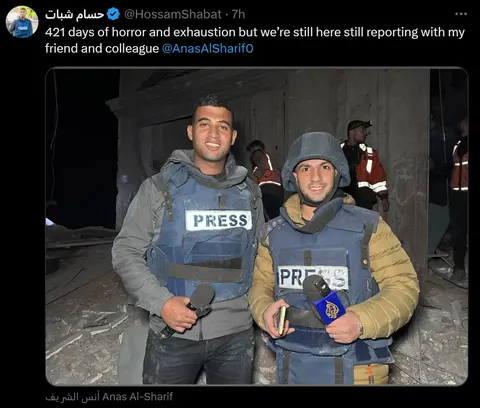
Monday’s killings are not isolated. Eleven days earlier, Israeli forces deliberately struck a tent of journalists outside Al-Shifa Hospital, killing six, including celebrated Al Jazeera correspondent Anas al-Sharif. The IDF later admitted it had been intentional, claiming the reporters were “terrorists in press vests.”
The Hind Rajab Foundation and the Palestinian Center for Human Rights have since filed a detailed communication to the International Criminal Court (ICC), accusing Netanyahu and senior commanders of orchestrating a “war on witnesses.” Their evidence shows a pattern:
- Label journalists, medics, and aid workers as Hamas operatives.
- Smear them publicly to soften international outrage.
- Eliminate them in strikes on clearly marked press or medical positions.
Nasser Hospital fits this template. A first strike on the fourth floor where journalists were known to be based. A second, minutes later, timed to kill rescuers. The result: six reporters silenced, cameras destroyed, the story nearly buried.
The Deadliest War for Journalists in Modern History
According to Al Jazeera’s tally, at least 273 Palestinian journalists have been killed since October 7, 2023. CPJ calls Gaza “the most dangerous place on Earth to be a journalist.” By comparison, fewer than 20 journalists were killed in the entire Iraq War over more than a decade.
“No conflict in modern history has seen a higher number of journalists killed,” Amnesty International said in a recent statement. “The killings at Nasser Hospital show this is not random tragedy — it is systematic silencing.”
Israel’s ban on foreign media entering Gaza makes Palestinian journalists indispensable — and more vulnerable. “We should be in Gaza alongside our colleagues,” one foreign correspondent said from Tel Aviv. “Instead we are forced to rely on their images, even as they are killed at an unprecedented rate.”
Silenced but Not Forgotten
As night fell in Khan Younis, colleagues carried out the last act of solidarity: retrieving the broken cameras of Abu Daqqa and al-Masri from the hospital ruins. Their mission — to bear witness — was cut short. But the fragments of their final broadcasts remain, testifying to the dangers they knew too well.
For their families, the grief is unbearable. For Gaza’s surviving press corps, the lesson is stark: every assignment could be their last.
Israel insists it does not target journalists, medics, or aid workers. But the evidence at Nasser Hospital — as at Al-Shifa and countless other strikes — points to the opposite. Each denial, rights groups say, is followed by another body count, another destroyed newsroom, another hospital in ruins.
“They died carrying out their mission,” Al Jazeera said in its statement. “But their images remain, and so does the truth they gave their lives to record.”st a war machine that claims innocence even as it strikes the very heart of civilian protection.