Sexual Torture of Palestinians Is Systematic, Warns British Surgeon as BMJ Article Sets Out Evidence
Oxford surgeon Nick Maynard describes testimony of genital torture and lasting injuries, as investigations document sexual violence against children, journalists and medical workers — and a persistent failure to hold perpetrators accountable.
The two Palestinian medical workers described the same threat. As their genitals were repeatedly beaten, their captors told them: “This will stop you having any more terrorist children.”
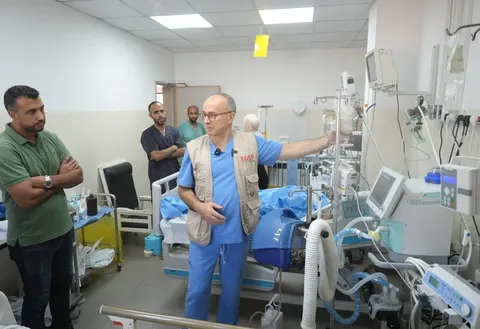
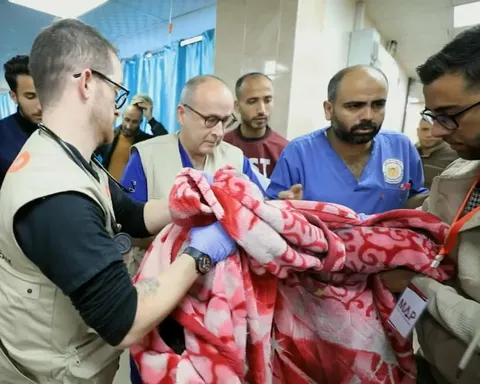
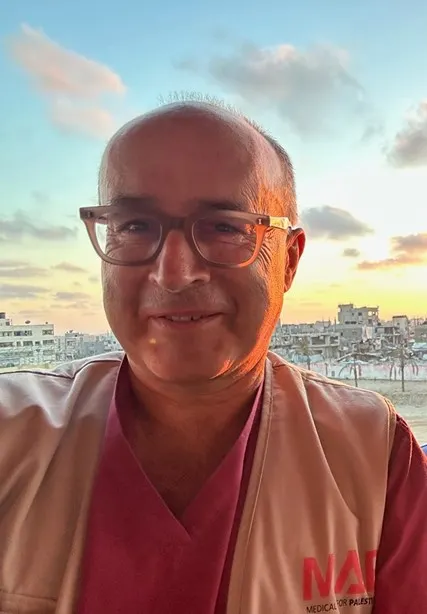
That is the account Oxford surgeon Nick Maynard says he received from a young doctor and a young male nurse detained from hospitals in Gaza in early 2024. Both also described electric shocks to their genitals. For Maynard, their testimony forms part of a much wider pattern of sexual violence against Palestinians that demands investigation, medical intervention and consequences for those responsible.
“It is systematic,” he told journalist Owen Jones. “This is far more than just isolated reports of sexual violence.”
Maynard was discussing a new article in The BMJ, Sexual violence against Palestinians, co-authored with Rubin Minhas, Neve Gordon, Mishal Khan and Gene Feder. Drawing together existing investigations and testimony, it brings renewed attention to abuses whose consequences can continue long after a prisoner is released.
The surgeon, who has worked repeatedly in Gaza and the West Bank, said the evidence extended back decades. He recalled encountering cases in the West Bank in 2006 and 2007, and taking testimony from people he knew in Gaza.
“This shows very clearly a systematic pattern of abuse of Palestinian detainees using sexual violence and affecting women, children, and men,” he said.
His assessment echoes findings published by the UN’s Independent International Commission of Inquiry in March 2025. The commission concluded that forced public stripping, sexual harassment, rape threats and sexual assault had effectively become part of Israeli security forces’ “standard operating procedures” towards Palestinians.
It also found that rape and violence against the genitals had occurred under explicit orders or with implicit encouragement from senior civilian and military leaders. Investigators identified conduct amounting to war crimes and crimes against humanity, and described sexual and gender-based violence as an increasingly used method of war.
Israel rejected the commission’s allegations as unfounded and accused it of pursuing a biased political agenda.
For Maynard, the injuries described in survivor accounts are evidence of both immediate brutality and potentially lifelong harm. He spoke of sexual assaults requiring emergency surgery and the creation of a colostomy, alongside damage to the genitals and urinary system that could permanently affect fertility or the ability to pass urine normally.
Such injuries, he warned, can leave survivors needing reconstructive operations and specialist care, while also living with chronic pain and profound psychological distress. Release from detention does not end those consequences.
Children are among those reporting abuse. Research commissioned by Save the Children surveyed 165 former detainees who had been aged between 12 and 17 when detained. All the children directly consulted were from the West Bank, including East Jerusalem.
More than half said they had witnessed or experienced sexual violence in detention. Their accounts included sexual assault, threats of rape and other forms of sexualised humiliation. The finding covers both witnessing and experiencing abuse; it is not a measure of how many children were raped.
The same research found that 20 per cent reported intentional self-harm and 45 per cent had not returned to school after release. Children described nightmares, panic attacks, withdrawal and a persistent fear of being detained again. These figures concern the surveyed group, rather than every Palestinian child held in Israeli custody.
Maynard warned that survivors’ needs were being compounded by the lack of accessible treatment, particularly in Gaza. People suffering serious physical injuries may also need sustained psychological and psychiatric support, yet the services capable of providing it are severely constrained.
“The availability of psychological support, psychiatric support to try and help these people is enormously limited at the moment,” he said.
Journalists have described similar treatment. In a report published in February 2026, the Committee to Protect Journalists interviewed 59 Palestinian journalists released from Israeli detention between October 2023 and January 2026. Seventeen gave accounts involving sexual violence, including two who described rape.
CPJ said it could not independently verify every allegation, but found striking similarities across the accounts and consistency with other human rights investigations. It also documented threats of re-arrest or death if journalists spoke publicly — a further obstacle to establishing the full extent of abuse.
Maynard believes sexual violence also serves a wider purpose: humiliating Palestinians and making life in their communities intolerable.
“They want to humiliate these people,” he said. “They want to drive them out so they actually want to leave these territories.” He described this as part of what he considers a longstanding policy of ethnic cleansing.
Research published in April 2026 by the West Bank Protection Consortium, led by the Norwegian Refugee Council, documented the relationship between sexualised violence and displacement. More than 70 per cent of displaced households interviewed identified threats against women and children, particularly sexualised violence, as decisive in their decision to flee.
The researchers stressed that their findings illustrated recurring patterns in high-risk communities, rather than statistically representative trends across the West Bank.
“Sexual violence is not incidental to this crisis. It is one of the mechanisms driving people from their land,” said Allegra Pacheco, the consortium’s chief of party.
The report described families separating to protect women and children, girls being withdrawn from education and early marriages arranged in response to danger. It also documented incidents in which Israeli forces were present but failed to stop the abuse.
Maynard’s interview addressed sexualised humiliation directed at women and girls, including allegations of forced undressing, unwanted touching, threats of rape and threats to circulate degrading images. He warned that the consequences reached beyond individual survivors, shaping family decisions and deepening fear throughout communities.
Stigma, intimidation and fear of reprisals also make sexual violence difficult to document. Maynard described it as “grossly under-reported”, arguing that the evidence already available was unlikely to capture its full extent.
The fate of medical workers illustrates the difficulty of securing answers. Dr Adnan al-Bursh, an orthopaedic surgeon at Gaza’s al-Shifa hospital, died in Israeli custody in April 2024 after being detained from al-Awda hospital the previous December.
A Sky News investigation published in November 2024 reported a witness account that he arrived at Ofer prison badly injured, naked from the waist down and unable to stand. The witness said he died shortly afterwards. The report did not establish a definitive medical cause of death.
The Israel Prison Service told Sky it was unaware of the alleged events and maintained that prisoners’ rights were upheld. The account nevertheless raised grave questions about what happened to a surgeon whose colleagues described him as healthy before detention.
The broader record of accountability offers little reassurance. Israeli human rights organisation Yesh Din analysed military figures covering 2017 to 2021, before the current Gaza war. Of 1,260 cases of alleged offences against Palestinians brought to the military’s attention, 248 led to criminal investigations and just 11 resulted in indictments — approximately 0.87 per cent of the original total.
Those figures cover alleged offences against Palestinians generally, not sexual violence alone. They measure indictments, not convictions. They nevertheless show how rarely complaints reached prosecution even before the subsequent escalation in reported abuse.
The Sde Teiman case has become a particularly stark test of accountability. Five reservists were indicted in February 2025 over the alleged severe abuse of a Palestinian detainee. Their indictment was withdrawn in March 2026.
The Israeli military cited evidentiary difficulties, procedural problems and concerns about the defendants’ right to a fair trial, including the unauthorised release of investigative material. Its own account acknowledged that the original arrests had prompted protests and mass breaches of the Sde Teiman and Beit Lid military bases.
Amnesty International condemned the withdrawal as further evidence of impunity and called for international justice. It said that, as of March 2026, only one Israeli soldier had been sentenced for torturing a Palestinian detainee since October 2023, despite extensive reports of abuse.
“They know that they are able to act with impunity,” Maynard said, accusing Western governments of failing to confront the conduct he described.
Independent access remains central to his demands. In September 2026, the International Committee of the Red Cross reported that a team had toured parts of an Israeli military detention facility and held discussions with officials — but had neither met nor had direct contact with any detainees.
The ICRC said it had been unable to access detainees in Israeli facilities since October 2023. A visit to buildings, without access to the people held inside, did not restore its ability to monitor their treatment.
The UN commission has also reported being denied access to Israel and the occupied Palestinian territory. Maynard argued that documenting violations without securing access, investigations or sanctions left detainees exposed to further harm.
He cited concerns about Dr Hussam Abu Safiya, director of Kamal Adwan hospital, saying that relatives with whom he was in contact and the doctor’s lawyers had described repeated beatings and denial of medical care.
Maynard also criticised what he regarded as inadequate attention from mainstream Western media. There has been significant reporting, including Sky’s investigation into al-Bursh’s death, but he argued that medical workers and survivors still struggled to obtain sustained attention for their evidence.
“A lot of the medical humanitarian atrocities that I’ve described and many other healthcare workers have described have simply not been reported in the media,” he said.
His demands of Britain are concrete: independent monitoring of detention facilities; effective investigations; protection for Palestinians facing settler violence; and specialist medical care for survivors, including urological, gynaecological and mental health treatment.
He also called for sanctions against those responsible and an end to arms transfers or security cooperation that could contribute to the abuses.
For the doctor and nurse whose accounts he heard, the violence was accompanied by an explicit threat against their ability to have children. For other survivors, its consequences include lasting disability, disrupted education, displacement and fear. Maynard’s argument is that governments have already been given enough evidence to demand protection and accountability.
“We need to see some concrete actions,” he said, “and we need to see them rapidly.”
Sources and attribution
Nick Maynard’s quotations and accounts are drawn from the supplied transcript of his interview with Owen Jones. Speech disfluencies have been removed without changing meaning. Additional reporting and factual checks draw on the sources below.
- The BMJ: Sexual violence against Palestinians, Rubin Minhas, Neve Gordon, Mishal Khan, Nick Maynard and Gene Feder, 2026;395:e101118.
- UN Commission of Inquiry press conference and findings on sexual and gender-based violence, 13 March 2025, including Israel’s response.
- Save the Children: The escalating abuse of Palestinian children in Israeli military detention.
- Committee to Protect Journalists: We returned from hell, 19 February 2026.
- Norwegian Refugee Council: Sexualised violence drives Palestinian displacement, 20 April 2026.
- Sky News: Investigation into the death of Dr Adnan al-Bursh, John Sparks, 14 November 2024.
- Yesh Din: Law enforcement against Israeli soldiers, figures for 2017–2021, 21 December 2022.
- Israeli military: Explanation of the decision to withdraw the Sde Teiman indictment, 1 April 2026.
- Amnesty International: Response to the withdrawal of the Sde Teiman charges, 13 March 2026, updated 14 March.
- ICRC: Detention-facility visit did not include contact with detainees, 9 September 2026.