Gaza’s Genocide: The Farce of Letting Israel Mark Its Own Homework While UN Investigators Are Kept Out
Hundreds of promised military inquiries have no identifiable public outcome. Meanwhile, foreign journalists remain barred from independent entry, UN investigators’ requests go unanswered, and even Israel’s allies are condemning decisions to close cases without criminal investigation.
When Nahida Anton and her daughter Samar were killed in the grounds of Gaza’s Holy Family church in December 2023, the Israeli military promised to review what had happened. In September 2025, the case was still being examined. Now, almost three years after their deaths, the answer remains the same: under review.
The two women’s deaths are among 254 incidents in which the military said it was investigating allegations of killing or injuring people, but for which a new examination could find no published outcome on its website. Of 300 incidents identified, only 28 had publicly identifiable conclusions; the status of another 18 was unclear.
That leaves almost 85 per cent of the sample without a public outcome. The cases span Gaza, the occupied West Bank, Lebanon, Israel and military detention, between 7 October 2023 and 19 August 2026. More than 200 of the 254 involved at least one reported death.
The findings do not establish that every unpublished inquiry has stopped, or that every incident constituted a crime. They establish something more specific: the public cannot see how hundreds of promises to investigate have been resolved. Nor are all these proceedings criminal investigations. An operational review, a preliminary assessment and a criminal inquiry are different processes, with different purposes and consequences.
That distinction becomes politically decisive when the existence of an internal process is offered as reassurance that accountability is being delivered. The institution whose conduct is in question controls much of the evidence, the timetable and the information released about its conclusions. Meanwhile, the people who could independently test its account face barriers to reaching the scene.
Israel was explicitly ordered to facilitate outside investigation. On 24 May 2024, the International Court of Justice directed it to take effective measures ensuring “unimpeded access” to Gaza for commissions, fact-finding missions and other bodies mandated by the United Nations to investigate allegations of genocide. The court reiterated that its provisional-measures orders create binding legal obligations.
Yet the UN commission’s June 2026 report recorded 13 requests for information or access sent to Israel since 7 October 2023. It reported receiving no responses from the Israeli government. An international body tasked with examining alleged atrocities was left pursuing evidence without the cooperation it repeatedly sought from the state under investigation.
The restrictions extend to the press. In a statement published on 7 October and updated on 9 October 2026, the International Federation of Journalists said Israel continued to deny foreign reporters independent access to Gaza. Palestinian journalists have continued reporting from inside the territory, often at immense personal cost. Their work makes the destruction visible; the exclusion of foreign colleagues prevents additional reporting and independent examination on the ground.
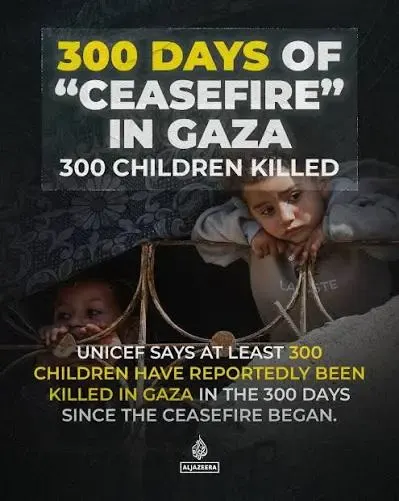
The genocide finding is also more substantial than a political slogan. On 23 June 2026, the UN Independent International Commission of Inquiry reaffirmed its assessment that Israel was committing genocide, drawing on evidence of the deliberate targeting of Palestinian children and conduct continuing after the October 2025 ceasefire. Israel disputes the findings and has attacked the commission’s impartiality and methods. The commission’s assessment is distinct from a final judgment by the ICJ, whose separate genocide case remains unresolved.
This is the setting in which Israel’s insistence on investigating itself must be judged: serious findings by an international investigative body, a binding order requiring access, unanswered requests for cooperation, and hundreds of military inquiries without publicly identifiable conclusions.
The church case shows what those abstractions mean for individual families. The Latin Patriarchate of Jerusalem said Nahida and Samar Anton were killed by sniper fire inside the church compound. Israel initially said its forces had been operating against a Hamas threat in the area and promised a thorough review. Almost three years later, the military says complex incidents take time to establish and verify.
Another unresolved case concerns the August 2024 strike on the al-Tabaeen school complex in Gaza City, where displaced Palestinians had sought shelter. Gaza’s civil defence agency reported at least 93 people killed, including six women and 11 children. Israel said it had struck a Hamas command centre and killed 31 fighters, disputing the reported casualty toll. The military says the incident remains under review.
Even when a public decision finally arrives, it may leave the central demand for accountability unanswered. On 19 August 2026, military prosecutors announced that they would not open a criminal investigation into the April 2024 strikes that killed seven World Central Kitchen workers.
The military acknowledged serious failures but said commanders mistakenly believed the vehicles carried Hamas operatives and that the circumstances did not establish reasonable suspicion of criminal misconduct. Two officers had been removed from their posts and three reprimanded.
World Central Kitchen rejected that account. It said Israel knew its team’s identities, movements and activities, and that the workers were unarmed and travelling in clearly marked humanitarian vehicles. “The military investigation conflates different timelines and events, muddies the story and shifts the blame for the IDF’s illegal conduct,” the organisation said. It continued to demand an independent commission.
Britain, Australia and Canada then delivered an unusually blunt response. In a joint statement on 21 August, the three governments called the refusal to pursue criminal investigations “shameful”. They had spent more than two years pressing for answers. Announcing the decision on World Humanitarian Day compounded the offence. “This decision is both too little, and too late,” they said.
The same military announcement declined criminal investigations into two attacks involving Médecins Sans Frontières: a November 2023 convoy attack in Gaza City and a February 2024 strike on a shelter in Khan Younis.
Four people were killed across those incidents. MSF identifies them as staff family members; one of those killed in the convoy, Alaa Al Shawa, also volunteered with its medical teams. Those killed at the shelter were an employee’s wife and daughter-in-law.
MSF said the decisions came nearly two years after it submitted its requests, and after it had challenged the lack of an answer in Israel’s High Court. “This is not justice,” it said. The organisation called for an impartial investigative body and rejected the proposition that another internal military review could provide the accountability its colleagues and their families were owed.
There have been criminal referrals. The August announcement opened inquiries into the incident involving Hind Rajab, her relatives and the ambulance sent to rescue her, and into the March 2025 killing of 15 Palestinian emergency and aid workers near Rafah. The latter decision came roughly 17 months after the killings. The military said the firing raised reasonable suspicion of criminal misconduct.
Those decisions matter, but opening an inquiry is a beginning. It does not establish what investigators will find, whether charges will follow or whether anyone will be convicted. The 15 people killed near Rafah were not all Red Crescent personnel; the victims included other emergency workers and a UN employee.
The delay problem also predates the present campaign. A July 2024 study examined the military’s handling of incidents from the 2014 Gaza war, the Great March of Return protests and the May 2021 fighting. At least 664 incidents had been referred to its fact-finding mechanism; 542 were closed without a criminal investigation. Only one investigation emerging from that mechanism produced an indictment. Two further indictments arose from investigations opened without passing through it. Some incidents referred in 2014 were still being reviewed in 2022.
A separate report published in December 2025 recorded 2,427 complaints about soldiers’ offences against Palestinians during 2016–2024, with 552 criminal investigations and 23 indictments: 0.9 per cent of complaints. Its examination of West Bank cases in which the organisation represented Palestinians found that deciding whether to investigate took an average of 213 days. In fatal cases not investigated immediately, the average was 304 days. These are different datasets from the new 300-incident sample, but they document a longer history of delay and limited prosecution.
Dan Owen, a researcher at the Israeli human rights organisation Yesh Din, describes delay as part of the problem itself. “They try to stretch out these processes to the point where people forget and people don’t care about them,” he said.
Journalists’ families face the same uncertainty. On 13 October 2026, Reuters marked three years since Israeli tank fire killed its journalist Issam Abdallah in southern Lebanon and wounded six other reporters. Editor-in-chief Alessandra Galloni said: “the only update we have received from the IDF is that the incident is still under review.” She also said questions remained unanswered about Reuters journalist Hussam al-Masri’s death in the August 2025 strikes on Nasser Hospital.
Israel says it takes allegations of unlawful conduct seriously. It argues that combat conditions complicate evidence collection, that security and privacy can limit disclosure, and that disciplinary action has been taken in dozens of cases. It has also reported completing approximately 150 assessments through its General Staff Fact-Finding and Assessment Mechanism and referring them to military prosecutors. Those assessments are not equivalent to 150 criminal investigations or prosecutions. Criminal inquiries can also be opened directly, without an assessment by this mechanism; the two August referrals are not the entire criminal caseload.
Investigating wartime conduct can present real difficulties. Eran Shamir-Borer, a former senior military lawyer, points to problems collecting evidence in hostile territory and reconstructing events involving numerous forces. But he also argues that Israel would benefit from greater transparency about the progress of investigations.
Oxford international-law professor Janina Dill puts the time problem plainly: “Three years into this operation, some of these investigations should have been concluded.” She warns that documented abuse left unexamined, or inquiries allowed to disappear into prolonged delay, undermines Israel’s claim that it can deliver accountability itself.
The legal issue is not whether a state may investigate its own forces. States are expected to do so. Guidelines produced by the International Committee of the Red Cross and the Geneva Academy identify independence, impartiality, thoroughness, promptness and transparency as essential standards for effective investigation. The relevant question is whether the process meets those standards in practice.
The International Criminal Court’s founding treaty makes that distinction consequential. Article 17 generally gives priority to genuine domestic proceedings, while allowing the court to examine unwillingness or inability to act genuinely. It identifies shielding suspects, certain unjustified delays and a lack of independence or impartiality as relevant considerations. A promise to investigate is therefore not an automatic shield against international proceedings. Equally, delay or an unpublished result alone does not settle the legal test.
The cost of waiting can include the loss of evidence. On 7 September 2026, UN special rapporteur Francesca Albanese warned that large-scale rubble removal in Gaza could erase evidence of atrocity crimes and obstruct the recovery and identification of human remains. Her warning concerns a risk requiring protection and independent oversight; it does not establish that every clearance operation is intended to conceal crimes.
For bereaved families, however, the danger is immediate enough. The longer a case remains unresolved, the longer they must live without an authoritative account of how their relatives died, why force was used and whether anyone will be held responsible.
The accountability farce lies in treating the announcement of a process as if it were the delivery of justice. Israel’s allies cannot resolve that failure simply by asking for another update. Credible scrutiny requires access for investigators, preservation of evidence, reasoned public decisions and criminal proceedings wherever the evidence warrants them.
Until those conditions are met, letting Israel mark its own homework leaves the bereaved being asked to trust a system whose answers they are still waiting to see.
Sources and reporting notes
Original reporting and quotations attributed below; additional research checked on 15 October 2026. The article is news analysis. No new interviews were conducted.
- BBC Verify: Merlyn Thomas and Maryam Ahmed, “Hundreds of IDF investigations into killings still have no public outcome, BBC Verify finds”, supplied article, 15 October 2026. Source of the 300-incident review, geographic and date coverage, church and school cases, military responses, and quotations from Dan Owen, Janina Dill and Eran Shamir-Borer. Its method examined approximately 61,000 BBC and Reuters reports, used AI-assisted searches and grouping, and manually checked the resulting incidents. “No public outcome” means none identified on the IDF website; it does not mean all inquiries were criminal, abandoned or necessarily unfinished. The sample was not exhaustive.
- ICJ, order of 24 May 2024, paragraphs 51, 54 and 57(2)(c), on evidence preservation, binding obligations and access for UN-mandated genocide investigators. Case docket, checked for procedural status.
- UN Commission of Inquiry, A/HRC/62/CRP.2, June 2026, paragraph 3 on requests for information or access. Commission release, 23 June 2026, and UN Geneva press conference, for findings, methodological discussion and Israel’s objections. Indexed primary text was used where full-page access was unavailable.
- International Federation of Journalists, 7 October 2026, updated 9 October, on continued exclusion of independent foreign reporters.
- IDF, criminal-investigation decisions concerning five incidents, 19 August 2026. Covers WCK, Hind Rajab, Rafah emergency workers and the two MSF cases. Its account is distinguished from affected organisations’ responses. IDF explanation of investigation procedures, updated 3 August 2024, confirms direct criminal investigations outside FFAM.
- World Central Kitchen, 19 August 2026, rejecting the military account and requesting an independent commission.
- Joint statement by Britain, Australia and Canada, 21 August 2026, condemning the WCK decision.
- MSF, 20 August 2026, on the convoy and shelter cases, the victims’ identities, its court submission and demand for impartial investigation.
- Yesh Din, 9 July 2024, historical Gaza fact-finding data. Yesh Din, 30 December 2025, complaint totals and a distinct study of delays in cases involving its West Bank clients. Indictments are not convictions; these datasets should not be merged with the BBC sample.
- Reuters editor-in-chief Alessandra Galloni, 13 October 2026, statement on Issam Abdallah and Hussam al-Masri.
- ICRC and Geneva Academy, Guidelines on Investigating Violations of International Humanitarian Law, September 2019. Rome Statute, Article 17, on admissibility and genuine domestic proceedings.
- Francesca Albanese, UN statement, 7 September 2026, warning about evidence and human remains during rubble clearance.