Israel Bans Red Cross Access to Palestinian Prisoners — Including 400 Children — In Defiance of Geneva Protections
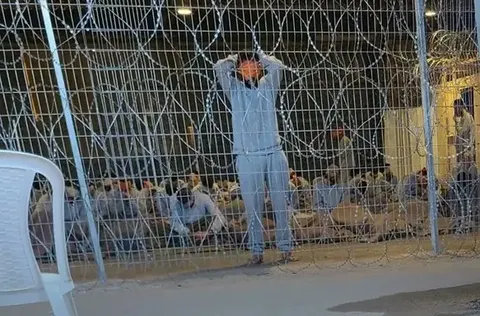
Israel’s defence minister has signed a sweeping executive order banning the International Committee of the Red Cross (ICRC) from visiting thousands of Palestinian detainees in Israeli prisons, including an estimated 400 children. Under the Fourth Geneva Convention, the ICRC must be granted access to detainees to inspect conditions, prevent torture, and ensure humane treatment. The ban further entrenches a blackout on international oversight at a time when Israel’s prison population has surged to its highest level in decades, amid mounting allegations of systemic abuse, sexual violence, deaths in custody, and enforced disappearance.
Officials justified the measure by claiming Red Cross visits would “seriously harm state security.” Human-rights groups, however, say it is a deliberate attempt to conceal criminal conduct as allegations of torture proliferate. Families of prisoners report they have received no reliable communication from detained relatives for months, and many still do not know whether loved ones are alive.
An Expanding Architecture of Detention
Palestinian prisoner organisations estimate that between 9,000 and 10,000 Palestinians are currently in Israeli custody. This includes hundreds of women and approximately 400 children. Thousands are held without charge under administrative detention. The spike represents the largest mass incarceration of Palestinians since the early 2000s, driven by sweeping raids across the West Bank, East Jerusalem and Gaza after October 7, 2023.
Administrative detention, inherited from British emergency regulations, allows individuals to be imprisoned indefinitely without charge. The state provides no evidence, hearings are conducted in camera, and files are sealed from both detainee and lawyer. Proceedings are overseen by military judges and often rely on secret intelligence. UN jurists have condemned the practice as arbitrary detention incompatible with basic legal norms.
To many Palestinians, prisoner exchanges are the only historically successful avenue for securing releases. Hamas leaders have stated openly that capturing Israelis on October 7 was meant to force negotiations for Palestinian prisoners, including individuals held for decades without meaningful due process. For Palestinians, the prison issue is structural, not symbolic.
A System Sealed From Witnesses
ICRC visits were suspended shortly after October 7, but the new order formalises the ban indefinitely. Without the ICRC, independent medical inspections, confidential interviews, and documentation of torture are eliminated. The system becomes closed to witnesses, accountability, and international scrutiny.
Under the Fourth Geneva Convention, the denial of Red Cross access to detainees is a grave breach. The same legal framework prohibits torture, the forced transfer of prisoners outside occupied territory, and the detention of minors without heightened protections. Each of these prohibitions has been raised repeatedly by UN Special Rapporteurs, legal associations, and humanitarian bodies.
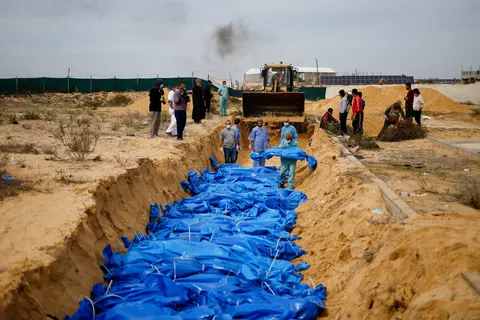
Since late 2023, dozens of Palestinian detainees have died in custody. Bodies returned to families have shown bruising consistent with blunt-force trauma, fractured ribs, and ligature marks on wrists and ankles. Several prisoners with chronic illnesses died after being denied medication. Israeli authorities have routinely claimed natural causes. Released prisoners and medical personnel dispute these explanations.
Survivors have described treatment consistent with torture: prolonged shackling, beatings with batons, sleep deprivation, sexual humiliation, exposure to extreme cold, and the use of attack dogs inside cells. Nerve damage from sustained restraint has been reported. Detainees describe being blindfolded for weeks, forbidden from using toilets, and denied food as punishment. One former prisoner described a facility as “a factory of broken men.”
Children Before Military Courts
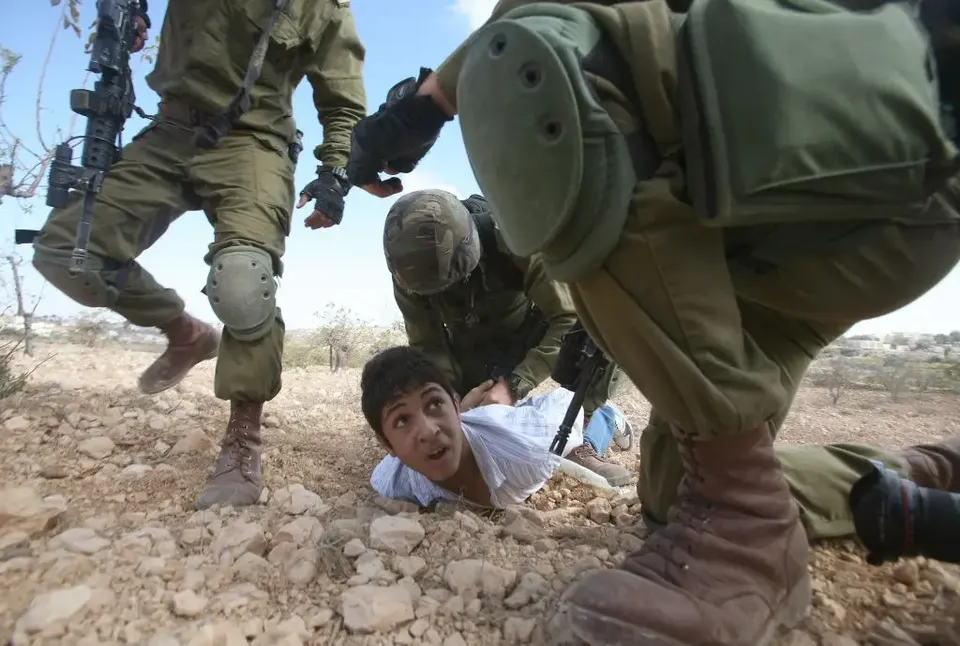
Israel remains the only state on record to routinely prosecute children before military courts. Hearings are conducted by army officers. Proceedings are frequently in Hebrew without adequate interpretation. Lawyers report that children are interrogated without guardians present and pressured to sign confessions they cannot read. Conviction rates approach totality. UN experts have repeatedly warned that these practices violate the Convention on the Rights of the Child.
Since October 2023, legal access has deteriorated sharply. Lawyers have been turned away without explanation, hearings have been postponed indefinitely, and detainees have been held for weeks or months without contact. Files are withheld for “security reasons,” rendering defence impossible. Without the ICRC and without lawyers, detainees are trapped in a system where oversight is structurally obstructed.
International law is unequivocal. Arbitrary detention, torture, the denial of fair trial rights, forced transfer of detainees from occupied territory, and the detention of minors under military jurisdiction all violate the Fourth Geneva Convention. Denying the ICRC access removes the primary safeguard against torture. Grave breaches of the Geneva Conventions carry individual criminal liability through universal jurisdiction.
A Special Rapporteur on torture recently stated that prohibiting independent humanitarian access “strongly suggests the desire to conceal criminal conduct.” A former UN Special Rapporteur on human rights in the Palestinian territories described the ban as “a textbook violation of humanitarian law.” Legal scholars consulted by European governments note that the combination of mass detention, lack of oversight, and credible torture allegations resembles patterns prosecuted in major international tribunals.
Silence Beyond the Walls
Regional silence has become a source of anguish among Palestinians. Neighbouring Arab governments have issued muted statements while maintaining diplomatic and security cooperation frameworks. Analysts cite economic reliance on Western partners, intelligence coordination with Israel, fear of domestic unrest, and a desire to preserve normalisation projects. Popular sentiment in Arab states remains overwhelmingly supportive of Palestine; official policy remains restrained. As one regional expert put it: “Arab governments are terrified of awakening the political energy that the Palestinian cause inspires.”
Israel continues to demand Red Cross access to Israeli captives held in Gaza, even while refusing identical access to Palestinian prisoners. Human-rights lawyers argue that such asymmetry violates the equal-protection principles embedded in international humanitarian law.
Families of prisoners describe emotional devastation. With no phone calls, no letters, and no Red Cross reports, many do not know if relatives are dead, alive, or hospitalised. One mother from Nablus said: “I ask only to know if my son is breathing. Israel refuses even that.”
Legal scholars warn that when a state detains individuals, refuses to disclose their condition or location, and removes them from legal protection, it crosses into enforced disappearance. Under international law, enforced disappearance is prosecutable as both a war crime and a crime against humanity. It triggers command responsibility: senior officials may be culpable if they knew or should have known of violations.
The denial of ICRC access, the transfer of detainees out of occupied territory, torture and cruel treatment, and the prosecution of minors without adequate protections collectively form a pattern of Geneva Convention violations.
The Timeline of Deaths: A Pattern Emerges
A chronological pattern illustrates the cumulative nature of harm:
On 15 October 2023, thirty-one-year-old Mohammad al-Fakhouri collapsed in Ofer Prison following repeated beatings during interrogation. Authorities cited “medical complications,” but released detainees described bruising and trauma.
On 2 November, twenty-nine-year-old Ali Hamdan died in Megiddo Prison after chest-pain complaints were ignored. His family reported bruising on his torso.
Later that month, forty-four-year-old Ashraf Abu Raida died at Sde Teiman following prolonged beatings. Autopsy records indicated fractured ribs and internal bleeding.
On 7 December, twenty-three-year-old Nour Barghouti was found unresponsive in solitary confinement after witnesses reported screaming. Medical access was delayed.
In late December, forty-seven-year-old Mousa Abu Jaber, a diabetic, died in Damon Prison after medication was withheld as punishment.
Into January, forty-one-year-old Abdullah al-Sawalha died after repeated transfers between interrogation wings; witnesses noted head wounds and severe restraint marks. Authorities attributed his death to respiratory failure.
On 25 January, thirty-six-year-old Jamil Shtewi died in Ketziot after exposure to extreme cold and stress positions. Bruising on limbs suggested prolonged restraint.
In February, thirty-nine-year-old Yusuf Khoudari collapsed at Sde Teiman from baton beatings. Medical assistance was delayed nearly an hour.
Twenty-two-year-old Saif Taha died there the following month after suffering spinal injuries linked to forced stress positions. Guards reportedly mocked his inability to stand.
March saw the death of fifty-two-year-old Mahmoud al-Sawarka from respiratory distress after prolonged tear-gas exposure in a sealed cell. There was no ventilation.
In April, thirty-four-year-old Rami al-Shami died in Ketziot following requests for medical care that were allegedly ignored.
On 2 May, forty-five-year-old Ahmad al-Shawish died at Ofer after interrogation, reportedly without access to diagnostic equipment.
Sixteen days later, thirty-year-old Adel Suleiman died from infected dog-bite wounds sustained during questioning at Sde Teiman. Untreated sepsis followed.
By 1 June, forty-nine-year-old Hamzeh Washah died at Damon after strict denial of medication for a chronic heart condition.
Patterns in these cases demonstrate recurring mechanisms: blunt-force trauma, respiratory compromise, untreated infection, denial of medication, solitary confinement, stress positions, delayed clinical access, and tear gas deployed inside sealed cells. Authorities frequently attribute deaths to “natural causes.” Medical professionals and released inmates offer conflicting accounts.
Sexual Violence in Detention
At Sde Teiman, multiple testimonies describe sustained physical abuse. In one documented case, a handcuffed Palestinian detainee was raped with an object by an Israeli soldier, causing internal injury. Fellow detainees reported seeing the victim collapse, bleeding, before being removed for medical treatment. A medic later confirmed trauma consistent with sexual assault. Despite internal military knowledge, no public accountability followed.
UN Special Rapporteurs argue that sexual violence in detention is not merely incidental; its presence indicates a climate of impunity. Former ICC prosecutors note that rape in detention is prosecutable as both a war crime and a crime against humanity when part of a wider pattern of abuse.
Legal Ramifications
Denying ICRC access; transferring detainees out of occupied territory; subjecting them to torture, humiliation, and medical neglect; and detaining minors under military jurisdiction all constitute grave breaches of the Fourth Geneva Convention.
Grave breaches carry individual criminal liability and may trigger universal jurisdiction in foreign courts. Command responsibility applies: senior officials may be culpable if they knew or should have known.
Former ICC legal advisers observe that closing detention facilities to the one institution mandated to prevent torture is itself probative of intent.
Why the Silence Holds
Geopolitically, analysts suggest several motives for the muted response from Arab governments:
- reliance on Western military assistance
- economic integration with Israel’s allies
- fear of domestic mobilisation
- intelligence coordination frameworks
- preservation of normalisation agreements
The public in these states overwhelmingly identifies with the Palestinian cause. Governments do not.
Meanwhile, Western governments have offered little more than expressions of “concern,” unwilling to jeopardise strategic partnerships. International law lacks enforcement mechanisms beyond the Security Council — where political vetoes function as immunity devices.
The Psychological Terrain
For families, the absence of communication constitutes a form of psychological torture. The uncertainty is paralysing. Mothers speak of imagining hospital rooms, morgues, and interrogation basements simultaneously. In Palestinian society, where prisoners are communal figures, withheld information radiates outward; thousands are traumatised by the status of one.
As one mother said, “I ask only to know if my son is breathing. Israel refuses even that.”
The Turning Point
The ban on Red Cross access represents more than administrative policy. It seals off the prison system, blocks the only neutral witness to torture, and normalises detention practices beyond the reach of law. It signals a transition from militarised policing toward punitive opacity. Without transparency, there is no meaningful restraint.
For thousands of Palestinian families, the most basic question remains unanswered: if Israel has nothing to hide, why does it fear inspection?
Until that question can be addressed by independent observers, the walls surrounding these detainees will not merely detain. They will conceal. And as each month passes without external oversight, a growing number of jurists now describe the system not only as abusive, but criminal — and darkening further by design.
77 Deaths in Israeli Custody Since October 2023
Some of the casualties of Israeli detention include:
15 October 2023 — Mohammad al-Fakhouri (31), Ofer Prison
Collapsed following repeated beatings during interrogation. Prison authorities cited “medical complications.” Released detainees reported signs of blunt trauma.
2 November 2023 — Ali Hamdan (29), Megiddo Prison
Detained without charge. Died after complaints of chest pain were ignored. Family reported bruising on torso when the body was returned.
18 November 2023 — Ashraf Abu Raida (44), Sde Teiman Camp
Allegedly beaten over several days. Autopsy revealed fractured ribs, internal bleeding. Authorities claimed “cardiac arrest.”
7 December 2023 — Nour Barghouti (23), Ofer Prison
Found unresponsive in solitary confinement. Witnesses heard prolonged screaming the night before. Guards delayed medical access.
22 December 2023 — Mousa Abu Jaber (47), Damon Prison
Known diabetic. Medication withheld as punishment, according to testimony from released inmates. Died after severe hypoglycaemia.
6 January 2024 — Abdullah al-Sawalha (41), Anatot Camp
Transferred multiple times between interrogation wings. Returned with visible head wounds and arm restraints. Prison statement cited “respiratory failure.”
25 January 2024 — Jamil Shtewi (36), Ketziot Prison
Reportedly subjected to stress positions and exposure to the cold. Multiple bruises on wrists and ankles. Died in cell during the night.
4 February 2024 — Yusuf Khoudari (39), Sde Teiman Camp
Released prisoners reported he collapsed after severe beatings with batons. Emergency medical response delayed for nearly an hour.
19 February 2024 — Manar Abu Sitta (33), Military Camp (unnamed)
Collapsed during interrogation following prolonged shackling. Detainees stated guards refused medical requests until he lost consciousness.
3 March 2024 — Firas Abu Sal (28), Megiddo Prison
Documented rib fractures and extensive bruising. Officials again cited “natural causes.” Family rejected the explanation.
17 March 2024 — Mahmoud al-Sawarka (52), Sde Teiman Camp
Severe respiratory distress after hours of tear-gas exposure in a closed cell. No ventilation provided. Died en route to clinic.
30 March 2024 — Saif Taha (22), Sde Teiman Camp
Suffered spinal injury after forced stress positions. Guards reportedly mocked his inability to stand. Condition deteriorated over several days.
11 April 2024 — Rami al-Shami (34), Ketziot Prison
Medical neglect cited. Fellow inmates reported repeated requests for treatment ignored. Found dead in bedding during morning check.
2 May 2024 — Ahmad al-Shawish (45), Ofer Prison
Complained of chest pain following interrogation. ECG machine allegedly unavailable. Witnesses saw significant bruising on chest and neck.
18 May 2024 — Adel Suleiman (30), Sde Teiman Camp
Reportedly subjected to dog attacks during questioning. Severe lacerations became infected. Died following untreated sepsis.
1 June 2024 — Hamzeh Washah (49), Damon Prison
Long-term detainee with heart condition. Medication restricted; family had petitioned for humanitarian release. Passed away in custody.
Patterns Observed
- Consistent blunt-force trauma
Fractured ribs, bruising, head wounds. - Medical neglect
Chronic conditions ignored; medications withheld. - Delayed clinical access
Multiple cases describe hours-long delays. - Use of stress positions
Permanent nerve damage reported by survivors. - Respiratory failure in confinement
Often following gas exposure or chest trauma. - Undisclosed interrogation injuries
Authorities often list “natural causes.”
Legal Significance
Under international humanitarian law:
- Deaths resulting from torture or neglect are prosecutable as grave breaches.
- Patterns of consistent abuse may constitute crimes against humanity.
- Command responsibility may apply to senior officials who knew or should have known.