US Sanctions Plan Threatens ICC as UN Findings on Gaza Grow
More than two years after Navi Pillay presented findings of extermination, forcible transfer and starvation, new UN reports have widened the record. Arrest warrants remain outstanding, while the ICJ’s written timetable runs to 2029.
The Trump administration is reportedly preparing sanctions against the International Criminal Court as an institution, seeking to pressure the tribunal to drop arrest warrants for Israeli leaders over alleged crimes in Gaza. The reported preparations concern a broader measure than existing sanctions against individual officials; they should not be read as confirmation that sanctions on the court itself have already taken effect.
The confrontation comes after UN investigators expanded their findings from war crimes and crimes against humanity to genocide. It gives renewed urgency to the record first set out publicly in June 2024: an investigation of killings, starvation, displacement and sexual violence whose conclusions preceded the ICC’s arrest warrants and the commission’s later genocide determination.
Sanctions against the institution could disrupt its access to the US financial system and deter businesses elsewhere from supplying it. The consequences could extend across a court with about 900 employees, affecting the practical ability to investigate and prosecute international crimes. Washington’s campaign also concerns the ICC’s investigation of alleged crimes involving American personnel in Afghanistan.
The Netherlands, which hosts the court in The Hague, is preparing measures to help it continue operating. The ICC has already reduced its dependence on American services, including changing software and financial providers. Witness protection and other essential operations are among the functions potentially exposed to disruption.
The pressure is already substantial. On 19 August, the ICC said US sanctions covered nine of its 18 judges, both deputy prosecutors, its former prosecutor and a staff member. The latest designations included court president Tomoko Akane. “When judicial actors are threatened for applying the law, it is the international legal order itself that is placed at risk,” the court said.
Washington presents its actions as a defence of American sovereignty and its allies. President Donald Trump’s February 2025 executive order accused the ICC of illegitimate action against the United States and Israel, neither of which is a party to its founding treaty. Those assertions express the administration’s position; they do not themselves determine the court’s jurisdiction.
The earlier findings at the centre of the Gaza accountability debate were presented to the UN Human Rights Council on 19 June 2024 by Navi Pillay, then chair of the independent commission investigating the occupied Palestinian territory, including East Jerusalem, and Israel. “We conclude that Israeli authorities are responsible for war crimes, crimes against humanity and violations of international humanitarian and human rights law,” she said.
The findings, announced on 12 June, included extermination, murder or wilful killing, deliberate attacks on civilians and civilian objects, starvation as a method of warfare, forcible transfer, sexual violence, torture and cruel or inhuman treatment, arbitrary detention and outrages upon personal dignity. The commission also found gender persecution targeting Palestinian men and boys. These offences crossed distinct legal categories: extermination was identified as a crime against humanity.
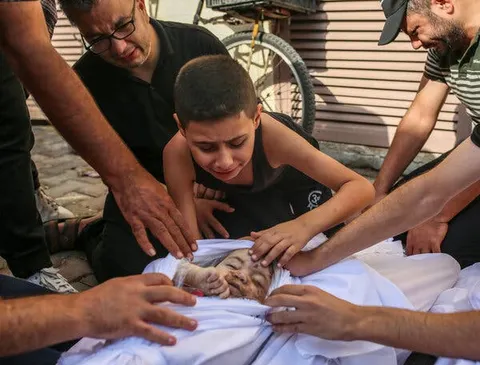
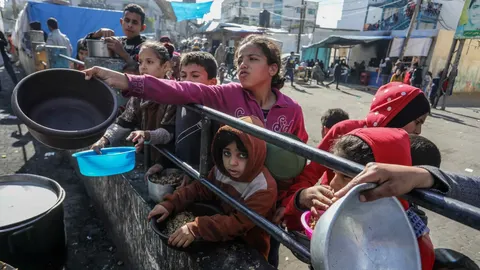
Investigators found that Israel’s siege withheld food, water, electricity, fuel and humanitarian assistance, using necessities of life to advance military and political objectives. They described collective punishment with especially severe consequences for pregnant women, disabled people and children, including preventable deaths from starvation. They also documented forced stripping and sexual humiliation, concluding that certain forms of sexual and gender-based violence formed part of Israeli forces’ operating procedures.
Evacuation orders did not, in the commission’s assessment, provide reliable protection. Some were contradictory or unclear, allowed insufficient time, or directed people towards places that were subsequently attacked. Routes and areas presented as safe offered no dependable refuge. Investigators connected extensive civilian deaths and destruction to a strategy of maximum damage, involving powerful weapons in densely populated areas and disregard for distinction, proportionality and precautions.
The principal period examined was 7 October to 31 December 2023, with some later incidents considered where relevant. Evidence included remote interviews, accounts gathered in Egypt and Türkiye, verified digital material, satellite analysis, submissions and medical records. The commission described Israeli obstruction of access and acknowledged limits on what it could verify without entering Gaza. Its conclusions were investigative findings, reached on a reasonable-grounds standard.
The commission conducted a parallel investigation into the Hamas-led attacks in Israel. It found war crimes by Hamas and other Palestinian armed groups, including intentional attacks on civilians, murder or wilful killing, torture and cruel treatment. Pillay’s central legal point applied to every party: violations committed by one side cannot authorise violations by another.
Israel rejected the commission’s findings as biased. Its objections formed part of the dispute from the outset, alongside the investigators’ account that Israeli restrictions prevented direct access to the territory. The findings were therefore contested assessments by a UN investigative body, rather than judgments reached after a criminal trial.
On 16 September 2025, the commission went further. Assessing conduct through 31 July that year, it concluded that Israel had committed genocide in Gaza. It identified four acts under the Genocide Convention: killing members of the protected group; causing serious physical or mental harm; imposing conditions of life calculated to bring about physical destruction; and measures intended to prevent births.
Its legal analysis considered both conduct and statements by senior Israeli officials in assessing the specific intent required for genocide. It concluded that genocidal intent was the only reasonable inference from the pattern it examined. The commission also found that statements by Isaac Herzog, Benjamin Netanyahu and Yoav Gallant amounted to incitement to genocide.
The commission urged the ICC prosecutor to consider genocide in the criminal investigation and called on states to stop transfers of arms and other support facilitating the crimes. Those recommendations sought further action by prosecutors and governments. The commission’s conclusion did not amount to an ICJ judgment or automatically add genocide charges to the ICC warrants.
Israel categorically rejected the genocide report. Its ambassador in Geneva, Daniel Meron, called it “scandalous” and “fake”, while the government renewed its accusations of bias against the commission. Those denials sit alongside an increasingly detailed public record of the investigators’ evidence and reasoning.
A further report released on 23 June 2026 examined the targeting of Palestinian children. The commission, now chaired by Srinivasan Muralidhar, found continuing genocide, crimes against humanity and war crimes in Gaza, and war crimes in the West Bank. It identified military units implicated in violations and described harm continuing after the October 2025 ceasefire.
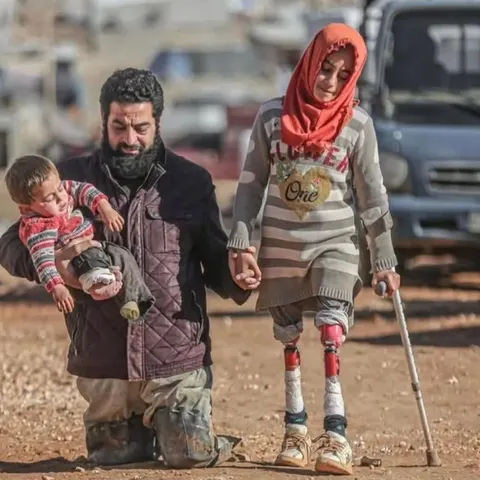
The findings covered killings and injuries, starvation, disability, psychological trauma, destruction of education and healthcare, and damage to neonatal care. “By targeting children, Israel is attacking the very capacity of the Palestinian people to exist and to determine their future,” Muralidhar said. The report treated the destruction of children’s lives and prospects as central to its assessment of the wider campaign.
More recent findings extend beyond Gaza. A UN Human Rights Office report published on 4 September examined Operation Iron Wall in the northern West Bank. It said Israeli forces had displaced the entire populations of the Jenin, Nur Shams and Tulkarm refugee camps, more than 33,000 people, and continued to prevent their return. The office said the scale, duration and systematic character of the displacement raised serious concerns about the crime against humanity of forcible transfer. That formulation expresses an assessment of possible criminality, rather than a court conviction.
The ICC proceedings concern individual criminal responsibility. On 21 November 2024, judges issued arrest warrants for Netanyahu and former defence minister Gallant, finding reasonable grounds to believe they bore responsibility for starvation as a method of warfare and the crimes against humanity of murder, persecution and other inhumane acts. The court also identified alleged responsibility as civilian superiors for intentionally directing attacks against civilians.
Those warrants did not charge genocide. The standard for issuing them was reasonable grounds to believe the crimes had been committed; it was not the finding of guilt required for conviction. The warrants remain outstanding, and neither man has been tried by the ICC.
On 16 July 2025, judges rejected an Israeli request to withdraw the warrants and suspend the proceedings. That decision preserved the warrants at that stage without resolving every possible jurisdictional issue. Israel’s legal challenges and its denials of wrongdoing therefore need to be distinguished from the continued existence of the arrest orders.
One newer argument concerns how the evidence could be heard before either suspect enters custody. Writing on 26 August 2026, Kevin Jon Heller, a professor of international law and former adviser to the ICC prosecutor, urged prosecutors to seek a public confirmation-of-charges hearing, potentially in the men’s absence. Such a hearing would test whether the evidence met the higher threshold required to send charges to trial.
Heller pointed to the court’s use of a hearing in Joseph Kony’s absence, while acknowledging uncertainty over whether that precedent could apply to Netanyahu and Gallant, who live openly in Israel. His proposal is a legal argument for a next step. It is not an announcement that the ICC has scheduled such a hearing, confirmed the charges or authorised a trial in their absence.
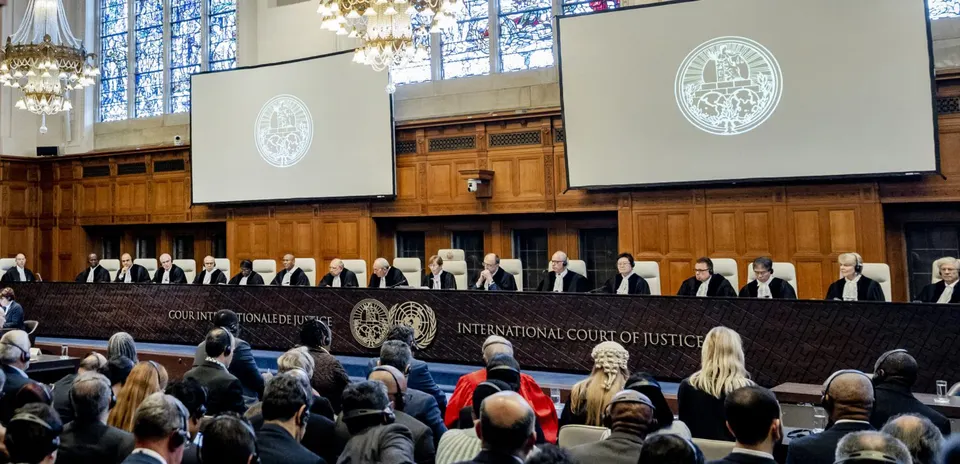
The International Court of Justice is considering a separate question: Israel’s responsibility as a state under the Genocide Convention in the case brought by South Africa. Israel filed its counter-memorial on 12 March 2026. There has been no final judgment determining whether Israel has committed genocide.
The next published timetable extends years ahead. An order of 21 May 2026 set 22 November 2027 for South Africa’s reply and 22 May 2029 for Israel’s rejoinder. These are deadlines for written pleadings, not dates for a verdict. South Africa must also address Israel’s jurisdictional objections.
The long timetable does not suspend the provisional measures ordered on 26 January, 28 March and 24 May 2024. Those binding requirements address protection against prohibited acts, access to urgently needed assistance and access for UN investigative bodies. They operate while the case continues. They should not be described as a final determination that genocide occurred, or as an exoneration pending the eventual judgment.
South Africa reportedly submitted further material on 25 August alleging that Israel had failed to comply with those orders. The dossier adds to the case South Africa is advancing about implementation of the court’s measures. Its allegations are those of a party to the proceedings, not a new finding by the judges.
Meanwhile, the preservation of evidence has become an immediate issue. On 7 September, Francesca Albanese, the UN special rapporteur on the occupied Palestinian territory, warned that the removal, crushing and relocation of rubble in Israeli-controlled parts of Gaza could destroy traces of atrocity crimes and prevent the recovery and identification of human remains. Her warning concerned the risk of losing material needed to establish what happened and to identify those who died.
On 15 September, UN human rights chief Volker Türk said the recovery of more than 630 bodies, many of them women and children, raised concerns about possible war crimes. Restrictions on DNA identification kits and excavation equipment were obstructing recovery work. The warning brings the long legal timetable back to a present task: recovering the dead and preserving evidence on which future findings may depend.
Sources and attributions
Reuters, 20 September 2026 — reported preparations for sanctions against the ICC
Reuters, 21 September 2026 — potential effects of sanctions on the court
Associated Press — Dutch preparations and risks to ICC operations
Reuters, 12 June 2024 — initial commission findings and Israel’s response
Reuters, 16 July 2025 — rejection of Israel’s request to withdraw the warrants
HLRN / Central News — reporting on South Africa’s 25 August 2026 submission
Reuters, 15 September 2026 — Volker Türk’s statement on recovered remains