The Letter That Promised Palestinian Land: War, Debt and the British Betrayal That Sparked 75 Years of Conflict
How a 67-word wartime declaration, shaped by imperial desperation, financial crisis, and competing promises, redrew the political future of Palestine and set the stage for a century of conflict
In the closing years of the First World War, as empires weakened and the map of the Middle East was being quietly redrawn, the people of Palestine found their future decided far beyond their own borders, in the private offices and war rooms of imperial power where they had neither representation nor voice. They were not consulted at any stage in the process, yet in 1917 their homeland was effectively promised away in a decision that would reshape their history for generations.
For Palestinian Arabs, who formed the overwhelming majority of the population at the time, the years that followed did not represent a negotiated transition or a gradual political transformation. Instead, they marked a profound rupture in which the political foundations beneath them shifted without warning, leaving their future determined by external decisions rooted in war, financial survival, and imperial ambition.
At the centre of this transformation stood the Balfour Declaration, issued by Arthur Balfour and addressed to Lord Walter Rothschild, a document whose brevity concealed consequences that would reverberate for more than a century.
A Bankrupt Empire and the Price of Survival
When the war began in 1914, Britain entered with the confidence of a global empire that believed victory would be swift. Instead, it became trapped in an industrial war that consumed money, resources, and lives on a scale never seen before.
By 1917, the financial strain had become extreme. Britain’s national debt had increased more than tenfold, transforming the country from a global creditor into a debtor dependent on American finance. Loans from institutions such as J.P. Morgan became essential, and when Woodrow Wilson moved to restrict lending, the war effort itself began to look unstable.
What emerges from this context is not a story of simple diplomacy, but one of survival. Britain was searching for leverage wherever it could find it, and policy decisions were increasingly shaped by the need to maintain the war effort at almost any cost.
Three Promises, One Land
By 1917, Britain had already committed itself to multiple and contradictory futures for Palestine.
Through the McMahon-Hussein Correspondence, it had promised Arab independence in exchange for revolt against the Ottoman Empire. Arab forces, led by Hussein bin Ali, took up that call and fought, believing their sacrifice would lead to sovereignty.
At the same time, Britain had secretly agreed with France under the Sykes-Picot Agreement to divide the region into spheres of influence, placing Palestine under international control rather than independence.
The Balfour Declaration introduced a third and incompatible commitment, supporting the establishment of a Jewish national home in the same territory.
These promises were not coordinated, nor were they intended to coexist. Each served an immediate wartime purpose, and together they formed a structure that could not hold.
For the Arabs who had taken part in the revolt, the result was a profound betrayal. Their contribution to the war had been real, but the independence they had been led to expect was overtaken by arrangements made without their knowledge.
The Chemist, the War Machine, and Political Access
At the centre of Britain’s shifting calculations was Chaim Weizmann, whose influence extended beyond diplomacy into the material reality of the war effort itself.
Britain faced a critical shortage of acetone, a chemical essential for producing cordite, the propellant used in artillery shells. Without it, the machinery of industrial warfare would have slowed dramatically.
Weizmann’s fermentation process solved that problem. His work helped sustain munitions production at a moment when Britain could not afford failure. Between 1914 and 1918, British forces fired hundreds of millions of shells, and that output depended in part on his discovery.
This contribution gave Weizmann access to senior figures including Winston Churchill and David Lloyd George, placing him inside the decision-making circles of wartime Britain.
He used that access to advocate for Zionism, presenting it as both a moral cause and a strategic opportunity. At a time when Britain was financially strained and politically vulnerable, these arguments carried weight.
A Letter to a Banking Dynasty: Perception, Power, and a Wartime Calculation
The choice to address the declaration to Lord Walter Rothschild was neither incidental nor merely ceremonial. It reflected a deeper set of assumptions within British policymaking circles about finance, influence, and the relationship between political commitments and wartime survival.
By 1917, the British government was operating under severe financial strain, increasingly dependent on American credit and facing the possibility that its access to funding could tighten at any moment. Within this environment, there existed a widely held belief among senior officials that Jewish financial networks, particularly those associated with prominent families such as the Rothschilds, could play a role in shaping political and financial outcomes, especially in the United States.
Historians have since noted that these assumptions were often exaggerated and, at times, based on flawed perceptions of global Jewish influence. However, what matters in understanding British policy is not only what was true, but what decision-makers believed to be true at the time.
War Cabinet discussions and internal memoranda make clear that British leaders saw a pro-Zionist declaration as potentially advantageous in strengthening their position with influential Jewish communities abroad, particularly in America, where financial and political support had become essential to sustaining the war effort. The declaration was therefore not only a diplomatic gesture, but also a signal intended to resonate beyond Britain’s borders.
There is no evidence of a direct financial exchange in which support for a Jewish homeland was traded for funding. Yet the structure of the decision, the context in which it was made, and the choice of recipient all point to a broader wartime calculation in which diplomacy, perception, and financial necessity intersected.
In that sense, the Balfour Declaration can be understood not simply as a statement of policy, but as part of a wider effort by a financially strained empire to secure advantage wherever it could, using political commitments as instruments within a larger struggle for survival.
Finance, Influence, and Imperial Strategy
At the same time, Palestine held clear strategic value. Its position between Egypt, India, and the Suez Canal made it central to Britain’s imperial network. Supporting a Jewish national home under British protection offered a way to secure long-term influence over the territory and avoid the internationalisation proposed under Sykes-Picot.
A Declaration Built on Ambiguity
The language of the Balfour Declaration was deliberately constructed to allow multiple interpretations.
By referring to a “national home” rather than a state, it left open the question of political sovereignty. It also included a commitment to protect the civil and religious rights of existing non-Jewish communities, while making no reference to political rights or self-determination.
At the time, the population of Palestine was overwhelmingly Arab, yet their political status was not addressed in the document that would shape their future.
From Imperial Policy to Enduring Conflict
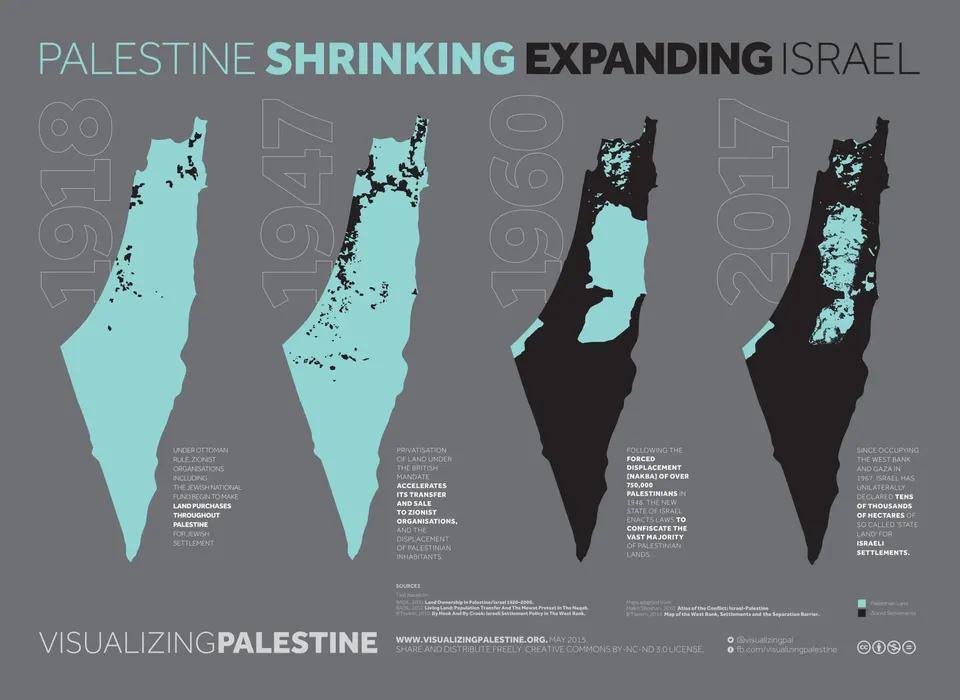
The contradictions embedded in the declaration carried forward into the British Mandate established by the League of Nations in 1922. Britain was tasked with facilitating a Jewish national home while also protecting the rights of the Arab majority, a balance that proved impossible to maintain.
Tensions escalated over time, leading to unrest, revolt, and increasing violence. By 1948, Britain withdrew, the state of Israel was declared, and war followed, resulting in the displacement of hundreds of thousands of Palestinians.
The Legacy of a Wartime Transaction
The Balfour Declaration was not simply a statement of intent. It was the product of war, financial strain, imperial ambition, and political calculation.
It reflected genuine belief and strategic necessity, but also a willingness to make promises that could not be reconciled.
For Jewish communities, it represented the possibility of a homeland after centuries of persecution. For Palestinian Arabs, it marked the beginning of displacement and political exclusion.
For Britain, it was a wartime decision shaped by survival, in which diplomacy, finance, and empire converged.
More than a century later, the consequences remain unresolved. The conflict that followed did not emerge from a single cause, but from a series of decisions made under pressure, in which competing promises were issued without a viable path to coexistence.
As John Maynard Keynes observed, the statesmen of that era were managing forces whose consequences they did not fully understand.
Those consequences have endured.