
Iran has accused Israel of carrying out or exploiting “false flag” attacks on regional assets, including sites in Saudi Arabia and Azerbaijan, as the U.S.–Israeli assault on Iran expands into a rapidly widening regional war involving the Persian Gulf, the eastern Mediterranean, NATO airspace near Turkey, and Western military bases across the region.
Tehran has coupled those accusations with calls for international action over what it says are indiscriminate strikes on schools, hospitals, Red Crescent facilities and residential areas. While no independent evidence has publicly confirmed the “false flag” claims, the accusation reflects the level of mistrust and the speed with which the conflict is spreading geographically and politically.
The war began on 28 February 2026, when the United States and Israel launched coordinated strikes on Iranian military and government targets in what Washington described as an operation to dismantle Iran’s missile capabilities. Iran responded with large-scale missile and drone attacks across the region, in what Iranian commanders call Operation True Promise IV.
Civilian Death Toll Mounts in Iran
Iran’s health ministry says hundreds of civilians have been killed and thousands wounded since the bombing campaign began. International health agencies have confirmed that medical infrastructure has been affected, reporting attacks on hospitals, ambulances and healthcare personnel during the first week of the war.
The deadliest incident of the conflict occurred in the southern Iranian city of Minab, where three missiles destroyed the Shajareh Tayyebeh girls’ elementary school during the opening hours of the campaign.
Iranian authorities say more than 160 schoolgirls and teachers were killed, making it the single largest mass-casualty event of the war so far.
Funerals across Hormozgan province drew massive crowds and quickly turned into demonstrations condemning the United States and Israel.
Decapitation Strike Kills Iran’s Leadership
The opening strikes also killed Iran’s Supreme Leader Ali Khamenei, according to Iranian authorities.
Tehran also confirmed the death of former president Mahmoud Ahmadinejad, along with several senior military commanders and members of Iran’s national security leadership.
The killings amounted to one of the most dramatic leadership decapitation strikes against a sovereign state in modern history and transformed the conflict into what many analysts describe as a de facto regime-change war.
Iranian Frigate Sunk in the Indian Ocean
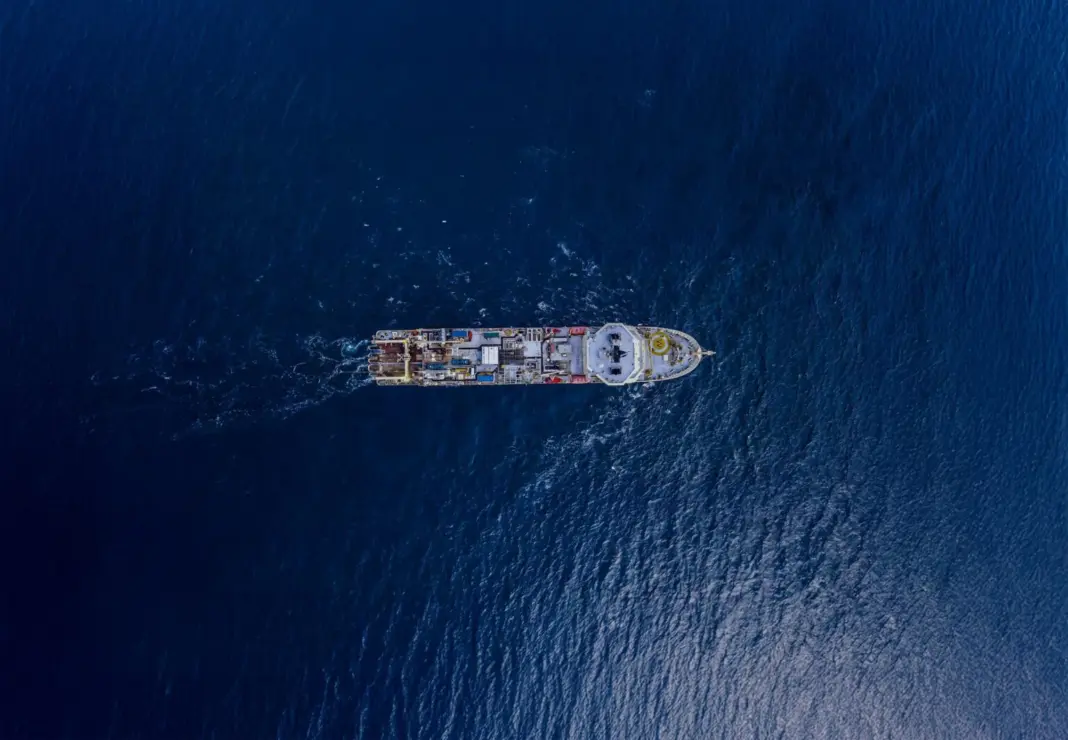
The maritime theater widened dramatically when the Iranian navy frigate IRIS Dena was sunk by a U.S. torpedo off the southern coast of Sri Lanka while participating in a naval exercise with India.
Dozens of sailors were killed in the attack, which pushed the war beyond the Persian Gulf into the wider Indian Ocean and raised serious legal questions about the targeting of a sovereign naval vessel in international waters.
Massive Air Campaign Across Iran
The scale of the bombing campaign has been extraordinary.
U.S. and Israeli forces have carried out nearly 2,000 strikes against roughly 630 sites across Iran, targeting missile bases, air-defense systems, naval infrastructure, command centres and government facilities.
Military officials say the campaign is aimed at dismantling Iran’s missile capabilities and military command structure, but the scale of the attacks has also produced extensive civilian casualties and damage to infrastructure.
War Expands into Lebanon
The regional conflict quickly spread to Lebanon after Hezbollah launched rockets toward northern Israel in response to the killing of Iran’s leadership.
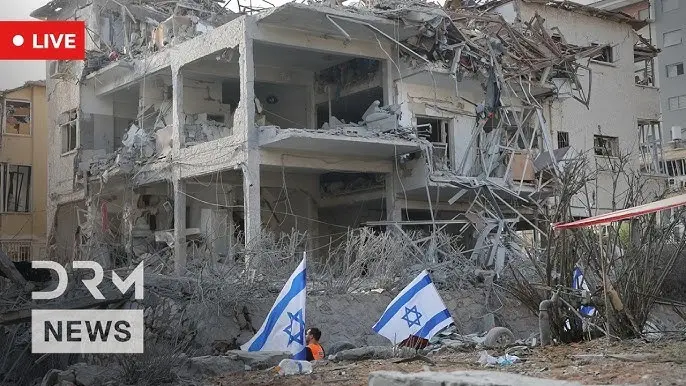
Israel responded with heavy airstrikes across southern Lebanon and the southern suburbs of Beirut.
Lebanon’s health ministry says at least 123 people have been killed and 683 injured in Israeli strikes during the first week of the escalation, while tens of thousands of residents have fled their homes.
Large parts of southern Lebanon have been placed under evacuation orders, and Israeli strikes have targeted residential neighborhoods, infrastructure and areas believed to contain Hezbollah positions.
The fighting has displaced hundreds of thousands of civilians, adding to a humanitarian crisis that has been building in Lebanon since the earlier stages of the Israel–Hezbollah conflict.
Iranian Retaliation Targets U.S. Bases
Iran’s response has extended far beyond Israel.
Iranian commanders say hundreds of ballistic missiles and thousands of drones have been launched since the war began, targeting U.S. bases and Israeli military infrastructure across the Middle East.
Major American installations in Qatar, Bahrain, Kuwait, Jordan, Saudi Arabia and the United Arab Emirates have been targeted.
The attacks have damaged communications systems, radar installations and command facilities used to coordinate regional air-defense networks.
Drone Strike on British RAF Base in Cyprus
One of the clearest signs the conflict is widening occurred on 2 March, when a drone struck Britain’s RAF Akrotiri base in Cyprus.
RAF Akrotiri is one of the United Kingdom’s most strategically important overseas military installations and has long served as a staging ground for Western operations in Iraq, Syria and across the Middle East.
British officials confirmed the strike caused limited structural damage and no casualties, though additional drones approaching the base were intercepted by air defenses.
The attack occurred shortly after Britain confirmed that the United States would be allowed to use British bases — including Akrotiri and Diego Garcia — to support operations against Iran.
NATO Missile Interception Near Turkey
Another escalation occurred on 4 March, when NATO missile defenses intercepted a ballistic missile traveling toward Turkish airspace.
Turkey, a NATO member, said the missile was destroyed before reaching its territory.
Although NATO officials said there was no discussion of invoking Article 5, the incident marked one of the first times alliance missile defenses directly engaged a weapon connected to the conflict.
Iran denied targeting Turkish territory.
Israeli Wartime Censorship and the Information War
Alongside the military escalation, the conflict has also intensified an information battle.
Israeli authorities have imposed strict wartime censorship rules restricting the publication of images or video showing missile strike locations or damage.
Under Israel’s military censorship system, journalists may be prevented from filming strike sites without approval, and certain footage must be submitted for military review before publication.
Despite these restrictions, videos have circulated online showing missile impacts and interceptions across Israeli cities including Tel Aviv and Beer Sheva.
Because access to strike locations is restricted and much footage disappears quickly from social media platforms, the full scale of damage caused by Iranian missile attacks remains difficult to independently verify.
Strait of Hormuz Crisis Shakes Global Energy Markets
The war has already sent shockwaves through global energy markets.
The Strait of Hormuz carries roughly 20 percent of the world’s oil supply and a major share of global liquefied natural gas shipments.
The threat of missile attacks and naval combat near the waterway has already disrupted shipping and driven sharp volatility in global energy markets.
Oil prices surged during the first week of the conflict as traders priced in the possibility that tanker traffic could be disrupted.
Natural gas markets have also reacted strongly because Qatar exports roughly one-fifth of the world’s LNG through the strait, making the corridor critical for energy supplies to Europe and Asia.
Energy analysts warn that any prolonged disruption to shipping through Hormuz could trigger one of the largest global energy supply shocks in decades.
Protests Spread Across the Region
The war has also triggered widespread public anger across the Middle East and South Asia.
In Pakistan, protesters gathered outside the United States Consulate General Karachi, where clashes with security forces turned deadly after crowds attempted to breach security barriers.
In Iraq, demonstrations gathered near the Embassy of the United States, Baghdad in Baghdad’s fortified Green Zone.
Large mourning demonstrations have also filled Iranian cities following the deaths of schoolchildren and senior leaders.
A Region Sliding Toward Wider War
For many observers, the conflict now represents far more than a confrontation between Iran, Israel and the United States.
With leadership assassinations, thousands of bombs dropped across Iran, attacks on schools and hospitals, missile exchanges across the Middle East, Israeli strikes in Lebanon causing over a hundred deaths and hundreds of injuries, incidents involving NATO territory, and energy markets already destabilized, the war has crossed several thresholds that once constrained interstate conflict.
The events of early March 2026 suggest the confrontation is rapidly expanding beyond a contained military operation into a much wider regional war whose consequences — political, economic and military — remain deeply uncertain.