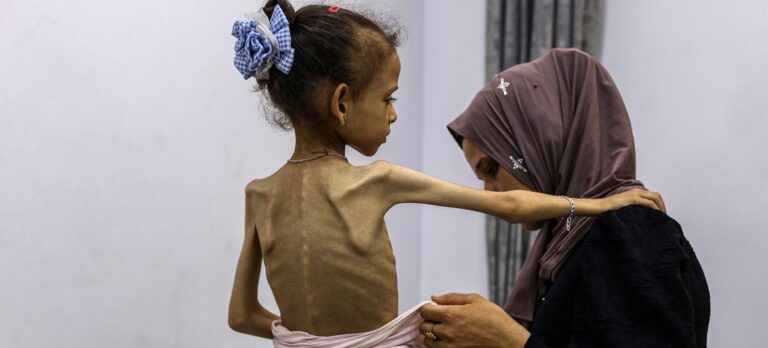
For ten consecutive days, Israel has prevented the entry of essential humanitarian aid into the Gaza Strip, cutting off food, fuel, medicine and other lifesaving supplies to more than two million Palestinians trapped inside the enclave.
The closure of Gaza’s crossings began around 28 February 2026, effectively halting the humanitarian lifeline on which Gaza’s population depends for survival. Aid agencies warn that warehouses are already emptying, bakeries are running out of flour and hospitals are rationing critical supplies.
Humanitarian officials say the restrictions risk pushing Gaza back toward famine conditions that previously emerged during earlier phases of the war.
The aid blockade is unfolding alongside another restriction that has drawn widespread criticism: Israel continues to prohibit international journalists from entering Gaza independently. The ban on foreign reporters — in place since the war began in October 2023 — has left the outside world largely reliant on Palestinian journalists inside the territory to document the conflict.
Despite growing warnings from humanitarian organizations, the aid blockade has now stretched beyond ten days with no clear timeline for reopening the crossings.
Gaza cut off from its humanitarian lifeline
The closure affects several crossings that normally function as Gaza’s lifelines to the outside world.
The most important is the Kerem Shalom (Karem Abu Salem) crossing, the primary entry point for aid trucks carrying food, medicine and fuel. The Rafah crossing with Egypt, often used for medical evacuations and some humanitarian shipments, has also been largely closed.
When the shutdown began, hundreds of trucks loaded with humanitarian aid were forced to halt operations. Thousands more remain stranded outside Gaza, particularly near the logistics hub at Al-Arish in Egypt, waiting for permission to enter.
Humanitarian agencies say the scale of Gaza’s dependence on aid makes even short disruptions extremely dangerous.
Before the war, aid organizations estimated that 500 to 600 aid trucks per day were required to sustain Gaza’s population.
During earlier phases of the conflict, deliveries often fell far below that level, with only 100 to 200 trucks per day entering the territory in some weeks.
Since the latest closure began, aid groups say deliveries have dropped even further, with some days seeing little or no aid entering Gaza at all.
Each day that the crossings remain closed increases the risk of severe shortages of food, medicine and fuel.
Food shortages already emerging
Within days of the crossings closing, aid groups warned that Gaza’s fragile food system was beginning to unravel.
Markets across the enclave reported panic buying as residents rushed to secure basic staples including flour, cooking oil and sugar.
Bakeries — which supply bread to hundreds of thousands of people each day — are particularly vulnerable. Without regular deliveries of flour and fuel, many could soon shut down completely.
Aid organizations operating inside Gaza say the territory’s humanitarian infrastructure is now relying on emergency reserves.
For a population already weakened by years of war, displacement and malnutrition, the consequences could be devastating.
Hospitals running out of supplies
The crisis extends far beyond food.
The World Health Organization has warned that Gaza’s healthcare system is nearing collapse due to shortages of supplies and fuel.
Hospitals are already running critically low on essential items such as surgical materials, trauma equipment and basic medicines.
Fuel shortages threaten generators powering intensive care units, dialysis machines and operating theatres.
WHO officials have described the situation as “catastrophic,” warning that Gaza’s health system is already operating far beyond its limits.
Roughly half of Gaza’s hospitals remain closed or only partially functioning after years of bombardment.
Meanwhile the closure of the Rafah crossing has halted medical evacuations, leaving thousands of critically ill patients unable to travel abroad for treatment.
Another journalist killed
The humanitarian crisis is unfolding alongside an increasingly deadly toll on Palestinian journalists documenting the war.
Over the weekend, journalist Amal Shamali was killed in an Israeli airstrike that struck a displacement tent in the Nuseirat refugee camp in central Gaza.
According to local reports, two additional civilians were killed in the strike, including a four-year-old girl.
Shamali’s death brings the number of journalists killed during Israel’s war on Gaza to more than 160, according to press freedom monitoring organizations.
The conflict has become one of the deadliest wars for journalists in modern history, with Palestinian reporters bearing the overwhelming burden of documenting the war from inside the besieged territory.
Press freedom groups say the continued ban on international journalists entering Gaza further limits the world’s ability to independently verify events unfolding inside the enclave.
Legal obligations under international law
The blockade has also reignited debate over Israel’s obligations under international humanitarian law.
Under the Fourth Geneva Convention, a power exercising control over a territory must ensure civilians have access to food, medical supplies and other essential goods.
If local resources are insufficient, authorities must allow humanitarian relief to reach the population.
International humanitarian law also prohibits collective punishment, meaning civilians cannot be penalized for actions they did not personally commit.
Another key principle concerns starvation. The Rome Statute of the International Criminal Court defines the deliberate starvation of civilians by blocking humanitarian aid as a potential war crime.
Legal experts note that while authorities may inspect humanitarian shipments for security reasons, they cannot arbitrarily block relief supplies needed by civilians.
The ICJ genocide case and humanitarian obligations
The issue of humanitarian access has also become central to the genocide case brought against Israel at the International Court of Justice by South Africa in 2023.
In January 2024, the court issued provisional measures ordering Israel to ensure the delivery of humanitarian assistance to Gaza’s civilian population.
The court ruled that Israel must take “immediate and effective measures” to enable the provision of urgently needed basic services and humanitarian aid.
Subsequent orders reinforced those obligations as the humanitarian crisis worsened.
Legal analysts say prolonged restrictions on aid deliveries could place Israel in violation of those orders if they prevent relief supplies from reaching civilians.
A crisis with no clear end
As the blockade enters its tenth day, humanitarian agencies say the situation inside Gaza is becoming increasingly dire.
Warehouses are emptying, hospitals are rationing supplies, and thousands of aid trucks remain stranded outside the enclave awaiting permission to enter.
For the civilians trapped inside Gaza, access to the most basic necessities — bread, medicine and clean water — now depends on whether the crossings reopen before shortages become irreversible.
Without a rapid restoration of humanitarian access, aid officials warn that Gaza may once again face the specter of famine.