
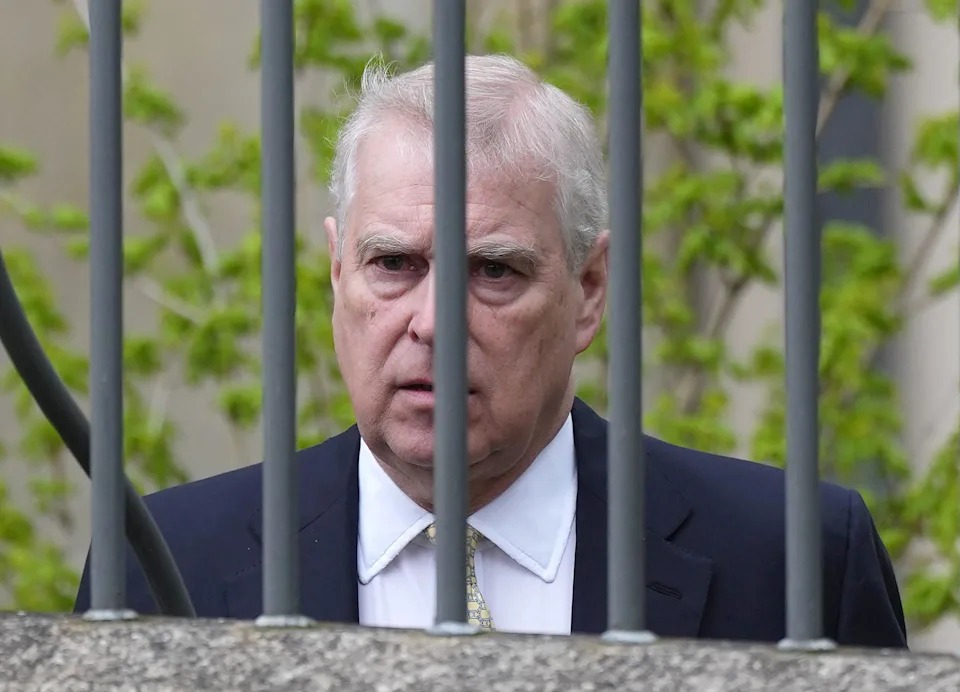

The arrest of Andrew Mountbatten-Windsor, brother of King Charles III, has triggered what may be the most serious crisis ever to confront Britain’s modern constitutional monarchy, intensifying scrutiny of not only the King’s brother but of the institution itself.
Mountbatten-Windsor was arrested this morning at Wood Farm on the Sandringham estate in Norfolk. Wood Farm was the former residence of his father, Prince Philip, who spent much of his retirement there after stepping back from public duties in 2017.
The arrest occurred on Mountbatten-Windsor’s 66th birthday. Officers from Thames Valley Police also conducted searches at properties linked to him in Berkshire and Norfolk.
In its latest public statement, Thames Valley Police confirmed that it has opened an investigation into an offence of misconduct in public office and arrested a man in his 60s in Norfolk. The force said the individual remains in custody while inquiries continue.
No formal charges have been announced.
It is important to emphasise that an arrest does not constitute a finding of guilt. Under UK law, individuals are presumed innocent unless and until proven guilty in court.
What “Misconduct in Public Office” Means
Misconduct in public office is a common law offence in the United Kingdom. It applies where a person holding public office wilfully neglects their duties or wilfully abuses their position in a way that seriously breaches the public trust.
To secure a conviction, prosecutors must demonstrate that:
- The individual held a recognised public office;
- They wilfully neglected to perform their duty or wilfully misconducted themselves;
- The misconduct amounted to an abuse of the public’s trust; and
- There was no reasonable excuse or justification.
The offence carries a maximum sentence of up to ten years’ imprisonment.
Investigators are examining alleged conduct during Mountbatten-Windsor’s tenure as the UK’s trade envoy between 2001 and 2011. Reports indicate police are assessing whether sensitive or confidential government information may have been shared with Jeffrey Epstein during that period. Authorities have not publicly detailed the evidential basis of the allegations.
Loss of Royal Status
Formerly known as Prince Andrew and previously styled Duke of York, Mountbatten-Windsor lost his military titles and royal patronages in January 2022 following a decision by Queen Elizabeth II. He also ceased using the style “His Royal Highness” in official settings at that time.
In late 2025, King Charles III formally removed his remaining royal styles and principal honours through Letters Patent. He now uses the family name Mountbatten-Windsor and no longer holds the royal titles he once carried.
He has not undertaken public duties on behalf of the monarchy since stepping back in 2019.
Ghislaine Maxwell, Epstein and Royal Access
Mountbatten-Windsor’s public standing has long been affected by his association with Jeffrey Epstein, who died in 2019 while awaiting trial in the United States on sex trafficking charges.
Central to Epstein’s network was Ghislaine Maxwell, the British socialite convicted in the United States in 2021 on sex trafficking-related charges. During her trial, Maxwell was described as playing a key role in recruiting and grooming young women for Epstein.
Maxwell moved in elite social circles in London and New York in the late 1990s and early 2000s. She was photographed socialising with Mountbatten-Windsor and is widely reported to have introduced him to Epstein.
A widely circulated photograph taken in 2001 shows Maxwell standing beside Mountbatten-Windsor and Virginia Giuffre at Maxwell’s London townhouse.
Images published in 2020 also showed Maxwell sitting on the Queen’s throne inside Buckingham Palace during a 2002 private tour arranged by Mountbatten-Windsor. The photographs prompted criticism about the level of access afforded to Epstein’s associates at the time.
Mountbatten-Windsor has acknowledged social contact with Maxwell and Epstein but has consistently denied any knowledge of or involvement in criminal wrongdoing.
Recently released Epstein-related documents in the United States have included reported email exchanges appearing to show communications between Mountbatten-Windsor, Epstein and Maxwell. Among them was an August 2001 exchange in which a correspondent believed to be Mountbatten-Windsor asked Maxwell about finding “new inappropriate friends,” to which Maxwell replied she had only found “appropriate friends.”
Another reported email from 2011 stated: “We are in this together … keep in close touch and we’ll play some more soon!!!!”
Media outlets have stressed that being referenced in released documents does not in itself constitute proof of criminal conduct. Mountbatten-Windsor has not been convicted of any offence relating to Epstein.
Civil Settlement and Loan Controversy
In February 2022, Mountbatten-Windsor reached an out-of-court settlement with Virginia Giuffre, who alleged she had been sexually abused as a minor after being trafficked by Epstein and claimed Mountbatten-Windsor had been involved. He denied the allegations and did not admit liability.
Although the settlement terms were confidential, multiple reports placed the figure at approximately £12 million.
It has been widely reported that the settlement funds were advanced to Mountbatten-Windsor by members of the royal family, including sums associated with the late Queen and Prince Philip’s estate. Subsequent reporting has suggested that he has not repaid the full amount of the loan, and that attempts to fund repayment through the sale of a Swiss chalet were unsuccessful.
No official public accounting of repayment arrangements has been issued.
Virginia Giuffre died in April 2025 in Western Australia. Authorities reported her death as a suicide. Her family stated she had endured lasting trauma linked to her experiences under Epstein’s network. Her death renewed international discussion about the long-term psychological impact of sexual exploitation.
Wider Police Review
The arrest forms part of a broader reassessment of material connected to Epstein in the United Kingdom. Reports indicate that nine UK police forces are reviewing documentation linked to alleged offences involving Epstein and associated individuals.
Police have not publicly stated that all such reviews concern Mountbatten-Windsor directly, and no conclusions have been reached.
Political and Public Reaction
Buckingham Palace has stated that King Charles III is prepared to cooperate fully with law enforcement authorities, expressing “profound concern at allegations which continue to come to light” and confirming that, if approached by police, the royal household stands ready to assist.
Prince William has said he is “deeply concerned by the continuing revelations” connected to the broader Epstein scandal and that his thoughts remain with victims.
Prime Minister Keir Starmer reiterated that all individuals are equal before the law and that due process must proceed independently.
The anti-monarchy campaign group Republic has called for the investigation to proceed “without fear or favour,” urging transparency and arguing that no individual’s status should shield them from scrutiny.
A Monarchy Under Strain
The British monarchy is one of the few major hereditary royal institutions still operating in a Western democracy. Over the past century, monarchies in Russia, Germany, Italy and Greece have been abolished.
The British Crown has survived abdication crises — including that of Edward VIII — world wars and sweeping social transformation. Yet detractors argue that repeated controversy risks weakening the public consent upon which a constitutional monarchy ultimately depends.
Some republican campaigners now suggest the institution may be on borrowed time and should be wound down entirely. Others maintain that public support remains significant and that any constitutional change would require parliamentary action and potentially a referendum.
In more than five centuries of English and British history, moments such as this have been vanishingly rare. The last time a senior royal was formally detained by the state was in 1554, when the future Queen Elizabeth I was imprisoned in the Tower of London on suspicion of involvement in rebellion against her half sister, Queen Mary I. Though never charged and ultimately released, her arrest revealed how fragile the monarchy could be in times of political turmoil.
Now, more than four and a half centuries later, the detention of Andrew Mountbatten-Windsor has revived questions about accountability, privilege and the durability of hereditary rule in a modern democracy. Whether this proves to be a passing crisis or a genuine turning point for the Crown remains uncertain, but history suggests that such moments can reshape institutions in ways few anticipate at the time.