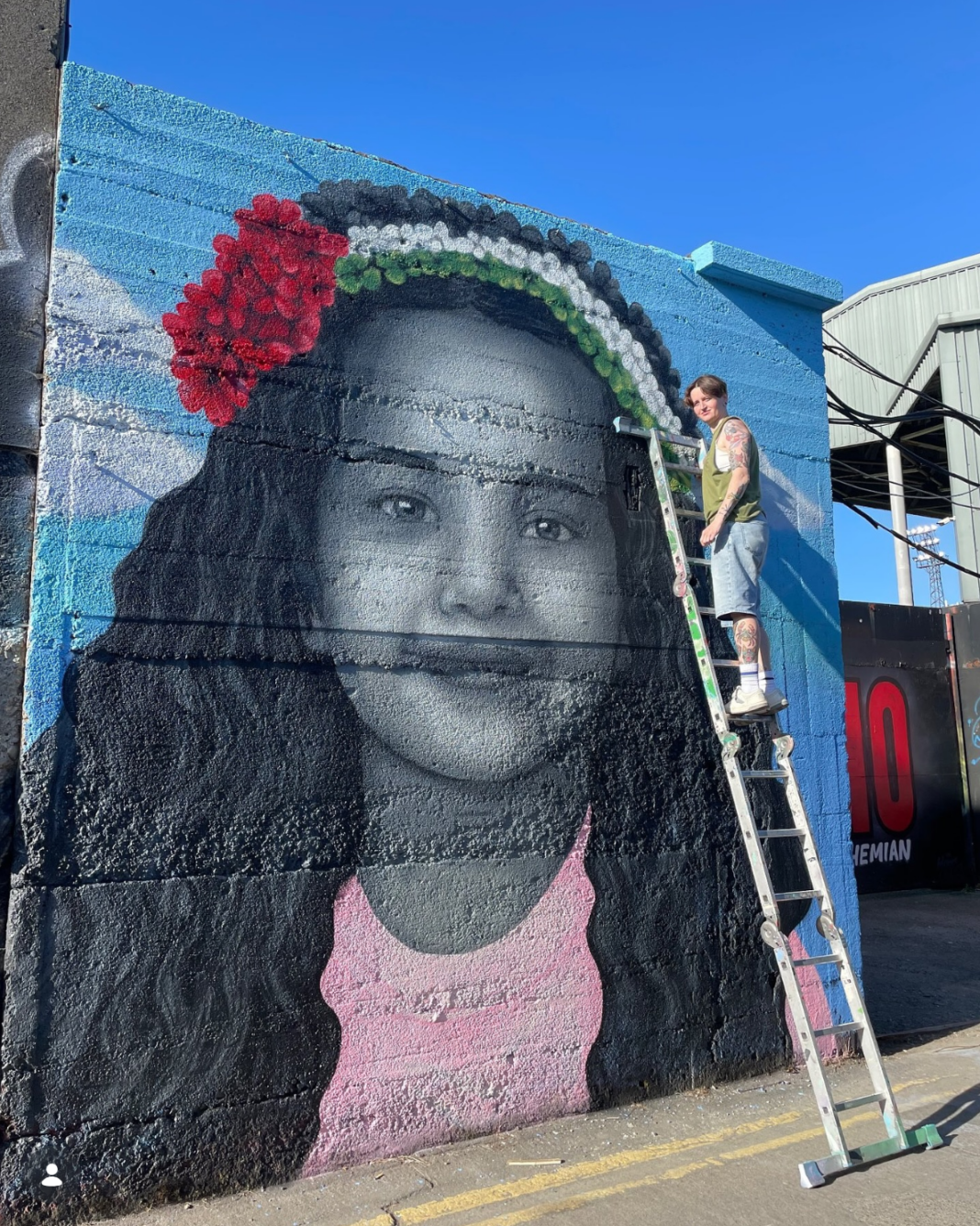

The admission overturns the Israeli military’s first account. But the full fact finding review remains withheld, the ambulance attack is still hedged as an allegation, and the new criminal inquiry enters a system that has almost never prosecuted soldiers for Palestinian deaths.
For more than three hours on 29 January 2024, a frightened five year old girl waited in a bullet riddled car in Gaza City and pleaded for an ambulance to reach her. Hind Rajab was surrounded by the bodies of six relatives. Her fifteen year old cousin Layan had already told rescuers that Israeli tanks were beside the vehicle before gunfire and a scream cut off her call. Hind remained on the line as the Palestine Red Crescent Society sought clearance for a rescue mission that its dispatchers believed had been coordinated with Israeli authorities.[4][5][6]
The ambulance came, but Hind did not leave. Paramedics Yusuf Zeino and Ahmed al-Madhoun lost contact as they neared the car with emergency lights operating. Their burned vehicle and the bodies of the two men were recovered twelve days later, roughly fifty metres from the Kia. Hind and the six members of the Hamada family were found dead inside the car.[4][5]
Israel’s military initially said its forces had not been near the car or within firing range and that no ambulance coordination had been necessary. On 19 August 2026, 933 days after the attack, the Israel Defense Forces reversed the decisive part of that account. Its troops had fired on the car. The ambulance movement had been coordinated. A criminal investigation would now be opened.[1][2][3]
That admission closes one of the central factual disputes in a case that had already been reconstructed from recorded calls, satellite images, projectile impacts, vehicle wreckage, liaison records and United Nations findings. It does not answer who ordered or carried out the fire, why a civilian family car was subjected to an overwhelming attack, how Hind and Layan died after surviving the first volley, why a coordinated ambulance was struck, or why a categorical denial was issued and maintained after evidence of Israeli troop presence was available.[1][4][5][6][7][8]
Nor has Israel released the complete military fact finding report that news coverage sometimes implies now exists in public. The document published by the Military Advocate General’s Corps is a summary of prosecution decisions in five cases. On Hind Rajab, the page says that no further details can be provided about the underlying review. The evidence, witnesses, operational logs, legal reasoning and internal contradictions that produced the referral remain outside public scrutiny.[1]
The result is a landmark admission wrapped in a familiar structure of limitation. Israel has moved from denial to partial acknowledgement, but the inquiry described to the public appears to focus on alleged failures in the coordination of the ambulance. If it does not also examine the attack on the Hamada family, the later gunfire heard on the calls, the shelling of the rescue vehicle, the chain of command and the creation of the false public account, it will leave the core of the case untouched.
| THE CENTRAL SHIFT The question is no longer whether Israeli troops fired on the Hamada family car. The IDF has admitted that they did. The question is whether the investigation will reach the conduct, the commanders and the institutional decisions behind the attack. |
A family trying to escape
On 29 January 2024, Israeli forces were operating in western Gaza City, including Tel al-Hawa. Hind travelled in a black Kia Picanto with her great uncle Bashar Hamada, his wife Ana’am, and their children Layan, Raghad, Sarah and Mohammad. Hind’s younger brother Iyad left the car at the last moment and remained with the adults travelling on foot. The vehicle came under intense fire near a petrol station only a short distance from where the family had sheltered.[4][5]
The exact time of the first attack is one of the unresolved chronological issues. Hind’s mother, Wissam Hamada, told Sky News that the family left at about 8:00 am and that the car was attacked at 8:10 am. The Washington Post reconstruction places Layan’s call to relatives at around 1:00 pm and notes an IDF evacuation notice at 9:32 am. These accounts cannot simply be collapsed into a single definitive timeline. They are especially relevant because the 2026 IDF explanation relies on an advance movement notice.[4][5]
The calls
Layan told relatives that everyone in the car except her and Hind had been killed. When Palestine Red Crescent dispatcher Omar al-Qam reached her, she said that the tanks were beside the vehicle. Gunfire and her scream were then heard before the line went dead. The Washington Post reported sixty two shots audible over six seconds in two bursts; Forensic Architecture and Earshot reported sixty four shots in the relevant audio segment. The small numerical difference reflects analytical counting, not a dispute about the intensity of the fire.[4][6]
Hind answered when dispatchers called back. For more than three hours, Red Crescent personnel tried to reassure a wounded child alone among the bodies of her relatives. She repeatedly asked to be collected, said she was afraid and became increasingly distressed as darkness approached. The public recordings gave the incident a human immediacy rarely available in remote warfare and made the subsequent dispute over responsibility unusually difficult to bury.[4][5]
The ambulance
The Red Crescent sought safe access through the established coordination channel. Sky News published dispatcher audio in which Hind’s mother asked whether the mission had been coordinated and was safe; the dispatcher replied that access had been coordinated after approximately three hours of work. The ambulance left al-Ahli Hospital at 5:40 pm with paramedics Yusuf Zeino and Ahmed al-Madhoun. At about 6:00 pm, as the crew approached with emergency lights on, communication ended amid heavy fire.[4][5]
The bodies could not be recovered until 10 February, after Israeli forces withdrew. Hind and the six relatives were found in the bullet riddled Kia. The ambulance lay burned roughly fifty metres away. Six munitions experts consulted by the Washington Post found the destruction consistent with a round fired by an Israeli tank. Sky News weapons analysis similarly identified damage from a large calibre projectile.[4][5]
Early reports often described Hind as six. Later reporting and her recorded date of birth support the age of five, which is used here. That correction does not change the substance of the case, but precision matters in an investigation built around the consequences of official and journalistic claims.[4][5]
Timeline | From the attack to the admission
| Date | Development | Evidentiary significance |
| 29 Jan 2024 | Hamada family car comes under intense fire in Tel al-Hawa. Layan and then Hind speak with relatives and PRCS dispatchers. | Recorded calls identify tanks close to the car. |
| 29 Jan 2024 | PRCS spends hours seeking safe access. Ambulance carrying Yusuf Zeino and Ahmed al-Madhoun is dispatched after coordination. | Coordination is later confirmed by the IDF in 2026. |
| 10 Feb 2024 | Bodies are recovered from the car and the burned ambulance after Israeli withdrawal. | Wreckage becomes available for visual and munitions analysis. |
| 24 Feb 2024 | IDF says no troops were near the car or within firing range and no ambulance coordination was needed. | Categorical denial later contradicted by the IDF itself. |
| 16 Apr 2024 | Washington Post publishes visual forensics investigation; US says Israel acknowledged units were in the area. | Satellite, audio, route and munitions evidence challenges denial. |
| 21 Jun 2024 | Forensic Architecture publishes reconstruction mapping 335 projectile impacts. | Analysis indicates close range fire and visibility of occupants. |
| 10 Oct 2024 | UN Commission of Inquiry attributes the killings to the IDF’s 162nd Division and identifies potential war crimes. | Independent international finding of responsibility. |
| 18 Jun 2026 | UN Commission report identifies the 401st Brigade and concludes the family car was deliberately targeted at close range. | Specific unit attribution and assessment of intent. |
| 19 Aug 2026 | IDF admits its troops fired on the car, confirms ambulance coordination and opens a criminal investigation. | More than two years of denial gives way to partial admission. |
The admission that changed the official story
The IDF Military Advocate General’s Corps published decisions concerning five incidents reviewed by the General Staff Fact Finding and Assessment Mechanism. It said the mechanism had completed approximately 150 reviews since the beginning of the war and had transferred them to the Military Prosecution. Two cases were referred for criminal investigation: the Hamada family and ambulance killings, and the Tel al-Sultan killings. Three cases involving World Central Kitchen and Médecins Sans Frontières were not referred for criminal investigation.[1]
On Hind Rajab, the military’s wording matters. It stated that troops fired at a vehicle approaching them while travelling contrary to an advance notice issued to residents. It said five passengers were killed and Hind and Layan survived. It then acknowledged that, after calls to rescue authorities, the movement of a Red Crescent ambulance was coordinated to evacuate the casualties. According to the military, allegations say that a shell was fired towards the ambulance when it reached the scene, killing paramedics Yusuf Zeino and Ahmed al-Madhoun. The military ordered a Military Police Criminal Investigation Division inquiry because of alleged failures in coordination.[1]
Associated Press and Reuters described the announcement as an admission that Israeli troops killed Hind and her family. The underlying military statement is more guarded about the ambulance and does not expressly say how Hind died after surviving the first volley. Rigorous reporting should therefore distinguish the broad journalistic summary from the narrower official wording, while recognising that the totality of independent evidence goes considerably further than the IDF statement.[1][2][3]
The Guardian’s report by Jason Burke used stronger language, stating that the IDF had also admitted that troops fired on the ambulance. That is a consequential journalistic characterisation and accords with the broader evidentiary record, but it is not a verbatim description of the primary statement. The quoted military wording confirms coordination, says a shell was fired ‘according to the allegations raised’, and orders a criminal investigation into alleged coordination failures. GreatReporter therefore records the Guardian’s formulation while retaining the narrower official wording as the controlling account of what the IDF expressly said.[1][33]
| WHAT THE PUBLIC DOCUMENT WITHHOLDS “In light of this decision, no further details can be provided beyond the above with respect to the aspects arising from the FFAM’s review.” |
The sentence is decisive for understanding the limits of the announcement. Israel has disclosed the prosecutorial outcome, not the evidence package on which it was based. No publicly accessible full report was attached to the decision, and no witness summaries, radio logs, targeting feeds, tank records or legal analysis were released.[1]
From categorical denial to partial admission
On 24 February 2024, the IDF spokesperson’s unit told the Times of Israel that a preliminary investigation indicated that troops were not near the vehicle or within firing range. It added that, because there were no forces in the area, individual coordination for the ambulance would not have been necessary. That statement denied both physical presence and the premise of the rescue coordination.[4][5]
Contradictory official messages
The Washington Post reported that COGAT official Elad Goren said the agency had ‘coordinated everything’, including the ambulance seeking Hind, although he said he did not know the details. The IDF nevertheless continued to deny that coordination took place. On 16 April 2024, US State Department spokesperson Matthew Miller said Israeli officials had told Washington that IDF units were in the area, while maintaining that the military had no knowledge of or involvement in the attack described. The official account had therefore already shifted from absence to presence without responsibility.[4]
A state funded alternative narrative
In April 2026, the website FactSignal published an article questioning the established account and suggesting possible fighting between Hamas and Palestinian Islamic Jihad as an alternative explanation. The site’s footer stated that the material was distributed by Clock Tower X LLC on behalf of the State of Israel, a disclosure also present in US Foreign Agents Registration Act filings. The 2026 IDF admission that its troops fired on the car undercuts the article’s effort to shift the evidentiary burden back onto Palestinian gunfire without presenting comparable primary evidence.[23][24]
This episode matters beyond one website. It shows how uncertainty can be manufactured after independent evidence has converged. A state denial is repeated, later supplemented by speculative alternatives, and finally narrowed or abandoned once public attention has moved elsewhere. The delay creates an asymmetric information environment: the initial denial travels at the speed of breaking news, while the correction arrives years later and receives a fraction of the cumulative exposure.
The evidence that would not disappear
Convergence, not a single smoking gun
No single item carries the whole case. The strength lies in convergence. The callers described tanks at the car; satellites showed Israeli armour nearby; the IDF’s own material confirmed operations in the neighbourhood; acoustic and damage analysis matched Israeli weapons; the ambulance route was coordinated; and two successive United Nations investigations attributed responsibility to Israeli units. The 2026 military admission then confirmed the decisive proposition that Israeli troops fired on the vehicle.[1][4][5][6][7][8]
Evidence matrix | What the public record supports, and where caution remains
| Evidence | What it supports | Limit or caution |
| Recorded calls | Layan and Hind repeatedly described Israeli tanks next to or approaching the car; gunfire is audible before Layan’s line goes silent. | Eyewitness audio identifies the immediate threat but cannot identify an individual shooter. |
| Satellite imagery | The Washington Post and Sky News identified Israeli armoured vehicles in the area. Sky placed the closest visible vehicle about 300 metres away. | Satellite capture times do not reproduce every minute of the attack, but contradict claims of military absence. |
| IDF materials | An IDF release said forces operated in Shati and Tel al-Hawa during the relevant two week period; the release was later removed. Sky geolocated three units within 650 metres. | The exact filming date of every clip is not established, but the operational presence is corroborated. |
| Vehicle damage | Forensic Architecture mapped 335 projectile impacts. Weapons experts identified likely 7.62 mm fire consistent with weapons mounted on Israeli armoured vehicles. | Calibre consistency is not the same as recovery of a uniquely attributable weapon. |
| Ambulance wreckage | A large exit hole and catastrophic burning were assessed as consistent with a direct fire tank projectile. | The munition itself was not independently recovered and forensically matched to a specific platform. |
| Coordination records | PRCS recordings, the route map, liaison testimony and COGAT comments support prior coordination; the IDF confirmed coordination in 2026. | The internal transmission of the clearance through the Israeli chain remains undisclosed. |
| UN findings | The Commission of Inquiry attributed responsibility to the 162nd Division in 2024 and the 401st Brigade in 2026, concluding that the car was deliberately targeted at close range. | Commission findings use a reasonable grounds standard and are not criminal convictions. |
The United Nations findings
In October 2024, the Independent International Commission of Inquiry found reasonable grounds to conclude that the 162nd Division was operating in the area and was responsible for killing the family, shelling the ambulance and killing the paramedics. It characterised the conduct as potential war crimes, including wilful killing and attacking a civilian object. In June 2026, the Commission’s report on Palestinian children specifically identified the 401st Brigade under the 162nd Division and concluded that the family car was deliberately targeted at close distance while children were inside.[7][8]
The Commission’s standard is not the criminal standard of proof beyond reasonable doubt. Nor does unit attribution automatically establish the personal criminal responsibility of every commander in the chain. It does, however, make the IDF’s long refusal to acknowledge even troop presence exceptionally difficult to defend.
What the new military account still does not explain
A credible criminal investigation must answer a set of questions that the public decision leaves unresolved. They concern not only a broken coordination channel, but the entire sequence from the first shot to the final public denial.
What was the exact time of the first firing, and did it precede the evacuation notice on which the IDF now relies?
What threat did a small civilian car carrying a family and children present to armoured troops, and what positive identification was made before hundreds of rounds were fired?
What happened to Layan after she survived the initial firing described by the IDF, and what caused Hind’s death after her hours of contact with dispatchers?
Which unit received the ambulance coordination, through what channels, and was that clearance transmitted to the soldiers and vehicle crews at the scene?
Which weapon fired on the ambulance, who authorised or executed that fire, and what surveillance or communications records exist?
Why did the IDF issue a categorical public denial before resolving obvious contradictions in satellite imagery, its own operational release and liaison records?
Will the criminal inquiry examine the initial fire on the family car, the subsequent fire heard on the calls, the ambulance strike, the coordination failure, the public denial and the conduct of commanders, or only a narrow administrative breakdown?
The motive claim
Owen Jones argues in his commentary that the paramedics were deliberately killed to prevent Hind from being rescued and testifying publicly. The sequence understandably gives rise to that suspicion: a coordinated ambulance approached a child who had survived an attack, and the rescuers were killed. Yet the publicly available evidence does not presently establish that specific motive. A criminal investigation should test it against communications, targeting feeds, orders and witness testimony, but it should not be reported as proven fact.[28][4][8]
The commanders named in external filings
The 2026 UN report attributes the incident to the 401st Brigade under the 162nd Division. The Hind Rajab Foundation has separately filed allegations with the ICC naming officers it says were in the relevant chain of command. Those filings are allegations, not convictions. The appropriate reporting formulation is that named officers may face investigation for their role or command responsibility, while guilt must be determined through an independent judicial process with access to evidence and a right of defence.[8][29]
The Foundation’s October 2025 Article 15 communication was described by the organisation as a 120 page filing concerning twenty four soldiers and commanders. It publicly identified Colonel Beni Aharon, then commander of the 401st Armoured Brigade; Lieutenant Colonel Daniel Ella, commander of the 52nd Armoured Battalion; Major Sean Glass, commander of a tank company; and tank crew member Itay Cukierkopf. The Foundation said its material included satellite, digital, geolocation and forensic evidence. These are particulars of an advocacy submission, not findings by the ICC, and several other identities were not made public.[36]
Independent official material confirms part of the organisational map, but not the alleged crimes. An IDF release identifies Benny Aharon as a colonel commanding the 401st Brigade. In April 2026, the Times of Israel reported that the military had temporarily returned Daniel Ella to command the 52nd Battalion after his successor was wounded. GreatReporter linked that return to the continuing ICC allegations. Continued or renewed service is relevant to the question of interim institutional safeguards, but it does not establish that the military endorsed alleged unlawful conduct and it creates no presumption of guilt.[37][38][39]
Tel al-Sultan: another account overturned by video
On 23 March 2025, Israeli troops in Tel al-Sultan, Rafah, fired in three episodes on rescue vehicles, including ambulances, a fire engine and a United Nations vehicle. Fifteen Palestinians were killed: eight Red Crescent personnel, six Civil Defence workers and one UN employee. The bodies and vehicles were later found buried. The August 2026 IDF statement acknowledged that the troops decided to crush the vehicles and cover the bodies with metal mesh, and said the shooting raised a reasonable suspicion of criminal misconduct.[1][12]
The military’s first public account said the vehicles advanced suspiciously without headlights or emergency signals. Video recovered from the phone of slain paramedic Rifaat Radwan showed clearly marked vehicles moving slowly with headlights and flashing emergency lights before sustained gunfire began. The IDF then acknowledged that its initial description was mistaken. Later military review referred to professional failures and an operational misunderstanding, while humanitarian organisations and independent investigators demanded a criminal inquiry.[12]
The Guardian added the testimony of those who recovered the dead and survived the attack. Jonathan Whittall, a United Nations official who helped reach the burial site, said the rescuers were killed in uniform while driving clearly marked vehicles on a mission to save lives. Munther Abed, the sole surviving paramedic, said he wanted those responsible to face real justice and insisted that the Red Crescent ambulance service must never be treated as a target. Their evidence gives the procedural question of accountability a direct human and professional dimension.[33]
Tel al-Sultan is therefore not merely a separate atrocity in the same announcement. It is an evidentiary parallel. In both cases, Palestinian emergency workers were attacked; early military accounts minimised or denied crucial facts; independent media or victim generated evidence contradicted those accounts; and formal criminal investigation came much later.[1][5][12]
World Central Kitchen: three strikes and no criminal case
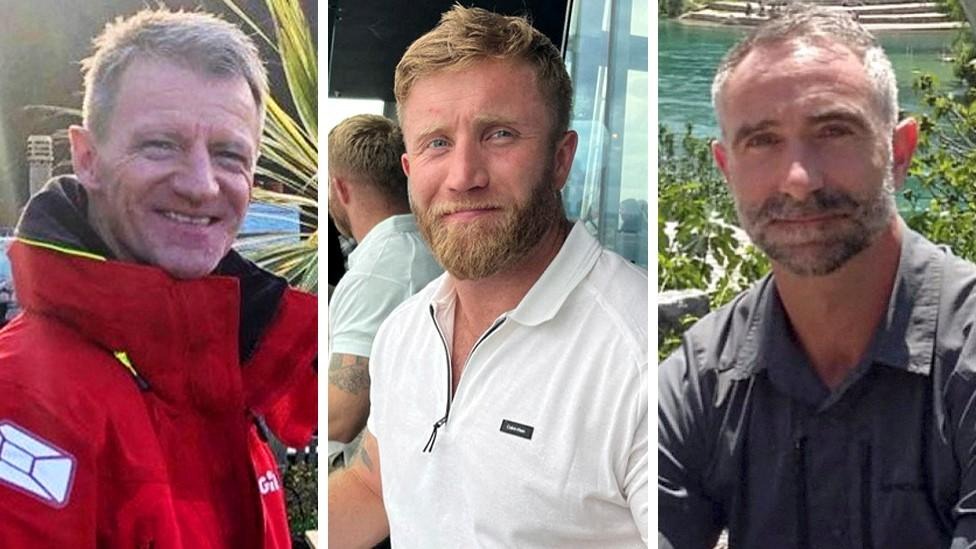
On 1 April 2024, seven World Central Kitchen workers were killed after leaving a Deir al-Balah warehouse in three vehicles. The convoy was travelling in a deconflicted zone and its movement had been coordinated with Israeli authorities. The vehicles were clearly marked on their roofs. The strikes occurred sequentially, allowing survivors of the first strike to move into another vehicle before that vehicle and then the third were hit.[10][30][31]
The IDF’s 2026 review said troops initially saw an armed security presence connected with the aid convoy and later mistakenly identified people entering the WCK vehicles as armed. It said the vehicles deviated from the coordinated route and that attempts to reach WCK representatives were unsuccessful. The military concluded that serious failures occurred but that the commanders’ decisions did not create a reasonable suspicion of criminal misconduct. Two officers had already been removed and senior commanders reprimanded.[1]
World Central Kitchen rejected that account. It said the team was unarmed, the IDF had full visual clarity on the marked vehicles, and the movements, identities and activities were known in advance. The organisation accused the military review of conflating events and shifting blame, and renewed its call for an independent commission.[9][33]
One of those killed was the Australian aid worker Zomi Frankcom. Prime Minister Anthony Albanese said Australia had pressed Israel for transparency, full accountability and any appropriate criminal charges. On the second anniversary of Frankcom’s death, Foreign Minister Penny Wong described her selflessness as something that should not only be celebrated but protected. The Australian response underscores that the unresolved accountability question is diplomatic as well as legal.[33][34]
An Australian special adviser’s public report noted that a senior brigade level officer involved in the strikes had been among 130 signatories to a 20 January 2024 letter calling for aid flows into Gaza to be restricted. The report said this was an issue for the Military Advocate General to address. The fact is relevant to the assessment of possible bias or state of mind, but it does not by itself prove that the WCK convoy was attacked in order to reduce aid deliveries.[18]
The same public report placed the three strikes between 11:09 pm and 11:13 pm. Its special adviser assessed that the first death followed a mistaken identification, while the remaining six workers were killed in the later strikes as a result of failures to comply with rules of engagement and standard operating procedures. GreatReporter’s later comparison is therefore especially pointed: Israel acknowledged grave operational breaches, yet in August 2026 still concluded that the commanders’ decisions did not raise a reasonable suspicion of criminal misconduct.[18][45]
The consequences for humanitarian access
WCK suspended operations immediately after the killings, illustrating how attacks on a single high capacity aid organisation can affect far more people than the direct victims. Jones argues that the suspension was the intended outcome. The causal effect is clear; the specific intent is not. Establishing it would require evidence from orders, communications or testimony that is not publicly available.[30][31]
The same August announcement declined criminal action over the deaths of four Médecins Sans Frontières workers in two incidents in November 2023 and February 2024. The Guardian reported that Israel later effectively barred the medical charity from operating in Gaza. Whatever the separate operational explanations for the two cases, the combination of staff deaths, rejected criminal referrals and restrictions on the organisation raises a wider question about whether humanitarian access can be protected by an accountability system controlled by a belligerent party.[1][33]
The five decisions announced by the IDF on 19 August 2026
| Incident | Decision | Official rationale or issue |
| Hamada family and PRCS ambulance, Jan 2024 | Military Police criminal investigation | Troops fired on car; ambulance movement coordinated; shelling publicly framed as an allegation. |
| Tel al-Sultan rescue workers, Mar 2025 | Military Police criminal investigation | Reasonable suspicion of criminal misconduct; vehicles crushed and bodies covered. |
| World Central Kitchen, Apr 2024 | No criminal investigation | Serious failures acknowledged; military says no reasonable suspicion of criminal misconduct. |
| MSF building, Khan Yunis, Feb 2024 | No criminal investigation; possible command measures | Outdated information and attack process faults acknowledged. |
| MSF convoy, Gaza City, Nov 2023 | No criminal investigation | Military says warning fire may have caused deaths but direct fire was not aimed at convoy. |
A system built to investigate itself
The prosecution gap
The Israeli human rights organisation Yesh Din examined military law enforcement concerning alleged harm to Palestinians and their property between 2018 and 2022. Its 2025 data sheet reported that only one prosecution followed 219 Palestinian fatalities brought to the military’s attention, a probability of 0.4 per cent. Jones cited 209 fatalities in his commentary; Yesh Din’s published figure is 219, and that figure controls.[13]
The exceptional prosecution concerned the killing of Ahmad Jamal Manasra near Bethlehem in March 2019. A soldier pleaded guilty to the military equivalent of negligent homicide and received three months of unpaid military service, probation and demotion to private, without imprisonment. He was not charged for seriously wounding another man in the same episode.[15]
For the Gaza war, Action on Armed Violence identified fifty two publicly reported investigations into alleged war crimes or abuse between October 2023 and June 2025. Of these, forty six, or 88 per cent, were either closed without fault or remained unresolved. One case produced a prison sentence: seven months for aggravated abuse of bound and blindfolded detainees at Sde Teiman. The IDF said its own data covered a wider set of seventy four criminal investigations, many involving detainee deaths or mistreatment and theft of ammunition rather than battlefield killings.[14]
Discipline for minor offences
The contrast drawn by Jones is factually grounded, although it should not be overstated as a direct legal comparison. In May 2026, a soldier received thirty days in military prison for wearing an unauthorised ‘Messiah’ patch. In a separate case, a soldier received twenty one days for placing a cigarette in the mouth of a Virgin Mary statue in southern Lebanon, while the soldier who photographed the act received fourteen days. These were summary disciplinary matters with readily available evidence. They nevertheless underscore how quickly the institution can impose custodial discipline when it chooses to do so.[16][17][28]
The correct conclusion is not that dress code or desecration offences should go unpunished. It is that speed and severity in minor, visible disciplinary cases sit uneasily beside years of delay, narrow scoping and non prosecution in cases involving civilian deaths. The institutional incentives are different, but so are the human stakes.
Fact finding is not criminal accountability
The FFAM is an internal military mechanism designed to collect facts for command and prosecutorial decisions. Its work can preserve evidence and identify operational failures. Yet it is not independent of the institution whose conduct it examines, its reports are often not public, and the process can take years. Yesh Din argues that the mechanism has frequently operated as a shield against genuine criminal scrutiny. The latest IDF announcement cites approximately 150 completed reviews, but the number of criminal prosecutions resulting from them remains the decisive measure.[1][13][14]
Crucially, the document released on 19 August is not the full FFAM report on Hind Rajab. It is a Military Advocate General’s Corps summary of prosecution decisions. The official page states: ‘In light of this decision, no further details can be provided beyond the above with respect to the aspects arising from the FFAM’s review.’ The public therefore cannot inspect the underlying witness accounts, operational logs, evidentiary conflicts, scope of review or legal reasoning that produced the referral. Headlines describing a completed official report should make this limitation explicit.[1]
Competing assessments of the system
Dan Owen of Yesh Din told the Guardian that only a tiny proportion of investigations had produced indictments over the preceding decade and that growing political pressure further deterred law enforcement authorities from holding those responsible to account, even where clear evidence existed. A United Nations report published in February 2026 reached a broader conclusion, describing a pervasive climate of impunity in relation to gross human rights violations and serious violations of international humanitarian law, some potentially amounting to international crimes.[33][35]
The IDF’s position must also be recorded. It says its forces never deliberately target civilians, accuses Hamas of using civilians to shield militants, and argues that it investigates exceptional incidents under international and Israeli law while conducting intensive operations across several fronts in an exceptionally complex environment. Operational complexity is legally and factually relevant, but it does not answer the incident specific evidence: the presence and conduct of troops, the identification of protected persons and vehicles, the transmission of coordination, the proportionality of force, and the accuracy of later public accounts.[1][33]
What international law requires
Protection of civilians and medical transport
International humanitarian law requires parties to distinguish civilians from fighters and civilian objects from military objectives. Civilians are protected from direct attack unless and for such time as they directly participate in hostilities. In case of doubt, the person must be presumed civilian. Medical personnel and medical transport receive specific protection; ambulances and staff must be respected and protected, and the red crescent emblem signals that status.[21][22]
A medical transport can lose special protection only under restricted conditions, including use for acts harmful to the enemy outside its humanitarian function and, where applicable, an unheeded due warning. Even then, the ordinary rules of distinction, proportionality and precautions continue. On the public evidence in the Hind Rajab case, the ambulance was engaged in a coordinated rescue of wounded civilians. No evidence has been published that it was used for an act harmful to the enemy.[21][22]
Potential offences
Depending on proof of intent and the classification of the conflict, the conduct may engage war crimes relating to wilful killing, intentionally directing attacks against civilians or civilian objects, attacking medical units or transport displaying protected emblems, and attacking personnel or vehicles involved in humanitarian assistance. The United Nations Commission of Inquiry has already found reasonable grounds for war crimes in relation to the family and ambulance. A criminal tribunal would still need to establish the required elements for each accused person.[7][19][22]
ICC complementarity
The ICC is a court of last resort. Article 17 of the Rome Statute makes a case inadmissible when a state with jurisdiction is genuinely investigating or prosecuting it, unless that state is unwilling or unable genuinely to carry out the proceedings. In November 2024, the ICC issued arrest warrants for Prime Minister Benjamin Netanyahu and former defence minister Yoav Gallant in the situation in Palestine. Those warrants concern alleged conduct at senior policy level and are not displaced merely because a military police file is opened into a discrete field incident.[19][20]
Jones interprets the new inquiries as a strategic attempt to challenge ICC jurisdiction. That is plausible as a political inference because Israel emphasises its domestic accountability mechanisms. It cannot be stated as proven motive without evidence. Legally, a token or narrowly framed inquiry is not enough: the proceedings must be genuine and must substantially address the same person and conduct at issue in the international case.
Command responsibility
Command responsibility is not guilt by rank. It requires proof that a commander had effective command and control, knew or should have known that forces were committing or about to commit crimes, and failed to take necessary and reasonable measures to prevent, repress or report them. The identification of the 401st Brigade and the 162nd Division is therefore a starting point for investigating orders, communications, rules of engagement, operational logs and post incident reporting, not a substitute for that work.
Universal jurisdiction and the travel strategy
The GreatReporter archive documents a second accountability track operating outside Israel and the ICC: complaints filed in national jurisdictions when alleged participants live in, visit or hold ties to those states. In May 2026, the Hind Rajab Foundation said it had submitted more than ninety complaints across thirty jurisdictions. GreatReporter reported in August that the total had passed one hundred and described six complaints filed during July in Italy, Portugal, Belgium and the Netherlands concerning seven people. These are the Foundation’s and GreatReporter’s reported totals; a complaint can initiate scrutiny but does not establish that prosecutors accepted the facts, opened a case or proved an offence.[40][41]
Belgium provides a concrete example of both the strategy and its limits. After complaints were made during the Tomorrowland festival in July 2025, Belgian federal police located and questioned two Israelis and then released them. Belgian prosecutors later referred the complaints to the ICC. GreatReporter initially described the event as Europe’s first arrest of Israeli soldiers accused over Gaza; the more precise formulation supported by the prosecutorial account is that two men were questioned and released, with no finding of guilt. The episode nevertheless shows that foreign travel can expose alleged participants to identification, evidence preservation and referral even where a national prosecution does not immediately follow.[42][43][44]
The politics of delayed truth
False balance in an evidence rich case
War reporting requires caution, especially when journalists cannot reach the scene. Caution, however, is not the same as treating every official denial as equal to a growing body of contrary evidence. In the Hind Rajab case, the early denial was categorical. The child and her cousin had described tanks; the family witnessed fire; the Red Crescent documented coordination; and satellite imagery could test troop presence. Once those elements were available, continued reliance on ‘fog of war’ framing risked becoming a form of institutional credulity.
There was important investigative journalism. The Washington Post reconstructed the incident in April 2024 using satellite imagery, calls, interviews and weapons expertise. Sky News later geolocated military units, analysed the ambulance and located at least fifteen military vehicles in the neighbourhood. Those investigations did exactly what war reporting should do: preserve uncertainty where necessary, test official claims against physical evidence and show readers how conclusions were reached.[4][5]
The correction deficit
The structural problem is that corrections rarely match the reach of the original claim. A denial becomes part of thousands of reports, broadcasts and conversations. A later reversal is treated as a new, isolated development rather than as evidence that the earlier information system failed. The appropriate journalistic response is not merely to report the admission, but to revisit the chain of claims, identify who repeated them, explain what evidence was available at each stage and correct archives prominently.
Propaganda and search systems
The FactSignal intervention adds a contemporary dimension. State sponsored material was published online with the explicit appearance of independent analysis while carrying a foreign agent disclosure in its footer. Such pages can influence search results and automated systems long after publication. Journalists and researchers should therefore record funding, ownership and provenance, especially when a source’s primary function is to introduce doubt into a well documented civilian harm case.[23][24]
A wider pattern of revised accounts
Hind Rajab’s case did not emerge in a vacuum. Jones places it within a recurring pattern in which Israeli authorities initially deny responsibility or attribute Palestinian deaths to Palestinian fire before later acknowledging Israeli involvement. Three earlier examples illustrate the issue, although each case has its own evidence and legal questions.
The pattern does not mean every Israeli statement is false or every disputed incident has the same explanation. It does mean that official credibility must be earned through transparent evidence rather than presumed. Hind Rajab is unusually important because the military’s 2026 statement directly negates the factual core of its 2024 denial.[1][25][26][27]
Three earlier cases in which the official account changed
| Case | Evolution of account | Why it matters |
| Gaza, 2008 to 2009 | Israel initially denied using white phosphorus during Operation Cast Lead; subsequent evidence and Israeli reviews acknowledged use, while disputing illegality. | Human Rights Watch documented air burst use over populated areas and alleged unlawful attacks. |
| Jabalia, Aug 2022 | After five Palestinian boys were killed in a cemetery, early Israeli messaging attributed the blast to a misfired Palestinian rocket; Israeli reporting later established an Israeli airstrike. | The case shows how attribution can change after attention and evidence develop. |
| Jenin, May 2022 | Israeli officials initially foregrounded possible Palestinian gunfire in the death of journalist Shireen Abu Akleh; the IDF later said there was a high probability she was unintentionally hit by Israeli fire. | Multiple independent investigations had already traced fire to an Israeli position. |
One child in a war of mass civilian death
The war followed the Hamas led attack of 7 October 2023, in which about 1,200 people were killed, most of them civilians, and approximately 250 were abducted. That context is indispensable to understanding the conflict, but it does not suspend the protections owed to civilians, medical personnel or humanitarian workers, nor does it resolve the evidence in any later incident.[33]
Hind’s story has become emblematic because her voice survived. Most children killed in Gaza left no comparable audio record, and most attacks have not received forensic reconstruction. UNICEF reported that by 3 February 2026 at least 71,803 Palestinians had been killed in Gaza, including at least 21,289 children, with many more injured. By August 2026, Associated Press reported the overall toll at more than 73,000, citing Gaza’s Health Ministry. Israel disputes accusations of genocide and war crimes and says it targets Hamas, while United Nations commissions and rights groups have reached grave contrary findings.[2][32][33]
The Guardian reported that the overall death toll had exceeded 73,000, mostly women and children, and that more than 1,200 Palestinians had been killed after a fragile ceasefire took effect in October 2025. It also reported seven Palestinian deaths from Israeli airstrikes on 19 August 2026, with Israeli officials saying that a strike killing six had targeted a meeting of Hamas commanders. These figures are attributed reports rather than findings about each individual strike, but they show that the accountability debate continued amid ongoing lethal operations rather than after the conflict had ended.[33]
The numbers do not reduce Hind to a statistic. They show why the accountability question cannot end with a single famous case. High profile investigations can create a hierarchy of victims in which a child with a recorded call, foreign aid workers or a filmed rescue convoy receive scrutiny, while entire families killed without witnesses remain outside any public process. A credible system must investigate representative patterns and command decisions, not only incidents that generated international embarrassment.
The question now is accountability
The killing of Hind Rajab, her relatives and the paramedics sent to rescue her is no longer a case in which Israeli troop presence can honestly be described as uncertain. The IDF has acknowledged that its forces fired on the car and that the ambulance mission was coordinated. Those admissions arrive after more than two years in which the military denied both propositions, despite extensive independent evidence.
The criminal inquiry is important because it may secure records, identify the units and individuals involved, and compel testimony. It is inadequate if confined to an administrative coordination failure. The evidence demands examination of the initial attack on the car, the later firing heard on the calls, the death of Hind after hours awaiting rescue, the shelling of the ambulance, the accuracy of the evacuation explanation, the chain of command and the origin of the public denial.
The broader announcement also reveals the limits of the system. Israel opened two criminal cases while closing or declining three others, including the World Central Kitchen strikes, even as the affected organisation rejected the military account and demanded independent scrutiny. The low historical prosecution rate means that the existence of a file cannot be confused with justice.
| FINAL ASSESSMENT The admission does not resolve the Hind Rajab case. It confirms that the original denial failed, strengthens the case for independent investigation, and shifts the central question from who fired to whether any institution will impose meaningful accountability. |
What genuine accountability would require
Opening a file is not the same as conducting a genuine investigation. The steps below follow directly from the gaps in the public record and from the need to test individual and command responsibility rather than treating the case as a technical liaison error.
Publish the full FFAM findings, subject only to narrow redactions necessary to protect witnesses or genuinely sensitive operational information.
Define the Military Police investigation’s scope and confirm that it covers the car, the subsequent gunfire, the ambulance strike, coordination channels, rules of engagement, command decisions and public reporting.
Preserve and disclose relevant drone feeds, tank fire logs, radio traffic, geolocation data, orders, after action reports, COGAT communications and the deleted operational release.
Provide independent investigators and the families’ legal representatives with access to the evidence and an effective opportunity to challenge military conclusions.
Ensure that responsibility is examined up the chain of command and is not limited to junior personnel or a technical coordination error.
Invite an independent international mechanism to investigate the Hamada family, the ambulance crew, Tel al-Sultan and the World Central Kitchen strikes.
Require media organisations that reported the original denial to publish prominent corrections and explanatory timelines linking the 2026 admission to their earlier coverage.
Treat state sponsored information operations as such, with clear provenance labels in reporting, search products and automated research systems.
Develop a transparent programme for investigating patterns of civilian and child deaths, rather than restricting scrutiny to a small number of internationally famous incidents.
Verification box: what can and cannot be claimed
The case has generated forceful commentary, advocacy filings and compressed headlines. The distinctions below preserve the strongest supported conclusions without converting allegations into verdicts or describing an unpublished review as a public report.
| Claim | Assessment | Reason |
| Israel admitted firing on the family car. | Established | Directly stated by the IDF on 19 August 2026. |
| Israel admitted shelling the ambulance. | Partly overstated | The Guardian used this formulation. The primary IDF statement confirms coordination but describes the shelling as an allegation; independent and UN evidence attributes it to Israeli forces. |
| There were no IDF troops in the area. | Disproved | Contradicted by satellite imagery, IDF material, US reporting and the 2026 admission. |
| The ambulance did not require or receive coordination. | Disproved | PRCS records and COGAT reporting supported coordination; the IDF confirmed it in 2026. |
| The car was hit in Palestinian crossfire. | Unsupported | The state funded FactSignal article offered speculation; the IDF now says its own troops fired on the car. |
| The paramedics were killed to silence Hind. | Unproven inference | The sequence raises the question, but public evidence does not establish this specific motive. |
| The 401st Brigade committed the attack. | Attributed finding | The UN Commission reached this conclusion on a reasonable grounds standard; criminal responsibility remains to be adjudicated. |
| Yesh Din examined 209 fatalities. | Correction required | Its published figure is 219 fatalities, with one prosecution. |
| No investigation occurred in the WCK case. | Needs qualification | The IDF conducted internal reviews and imposed command measures, but declined a criminal investigation. |
| Israel published the full official investigation into Hind’s killing. | Incorrect | The IDF released a prosecutorial decision summary and expressly withheld further incident details; the underlying FFAM report is not public. |
| Foreign complaints against named soldiers prove criminal guilt. | Incorrect | Complaints and Article 15 communications can trigger scrutiny, preservation or referral, but guilt requires an independent judicial determination. |
| Domestic inquiries automatically defeat ICC jurisdiction. | Incorrect | Article 17 requires genuine proceedings and a case specific complementarity assessment. |
| Extended news feature | Source checked and publication ready | Page |
| GREATREPORTER | GAZA INVESTIGATION | HIND RAJAB | 20 AUGUST 2026 |
Source dossier
Links were checked on 20 August 2026. Primary records control where they are available. United Nations findings are identified by their stated evidentiary standard; advocacy submissions and criminal complaints are not treated as judicial findings; and the IDF page of 19 August 2026 is described as a prosecution decision summary rather than the unpublished full FFAM review.
[1] Israel Defense Forces, ‘Criminal Investigation Decisions Regarding 5 Incidents Examined by the General Staff Fact Finding and Assessment Mechanism’, 19 August 2026. Open source
[2] Associated Press, ‘Israeli military launches criminal probes into killings of Hind Rajab and Palestinian paramedics’, 19 August 2026. Open source
[3] Reuters, ‘Israel opens criminal probes over killings of Hind Rajab, Gaza rescue workers’, 19 August 2026. Open source
[4] The Washington Post, ‘Palestinian paramedics said Israel gave them safe passage to save a 6 year old girl. They were all killed’, 16 April 2024. Open source
[5] Sky News, ‘I’m so scared, please come: Heartbreaking final moments of girl, 5, killed in Gaza’, 8 October 2024. Open source
[6] Forensic Architecture, ‘The Killing of Hind Rajab’, 21 June 2024. Open source
[7] UN Human Rights Office, ‘UN Commission finds war crimes and crimes against humanity in Israeli attacks on Gaza health facilities’, 10 October 2024. Open source
[8] Independent International Commission of Inquiry, ‘The essence of childhood has been destroyed’, A/HRC/62/CRP.2, 18 June 2026. Open source
[9] World Central Kitchen, ‘World Central Kitchen Condemns Israeli Account of April 1, 2024’, 19 August 2026. Open source
[10] World Central Kitchen, ‘WCK calls for independent investigation into IDF strikes’, 4 April 2024. Open source
[11] World Central Kitchen, ‘7 WCK team members killed in Gaza’, 2 April 2024. Open source
[12] Associated Press, ‘Israel walks back its account of the killing of 15 medics in Gaza after video seems to contradict it’, 5 April 2025. Open source
[13] Yesh Din, ‘Data Sheet: Law Enforcement Against Israeli Soldiers Suspected of Harming Palestinians and Their Property, Figures for 2018 to 2022’, 4 February 2025. Open source
[14] The Guardian, ‘Israel closes down or leaves unresolved 88% of cases of alleged war crimes or abuse’, 2 August 2025. Open source
[15] The Times of Israel, ‘IDF court okays community service plea deal for soldier who killed Palestinian’, 9 December 2020. Open source
[16] The Times of Israel, ‘Soldier jailed, commanders penalized after IDF chief calls out Messiah patch’, 14 May 2026. Open source
[17] Associated Press, ‘Israeli troops get prison for desecration of Virgin Mary statue in Lebanon’, 11 May 2026. Open source
[18] Australian Department of Foreign Affairs and Trade, ‘Special Adviser’s Public Report on Israel’s Response to the WCK Strikes’, 2 August 2024. Open source
[19] International Criminal Court, Rome Statute, Article 17 and Article 8. Open source
[20] International Criminal Court, ‘State of Palestine’, case information and warrants. Open source
[21] International Committee of the Red Cross, ‘The protection of hospitals during armed conflicts: what the law says’, 2 November 2023. Open source
[22] ICRC Customary IHL Database, Rule 29: Medical Transports. Open source
[23] FactSignal, ‘When the Narrative Doesn’t Match the Evidence: Reexamining the Hind Rajab Story’, 6 April 2026. Open source
[24] US Department of Justice FARA eFile, Clock Tower X LLC informational materials distributed on behalf of the State of Israel, 2026. Open source
[25] Human Rights Watch, ‘Rain of Fire: Israel’s Unlawful Use of White Phosphorus in Gaza’, 25 March 2009. Open source
[26] PBS NewsHour, ‘Israel carried out Gaza strike that killed 5 children, report says’, 16 August 2022. Open source
[27] Axios, ‘Israeli investigation finds Shireen Abu Akleh likely killed by unintentional IDF fire’, 5 September 2022. Open source
[28] Owen Jones, ‘Israel ADMITS Killing Hind Rajab, But Is STILL Lying’, The Owen Jones Podcast, 19 August 2026. Open source
[29] Hind Rajab Foundation, ‘On Her 7th Birthday, We Know Who Killed Hind Rajab. And We’re Taking Them to Court’, 3 May 2025. Open source
[30] World Central Kitchen, ‘7 WCK team members killed in Gaza’, 2 April 2024. Open source
[31] Reuters, ‘WCK demands independent commission, says IDF cannot investigate its own failure’, 5 April 2024. Open source
[32] UNICEF State of Palestine, ‘Humanitarian Situation Update’, reporting period 5 February 2026. Open source
[33] The Guardian, Jason Burke, ‘Israel admits its soldiers fired at car in which Hind Rajab was killed’, 19 August 2026. Open source
[34] Australian Minister for Foreign Affairs, Penny Wong, ‘Two years since the death of Zomi Frankcom’, 1 April 2026. Open source
[35] United Nations Human Rights Council, ‘Human rights situation in the Occupied Palestinian Territory, including East Jerusalem, and the obligation to ensure accountability and justice’, A/HRC/61/26, February 2026. Open source
[36] Hind Rajab Foundation, ‘Her Name Was Hind: Her Foundation Takes 24 Israeli Soldiers and Commanders to the ICC for Her Murder’, 21 October 2025. Open source
[37] Israel Defense Forces, ‘Head of the Intelligence Directorate Holds Situational Assessment in Gaza’, 15 December 2023. Open source
[38] The Times of Israel, ‘Former armored brigade’s battalion commander returns to head unit after successor wounded in Lebanon fighting’, 15 April 2026. Open source
[39] GreatReporter, ‘Israeli Commanders Behind Hind Rajab’s Killing Return to the Battlefield — and to the Docket at The Hague’, 16 April 2026. Open source
[40] Hind Rajab Foundation, ‘Poland: Criminal Complaint Filed Against Senior Israeli Officials for Starvation and Obstruction of Humanitarian Aid in Gaza’, 25 May 2026. Open source
[41] GreatReporter, ‘Hind Rajab Foundation Files Six Complaints Alleging Gaza War Crimes in July’, 11 August 2026. Open source
[42] Associated Press, ‘Belgian police question two Israelis over alleged Gaza war crimes’, 21 July 2025. Open source
[43] Euronews, ‘Belgium refers complaints against Israeli soldiers over Gaza war crimes to the ICC’, 30 July 2025. Open source
[44] GreatReporter, ‘First in Europe: Israeli soldiers accused of Gaza atrocities arrested at Tomorrowland festival’, 21 July 2025. Open source
[45] GreatReporter, ‘Israel Issues Final Insult to Families of British Aid Workers Killed in Gaza’, 20 August 2026. Open source