
Britain, Australia and Canada have condemned as “shameful” Israel’s decision not to open a criminal investigation into the April 2024 drone strikes that killed seven World Central Kitchen humanitarian workers in Gaza. The intervention, published on 21 August 2026, ended Britain’s initial public silence but left the victims’ families no closer to seeing the evidence, an independent investigation or a court process.
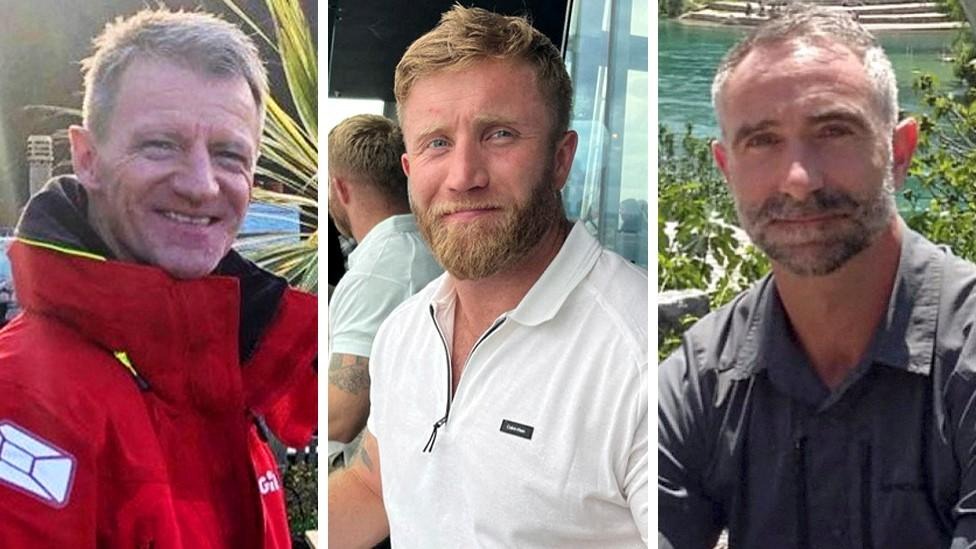
John Chapman, 57, James “Jim” Henderson, 33, and James Kirby, 47, were killed on 1 April 2024 as they attempted to help deliver food to desperate Palestinians. All three were British citizens and former members of the Armed Forces who continued their lives of service in support of others.
In their joint statement, the three governments said the Israeli military’s announcement, made without further explanation on World Humanitarian Day, was particularly egregious and had come far too late. They said the victims and their families deserved justice and accountability and promised to continue seeking answers on their behalf.
The statement placed the attack within a much wider absence of accountability in Gaza. It said the territory remained the deadliest place in the world to deliver aid despite a fragile ceasefire and recorded that 186 humanitarian workers were killed there during 2025. The Foreign Office separately said Britain was “appalled and angry” for the families of Chapman, Henderson and Kirby.
The families of the three British former servicemen, who travelled to Gaza to protect a WCK food mission during Israel’s siege and starvation of more than two million civilians, may nevertheless never see anyone brought to justice. The joint condemnation announced no independent British investigation, release of potentially relevant British surveillance material, referral to an international fact finding body or legal process capable of testing Israel’s account.
They were killed during an Israeli assault in which more than 70,000 Palestinians have been reported killed, including at least 21,289 children recorded by UNICEF by 3 February 2026. The United Nations Independent International Commission of Inquiry has concluded that Israel committed genocide in Gaza, a finding Israel rejects, while the separate genocide case remains before the International Court of Justice.
The machinery of that assault was sustained by foreign military support. The United States provided Israel with billions of dollars in military assistance and weapons; Germany authorised hundreds of millions of euros in military exports; and Britain continued licensing military equipment and components, including participation in the global F-35 supply programme. The three Britons therefore entered Gaza to protect a food mission amid a campaign conducted by Israel with extensive material support from the same Western allies that proclaimed concern for civilian life.
For their families, the killings were not an administrative mistake that could be closed with a military press notice. Kirby’s relatives described his death as murder and demanded that the evidence be examined by an independent body and, if appropriate, a court. No Israeli court will now hear the case because the military prosecution has decided that the conduct of the officers who tracked and struck the three vehicles does not even warrant a criminal investigation.
That decision closes the file without publicly answering one of the most disturbing matters identified by Australia’s special adviser, former defence chief Air Chief Marshal Mark Binskin. Binskin recorded that a senior brigade officer involved in the strikes had reportedly signed a January 2024 letter calling for restrictions on the flow of humanitarian aid into Gaza. He told the head of Israel’s initial inquiry that the matter would need to be addressed by the Military Advocate General. The report did not establish that the letter caused the attack, but evidence of a senior officer’s prior position on restricting aid was plainly relevant to the command culture, possible state of mind and credibility of the claim that the killing of seven food workers was merely an operational mistake. Israel’s final public summary does not say whether the letter was investigated, identify any conclusion about it or explain why it created no reasonable suspicion requiring a criminal inquiry.
Australia’s response was immediate. On 20 August, Foreign Minister Penny Wong said her government was “outraged,” called Israel’s timing on World Humanitarian Day “especially insulting,” announced that the Israeli ambassador would be summoned and instructed Australia’s ambassador in Israel to deliver Canberra’s protest directly. The Australian government, she said, “will not stop pressing Israel for justice” for Australian aid worker Lalzawmi “Zomi” Frankcom and her colleagues. Frankcom’s relatives said she deserved more than an opaque internal process ending with the Israeli military absolving its own personnel of criminal wrongdoing. Israel’s ambassador to Australia, Hillel Newman, defended the decision.
Britain joined Australia and Canada in the joint condemnation one day later. The language was unequivocal, but no equivalent British summons of Israel’s ambassador was announced and no British minister explained what additional action would follow the government’s repeated promises to Chapman, Henderson and Kirby’s families. Poland also described the Israeli decision as deeply disappointing and called on Israel to cooperate with the Polish investigation into the killing of Damian Soból.
The difference extends back to the first days after the attack. Australia appointed former defence chief Air Chief Marshal Mark Binskin as a special adviser on 8 April 2024, only seven days after Frankcom and her colleagues were killed. He travelled to Israel, questioned military and government officials, examined the Israeli process and viewed the unedited drone footage. Britain, despite losing three citizens rather than one, sent no equivalent investigator and commissioned no comparable public report.
This was not a minor bureaucratic omission during a quiet period in which London could reasonably wait for events to unfold. Britain left the investigation to Israel while the Israeli assault and siege continued through what the United Nations Independent International Commission of Inquiry would later conclude was a genocide. By 3 February 2026, UNICEF reported that at least 21,289 Palestinian children had been killed in Gaza and another 44,500 injured. UNICEF subsequently reported that at least 300 children were killed during the 300 days following the announcement of a ceasefire in October 2025. As the machinery of destruction continued to grind through Gaza’s children, hospitals, schools and displaced families, Australia pursued a national investigation while Britain relied on assurances from the military responsible.
That absence is particularly conspicuous because three of the seven people killed were British, more than from any other foreign country represented in the convoy. It is also inconsistent with the position Britain expressed only weeks before Israel closed the file. On 7 July 2026, Middle East minister Hamish Falconer told Parliament that he had raised the case “at every single available level and on every available opportunity.” He said the independence of Israel’s accountability mechanisms was proving “woeful” and admitted that he had no answers for the families.
Israel has now supplied its answer, while Britain, Australia and Canada have supplied their condemnation. Nobody involved in the WCK strikes will be criminally investigated or prosecuted within Israel’s military justice system, and the underlying evidence will remain hidden.
Veterans who returned to danger to help others
Chapman, Henderson and Kirby were members of the security team supporting World Central Kitchen, the disaster relief organisation founded by chef José Andrés. Their role was to protect humanitarian personnel attempting to move food through one of the most dangerous places on earth for aid workers.
Chapman, from Poole, had served in the Royal Marines and was remembered by his family as an extraordinary father, husband, son and brother. His relatives said he died trying to help people and was subjected to an “inhumane act.”
Henderson, from Falmouth in Cornwall, was a former Royal Marine, a fiancé and, in WCK’s words, a kind, honest and compassionate family man. His humanitarian work included teaching first aid to civilians in Ukraine and training people to respond to trauma. After his death, his brother said that accountability was the family’s only hope of justice and expressed little faith that the British government would hold the correct people responsible while continuing to arm Israel.
His father, Neil Henderson, later demanded the release of any British evidence that might explain why his son was targeted. “This footage should not be kept hidden from our family,” he said after learning that the Ministry of Defence held surveillance material from an RAF flight over Gaza on the day of the attack.
Kirby, known as “Kirbs,” had served with the British Army in Bosnia and Afghanistan before moving into security work.
Kirby’s family described him as courageous, compassionate and instinctively willing to help people in danger. He understood the risks of entering Gaza, but went because civilians needed assistance. His cousin Louise Kirby later said that his death left an unimaginable void in the life of his mother, Jacqui, whose only son had been killed.
In April 2026, on the attack’s second anniversary, Kirby’s family asked Bristol City Council to support a permanent memorial. They proposed a mural and surrounding marble as a tribute to a man they wanted their city to remember as a hero. The request carried a bitter contrast: while his family tried to preserve his name, the process supposedly established to determine responsibility for his death remained concealed inside the military that killed him.
The four other victims were Frankcom, 43, an Australian humanitarian worker and the WCK team leader; Damian Soból, 35, from Poland; Jacob Flickinger, 33, a dual Canadian and American citizen and former member of the Canadian Armed Forces; and Saifeddin Issam Ayad Abutaha, 25, the Palestinian driver and translator working with the team.
They were not combatants. They were part of a humanitarian operation whose personnel, vehicles, route and purpose had been extensively coordinated with the Israeli authorities.
The attack was exceptionally prominent because six of the seven victims were foreign nationals, but it did not occur in isolation. In May 2024, Human Rights Watch documented at least eight Israeli strikes on aid convoys or humanitarian premises whose coordinates had been supplied to the Israeli authorities. The organisation said no advance warning was issued in any of the eight cases and that at least 15 people were killed and 16 injured.
By October 2025, the United Nations humanitarian office said at least 562 aid workers, including 376 United Nations personnel, had been killed in Gaza since 7 October 2023. Israel says it does not deliberately target humanitarian personnel, but the scale of the deaths and the repeated failure of coordination systems place the WCK attack within a much wider collapse of protection for those attempting to keep civilians alive.
Carrying food into a landscape of starvation
The seven were killed after helping to unload more than 100 tonnes of food brought to Gaza through a maritime route. The cargo was part of an effort to reach a population already being pushed towards famine by Israel’s military campaign and restrictions on humanitarian access.
Only two weeks before the attack, the Integrated Food Security Phase Classification had warned that famine was imminent in northern Gaza. Its March 2024 analysis found that the entire population of approximately 2.23 million people was experiencing acute food insecurity and that about 1.1 million people were expected to face catastrophic conditions. It said the famine threshold for household food insecurity had already been exceeded and called for an immediate ceasefire and a major increase in humanitarian and commercial access.
The warning was followed by an official finding. In August 2025, the IPC confirmed famine in Gaza City, the first officially recorded famine in the modern history of the Middle East. Britain’s representative at the United Nations described it as entirely man made and said Israel must lift its restrictions so that food, medicine and fuel could reach civilians. The declaration gave retrospective force to the purpose of the WCK mission: the workers were killed while trying to interrupt a hunger catastrophe that later crossed the formal famine threshold.
Four days before the WCK convoy was destroyed, the International Court of Justice ordered Israel to take immediate and effective measures to enable urgently needed food, water, medical supplies and other humanitarian assistance to reach Palestinians in Gaza.
The legal case over Israel’s conduct remains before the ICJ and has not yet received a final judgment on the merits. Israel denies committing genocide. However, the United Nations Independent International Commission of Inquiry concluded in September 2025 that Israel had committed genocide against Palestinians in Gaza, and in June 2026 said the genocide and other atrocity crimes were continuing.
The WCK team was therefore not entering an ordinary battlefield with an incidental food shortage. It was attempting to feed civilians within a deliberately constricted humanitarian environment that international investigators would later conclude formed part of a genocide.
A mission known in extraordinary detail
The Australian government’s special adviser, former defence chief Air Chief Marshal Mark Binskin, reconstructed the mission in a public report released on 2 August 2024. His account demonstrates how thoroughly Israel knew about the operation before the missiles were fired.
World Central Kitchen’s coordination requests included the organisation’s identity, the task, the specific vehicles, the names and photographs of personnel and a detailed route. Israel’s Coordination and Liaison Administration approved and distributed the information within Southern Command. A senior Israeli commander and a representative of COGAT, the Israeli defence ministry body responsible for coordinating civilian activity in the occupied territories, were present at the jetty during the day.
The operation involved approximately eight locally contracted aid trucks, WCK vehicles and a separate vehicle belonging to a locally contracted security provider. The convoy was delayed while waiting for Israeli permission to move from the jetty, which meant that an operation WCK preferred to conduct in daylight extended into the night.
At the WCK Welcome Centre, locally contracted security personnel boarded the aid trucks. One man standing on a truck fired a weapon into the air. The Israeli drone operator saw this and the brigade fire support commander interpreted it as evidence that Hamas had seized the convoy.
The distinction between the truck security and the people later killed is crucial. Binskin reported that WCK and Solace Global took particular care to ensure their international personnel were never armed, openly or discreetly, precisely because they feared being misidentified by Israel. He also reported that the locally contracted security personnel protecting the trucks were separate from the WCK team.
After the trucks reached the warehouse, Israeli surveillance observed armed individuals around the wider convoy. An initial request to attack vehicles near the warehouse was refused because they were too close to the humanitarian convoy. A division commander also directed that no further strikes should occur around humanitarian convoys that night.
The armed local security vehicle subsequently drove north. The three WCK vehicles carrying the seven aid workers travelled west towards the coast and then turned south towards their accommodation in Rafah. Israel’s drone team stopped pursuing the vehicle in which armed men were actually travelling. It instead attacked the three WCK vehicles.
Three missiles in four minutes
The vehicles were struck between approximately 11.09pm and 11.13pm. They were not destroyed in a single confused explosion.
The first missile hit an armoured WCK vehicle. Two survivors escaped and transferred into the second vehicle. Approximately two minutes later, that vehicle was struck. Survivors again managed to escape and reach the third vehicle. Israel then fired a third missile, killing everyone who remained.
Binskin assessed that one person was probably killed in the first strike, two in the second and four in the third. His central conclusion was that the first death followed a mistaken identification and failure to comply with the intent of senior command direction, while the remaining six deaths resulted from violations of Israeli standard operating procedures and rules of engagement. The brigade attack cell did not carry out the required new identification before authorising the second and third strikes.
The vehicles were separated across the road, yet they were followed and attacked in succession as the surviving aid workers attempted to escape. Israel says the drone operators believed the vehicles contained Hamas operatives. World Central Kitchen maintains that the military had full visual clarity, knew the team’s identity and movements and attacked clearly marked humanitarian vehicles over an extended sequence.
The distinction matters legally. There is no dispute that the vehicles were intentionally selected and struck. What Israel denies is that its personnel knew they were killing the WCK team. The families and WCK have demanded an independent investigation because the evidence necessary to test that denial remains under Israeli control.
An investigation completed in less than 72 hours
Israel’s initial Fact Finding and Assessment Mechanism inquiry began on 2 April 2024 and was completed on 4 April. It concluded that the attack should not have happened, that the WCK mission had been properly coordinated at higher levels and that critical information was never passed to the brigade and drone operators.
The inquiry was led by retired Major General Yoav Har-Even, whom the IDF identified as head of the military’s fact finding mechanism. Har-Even was concluding an eight year term as president and chief executive of Rafael Advanced Defense Systems, the Israeli state owned arms manufacturer. Rafael produces the Spike family of precision missiles, which has been widely reported as the type of weapon used against the convoy, although Israel’s public findings have not confirmed the munition.
The reported aircraft was an Elbit Systems Hermes 450 drone. Neither the platform nor the missile manufacturer was accused of deciding to attack the convoy, but the industrial connections sharpen the appearance problem surrounding a process conducted entirely within Israel’s military and defence establishment. The first factual examination of the attack was led by the recently departing head of a major Israeli weapons company, while the complete evidence and precise weapon record remained beyond independent public scrutiny.
The inquiry found that the identification of supposed gunmen had been unprofessional, that a WCK driver had been wrongly identified as placing a weapon inside one of the vehicles and that the decision makers had adopted the wrong mindset. It also acknowledged that firing on the second and third vehicles violated Israeli procedures and rules of engagement.
The Israeli chief of staff removed the brigade fire support commander and brigade chief of staff from their positions. The brigade commander, the commander of the 162nd Division and the head of Southern Command received formal reprimands. These were administrative and command measures, not criminal findings.
Binskin initially described Israel’s response as timely and, with exceptions, sufficient, although he had no investigative powers and relied on voluntary cooperation. He nevertheless emphasised that the military prosecutor still had to decide whether the case should be referred for a criminal investigation. He recommended that Australia demand publication of both the decision and its reasoning.
The military prosecutor indicated in 2024 that this next decision should take one or two months. It took more than two years.
Israel’s final account contradicts earlier findings
On 19 August 2026, the IDF published a bulletin covering prosecution decisions in five prominent cases. It announced criminal investigations into the killing of five year old Hind Rajab, six relatives and the paramedics sent to rescue her, and into the killing of 15 Palestinian rescue workers and a United Nations employee at Tel al-Sultan. It declined to open criminal investigations into the WCK attack and two incidents involving Médecins Sans Frontières.
The military acknowledged that Israeli troops had opened fire on the Kia Picanto carrying Hind and her family as they attempted to flee an offensive in Gaza City on 29 January 2024. Hind remained alive long enough to make a desperate telephone call to the Palestinian Red Crescent in which she pleaded for rescue, but she, the six relatives in the vehicle and the medics sent to reach her were later found dead. The acknowledgement followed repeated Israeli denials that its forces had been operating near the car and independent investigations that found evidence pointing to nearby Israeli tanks.
The decision to investigate those killings does not itself guarantee a prosecution or conviction. Specialists cited by the Guardian said Israeli criminal investigations into military personnel over the killing of Palestinians very rarely produce convictions, a record that reinforces the demand for independent scrutiny even in the cases Israel has agreed to examine.
In the WCK case, Israel said the troops had identified a gunman on a truck and interpreted the vehicles around the trucks as evidence that Hamas had seized the convoy. It claimed WCK had hired an armed security force whose presence “in the organisation’s vehicles” had not been coordinated with the IDF. It also said that people mistakenly identified as armed entered vehicles that travelled south from the warehouse while deviating from the previously coordinated route.
The language appears to merge distinct people, vehicles and moments into a single narrative. Binskin’s report separated the armed local truck security from the unarmed WCK and Solace Global personnel. It said the vehicle containing the previously identified gunmen travelled north, while the WCK vehicles travelled west and then south.
The route claim presents another significant problem. Binskin recorded that the WCK vehicles did not return to the Welcome Centre as planned, but he also reported that Israeli investigators did not discover this deviation until after the attack. The decision to strike had already been made before the vehicles turned south. He therefore concluded that the changed route played no part in the targeting decision.
Israel’s new account also says its personnel tried unsuccessfully to contact WCK during approximately half an hour of surveillance. Binskin found that the extended communications process was difficult to time precisely and appeared to continue after the vehicles had already been attacked, suggesting that the Israeli coordination authority lacked real time awareness of what its military was doing.
Despite acknowledging “serious failures,” the chief military prosecutor concluded that the commanders’ decisions did not create a reasonable suspicion of criminal misconduct when considered against the “sequence of suspicious indicators” and the operational circumstances. The Military Advocate General did not personally make the decision because of a previous professional relationship with one of the people involved. The chief military prosecutor made it instead.
No additional disciplinary measures were ordered. The case was closed.
The report Israel did not publish
The document issued on 19 August has been widely described as a report, but it is not the complete investigative report. It is a short public summary of decisions covering five cases.
Israel has not published the full FFAM factual assessment, the 90 minute drone recording, the drone audio, the targeting authorisations, the operators’ communications, the full coordination documents, the exact attempts to contact WCK, witness interviews or the detailed legal reasoning used to decide that no criminal suspicion existed.
Binskin was permitted to watch the unedited drone video, but it had no audio. Earlier, representatives of the countries whose citizens were killed were shown an edited clip lasting about five minutes. It did not include the strikes and was reportedly grainy and difficult to assess. The families have continued demanding release of the audio and other evidence.
Israel is therefore asking the victims’ relatives and the public to accept the conclusion of an internal military process while withholding the evidence on which that conclusion supposedly rests. It investigated itself, decided that its commanders should not be investigated and published only its own compressed narrative of why.
The evidence Britain will not release
Israel is not the only government withholding potentially relevant material. Reporting previously published by GreatReporter drew attention to an RAF Shadow R1 surveillance aircraft that flew from RAF Akrotiri in Cyprus and spent approximately five hours over Gaza on 1 April 2024.
The Ministry of Defence confirmed in a freedom of information response that it holds video footage of Gaza from that flight, but refused to disclose it on national security and defence grounds. The aircraft landed in Cyprus at approximately 10.49pm, according to flight tracking data examined by Declassified UK, while the three missiles were fired at approximately 11.09pm, 11.11pm and 11.13pm.
That timing means it cannot responsibly be claimed that the RAF aircraft certainly filmed the missiles hitting the vehicles. It appears to have left Gaza shortly before the attack. Its recording could nevertheless contain evidence from the critical period leading to the strikes, including activity around the warehouse, the location of the local armed security personnel, the separation of their vehicle from the WCK cars and the movements that Israel later used to justify its targeting decision.
The Ministry of Defence has not disclosed precisely which parts of Gaza were recorded or at what times, so the families cannot know whether the material corroborates Israel’s account, contradicts it or contains nothing relevant. Britain has therefore demanded transparency from Israel while refusing to establish the relevance of evidence in its own possession.
The Henderson family asked the government for full transparency, a guarantee that no British supplied weapon or component was used in the attack and release of the RAF material. They also called for an end to British arms supplies to Israel. These were not abstract demands from a campaigning organisation. They came from the family of a former Royal Marine killed by the military of a country Britain continued to arm and support.
Parliament has repeatedly raised the footage. In a debate on military cooperation with Israel on 18 March 2025, Shockat Adam told ministers that the WCK families had requested the Shadow R1 recording and asked what was being hidden. Armed forces minister Luke Pollard said the flights were solely intended to assist hostage rescue and that only hostage related information could be passed on, subject to confidence that it would be used consistently with international humanitarian law. He did not announce release of the WCK material or an independent assessment for the families.
The issue is even more important now that Israel has closed its case. The RAF recording may or may not resolve the central factual disputes, but Britain has neither released it, provided a public account of its contents nor explained whether it has been examined by an authority independent of the Israeli military.
World Central Kitchen rejects Israel’s account
World Central Kitchen responded on 19 August with an unusually direct condemnation. It said the decision was inconsistent with the full truth, deeply offensive and incapable of providing any justification for the attacks.
The organisation said Israel knew the people in the WCK vehicles were unarmed and posed no threat. It said the military had clear visual awareness of the marked vehicles and advance knowledge of the team’s movements, identities and activities. Most significantly, WCK accused the military investigation of conflating different timelines and events, muddying the story and transferring blame for the IDF’s conduct onto those it killed.
WCK renewed its demand for an independent commission, arguing that the IDF could not credibly investigate its own actions.
Britain joins the condemnation after Australia acts
Australia’s ability to respond decisively did not emerge overnight. On 8 April 2024, Wong appointed Binskin to examine whether Israel’s investigation and response were sufficient. His public report recorded the procedural failures, the sequence of strikes and the violations that led to six of the seven deaths. Australia then followed the military prosecution process and repeatedly said it expected transparency and any appropriate criminal charges.
Binskin did not merely review documents from Canberra. He and his team visited Israel between 5 and 13 May 2024, obtained access to the senior levels of the IDF they requested, met the head of the Israeli fact finding mechanism and the chief of staff, and watched approximately 90 minutes of unedited drone footage. His mandate had limitations, including the absence of compulsory investigative powers and the lack of audio on the recording, but Australia nevertheless placed a senior former military commander inside the process and produced a public account against which Israel’s conduct could later be judged.
Britain did nothing comparable. It did not dispatch a former chief of the defence staff or another independent military expert, did not obtain and publicly assess the drone footage, did not publish a British reconstruction of the three strikes and did not establish an evidentiary route independent of Israel’s armed forces. This was despite the British death toll being three times Australia’s and despite Chapman, Henderson and Kirby having previously served in Britain’s own military.
The moral contrast became sharper as the war continued. Australia’s investigation was launched while famine was being projected in Gaza and while aid organisations were warning that restrictions and continuing military operations were destroying the means of civilian survival. Britain continued to wait through the most lethal stages of the assault. By February 2026, the UNICEF total of at least 21,289 children reported killed had already passed the 20,000 threshold, while tens of thousands more children had been injured and the health, water, education and food systems on which they depended had been devastated.
The decision of 19 August directly frustrated that declared expectation. Australia’s formal protest on 20 August was therefore the latest stage of a government process that had lasted more than two years. Canberra summoned Israel’s ambassador and instructed its own ambassador in Israel to protest directly. Israel’s ambassador to Australia defended the military’s decision, while Frankcom’s family rejected an internal process in which the institution responsible for the attack ultimately cleared its own personnel of criminal wrongdoing.
Britain took a different course. It called for transparency and, in April 2024, said Israel’s internal findings should be followed by a wholly independent review. It never appointed an equivalent British investigator and never produced its own public account for the families of its three citizens. For approximately a day after Australia’s protest, London issued no response.
In June 2025, the British government told Parliament that the strike was an “appalling injustice,” that it was pressing Israel to decide whether criminal proceedings should begin and that it expected those responsible to be meaningfully held to account. On the second anniversary in April 2026, Falconer again said Israel had a responsibility to provide answers and promised that Britain would continue pushing for justice.
By July, Falconer’s confidence in Israeli accountability had visibly collapsed. He told the Foreign Affairs Committee that when he became minister he had believed Israel’s justice system was sufficiently rigorous and independent. The WCK case and other incidents, he said, had produced an “obvious and growing concern” that the mechanisms were proving woeful. Asked what the Israeli system had done to deliver justice to the families, he replied: “Answers have I none.”
On 21 August, Britain finally joined Australia and Canada in a joint statement calling Israel’s decision “shameful.” The three governments said the announcement was too little and too late, described its publication on World Humanitarian Day as particularly egregious and promised to continue seeking answers for the families. They also said the WCK attack was one of countless incidents in Gaza for which there had been no accountability, noting that 186 humanitarian workers were killed in the territory during 2025 despite the fragile ceasefire.
The Foreign Office said Britain was “appalled and angry” for the families of Chapman, Henderson and Kirby. Canada’s participation reflected the killing of Jacob Flickinger, a dual Canadian and American citizen and former member of the Canadian Armed Forces. Poland, whose citizen Damian Soból was killed, said it was deeply disappointed and called on Israel to cooperate with Polish investigators.
The joint statement corrected Britain’s initial silence but did not close the gulf between condemnation and action. It announced no summons of the Israeli ambassador in London, no British investigator, no publication or independent assessment of the RAF surveillance material, no referral to the International Humanitarian Fact Finding Commission and no other process capable of compelling evidence or determining criminal responsibility.
Britain protected the Israeli commander while the families waited
Britain’s treatment of the Israeli chain of command offers another revealing contrast. On 24 and 25 November 2024, while the military prosecution decision remained outstanding, IDF chief of staff Herzi Halevi visited the United Kingdom for official meetings. Halevi was the commander to whom Har-Even presented the initial findings and the officer who approved the dismissals and reprimands that followed the WCK attack.
There is no public evidence that Halevi personally authorised the strikes, and he was not among the Israeli officials named in the International Criminal Court warrants issued days before his visit. Britain nevertheless granted him special mission status for the trip, a temporary form of protection attached to an official state visit. Declassified UK reported that he met senior Foreign Office and Ministry of Defence officials and Attorney General Richard Hermer to discuss Gaza and Lebanon.
The symbolism is difficult to avoid. Britain made formal arrangements to receive and protect the commander of the military responsible for the attack, yet it did not send an equivalent British investigator to examine the deaths, did not release its own surveillance material and did not create an independent route through which the families could test Israel’s version of events.
On 26 November 2024, immediately after Halevi’s visit, then foreign secretary David Lammy told Parliament that he had met the WCK families several weeks earlier and that Britain was urging Israel’s Military Advocate General to conduct a proper investigation as quickly as possible. The government did not tell Parliament that reliance on Israel would eventually leave the families with a closed case, a compressed press summary and no access to the principal evidence.
Britain dismantles its own machinery of scrutiny
Britain’s delayed condemnation over the WCK case cannot be separated from a wider retreat in its capacity to document and assess Israeli conduct. On 23 April 2026, the Guardian revealed that the Foreign Office had closed its specialist international humanitarian law cell, which had been tracking potential Israeli breaches in Gaza and Lebanon, as part of departmental cuts and restructuring.
The same decision ended Foreign Office funding for the Conflict and Security Monitoring Project run by the Centre for Information Resilience. Officials warned that the department would lose access to a database containing 26,000 verified incidents across Israel, Palestine and Lebanon dating from 7 October 2023. The project was described as the only British programme dedicated to collecting, verifying and analysing human rights and conflict incidents in Israel and the occupied Palestinian territories.
This was not a passive archive. The data helped officials assess whether arms export licences to Israel should remain suspended and whether attacks raised international humanitarian law concerns, including questions of proportionality. The project also assisted the Metropolitan Police in considering war crimes allegations, supplied rapid assessments to British diplomatic posts in the region and conducted more than 20 open source investigations, including into the potentially unlawful shooting of children in Gaza.
The closure came only weeks after Foreign Secretary Yvette Cooper declared that support for international law would be a linchpin of British foreign policy. Keir Starmer later told Parliament that the work of the specialist cell would be undertaken by another team as part of the restructuring, but he did not explain how officials would replace the external monitoring project or retain access to its database. A cross party group of MPs warned that the cuts would weaken Britain’s ability to identify and respond to grave violations and questioned how the decision could be reconciled with the government’s legal duties and its arms export criteria.
Human Rights Watch UK director Yasmine Ahmed said the decision raised questions about British compliance with the Arms Trade Treaty, the Genocide Convention and its own export rules. Campaign Against Arms Trade went further, alleging that the closure would shield ministers and officials from scrutiny and help preserve arms sales despite the risk of war crimes. The government presented the change as a consequence of cuts and reorganisation, not an attempt to protect Israel, and there is no public evidence proving that shielding Israel was the purpose of the closure.
Its practical effect is nevertheless difficult to dispute. At the moment when independent evidence was most necessary, Britain reduced the specialist capacity and external resources available to collect it. For the WCK families, that decision forms part of a stark pattern: Britain did not appoint its own investigator, did not invoke an available international fact finding body, continued elements of military licensing, dismantled part of the system used to assess possible Israeli violations and then waited two days after Israel closed the case before joining a statement that announced no new accountability mechanism.
Whether this record arose from political deference, financial cuts, strategic calculation or a refusal to confront an ally, the outcome is the same. Mechanisms that might have exposed wrongdoing were never used or were stripped of support, while the government’s promise of accountability produced no independent British evidence, no legal process and no public answer for the families.
The unanswered question of British military components
Britain’s delayed and still limited response sits within a wider and politically uncomfortable relationship with Israel’s military. In June 2025, Parliament’s International Development Committee reported evidence raising the possibility that British manufactured components could have been used in the drone strike that killed the three Britons, an allegation the government had neither confirmed nor denied.
The committee also noted that Britain funds and supports the International Humanitarian Fact Finding Commission, an institution capable of investigating individual incidents under the Geneva Conventions, but was not believed to have used its services. Poland had sought the commission’s involvement in the WCK case; Britain had not.
The previous Conservative government continued arms exports to Israel after the killings. Then foreign secretary David Cameron recommended that sales continue only two days after the strike, even while describing the incident as evidence of systemic and personal failures within the IDF.
These facts do not prove why the present government has failed to match Australia’s response. They do, however, intensify the question of whether strategic and defence considerations have repeatedly taken precedence over an independent search for the truth about the deaths of British citizens.
A promise emptied of meaning
Kirby’s family demanded an independent inquiry as early as September 2024. They said neither British nor Israeli diplomats had supplied meaningful answers and argued that simply calling the deaths an accident was not enough. They wanted accountability at every level so that other aid workers would not be killed in the same way.
The possibility of a British coronial investigation was raised within weeks of the killings. On 25 April 2024, Liberal Democrat MP Alistair Carmichael asked whether ministers had assessed the merits of opening an inquest into the deaths of the three British nationals. The government’s answer did not address the merits of an inquest. It said Britain was reviewing Israel’s initial findings and repeated the demand for a thorough and transparent Israeli investigation.
By September 2025, barrister Forz Khan, acting for Henderson’s family, told the independent Gaza Tribunal that the family had been left reliant upon the IDF process and that a coroner’s investigation could still be as much as two years away. Khan alleged that Downing Street had failed to provide the requested support and that the family’s lawyers were prevented from attending a ministerial meeting with the bereaved relatives. He said the family’s case was that Henderson had been deliberately killed, an allegation Israel denies and which no independent court has yet tested.
The distinction is important. The article does not claim that a British court has found murder or that the unpublished RAF material proves intent. It records that the families and their lawyers have sought a judicially independent process in which such questions can be examined, while Britain repeatedly referred them back to the state whose forces carried out the strikes.
More than two years later, the Israeli process has ended exactly as they feared. The military has accepted that its personnel misidentified the vehicles, failed to distribute coordination information, violated command direction and repeatedly breached procedures while firing on survivors. It has nevertheless decided that none of this creates reasonable grounds even to investigate a possible crime.
The three British men had already served their country in uniform. They later entered Gaza to protect people delivering food to a population being starved amid a campaign that a United Nations commission has found to constitute genocide. Israel followed their vehicles from the air and destroyed them one after another. When survivors escaped from the first wreckage, another missile followed. When survivors reached the final vehicle, Israel struck again.
Whether those acts legally amounted to murder is precisely the kind of question that an independent investigation and court should have been allowed to examine. Israel has prevented that examination within its own system while withholding the principal evidence from the public.
Australia recognised the insult and summoned Israel’s ambassador. Britain, Australia and Canada have now jointly called Israel’s decision shameful, while Poland has demanded cooperation with its own investigation. Yet Britain, whose ministers promised answers to the families of three former servicemen, has still announced no action capable of producing those answers independently of Israel.
For Chapman, Henderson and Kirby, service to Britain was followed by service to humanity. For their families, Britain’s promise of justice has produced an angry statement, but not the evidence, investigation or court in which the circumstances of their deaths could finally be tested.
Sources
- Israeli military prosecution decisions concerning five incidents, including the World Central Kitchen attack, 19 August 2026
- World Central Kitchen response to the Israeli decision, 19 August 2026
- Air Chief Marshal Mark Binskin’s public report, 2 August 2024
- Australian Foreign Minister Penny Wong’s statement, 20 August 2026
- UK government statement marking two years since the attack, 1 April 2026
- Evidence from Middle East minister Hamish Falconer to the Foreign Affairs Committee, 7 July 2026
- UK parliamentary answer concerning the investigation, 2 June 2025
- James Kirby’s family calls for an independent inquiry, 4 September 2024
- BBC report on the proposed James Kirby memorial, 7 April 2026
- UNICEF humanitarian update recording at least 21,289 children reported killed by 3 February 2026
- UNICEF statement recording at least 300 children reportedly killed in the 300 days following the ceasefire announcement, 6 August 2026
- IPC warning that famine was imminent in Gaza, March 2024
- United Nations Commission of Inquiry finding that Israel committed genocide in Gaza, 16 September 2025
- International Court of Justice case record: South Africa v Israel
- International Development Committee report on Britain’s role in protecting humanitarian workers, June 2025
- Report that David Cameron recommended continuing arms sales two days after the WCK attack, 2 May 2024
- Assessment recording at least $21.7 billion in United States military assistance to Israel during the first two years after 7 October 2023
- German Bundestag record of €485.1 million in military export authorisations for Israel between 7 October 2023 and 13 May 2025
- UK government data on extant export licences and the global F-35 programme exception, published in April 2026
- Guardian report on the closure of the Foreign Office international humanitarian law cell and the Conflict and Security Monitoring Project, 23 April 2026
- Guardian follow up on parliamentary concern over the Foreign Office cuts and the government’s response, 1 May 2026
Previous GreatReporter coverage reviewed
- Israel Army Chief Who Oversaw Deadly Attack on British Aid Workers in Secretive UK Visit, 27 November 2024
- “Unbearably Cruel”: Israel Continues Liquidating Gaza’s Children and Medics with Impunity, 25 May 2025
- Gaza Tribunal Hears Harrowing Gaza Testimonies, Urges UK Accountability, 5 September 2025
- “Heroes in Life and Death”: A Year and a Half After Three British Veterans Were Killed in Gaza, the UK Still Has No Answers, 10 December 2025
- Massacre of UK Aid Workers: Two Years On, Britain Still Withholds the Truth, 2 April 2026
- Britain’s Gaza Blind Spot: Foreign Office Closure Seen by Critics as a Gift of Impunity to Israel, 24 April 2026
- Israeli Arms Firms Linked to Killing of British Aid Workers in Gaza Threaten Journalists at Farnborough Airshow, 22 July 2026
Additional evidence and verification
- Declassified UK investigation confirming the Ministry of Defence holds Shadow R1 footage from 1 April 2024, 22 July 2024
- World Central Kitchen tribute to James “Jim” Henderson, 9 April 2024
- Hansard debate on military cooperation with Israel and the Shadow R1 footage, 18 March 2025
- Parliamentary question concerning a coronial inquest into the three British deaths, answered 30 April 2024
- Caroline Lucas’s parliamentary question about an independent commission, answered 26 April 2024
- Government confirmation that Herzi Halevi received special mission status for his UK visit, answered 11 December 2024
- Declassified UK report on Halevi’s protected visit and official meetings, 12 December 2024
- Hansard record of David Lammy’s statement that he met the WCK families and urged an Israeli investigation, 26 November 2024
- Henderson family demands for transparency, release of British evidence and an end to arms supplies, 13 August 2024
- Evidence concerning Henderson’s family and the prospective coroner’s inquiry presented to the Gaza Tribunal, 5 September 2025
- Interview with Henderson family lawyer Forz Khan, 6 September 2025
- IDF statement identifying Yoav Har-Even as leader of the initial fact finding inquiry, 5 April 2024
- Rafael record confirming Har-Even’s eight year tenure as chief executive, published 14 December 2023
- Haaretz report that a Hermes 450 drone fired three missiles at the WCK vehicles, 2 April 2024
- The Times report recording Henderson’s brother’s demand for accountability and criticism of British arms sales, 4 April 2024
- Human Rights Watch documentation of eight Israeli attacks on known aid worker locations, 14 May 2024
- Report of the United Nations humanitarian office figure of at least 562 aid workers killed in Gaza by October 2025
- Joint statement by Australia, Canada and the United Kingdom condemning Israel’s closure of the WCK case, 21 August 2026
- Guardian report on the joint condemnation and international responses, 21 August 2026
- UK statement at the United Nations on the IPC confirmation of famine in Gaza City, 27 August 2025