Gaza Tribunal Hears Harrowing Gaza Testimonies, Urges UK Accountability
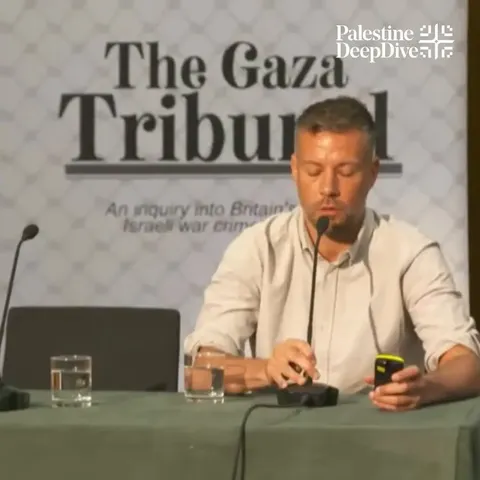
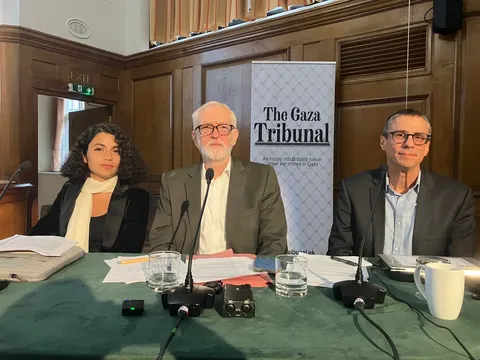
At a two-day “Gaza Tribunal” held in Westminster’s historic Church House this week, witnesses ranging from doctors and human rights lawyers to aid workers, journalists, and former officials delivered searing testimonies about the humanitarian catastrophe in Gaza. The unofficial public inquiry, chaired by Independent MP Jeremy Corbyn alongside human rights professor Neve Gordon and law lecturer Shahd Hammouri, set out to examine Israel’s actions in Gaza and scrutinize the British government’s role. In opening remarks, Corbyn said the event aimed to “hold our governments to account” amid the “indescribable” suffering in Gaza, vowing to uncover truths that official channels have ignored.
A People’s Tribunal Seeks the Truth Ignored by Officials
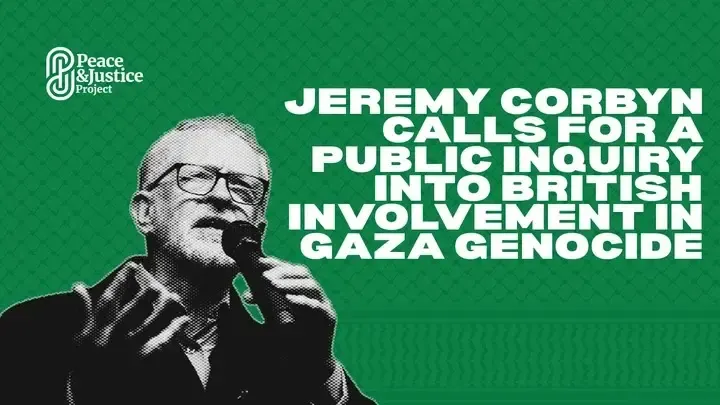
Speaking as the tribunal opened on September 4, Jeremy Corbyn – now an independent MP – explained that this unofficial inquiry was necessary because the UK government and parliament have refused a formal investigation into Britain’s involvement in the Gaza war. He noted he had introduced a “Gaza Inquiry Bill” in Parliament calling for an independent public inquiry into UK military, economic and political cooperation with Israel since October 2023. That effort, backed by dozens of MPs and NGOs, was thwarted in Westminster, so “if the government won’t organize an open public inquiry… it remains for us to do it,” Corbyn told the audience.
Corbyn set a serious, urgent tone. Standing beneath the same roof where a UN War Crimes Commission met in 1945, he reminded attendees that tens of thousands of Palestinians had been killed in Gaza over the past two years, including many children. “Words cannot begin to describe how all of us feel when we witness what is going on in Gaza,” he said, citing more than 63,000 people killed since October 2023 and the horror of “watch[ing] in real time children being starved to death” on television. Even if a ceasefire came immediately, Corbyn warned, the psychological trauma and “scars of war” would be “intergenerational” for Palestinians.
The tribunal, co-chaired by Professor Neve Gordon of Queen Mary University and Shahd Hammouri of the University of Kent, brought together jurists and experts to hear testimony from nearly thirty witnesses. Its stated purpose: to document the reality of Gaza’s suffering and confront the UK’s “complicity” in it.
Pro-Israel Lobby Tried to Shut It Down
The very fact that the tribunal went ahead at all was itself a point of controversy. In the days before it opened, the UK Lawyers for Israel (UKLFI) group – which is currently under investigation in Britain – attempted to stop it. UKLFI wrote to Church House, headquarters of the Church of England, urging it not to host the event. The group argued that the tribunal was not a genuine inquiry but a “political platform” for allegations of genocide and war crimes against Israel, and claimed that such language was “inflammatory” and risked “fuelling antisemitic hostility.”
Using its media allies – including the Daily Telegraph, which ran critical coverage – UKLFI sought to pressure Church House under its lettings policy, which prohibits hosting groups that promote racial prejudice.
But the irony was stark: UKLFI was still insisting that allegations of genocide were false and antisemitic even after the world’s leading genocide scholars had formally declared that Israel’s conduct in Gaza meets the UN definition of genocide. Just three days before the tribunal opened, the International Association of Genocide Scholars (IAGS) – the world’s largest body of genocide experts, including Holocaust scholars – passed a landmark resolution confirming that Israel’s systematic attacks on Gaza’s population, healthcare, aid and education sectors, alongside mass killing and displacement, constitute genocide, war crimes and crimes against humanity.
The three-page IAGS resolution catalogued Israel’s systematic destruction of the conditions needed for survival in Gaza. It cited the killing or maiming of more than 50,000 children, the deliberate creation of famine, and public statements by Israeli leaders vowing to “flatten Gaza” and “turn it into hell.” Out of its 500 members, 28% took part in the vote, with 86% voting in favour of the resolution.
That declaration demolished the very basis of UKLFI’s campaign, which sought to portray talk of genocide as beyond the pale. Instead, the attempt to brand the event illegitimate only underscored how threatened pro-Israel lobby groups felt by the truth the tribunal would bring to light. Despite UKLFI’s efforts, Church House stood firm, and the Gaza Tribunal opened on schedule before a packed hall and livestreamed audience.
Corbyn seized on the moment in his opening speech, declaring: “Justice, justice you shall pursue.” Witnesses at the tribunal — including genocide scholar Dr Raz Segal, UN rapporteurs, aid workers and doctors — echoed the IAGS findings with testimony of famine, mass killings and forced displacement. For campaigners, the IAGS resolution and the Gaza Tribunal together marked a turning point: the international scholarly community has formally recognised genocide, while British civil society forced an unofficial public inquiry to document the UK’s alleged complicity.
Doctors Describe a ‘Hell on Earth’ in Gaza’s Hospitals
Frontline medical professionals opened the testimony, delivering some of the most graphic and emotional accounts of Gaza’s plight. Professor Nick Maynard, an Oxford surgeon who has volunteered repeatedly in Gaza’s hospitals, described the situation as “daily war crimes” and even “genocide” in progress. Fresh from a month working at Nasser Hospital, Maynard recounted treating gravely wounded patients with almost no resources. “We were operating with virtually no resources… Often no water to scrub, no sterile gloves… No painkillers,” he said, before detailing the agony this caused.
Maynard relived the trauma of treating Ali and Yara, a young brother and sister who were the last survivors of their family after a bombing. “We had to treat both of them without any pain relief at all… I can still hear their screams as we treated them without any anesthetic,” the surgeon testified. He described another little girl, Nada, who arrived with unsurvivable burns – “you could see her facial bones” – and who “died an agonizing death on the floor” of the emergency room because there were no pain medicines left.
On average, more than 30 children were being killed in Gaza every day during the conflict, Maynard noted, a rate of child death far exceeding that in wars in Ukraine, Iraq or Syria. Thousands more children suffered traumatic amputations, and doctors witnessed “profound malnutrition” due to what he called “forced starvation by the Israeli blockade.”
Another British doctor, Dr Natalie Roberts of Médecins Sans Frontières (MSF), corroborated these accounts via video link. Roberts called the situation in Gaza “a complete and utter humanitarian disaster” – and entirely man-made. She reported that since October 2023, at least 1,500 healthcare workers had been killed and countless others injured or detained, decimating Gaza’s medical capacity. “There is no safe space in Gaza today and Israel’s indiscriminate assault… considers the whole population as a legitimate target,” Roberts said, noting that 12 of her MSF colleagues in Gaza had been killed and even aid convoys came under fire.
Both doctors emphasized that what they witnessed amounts to war crimes and crimes against humanity. Roberts revealed that MSF had repeatedly raised the alarm to UK officials – writing seven letters to the prime minister and foreign secretary – providing detailed evidence of Gaza’s nightmare and urging Britain to act. No meaningful reply was ever received.
Aid Workers and Activists Bear Witness to Suffering
Palestinian voices and aid volunteers added further humanitarian testimony, often blending personal grief with fierce criticism of policies they say enabled the crisis. Hala Sabbah, a Palestinian activist and co-founder of the Samir mutual aid project, testified to the aid blockade and famine gripping Gaza. She described how food and medicine were strangled off: during Israel’s 17-year blockade, 600 trucks of goods entered Gaza daily, barely meeting basic needs. But after March 2025, the trucks stopped completely, leading to “horrific images of children starving to death” by the summer.
The tribunal also heard from Abubaker Abed, a young Palestinian journalist evacuated to Dublin, who described life under bombardment and the despair of watching his community suffer from afar. Other activists, such as Ben Jamal, director of the Palestine Solidarity Campaign, reminded the tribunal that Gaza’s crisis is part of a much longer history of displacement and colonization. “History did not begin on October 7th,” Jamal said, insisting that the genocide was “built on the foundations of an incremental genocide decades old – 76 years of settler colonization, occupation, and apartheid.”
Legal Scholars Condemn Violations and Call for Accountability
Providing a framework for these harrowing narratives, international law experts testified that Israel’s actions in Gaza violate clear legal prohibitions – and that the UK has legal duties it is failing to uphold. Francesca Albanese, the UN Special Rapporteur on the occupied Palestinian territories, told the tribunal: “Far from preventing the genocide in Gaza, the UK has continued to supply Israel in violation of its obligations to international law.”
Dr Raz Segal, a leading genocide scholar, reinforced this by situating Gaza squarely within the legal and scholarly definition of genocide, echoing the IAGS declaration. Ralph Wilde, professor of law at UCL, argued that Britain has a “positive duty” to regulate its citizens and companies so they do not contribute to Israeli violations. Paula Gaviria Betancur, UN special rapporteur on the rights of internally displaced persons, testified that the mass displacement of Palestinians in Gaza constitutes a crime against humanity under the Rome Statute.
Also appearing were Richard Falk, professor of international law and former UN rapporteur, who placed Gaza in the wider trajectory of international impunity, and Eyal Weizman, director of Forensic Architecture, who presented visual investigations documenting destruction of civilian infrastructure.
Evidence of British Complicity Unveiled
A recurring theme throughout the tribunal was outrage at the UK government’s role in the Gaza crisis – whether through arms exports, diplomatic support, or failure to act. John McEvoy of Declassified UK shared investigations showing Britain had directly transferred F-35 fighter jet components to Israel throughout the war, even using RAF bases in Norfolk. He argued this made the British armed forces directly complicit in supplying arms to a state committing genocide.
Mark Smith, a former Foreign Office official who resigned in protest over continued arms sales to Israel, offered an insider’s view of how policy decisions ignored humanitarian warnings. Forz Khan, the lawyer for the family of World Central Kitchen aid worker James Henderson, who was killed in Gaza, pressed the UK government’s moral and legal responsibility for the safety of aid workers.
Other speakers included Katie Fallon of Campaign Against Arms Trade, who called for an immediate suspension of arms exports; Charlotte Andrews-Briscoe of the Global Legal Action Network, who detailed legal challenges to government policy; and Emily Tripp of Airwars, who presented data on civilian casualties.
“Justice, Justice You Shall Pursue”
Over two days of testimony, the emotional weight of the Gaza Tribunal was evident. Audience members often sat in stunned silence or wiped away tears as they listened to firsthand accounts of unimaginable suffering. Each speaker, in their own way, echoed a common plea: do not ignore what is happening to the Palestinian people.
Jeremy Corbyn, closing the first day’s session, invoked a simple moral injunction from scripture: “Justice, justice you shall pursue.” That pursuit of justice, he argued, requires us first to open our eyes and speak the truth. At this people’s tribunal in London, doctors spoke the truth of Gaza’s hospitals turned into hellish abattoirs, aid workers spoke the truth of starvation used as a weapon, lawyers spoke the truth of laws trampled and ignored, and reporters spoke the truth of a Britain that is far from a neutral observer.
The Gaza Tribunal did not end the war or alleviate the humanitarian calamity overnight. But by putting human stories and hard evidence on the record, it aimed to galvanize public conscience and pressure. With the IAGS resolution now confirming what survivors and witnesses have long insisted, campaigners argue the world can no longer claim it does not know.
“We will uncover the full scale of British complicity in genocide – and we will bring about justice for the people of Palestine,” Corbyn declared.