Gaza: 'Darkest Episode' of International Relations This Century, Says Spanish PM
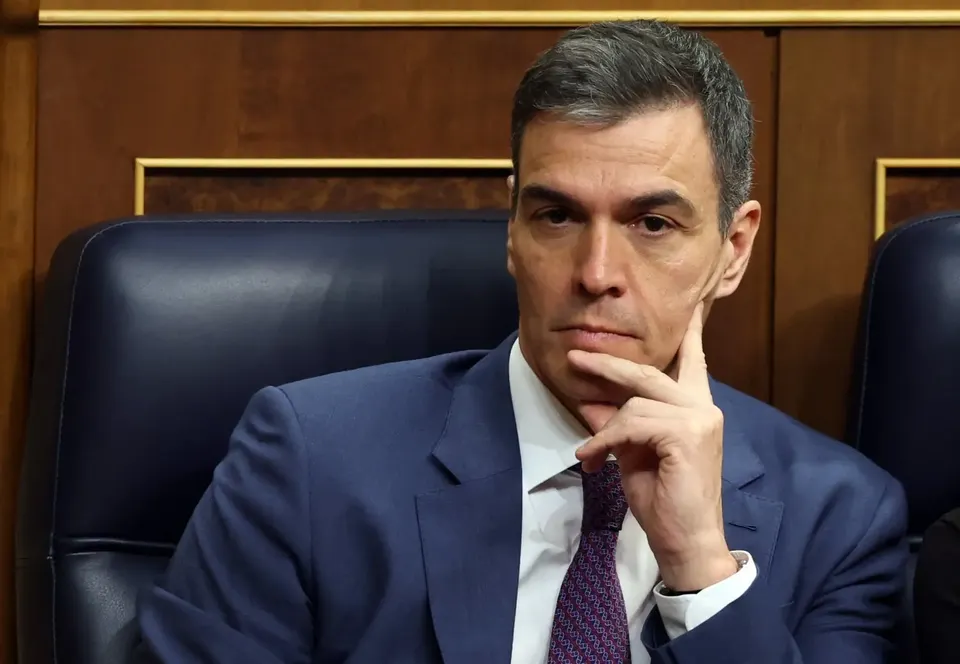
Spain’s prime minister Pedro Sánchez has delivered one of the strongest condemnations yet of Europe’s response to Israel’s war on Gaza, warning that the West’s credibility is being eroded by moral inconsistency and political cowardice.
In a wide-ranging interview with the Guardian ahead of his summit with UK prime minister Keir Starmer, Sánchez said the EU’s inability to act decisively against Israel marked “a failure” and “one of the darkest episodes of international relations in the 21st century.”
Spain was the first EU state to accuse Israel of genocide in Gaza, and Sánchez has since led efforts to suspend Brussels’ strategic partnership with Tel Aviv. “It is a failure,” he said bluntly. “Within the European Union, there are countries that are divided when it comes to how to influence Israel. But in my opinion, it’s not acceptable. We can’t last longer if we want to increase our credibility when it comes to other crises, such as the one we face in Ukraine.”
A lonely voice in Europe
Sánchez’s remarks highlight his position as a rare European leader willing to confront Israel directly.
French president Emmanuel Macron, while calling for a ceasefire and humanitarian access, has avoided using terms such as “genocide” and continues to stress Israel’s “right to defend itself.” German chancellor Olaf Scholz has been one of Israel’s most steadfast backers in Europe, repeatedly blocking attempts within the EU to sanction Tel Aviv, even as his own coalition faces domestic criticism for criminalising pro-Palestinian protest.
In London, Keir Starmer has taken a hard line in support of Israel since becoming prime minister, rejecting calls to suspend arms sales and resisting pressure from within Labour to back Palestinian statehood.
By contrast, Sánchez has not only recognised Palestine but sought to rally allies behind him. Ireland, Belgium and Norway have followed Spain in formal recognition, with other governments in Scandinavia and southern Europe considering the move. Still, the EU as a whole remains paralysed by internal divisions, with Eastern member states siding firmly with Israel and Germany wielding veto power against punitive action.
“The world is looking at the EU and asking: ‘Why are you doing double standards when it comes to Ukraine and when it comes to Gaza?’” Sánchez warned.
Palestinian reaction: ‘Spain has spoken the truth’
Sánchez’s words have drawn strong reactions from Palestinian officials, who see Spain as breaking a European taboo.
Nabil Shaath, a veteran Palestinian diplomat and former foreign minister, praised Madrid’s position: “For the first time in many years, a European leader has spoken the truth. Europe cannot claim to defend international law in Ukraine while excusing Israel’s crimes in Gaza.”
Officials in Ramallah echoed that sentiment, saying Spain’s recognition of Palestine and its pressure on the EU offered “a glimmer of hope” at a moment of despair. Mustafa Barghouti, a leading Palestinian politician and activist, said Sánchez’s remarks highlighted “a moral awakening that others in Europe have avoided for too long.”
The reaction from Gaza itself has been more cautious but nonetheless welcoming. A spokesperson for the Palestinian health ministry said: “What we need is not only words but action — pressure, sanctions, and accountability for Israel. But Spain’s position shows that Europe is not monolithic. There are voices of conscience.”
Israeli backlash: ‘A grave mistake’
Israel has reacted angrily to Sánchez’s position. When Spain formally recognised the State of Palestine earlier this year, Prime Minister Benjamin Netanyahu denounced the move as “a reward for terrorism” and warned it would “encourage Hamas and other extremists to continue their crimes.”
Israel’s foreign minister, Israel Katz, accused Madrid of “aligning with murderers” and promptly recalled the Israeli ambassador from Madrid in protest. Tel Aviv also summoned Spain’s ambassador for a formal reprimand.
In response to Sánchez’s description of the Gaza war as “genocide,” Israeli officials said such accusations were “outrageous and baseless” and amounted to “blood libel.” A government spokesperson said Spain was “undermining its role as a partner in the democratic world” and “siding with those who seek Israel’s destruction.”
Despite the diplomatic fallout, Sánchez has stood by his words, insisting that silence in the face of mass civilian deaths would be a greater betrayal of European values.
Pressure on Brussels
Sánchez’s stance has intensified debate within Brussels. While EU foreign policy chief Josep Borrell — also a Spaniard — has publicly warned that Europe’s double standards are undermining its credibility, efforts to impose sanctions or even suspend Israel’s preferential trade status have repeatedly been blocked.
The Spanish leader insists that if the EU fails to act, its authority on the global stage will collapse. “What we’re now witnessing in Gaza is perhaps one of the darkest episodes of international relations in the 21st century,” Sánchez said. “If Europe cannot act morally and consistently, it will lose the ability to lead.”
Trump, NATO and the global order
The interview also took aim at Washington. Sánchez accused Donald Trump of dismantling the very international system the United States helped to build after 1945. “The principal architect of the international order is now weakening it,” he said. “That’s not going to be positive for U.S. society or for the rest of the world, especially Western countries.”
He argued that the U.S. retreat created space for Europe and the UK to play a larger role, but only if they avoided hypocrisy. “It means that we need to avoid these double standards. It means that we need to reinforce our commitment when it comes to the green pact. It means that we need to have a humanitarian and moral vision – and also a pragmatic one – when it comes to migration.”
Migration, climate and the far right
At home, Sánchez contrasted his own policies with those of Europe’s conservatives. While Starmer has taken a hard line on immigration, the Spanish prime minister insisted that migration is “an opportunity” for economic growth and welfare sustainability. “The dilemma that Western societies are facing is whether we decide to be an opening-up and growing society, or a closing-off and shrinking society.”
On climate, Sánchez accused mainstream conservatives of borrowing far-right rhetoric and undermining urgent action. “Traditional rightwing parties – not the far right – trying to transform the scientific evidence on climate change into ideological and political struggles is the biggest mistake they are committing.”
A test of Europe’s moral authority
For Sánchez, the stakes are clear: unless Europe applies international law consistently, it risks irrelevance in a multipolar world.
Palestinian officials have seized on his words to press other governments to follow Spain’s lead. “The tide of history is shifting,” said senior Palestinian negotiator Saeb Erekat shortly before his death in 2020, a quote now circulating widely among diplomats. “Those who stand with justice will be remembered.”
Israel, however, has vowed to resist international pressure, framing Spain’s position as dangerous appeasement. That leaves Sánchez’s initiative hanging in the balance: praised in Ramallah, condemned in Tel Aviv, and largely ignored in Berlin, London and Paris.
Whether Sánchez can turn moral clarity into political leverage remains uncertain. But by calling Gaza a genocide and urging Europe to act, the Spanish leader has forced his peers to confront an uncomfortable question: how long can the West demand adherence to rules it does not itself uphold?