

Cannabis is often perceived as relatively low risk. However, previous brain imaging studies have produced mixed findings, particularly in younger users.1 This new study focused specifically on adults with long-term, heavy use patterns to examine whether measurable structural differences are present.
Researchers conducted high-resolution magnetic resonance imaging scans in 46 adults who had used cannabis for at least 10 years and consumed it daily for at least five years. Their average age was 31.3 years. They were compared with 46 adults who had used cannabis fewer than 10 times in their lifetime, matched for age, sex and IQ.
The researchers examined three aspects of brain structure. Cortical thickness refers to the width of the brain’s outer layer. Surface area and cortical volume are additional measures of brain structure that reflect overall size and shape. The authors examined the volume of subcortical nuclei, including the basal ganglia and hippocampus.
Key findings include:
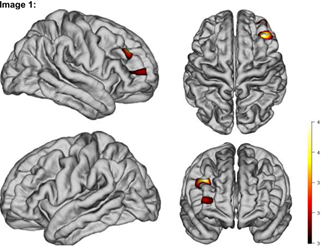
- Two areas of reduced cortical thickness were identified in the right rostral middle frontal cortex in long-term heavy cannabis users
- After controlling for potential confounders by adjusting for standard drink units and excluding recent, sporadic cocaine users, the reduction in right rostral middle frontal cortical thickness remained significant, although only one cluster was observed
- This region forms part of the prefrontal cortex, which plays a central role in executive functions such as planning, working memory and impulse control
- No significant differences were observed between users and non-users in overall cortical volume
- No significant differences were observed in cortical surface area
The findings suggest that long-term heavy cannabis use may be linked to subtle and region-specific cortical thinning, rather than widespread changes.
A. Aquino-Servin, Lead Author, FIDMAG Germanes Hospitalàries Research Foundation, said: “We found reduced thickness in a frontal brain region that supports executive functioning. While this study does not establish cause and effect, it adds to growing evidence that sustained heavy cannabis use may be associated with structural brain differences.”
Dr. Julian Beezhold, the Secretary General of the European Psychiatric Association, said: “As cannabis policies and public attitudes evolve, robust imaging studies like this are important for informing public health discussions with objective data.”
The European Congress of Psychiatry takes place from 28 – 31 March 2026 in Prague, Czech Republic and represents Europe’s largest congress dedicated to psychiatry, with over 4,200 attendees from over 105 countries worldwide: epa-congress.org.
Evidence for reduced frontal cortical thickness in long-term heavy cannabis users [O065]
A. Aquino-Servin 1,2*, P. Fuentes-Claramonte 1,3, N. Hostalet 1,2, I. París-Gómez 1,2, P. del Olmo-Encabo 1, M. Madre 4, X. Roca 4, F. Panicali 5, A. Romaguera 6, M. Á. García-León 7, P. J. McKenna 1, E. Pomarol-Clotet 1,3
1 FIDMAG Germanes Hospitalàries Research Foundation, Spain
2 Programa de Doctorat en Biomedicina, Universitat de Barcelona, Spain
3 CIBERSAM ISCIII, Spain
4 Mental Health, IR SANT PAU, Hospital de la Santa Creu i Sant Pau, Barcelona, Spain
5 Fundació Hospitalàries Sant Boi, Spain
6 Fundació Hospitalàries Barcelona Nord, Spain
7 Department of Personality, Assessment, and Psychological Treatments, Universidad de Sevilla, Spain
Introduction: Although cannabis use is often regarded as relatively harmless, structural imaging studies have found variable evidence for volume reductions in the hippocampus and orbitofrontal cortex (OFC) among other regions (Lorenzetti et al. Eur Arch Psychiatry Clin Neurosci; 269 59-71; Soleimani et al. Sci Rep 2023; 13 5847; Mashhoon et al. Drug Alcohol Depend. 2015; 155 275-83; Wittemann et al. Eur. Addict. Res. 2021; 27 115-22). These studies have mostly focused on adolescents and young adult users, and studies in long-term, heavy cannabis users, who would be arguably most likely to show structural alterations, are few.
Objectives: The aim of this study is to examine different morphological metrics at the whole-brain level, including volume, surface area and cortical thickness in long-term, heavy cannabis users.
Methods: We carried out 3T structural imaging in 46 cannabis users with ≥10 years of use and ≥5 years of daily consumption (mean age 31.3 ± 6.97 years), and 46 age, sex, and IQ (measured using the Test de Acentuación de Palabras (Del Ser et al 1999 Brain Cogn; 33 343-56) non-using controls (<10 lifetime uses). Structural MRI data were processed in FreeSurfer (v7.1.1), to provide measures of surface area, and cortical thickness. Whole-brain, non-parametric permutation testing was conducted with cluster-wise correction (p < .001, two-tailed; 5,000 Monte Carlo iterations), and clusters were considered significant at a corrected p of < .05.
Results: The cannabis users showed two clusters of cortical thickness reduction in the right rostral middle frontal cortex (See Fig1) (max=3.37, cluster=657.94 vertices, p=0.01; max=4.46, cluster=531.57 vertices, p=0.02). No differences were observed in cortical volume or surface area.
Conclusions: From this study, chronic cannabis use is associated with cortical thinning in the right rostral middle frontal cortex. Further studies could examine whether these changes relate to the executive and other neuropsychological impairments reported in users.
Disclosure of Interest: None Declared.
With active individual members in as many as 100+ countries and 47 National Psychiatric Association Members who represent more than 80,000 European psychiatrists, the European Psychiatric Association is the main association representing psychiatry in Europe. The EPA’s activities address the interests of psychiatrists in academia, research and practice throughout all stages of career development. The EPA deals with psychiatry and its related disciplines and focuses on the improvement of care for the mentally ill as well as on the development of professional excellence. More information: https://www.europsy.net/
References
- Jacobus J, Tapert SF. Effects of cannabis on the adolescent brain. Curr Pharm Des. 2014;20(13):2186-93. doi: 10.2174/13816128113199990426. PMID: 23829363; PMCID: PMC3930618.