

If the first casualty of war is truth, then the war now unfolding between the United States, Israel and Iran is already claiming its earliest victims.
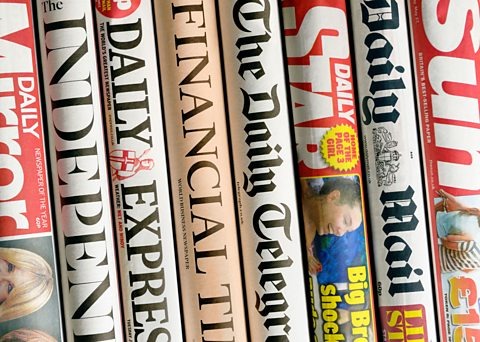
British audiences watching television news or reading the morning papers might reasonably conclude that the conflict is a defensive struggle forced upon Western governments by an imminent Iranian threat. The narrative repeated across large sections of the media is familiar: Iran is portrayed as a reckless regime racing toward nuclear weapons, Israel is presented as acting reluctantly in self-defence, and Western intervention is framed as a necessary step to maintain global security.
Yet a closer examination of the reporting surrounding the war reveals something very different.
Across large parts of the British media, a coordinated narrative has emerged that appears less concerned with explaining the war than with persuading the public that it should support it.
The pattern echoes earlier conflicts in the Middle East where the justification for military intervention was later shown to be misleading or outright false.
For critics of the current war, the parallels with the Iraq invasion of 2003 are impossible to ignore.
The British public was told then that Saddam Hussein possessed weapons of mass destruction capable of striking within minutes. Those claims, repeated across newspapers and television studios, were later shown to have been fabricated or grossly exaggerated.
More than two decades later, similar language is now being used to justify military action against Iran.
The central claim is that Iran is on the verge of obtaining nuclear weapons and must therefore be stopped before it crosses that threshold.
Yet this claim has been repeated for decades without ever being substantiated.
Israeli Prime Minister Benjamin Netanyahu has warned that Iran is “months away” from acquiring nuclear weapons since the 1990s. Western intelligence officials have repeatedly echoed similar claims, often citing anonymous assessments that Iran could obtain a nuclear bomb within a year, six months or even a few weeks.
Despite these repeated warnings, no nuclear weapon has ever emerged.
Even former U.S. President Donald Trump has previously stated that Iran’s nuclear infrastructure had already been “obliterated” during earlier operations, raising obvious questions about how the same programme could simultaneously be described as destroyed and on the verge of producing a bomb.
The reality is that the only country in the Middle East widely believed to possess nuclear weapons is Israel.
Israel has never officially acknowledged its nuclear arsenal and refuses to allow international inspections of its nuclear facilities. Estimates suggest that the country may possess roughly two hundred nuclear warheads, though the exact number remains unknown.
Yet this fact receives remarkably little attention in Western coverage of the current crisis.
By contrast, Iran’s nuclear programme — which remains subject to international monitoring — is treated as an existential threat.
This imbalance in coverage forms part of a wider pattern that critics argue is shaping the public narrative of the war.
One striking example involves an incident that occurred during the opening days of the conflict.
Shortly after the assassination of Iran’s Supreme Leader, Ayatollah Ali Khamenei, a missile struck a girls’ school in Iran. Reports indicated that roughly 175 people were killed and more than one hundred others injured.
Yet when British newspapers appeared the following morning, the story was almost entirely absent.
Imagine, critics argue, if a missile fired by Iran had killed more than 160 Israeli schoolchildren.
Such an event would have dominated headlines across the Western world.
But the deaths of Iranian children received little or no coverage.
The contrast highlights what some observers describe as a profound imbalance in how human suffering is reported.
When Israelis are killed, their deaths are documented with detailed reporting and emotional language. When Iranians or Palestinians die, the events are often described in passive or ambiguous terms.
The difference can sometimes be seen directly in the wording of headlines.
One BBC report on Iranian missile attacks declared clearly: “Nine dead in missile attack on Israel as Iran strikes region.”
Yet coverage of the attack on the Iranian school was framed very differently: “At least 153 dead after reported strike on school, Iran says.”
The contrast is striking.
In the first headline, the perpetrator is clearly identified and the attack is presented as a confirmed act of aggression.
In the second, the event becomes merely a “reported strike,” with no clear identification of who carried out the attack.
The victims are not described as children or schoolgirls.
They are simply “153 dead.”
Such framing, critics argue, subtly assigns different values to different human lives.
The pattern was widely observed during the war in Gaza, where Palestinian casualties often appeared in headlines as anonymous numbers while Israeli deaths were described with names, photographs and personal stories.
The same narrative structure now appears to be emerging in coverage of Iran.
Another striking aspect of the media response has been the enthusiastic support for the war expressed by some commentators.
Several British newspapers have published opinion columns praising Israeli Prime Minister Benjamin Netanyahu as one of the great military leaders of the modern era.
Yet these same articles rarely mention that Netanyahu faces charges at the International Criminal Court related to alleged war crimes during the war in Gaza.
The omission raises uncomfortable questions about journalistic transparency.
Similarly controversial was the decision by one major newspaper to publish an article by former Israeli defence minister Yoav Gallant advocating military action against Iran.
Gallant himself has also faced international legal scrutiny over Israel’s conduct in Gaza.
Critics argue that presenting such figures as neutral commentators without disclosing these controversies deprives readers of essential context.
The narrative being constructed across parts of the media is clear: Israel is acting responsibly in the face of a dangerous adversary, and Western governments should support it.
Yet many of the assumptions underlying that narrative remain deeply contested.
One example concerns the claim that Iran cannot be trusted to negotiate over its nuclear programme.
This assertion contradicts the historical record of the 2015 nuclear agreement, known as the Joint Comprehensive Plan of Action.
Under that agreement Iran accepted strict limits on its nuclear activities, including extensive international inspections and restrictions on uranium enrichment.
International monitors repeatedly confirmed that Iran was complying with the terms of the deal.
The agreement collapsed only after the United States withdrew from it during the Trump administration.
In the years since, negotiations to revive the deal have repeatedly stalled.
According to diplomatic sources, Iranian officials had recently signalled a willingness to accept even stronger restrictions in order to avoid war.
Those negotiations were still underway when the current conflict began.
For critics of the war, this raises an uncomfortable question.
If diplomacy was still possible, why was war chosen instead?
Some analysts believe the true objective of the conflict has little to do with nuclear weapons.
Instead, they argue, the war represents a long-standing effort to weaken or destabilise the Iranian state itself.
Historical context supports this interpretation.
Relations between Iran and Western governments were profoundly shaped by the 1953 coup that overthrew Iran’s democratically elected prime minister, Mohammad Mossadegh.
The coup, orchestrated by British and American intelligence agencies, restored the rule of the Shah and ensured Western control over Iran’s oil resources.
The Shah’s authoritarian regime eventually collapsed during the Iranian Revolution of 1979, paving the way for the Islamic Republic that governs Iran today.
For many Iranians, the current conflict cannot be separated from that earlier intervention.
Some critics now fear that Western governments may again be attempting to reshape Iran’s political system.
Evidence for such ambitions can be found in the sudden reappearance of Reza Pahlavi, the son of the former Shah, who has recently presented himself as a potential future leader of Iran.
His proposals include closer relations with Israel and Arab governments in the region.
Whether such plans have realistic support inside Iran remains highly uncertain.
But their emergence underscores the broader geopolitical stakes of the conflict.
Meanwhile the war itself continues to escalate.
Missile exchanges between Iran and Israel have intensified. American bases across the Middle East have come under attack. Oil markets have begun to react to the growing instability.
Yet the public narrative surrounding the war remains strikingly narrow.
The focus remains fixed on Iranian aggression and Israeli self-defence, even as the broader regional consequences become increasingly severe.
For critics of the war, this imbalance reflects a deeper structural problem within the British media.
Large sections of the press are owned by wealthy individuals or corporations with political and economic interests closely aligned with Western foreign policy.
In such an environment, dissenting perspectives often struggle to gain visibility.
The result is a media landscape where wars can be presented as inevitable, necessary or even morally justified.
If there were a truly independent media culture in Britain, critics argue, it would be far harder to persuade the public to support conflicts like the one now unfolding in Iran.
Instead the media itself has become one of the most important battlegrounds of the war.
Because in the end the most powerful weapon in modern conflict may not be a missile or a drone.
It may be the story that persuades millions of people that the war was justified in the first place.