

A media firestorm has gripped Britain following two seismic controversies at LBC: James O’Brien’s public apology for reading a listener’s message alleging anti-Arab teachings in a Hertfordshire Jewish school, and Sangita Myska’s unexplained departure from the network. Together, the incidents have intensified a national reckoning over media freedom, Zionist lobbying, and the suppression of dissent regarding Israel and Gaza.
Listener’s Message Triggers Censorship Allegations
The controversy began when O’Brien read a message on his LBC program from a listener named Chris, claiming his wife had attended a “Shabbat school” in Hertfordshire where children were taught that “one Jewish life is worth thousands of Arab lives” and that Arabs are “cockroaches to be crushed.” The segment, intended to illustrate mutual dehumanization in the Israel-Palestine conflict, was quickly deleted from LBC’s digital platforms following backlash.
In his on-air apology the following day, O’Brien said:
“The message has understandably upset a lot of people, and I regret taking those unsubstantiated claims at face value. I am genuinely sorry for that.”
But critics say the apology came under pressure from powerful pro-Israel lobbying organizations. The Community Security Trust (CST), Board of Deputies, and Jewish Leadership Council condemned the broadcast, while Jonathan Ash-Edwards, Hertfordshire’s Police and Crime Commissioner, wrote to LBC’s managing editor warning that the segment could “provoke further antisemitic incidents.”
Ash-Edwards noted that Hertfordshire had the fourth highest number of antisemitic incidents nationally in 2024 and accused O’Brien of making a “conscious and deliberate choice” to air the message.
Notably, there are at least three Shabbat schools in Hertfordshire:
- SAMS Cheder in St. Albans
- Yavneh Primary School & Yavneh College in Borehamwood
- Clore Shalom School in Shenley
None of these schools have issued statements refuting or clarifying the listener’s claims. Critics argue that transparency—rather than censorship—would have been the appropriate response.
Sangita Myska Breaks Her Silence
The O’Brien controversy comes on the heels of another media shock: the sudden and unexplained departure of former LBC host Sangita Myska. In a rare public statement, Myska revealed she is legally barred from discussing the reasons behind her exit:
“There are extremely onerous and lasting contractual restrictions that prevent me from discussing the circumstances surrounding my departure… These restrictions remain in place indefinitely.”
Her departure came shortly after a viral on-air exchange with Israeli government spokesperson Avi Hyman in which Myska questioned the legality of Israeli airstrikes on Iranian soil. Social media speculation quickly linked her disappearance to that broadcast.
Myska was later indirectly attacked by James O’Brien himself, who dismissed the idea that she had been removed over political content as “an anti-Semitic conspiracy theory.” He accused her of allowing such theories to fester by staying silent. Myska responded:
“It has been suggested, including by James O’Brien, that by remaining silent I deliberately allowed anti-Semitic conspiracy theories to develop. That accusation is false. It is deeply upsetting and it goes against everything I stand for.”
She added that her performance at LBC had been strong, citing record audiences verified by RAJAR, and revealed she had 16 weeks remaining on her contract when she was removed without warning.
Gary Lineker and the Price of Truth
The growing list of journalists and public figures punished for criticizing Israel now includes Gary Lineker, who was pushed out from the BBC by the UK Israel Lobby, after 30 years. His exit came after he shared a video of a Palestinian-Canadian lawyer discussing Zionism, along with an emoji he later apologized for.
“I’ve stood up against racism all my life, including antisemitism, which I abhor,” Lineker said. “But I should have been more diligent. It was a genuine mistake.”
Despite the apology, pro-Israel lobbying groups led a campaign to have him removed. The BBC complied. Critics say Lineker was forced out not for wrongdoing, but for speaking moral truth about Gaza.
Lineker’s case mirrors a broader pattern. The BBC, once a global standard for impartial journalism, is now accused of parroting Israeli government narratives while ignoring or downplaying Palestinian suffering. Internal whistleblowers have exposed editorial gatekeeping, with figures like Rafi Berg reportedly suppressing critical coverage.
“This isn’t journalism. It’s state-sanctioned bias,” one former BBC insider said.
Strategic hypersensitivity and the conflation of anti-Zionism with antisemitism have become powerful tools to silence dissent. Critics argue this weaponization of identity harms both Palestinians and Jews by shielding a violent settler regime from scrutiny while stoking social division.
Pattern or Coincidence?
Media critics have pointed to a growing trend of journalists losing jobs or facing suppression after voicing criticism of Israel. Sangita Myska, Gary Lineker, Mehdi Hasan (formerly of MSNBC), and Briahna Joy Gray (formerly of The Hill) are only the most high-profile examples.
“To suggest someone being dismissed over views on Israel is an anti-Semitic conspiracy theory is itself disingenuous,” said one media analyst. “These patterns are well documented.”
Gaza in Catastrophe, Media in Denial
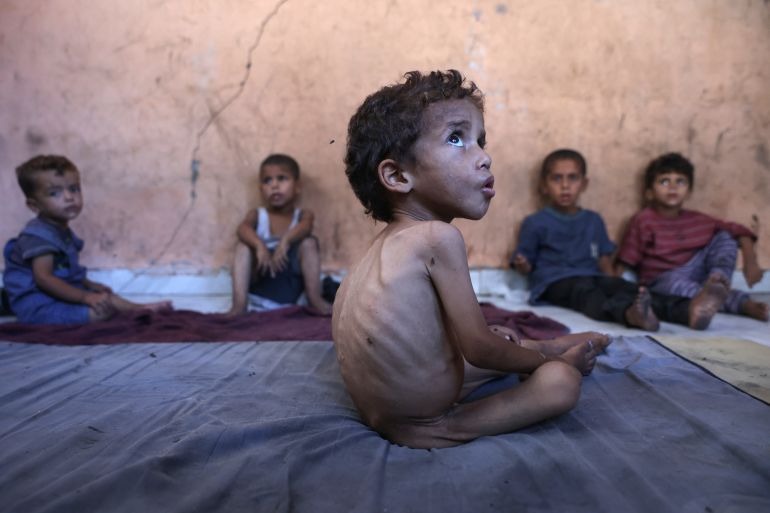
Meanwhile, the humanitarian crisis in Gaza continues to escalate. Over 100 aid organizations, including Oxfam and Save the Children, have warned of mass starvation. Oxfam’s Bushra Khaledi recently gave an emotional interview on Sky News describing widespread hunger, collapsed healthcare, and children dying of malnutrition.
The World Health Organization (WHO) has accused Israeli forces of attacking its personnel and facilities, yet major UK broadcasters like the BBC continue to issue Israeli government denials uncritically. BBC presenter Martine Croxall recently repeated Israel’s claim that there is “no sign of famine” despite overwhelming evidence to the contrary.
A Chilling Climate for Journalists
The combined cases of James O’Brien, Sangita Myska, and Gary Lineker paint a troubling picture of British media increasingly beholden to political pressure. As Gaza endures what many are calling a modern-day holocaust, journalists attempting to report critically or even neutrally on Israel face silencing, smears, or dismissal.
Sangita Myska ended her statement with a quote from Scottish poet Charles Mackay:
“If you have none [enemies], small is the work that you have done… You’ve never turned the wrong to right, you’ve been a coward in the fight.”
Despite legal constraints, her voice continues to echo. The public is left asking: Who decides what the truth is, and who gets to speak it?