Israel Has Erased More Than 2,700 Palestinian Families From Gaza’s Civil Registry
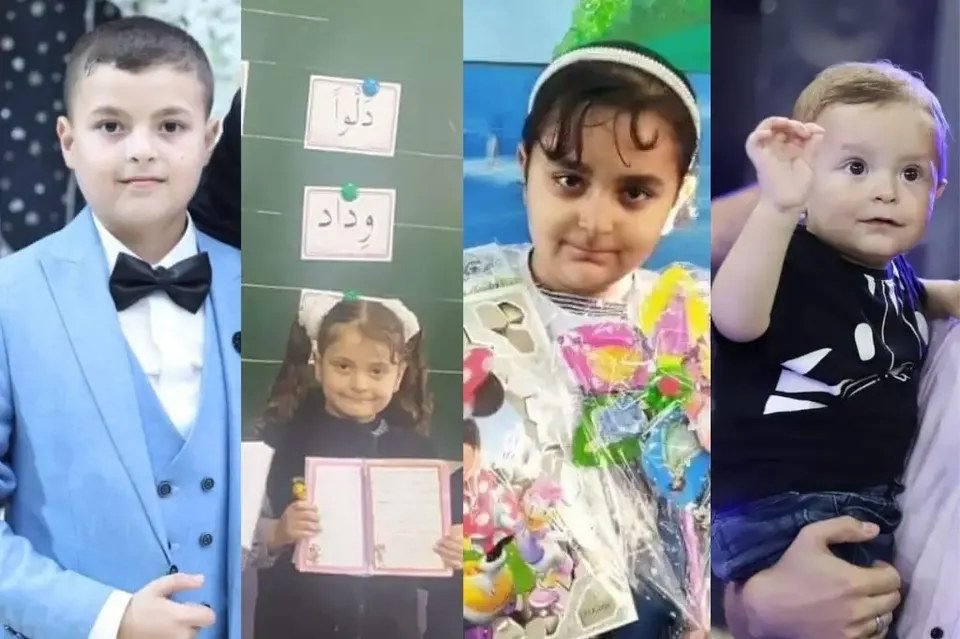
An extensive investigation has revealed the scale of family annihilation in Gaza since October 2023, documenting the complete erasure of more than 2,700 Palestinian extended families from the territory’s civil registry in what amounts to the systematic destruction of lineage, memory, and identity.
The findings, reported by Al Jazeera, go beyond casualty figures to expose a pattern of killing that eliminates entire bloodlines at once, defining an erased family as one in which three generations from the same household registry have been killed. This definition captures the obliteration not only of individuals but of family continuity itself, revealing a form of destruction that reaches simultaneously into the past and the future.
Before the genocide began, Gaza’s population stood at approximately 2.2 million people, making the erasure of more than 2,700 extended families an event of staggering demographic and social significance. According to the investigation, more than 8,000 people were killed within these completely wiped out families alone, while approximately 40,000 families were directly targeted overall, meaning that on average more than four members of each family were killed. Beyond this, over 6,000 families are now left with only a single surviving member, individuals who carry the knowledge that when they die, whether through continued violence, deprivation, illness, or age, their family name will vanish entirely from Gaza’s civil records.
The youngest recorded victim was one year old, while the oldest was 101 years old, a span that encompasses infancy, childhood, adulthood, and old age, all extinguished within the same campaign of destruction. An Al Jazeera reporter summarised the findings by stating that this is not merely a story of casualties but a story of lineage, heritage, and identity disappearing in an instant.
The Najar Family and the Destruction of a Bloodline
Among the families documented in the investigation was the al Najar family from Khan Younis, whose destruction illustrates the human reality behind the statistics.
Malik al Najar had just graduated from high school and was photographed celebrating with his father, mother, and uncles, a young man standing at the threshold of adulthood and possibility. For generations, the al Najar family had lived in the area, working to provide their children with stability, education, and the hope of a safer future, a future that was erased in a single Israeli airstrike.
Malik was killed alongside his father, his sister, and twenty two members of his extended family, with more than twenty relatives wiped out in one night, including sisters, brothers, aunts, uncles, and cousins, resulting in the disappearance of entire branches of the family tree at once. The destruction of the al Najar family was not an isolated tragedy but part of a wider pattern in which multigenerational households were targeted and eliminated in single strikes.
When Malik’s mother later returned to the site where their home once stood, she described seeing her son’s clothes scattered across the rubble, blown away by the force of the explosion, and said she could not stay because all the beautiful memories she associated with that place vanished in seconds. What continues to haunt her most, she explained, are the final moments she will never know, as she wonders whether Malik screamed and whether the children screamed, imagining every hardship they endured as if it were happening before her eyes.
According to the investigation, when a Palestinian family disappears in this way, they take with them not only lives but histories, traditions, memories, and futures, as names that would have been spoken for generations are removed from Gaza’s collective identity. These are names that define a genocide.
Killing Continues Despite Claims of a Ceasefire
The extermination of families has not ended, despite repeated claims that a ceasefire has been in effect since October.
At least 477 Palestinians have been killed and more than 1,300 injured during this period, with deaths occurring on a near constant basis. On a single day last week, Israeli forces killed at least eleven Palestinians, including two thirteen year old boys, three journalists, and a woman, demonstrating that even during periods described as pauses in hostilities, lethal violence has continued unabated.
One of the boys, Moataz al Sharifi, was killed while collecting firewood, an act of daily survival that cost him his life. For most readers, this will likely be the first time they encounter his name, and it will almost certainly be the last, reflecting the profound imbalance in whose lives are remembered and whose deaths pass without notice.
Humanitarian agencies have reported that Israel attacked Gaza on ninety two of the first one hundred days of the ceasefire period, with more than one hundred of those killed during this time being children, a figure that is three times higher than the number of Israeli children killed on October 7. Despite this, outrage and media attention have remained sharply unequal, with fabricated claims receiving more condemnation than the confirmed killing of tens of thousands of Palestinian children.
A Generation Living With Extreme Trauma
Humanitarian organisations estimate that every single child in Gaza now requires some level of mental health or psychosocial support due to the scale and intensity of the trauma they have endured.
Children have witnessed the deaths of parents, siblings, relatives, and friends, often at close range, while being repeatedly displaced under fire and forced to flee with little more than the clothes they were wearing. Many have suffered injuries themselves and have lived through relentless bombardment, constant explosions, and the persistent fear that the next moment could be their last.
They have endured starvation, untreated illness, lack of clean water, overcrowded and unsanitary living conditions, and the collapse of education, while being exposed to extreme heat, cold, and flooding in makeshift shelters. Some children have stopped speaking altogether, while others refuse food, and many exhibit symptoms of severe psychological distress that will take years, if not lifetimes, to address.
This level of trauma is shaping an entire generation, assuming that generation is allowed to survive.
“If This Happened in Britain, There Would Be No Debate”
Reflecting on the investigation’s findings, journalist Owen Jones placed the scale of destruction in Gaza into a comparative context that exposes the disparity in how mass violence is recognised and remembered.
“Imagine one extended family was violently killed in Britain,” Jones said, describing grandparents, parents, children, toddlers, and newborn babies all murdered in a country of around sixty nine million people. “It would be regarded as one of the great crimes of the postwar era, it would be splashed across every front page, and it would lead every news bulletin.”
He contrasted that response with the reality documented in Gaza, noting that “Gaza had a pre genocide population of around two point two million, and Israel has wiped out more than two thousand seven hundred Palestinian extended families since October 2023.” Each of those families, he said, had their own memories, histories, traditions, celebrations, and tragedies, all of which have been erased as though they never existed.
Jones argued that if such destruction occurred anywhere else, especially in a territory of just over two million people, “there would be no debate, no discussion, and no controversy about whether this constituted genocide,” adding that it would be considered outrageous even to deny it. He concluded that countries which helped arm and facilitate the destruction bear responsibility for remembering precisely what was done to the people of Gaza and for ensuring accountability rather than erasure.
More Than a Death Toll
What this investigation ultimately documents is not simply a high number of deaths but the systematic dismantling of a society’s foundational structures.
Families are the carriers of history, culture, and continuity, and to eliminate entire families is to erase both the past that shaped a people and the future that might have sustained them. Civil registries emptied of names tell a story that statistics alone cannot convey, a story of weddings that will never take place, children who will never be born, and memories that will never be passed down.
This is history being destroyed in real time.
A Crime That Defines the Age
What has unfolded in Gaza stands as one of the defining crimes of the modern era, not only because of its scale but because of how easily it has been normalised, rationalised, or ignored by those with the power to intervene.
The extermination of families has been documented in detail, the evidence is overwhelming, and the names are known, yet accountability remains absent. If justice does not follow, the lesson absorbed by the world will be that entire bloodlines can be erased without consequence, a lesson that carries implications far beyond Gaza and reaches into the moral foundations of the international order itself.
Once that lesson is learned, there is no meaningful boundary left, and the cost is paid not only by the victims but by the erosion of humanity as a whole.