The Speech Nobody Reported: How Washington Admitted Its Iran Strategy — And Why Europe Looked Away
One of the most consequential statements made at this year’s World Economic Forum in Davos did not come from a defence secretary or a general, but from the U.S. Treasury. And almost nobody in the mainstream media reported it.
While headlines focused on markets, technology, and climate pledges, U.S. Treasury Secretary Scott Bessent delivered an unusually blunt account of Washington’s strategy toward Iran — openly describing the deliberate destruction of the Iranian economy as a tool of state power. Not as deterrence. Not as leverage for negotiations. But as a method to induce unrest, destabilisation, and ultimately regime change.
For critics of U.S. foreign policy, the silence that followed was as revealing as the speech itself.
Economic warfare, openly acknowledged
At Davos, Bessent explained that U.S. sanctions had “worked” by collapsing Iran’s currency, triggering bank failures, restricting imports, and creating a shortage of dollars. He linked these outcomes directly to social unrest, noting approvingly that this economic pressure was “why the people took to the streets.”
He described this process as “economic statecraft,” stressing that it achieved results “with no shots fired” and concluding that “things are moving in a very positive way.”
In effect, a sitting U.S. Treasury Secretary publicly confirmed that Washington has been weaponising the global financial system to inflict economic pain on a civilian population in order to provoke internal instability.
That admission — which strips away years of rhetorical framing about “targeted sanctions” — received almost no coverage in major Western newspapers or broadcasters.
Jeffrey Sachs: sanctions as prelude to war
According to economist Jeffrey Sachs, the omission is no accident. In a wide-ranging analysis of the current escalation, Sachs argues that Bessent’s remarks amount to a rare moment of candour about a long-running strategy.
For Sachs, the sequence is clear: Israel has sought regime change in Iran for decades, and the United States has repeatedly acted to advance that objective. When direct military action failed or proved politically risky, economic warfare was deployed instead.
Sanctions, Sachs argues, are not an alternative to war but part of a hybrid warfare model — combining financial strangulation, cyber operations, covert action, assassinations, and information warfare. The aim is to weaken the state from within before or alongside military escalation.
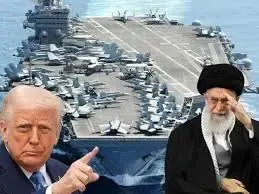
From this perspective, the current buildup of U.S. military forces in the region — including carrier strike groups and allied aircraft movements — is not a sudden shift, but the next phase of a strategy whose economic component has already been publicly acknowledged.
“Negotiations” as political theatre
Western officials continue to frame their threats toward Iran as an effort to force a “deal.” But Sachs dismisses this as disingenuous.
A negotiated settlement already existed: the Joint Comprehensive Plan of Action (JCPOA), endorsed by the UN Security Council in 2015. Iran complied with its terms. The agreement was dismantled unilaterally by the United States during Donald Trump’s first term — under heavy Israeli pressure.
Since then, Sachs notes, every serious attempt at renewed negotiations has been undermined or abandoned, often coinciding with Israeli military actions. In his assessment, the objective has never been diplomacy but overthrow.
Against that backdrop, Bessent’s Davos comments appear less like a policy explanation and more like confirmation that economic collapse is being treated as a success condition.
Europe’s silence — and its contradictions
Perhaps most striking, Sachs argues, is Europe’s response — or lack of one.
European governments have said virtually nothing about U.S. threats against Iran, the massing of military force, or the open admission of economic warfare. There have been no emergency summits, no principled statements invoking international law, no serious calls for restraint.
Yet many of the same governments reacted swiftly and forcefully when Trump floated threats against Greenland, condemning any challenge to Danish sovereignty as unacceptable and illegal.
For Sachs, the contrast exposes a stark double standard.
When European territory or interests are at stake, principles suddenly matter. When the target is Iran — a country in the Middle East already subjected to decades of sanctions and covert action — those principles quietly evaporate.
Germany’s increasingly explicit alignment with Israeli and U.S. rhetoric, including statements questioning Iran’s right to exist as a governing state, underscores the shift. Europe, Sachs suggests, now appears willing not just to tolerate but to endorse a campaign of destabilisation it once claimed to oppose.
Media narratives and managed outrage
The silence around Bessent’s remarks also helps explain another pattern: the steady flow of media coverage portraying Iran’s economic crisis as evidence of internal corruption, incompetence, or illegitimacy — rarely mentioning that U.S. officials themselves have explained how that crisis was engineered.
The result, Sachs argues, is a closed narrative loop. Economic suffering is reported as proof the government must fall; the policies causing that suffering are framed as neutral or invisible; and any resistance to escalation is dismissed as apologism.
In that context, Bessent’s frankness becomes inconvenient. Reporting it would force journalists to acknowledge that what is being described as “pressure” is, in practice, collective punishment by design.
A dangerous convergence
What worries Sachs most is not just the moral dimension but the strategic risk. Iran is not a small or isolated state. It has demonstrated the capacity to penetrate Israeli air defences, possesses advanced missile technology, and sits at the centre of a region packed with global energy infrastructure and nuclear-armed powers.
Economic warfare, far from preventing conflict, may push Iran toward decisions it has long avoided — including the pursuit of nuclear weapons — if it concludes that its survival is at stake.
From this vantage point, Bessent’s Davos speech was not a footnote. It was a warning — one that much of the Western media chose not to hear.
A moment of truth, quietly buried
Davos is often described as a place where power speaks honestly among itself. This year, it did. A senior U.S. official explained, in plain language, how the United States is deliberately destabilising Iran’s economy and applauding the social consequences.
That this moment passed almost unreported may say more about the state of Western political discourse than about the policy itself.
As Sachs puts it, when economic collapse is treated as success and silence becomes complicity, the line between sanctions and war all but disappears.