
Netanyahu’s rejection of the only active roadmap for Israeli withdrawal leaves Gaza’s civilians trapped between military occupation, continuing attacks and a devastated territory that international investigators have concluded is the scene of genocide
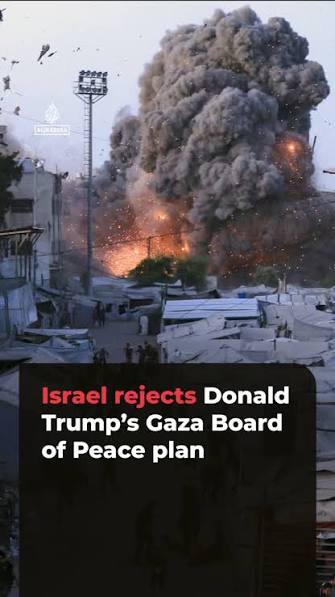
Israeli Prime Minister Benjamin Netanyahu has publicly rejected the United States-backed plan intended to disarm Hamas, transfer Gaza to an independent Palestinian administration and secure the complete withdrawal of Israeli forces from the territory.
The decision represents much more than another disagreement over the technical language of a ceasefire. By rejecting a phased and independently verified process that would remove Hamas from government, decommission Palestinian weapons and guarantee Israel’s security, Netanyahu has chosen the continuation of military occupation over a negotiated withdrawal. He has chosen to keep more than two million Palestinians confined within a devastated coastal strip, largely prevented from returning to their homes and exposed to Israeli military action despite a ceasefire that was supposed to have ended the war.
It is a policy that cannot be separated from the findings of international and Israeli human-rights organisations. A United Nations commission has concluded that Israel committed genocide in Gaza. The UN Human Rights Office has warned of ethnic cleansing through forcible transfer. Amnesty International, the Israeli human-rights organisation B’Tselem and Physicians for Human Rights Israel have reached their own findings of genocide.
Israel rejects all such conclusions, insisting that its operations are directed against Hamas and conducted in self-defence. The final judgment in South Africa’s genocide case against Israel at the International Court of Justice has not yet been delivered. Nevertheless, the evidence and legal findings have moved far beyond speculative accusations. Netanyahu’s government is continuing policies that multiple authoritative investigations have identified as genocidal, while rejecting a diplomatic mechanism that could bring those policies to an end.
The international community can no longer pretend that another statement of concern will protect Gaza. The legal basis for a multilateral force already exists. The institutional structures have been created. Countries have offered troops. What is lacking is the political will to deploy a genuinely independent force whose first responsibility is protecting Gaza’s civilian population, enforcing the ceasefire and ensuring that neither Israel nor Palestinian armed groups can sabotage a negotiated transition.
A direct challenge to Trump
Netanyahu delivered his rejection during a televised cabinet meeting on Sunday, 9 August, in one of his most forceful public breaks with US President Donald Trump.
“Israel rejects the 15-point document,” he declared, adding that the Israel Defense Forces would not withdraw from any part of Gaza until Hamas had surrendered every category of weapon.
Netanyahu said this meant heavy weapons, lighter weapons and “all weapons”, insisting that Israel would accept only what he called genuine rather than fictitious disarmament. Although he described Trump as a great friend of Israel, he said his government knew how to stand its ground even against its closest allies.
The statement was directed as much at Washington as at Hamas. Trump had announced the new roadmap on 30 July as a historic agreement for the complete disarmament of Hamas and other armed groups. His Board of Peace presented it as the decisive step towards implementing the second phase of the Gaza agreement, following months of negotiations involving Egypt, Qatar, Turkey and Palestinian representatives.
Netanyahu’s answer was that Trump had announced an agreement Israel had never approved.
That distinction is important. Israel previously accepted Trump’s original 20-point Comprehensive Plan to End the Gaza Conflict and implemented parts of its first phase in October 2025. Netanyahu is now rejecting the more detailed 15-point roadmap designed to fulfil the original plan’s unfinished provisions on demilitarisation, governance, reconstruction and Israeli withdrawal.
The roadmap itself says its implementation timetable must be prepared within 14 days after approval by all parties. Israel’s rejection means that timetable has not begun. Trump announced a breakthrough with Hamas and the mediators, but he had not secured Netanyahu’s consent.
The result is an extraordinary diplomatic snub. The American president chairs the Board of Peace and has attached his name and political reputation to the Gaza settlement. Netanyahu has effectively told him that Israel will decide which parts of the US plan it accepts, when it will withdraw and whether Gaza will ever be allowed to move towards Palestinian sovereignty.
Former US president Bill Clinton reportedly emerged from his first meeting with Netanyahu in 1996 asking, “Who’s the fucking superpower here?” Three decades later, Trump faces essentially the same question.
What the plan actually required
Netanyahu’s presentation risks creating the impression that Israel was being ordered to abandon Gaza on the strength of an unenforceable promise from Hamas. The published document shows otherwise.
The Board of Peace’s official roadmap establishes a reciprocal, performance-based process. No stage is supposed to proceed merely because one party promises to comply. Every step must be monitored and certified by an International Verification Committee comprising representatives of the guarantor states, the Board of Peace and the proposed International Stabilization Force.
The first provisions require Israel and Palestinian armed groups to complete the obligations left outstanding from the October 2025 Sharm el-Sheikh agreement. For Israel, this includes stopping military operations and complying with humanitarian-access commitments. Hamas and other Palestinian factions must also cease military activity.
The National Committee for the Administration of Gaza, known as the NCAG, would then enter the territory and begin assuming responsibility for government services. Hamas and other factions would surrender all civil-government and internal-security functions and undertake not to interfere in the new administration.
The committee, led by former Palestinian Authority official Ali Shaath, is intended to be an independent body of Palestinian technocrats. It would maintain schools, hospitals, municipalities and public services, audit Gaza’s finances and administer public property. Existing civil servants would be vetted but would not automatically lose their jobs or legal rights because of their political affiliations.
The roadmap’s security principle is summarised as “One Authority, One Law, One Weapon”. Police officers would be vetted and placed under the new committee. Police weapons would be transferred to NCAG control.
Heavy weapons, arms-production facilities, depots and military tunnels would be gradually decommissioned. The process would be administered by the Palestinian committee, supported by an International Stabilization Force and verified by the international committee.
Personal weapons would be registered and regulated under Palestinian law. Other militias, including armed groups operating outside Hamas, would also have to surrender their weapons. Their members would not be incorporated into the new police and security services.
A social-peace agreement would prohibit reprisals, armed demonstrations, factional violence and military parades, an important provision in a territory where Hamas, rival factions, clans and Israeli-supported militias have all exercised armed power.
The International Stabilization Force would deploy between Israeli forces and NCAG-administered territory. It would monitor the ceasefire, train Palestinian police, protect humanitarian deliveries and support the civilian administration. It would not be permitted to assume ordinary policing powers over Palestinian society.
The IDF would withdraw in stages. Each geographical withdrawal would follow verified decommissioning in the corresponding area. Reconstruction would then proceed under a plan supervised by the Palestinian administration and Board of Peace.
At the end of the process, Hamas would no longer govern Gaza and no Palestinian faction would possess an independent arsenal. Israeli forces would withdraw to the Gaza perimeter, subject to the security provisions in Trump’s original agreement.
This was hardly an Israeli capitulation.
The argument is over sequence and control
Nickolay Mladenov, the Board of Peace’s high representative for Gaza, responded to Netanyahu by emphasising that Israel would not be required to take irreversible action based on trust.
In an interview with Israel’s Channel 12, Mladenov explained that weapons would have to be removed from Palestinian factions, placed in storage and rendered unusable. Once that had been independently verified in a particular geographical sector, Israel would withdraw from that sector. The process would then continue step by step.
“If there is verified decommissioning of weapons,” Mladenov said, Israel would withdraw. If either party failed to perform its obligations, the process could stop.
Mladenov also said Israel retained the right to respond to an imminent danger to its troops. The roadmap would restrict continuing assassinations and offensive military operations, but it would not require Israeli soldiers to ignore an immediate attack.
Netanyahu rejects that reciprocal sequencing. His demand is that Hamas surrender everything across the entire territory before Israel withdraws from anywhere.
That position creates an obvious trap. Hamas is being told to surrender its only military leverage while Israeli forces continue occupying large parts of Gaza and Netanyahu explicitly refuses to guarantee the political outcome offered in return. Having disarmed, Palestinians would have no practical means of compelling Israel to withdraw if Netanyahu subsequently introduced another condition.
The roadmap was designed to solve precisely that problem by making the process simultaneous, sector based and independently verified. Neither side would be expected to perform every obligation before the other performed any.
Hamas’s acceptance is also conditional
Hamas has reaffirmed its commitment to the roadmap and called on the United States, Egypt, Qatar and Turkey to press Netanyahu to comply. Senior Hamas official Basem Naim accused the Israeli leader of obstructing the process for electoral and domestic political reasons.
Hamas’s acceptance should not be romanticised or overstated. The organisation avoids using the word “disarmament”. It describes the proposal as a transfer or storage of weapons under Palestinian authority, and it insists that no weapons will be handed to Israel or another foreign power.
On 30 July, Hamas negotiator Ghazi Hamad said the organisation would take no disarmament action before an Israeli withdrawal. That position does not fit comfortably with the phased reciprocity contained in the published roadmap.
There are also doubts about Hamas’s ability to compel every armed faction and commander to participate. Palestinian Islamic Jihad initially rejected the announcement. Smaller organisations, local militias and armed clans could resist. Some Israeli-supported anti-Hamas militias would also be required to surrender their weapons and would be prohibited from joining the new security services.
These are serious problems, but they strengthen the case for international verification rather than justify Netanyahu’s rejection. The roadmap does not ask Israel to trust Hamas. It creates a mechanism for determining whether Hamas and other factions have actually performed their obligations.
Israel’s deeper objection: Palestinian sovereignty
Netanyahu’s opposition goes beyond weapons.
During the same cabinet statement, he declared that there would be no Palestinian state in Gaza or the occupied West Bank while he remained prime minister. This directly contradicts the roadmap’s commitment to creating conditions for Palestinian self-determination and statehood.
The original Trump plan is deeply inadequate from a Palestinian perspective. It places Gaza under a powerful international board chaired by the US president. Palestinian participation is largely restricted to a technocratic committee responsible for administration, while fundamental political decisions remain with foreign governments. The promised pathway to statehood has no guaranteed date and remains conditional on reforms and Israeli security approval.
Nevertheless, even this cautious and conditional political horizon is too much for Netanyahu.
His government wants Hamas disarmed, but it does not want an independent Palestinian state to replace it. It wants Gaza demilitarised, but it refuses to accept a binding withdrawal schedule. It demands the removal of Palestinian weapons while retaining the right to conduct Israeli military operations. It calls for new government in Gaza but resists allowing that government to exercise genuine sovereignty.
The danger is that “demilitarisation” becomes another term for leaving Palestinians permanently defenceless under Israeli control.
The Yellow Line and Gaza’s shrinking territory
Israel initially withdrew to the so-called Yellow Line under the October 2025 ceasefire. That arrangement left the IDF controlling approximately 53 percent of Gaza.
Instead of continuing its withdrawal, Israel subsequently pushed the line farther into the territory. Palestinian residents and aid organisations reported that yellow markers were moved westward, sometimes by hundreds of metres. Israeli forces established new berms, military positions and restricted zones.
By July 2026, Israeli military officials reportedly told the security cabinet that the IDF controlled between 67 and 70 percent of Gaza. Netanyahu had publicly ordered the military to expand its controlled area to 70 percent. Reuters documented how the moving line displaced Palestinian families and reduced the territory available to civilians.
Nearly all of Gaza’s surviving population was consequently concentrated into a narrow coastal area containing less than half the territory. Most lived in tents, overcrowded shelters or damaged buildings. Much of the agricultural land, border infrastructure and territory where hundreds of thousands of Palestinians previously lived remained under Israeli control.
Mladenov said on 9 August that Israeli soldiers were no longer positioned beyond the original Yellow Line. Israeli reporting also suggested that the IDF had recently pulled back to the agreed positions. Reuters, however, continued to describe Israel as occupying and depopulating approximately two-thirds of Gaza.
The discrepancy may result from a distinction between the territory where soldiers are physically stationed and the larger area over which Israel claims operational control. It may also reflect an unannounced redeployment following American pressure. Without a current, independently verified map, the exact extent of Israeli control remains contested.
What is beyond dispute is that Palestinians have not been allowed to return freely to vast areas of Gaza and that Israeli military control has turned a temporary ceasefire line into an instrument of territorial separation.
This is one of the reasons the language of ethnic cleansing is unavoidable.
The evidence of ethnic cleansing
Ethnic cleansing describes the deliberate removal of an ethnic or religious population from a geographical area through violence, terror, coercion or conditions intended to make continued residence impossible. Although it is not a separately codified offence under a treaty bearing that name, the acts used to accomplish it can constitute war crimes and crimes against humanity, including forcible transfer and deportation.
In February 2026, the UN Human Rights Office warned of ethnic-cleansing concerns in Gaza and the West Bank. Its assessment pointed to mass displacement, destruction, expanding Israeli control and continuing restrictions preventing Palestinians from returning.
B’Tselem documented at least 161 Israeli evacuation orders between October 2023 and October 2025. Palestinians were repeatedly ordered from one part of Gaza to another, only for supposed safe areas, shelters and evacuation routes to come under attack. Homes and neighbourhoods were systematically demolished behind Israeli lines, reducing the possibility of return even where residents survived.
Israeli officials have repeatedly promoted “voluntary migration” from Gaza, despite the obvious impossibility of describing departure as voluntary when a population has been bombed, starved, displaced, denied adequate shelter and prevented from returning home.
The Netanyahu government has also contained ministers advocating the re-establishment of Israeli settlements in Gaza. Smotrich and Ben Gvir have openly supported policies intended to reduce the Palestinian population and establish permanent Israeli control.
The Yellow Line, the destruction of territory behind it, the concentration of Palestinians into an ever smaller coastal enclave and the attempt to make their displacement permanent form a recognisable pattern. Netanyahu’s refusal to commit to withdrawal reinforces the fear that temporary military occupation is becoming permanent demographic engineering.
A genocide finding, not merely a political slogan
The word genocide is often treated by Israel’s allies as inherently inflammatory, regardless of the evidence. That position became untenable when the UN Independent International Commission of Inquiry published its legal assessment in September 2025.
The commission concluded that Israel had committed genocide against Palestinians in Gaza. It found that four of the five genocidal acts defined by the 1948 Genocide Convention had occurred: killing members of the protected group, causing serious bodily or mental harm, deliberately inflicting conditions of life calculated to bring about the group’s physical destruction, and imposing measures intended to prevent births.
The commission also concluded that statements by senior Israeli officials, considered alongside the pattern of military and governmental conduct, established genocidal intent.
This was not a final judgment from the International Court of Justice, and Israel rejected the commission’s conclusions as biased and politically motivated. The distinction matters. The ICJ proceedings brought by South Africa remain active and a final ruling on state responsibility may take years.
The ICJ has, however, recognised that Palestinians possess plausible rights to protection under the Genocide Convention. It ordered Israel to prevent prohibited acts, punish incitement and facilitate humanitarian aid. Subsequent provisional orders addressed the catastrophic humanitarian situation and Israel’s Rafah offensive. Those directions are legally binding even though the court has not delivered its final merits judgment. The ICJ case record is available here.
The UN commission’s conclusion is also supported by independent investigations.
Amnesty International concluded in December 2024 that Israel’s killing of civilians, destruction of infrastructure, forcible displacement, obstruction of essential goods and restriction of water and power demonstrated genocidal conduct and intent.
In July 2025, B’Tselem concluded that Israel was committing genocide. Its significance lies partly in the fact that B’Tselem is an Israeli organisation drawing upon decades of documentation from inside Israel and the occupied Palestinian territories.
Physicians for Human Rights Israel reached the same conclusion, concentrating particularly on the systematic destruction of Gaza’s healthcare system, attacks on hospitals, deaths and detention of medical personnel, restrictions on medical supplies and the consequences for pregnancy, childbirth, illness and long-term survival.
Israel’s response has been to accuse investigators of ignoring Hamas’s atrocities on 7 October 2023, when Hamas-led forces killed approximately 1,200 people and abducted 251 hostages. Those attacks included deliberate killings and hostage-taking and constituted grave crimes under international law.
Nothing about recognising those crimes requires the international community to accept collective punishment, mass displacement, starvation, territorial destruction or genocide against Palestinians. Self-defence does not include a legal right to destroy the society from which an armed group emerged.
Killing continued under the ceasefire
The October 2025 ceasefire brought the release of the remaining Israeli hostages and thousands of Palestinian prisoners and detainees. It did not bring safety to Gaza.
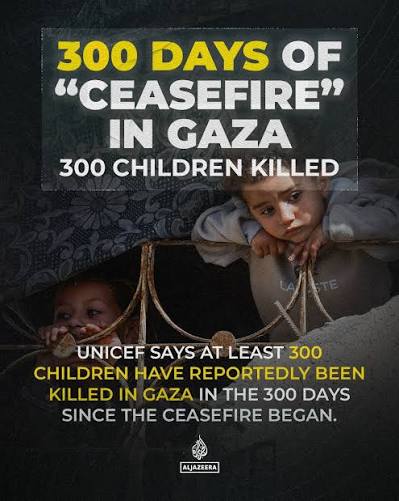
According to the Gaza Ministry of Health figures cited by the United Nations, 1,254 Palestinians were killed between the declaration of the ceasefire on 10 October 2025 and 5 August 2026. Another 4,121 were injured, while 804 bodies were retrieved from rubble. Four Israeli soldiers were killed by Palestinian fighters during approximately the same period.
The total Palestinian death toll since October 2023 has exceeded 73,000, not including many people whose bodies remain beneath destroyed buildings or deaths indirectly caused by hunger, disease, untreated injuries and the collapse of health services.
In July alone, more than 150 deaths were reported, the highest monthly toll of 2026. Israeli attacks continued after Trump announced the new disarmament roadmap, killing civilians and damaging medical supplies near Al-Aqsa Hospital in Deir al-Balah.
On 1 August, Palestinian Civil Defence completed a recovery operation at a residential block in Gaza City’s Sabra district that had been struck in November 2023. It recovered 112 bodies, including those of 40 children, 38 women and seven people with disabilities. Another 157 people believed to have died in the same attack remained missing. The recovered victims were buried in a collective funeral on 4 August.
These figures come from the UN Office for the Coordination of Humanitarian Affairs’ report of 7 August, which attributed casualty totals to the Gaza Health Ministry and noted that figures not independently verified by the UN were identified by their source.
Israel says its strikes targeted Hamas members, including individuals involved in the October 2023 attack. Israeli security agencies had been conducting a campaign to locate and assassinate alleged participants, often describing them as immediate threats even during the ceasefire.
Following pressure from Mladenov and the United States, those targeted killings appear to have been suspended at the beginning of August. Reuters reported that Israel agreed to limit military action to immediate threats. That pause remained in place for several days even as Netanyahu publicly rejected the roadmap.
This gap between words and actions suggests that negotiations are not dead. It also exposes how decisively Washington can influence Israeli conduct when it chooses to use its leverage.
Gaza physically destroyed
The destruction confronting any peace plan is almost beyond comprehension.
A UN satellite assessment found that by 16 June 2026 approximately 201,290 structures, an estimated 82 percent of all structures in Gaza, had been damaged. Of these, 134,422 were classified as destroyed, 13,848 as severely damaged, 28,096 as moderately damaged and 24,924 as possibly damaged.
More than 328,000 housing units were estimated to have sustained damage. Hospitals, schools, universities, roads, bakeries, water networks, sewage systems, mosques, churches, agricultural facilities and municipal buildings have been destroyed or degraded.
Around three-quarters of Gaza’s population depended primarily on water delivered by truck. Explosive ordnance contamination extended across the territory, but mine-clearance organisations lacked permission to move or dispose of dangerous objects and could not import all the equipment required.
The European Union, United Nations and World Bank have estimated that recovery and reconstruction will require approximately $71.4 billion over a decade, including more than $26 billion during the first 18 months.
Reconstruction cannot begin at the required scale while Israel retains control over most of the land, crossings, machinery and materials needed to rebuild. Nor can displaced families return to neighbourhoods that remain military zones or have been physically erased.
Smotrich’s demand that not a single building be reconstructed before Hamas’s total destruction therefore amounts to holding civilian survival hostage to an undefined military objective.
Netanyahu’s October election
Israel’s general election is scheduled for 27 October 2026. Netanyahu’s coalition is under pressure, while opposition parties have generally been polling more strongly, although the fragmented political system may prevent either bloc from assembling a majority.
Netanyahu depends on far-right partners who demand the permanent defeat of Hamas, oppose Palestinian statehood and support continued Israeli control of Gaza.
Smotrich praised Netanyahu’s rejection, declaring that the IDF must not withdraw “even a millimetre” and that reconstruction could not begin before Hamas was dismantled. Ben Gvir demanded a new cabinet decision rejecting the roadmap.
Netanyahu consequently has an electoral incentive to demonstrate that he can defy Trump and prevent concessions. His message is that only he can resist foreign pressure, retain conquered territory and stop the creation of a Palestinian state.
Reports from Israel’s Channel 12 reinforce the impression that domestic politics influenced his decision. The network reported that Netanyahu had personally approved a pilot IDF withdrawal from three small areas near Rafah before reversing himself within approximately 24 hours. Unnamed security officials said the change shocked the military establishment, which learned of it through the media.
The report has not been independently confirmed, but if accurate it suggests that Netanyahu’s categorical refusal was not the product of a new military assessment. It was a political decision taken as criticism from the right intensified.
The US midterm elections follow on 3 November, only one week after Israelis vote. Trump wants to present himself as the president who ended several interconnected Middle Eastern wars, reduced oil prices and imposed order on allies and adversaries alike. Netanyahu has now placed that ambition in jeopardy.
Eroding American support
Netanyahu may be gambling that Trump will ultimately retreat rather than create an open confrontation with Israel and its supporters in the United States.
That calculation worked repeatedly during the Biden administration. Washington expressed concern about civilian deaths and humanitarian access while continuing to provide military aid and diplomatic protection. Israel learned that American criticism rarely carried enforceable consequences.
The political environment is changing. A Pew Research Center survey published in April 2026 found that eight in ten Democrats and Democratic-leaning independents held an unfavourable view of Israel. Younger Americans have become particularly critical.
Vice-President JD Vance has publicly questioned Israeli influence over American policy and expressed scepticism about wars fought in Israel’s interests. His position matters because he is a leading potential Republican presidential candidate for 2028.
Trump must now decide whether the United States is a superpower capable of enforcing its own agreement, or merely the financial and military sponsor of a government that reserves the right to disregard American policy.
The multilateral force already has legal authority
The international community does not need to invent an entirely new mechanism to protect Gaza. UN Security Council Resolution 2803, adopted on 17 November 2025, already authorises member states participating with the Board of Peace to establish a temporary International Stabilization Force.
The resolution empowers the force to use all necessary measures, consistent with international law, to fulfil its mandate. Its responsibilities include protecting civilians and humanitarian operations, monitoring the ceasefire, securing border areas, supporting Palestinian police and overseeing the demilitarisation process. The resolution’s full text is available here.
The proposed force is expected eventually to include around 20,000 personnel under US Major General Jasper Jeffers. Morocco has pledged troops, while Uganda’s parliament authorised participation in August. Indonesia has also prepared for a potentially substantial contribution.
An initial deployment has repeatedly been discussed, including a smaller contingent that would enter the Rafah area and coordinate with Palestinian police and the NCAG. The force has not yet been deployed at the scale necessary to change the reality on the ground.
There are legitimate concerns about its current design. A force operating under a Trump-controlled Board of Peace, in close consultation with Israel and without sufficient Palestinian political representation, could become an instrument for administering occupation rather than ending it. If its primary role were simply to disarm Palestinians while leaving Israeli forces free to attack and occupy Gaza, it would possess neither legitimacy nor a genuine peacekeeping function.
That is why deployment must be accompanied by strict conditions.
The force must be multinational in more than name. Arab, Muslim-majority, African, Asian and other contributing countries must participate in its command and verification structures. Palestinian consent must be secured through the NCAG and broader Palestinian institutions. Its mandate must apply equally to Israeli and Palestinian violations.
Its first deployment areas should be hospitals, humanitarian crossings, displaced-person camps, aid routes and the Yellow Line. Its personnel should physically separate Israeli troops from Palestinian civilians, investigate shootings and prevent further unilateral movement of the line.
The force should supervise the decommissioning of Palestinian weapons while simultaneously certifying Israeli withdrawals. It should ensure that no Palestinian faction retains independent military control, but it must also guarantee that Israel cannot use demilitarisation as an opportunity to seize more territory.
It should secure the return of displaced families, protect reconstruction personnel, support mine clearance and prevent attacks on homes and civilian infrastructure. All violations should be publicly documented and reported to the Security Council.
Its presence should be explicitly temporary and tied to measurable withdrawal and reconstruction deadlines. There must be no permanent foreign military bases, no annexation and no international administration that indefinitely postpones Palestinian sovereignty.
Protection cannot depend on Israeli consent alone
Israel will argue that no international force can be deployed without its complete consent. That position would give Netanyahu a permanent veto over the protection of the population his military controls.
Resolution 2803 already provides international authority for the mission. Israel accepted the original comprehensive plan upon which that resolution was based. Netanyahu cannot reasonably claim the benefits of the plan, including Hamas’s removal from government and disarmament, while rejecting every corresponding obligation imposed upon Israel.
If Israel obstructs deployment, participating states must be prepared to impose political and economic consequences. These could include suspending arms transfers used in Gaza, restricting military cooperation, imposing targeted sanctions on officials obstructing the ceasefire and reviewing trade arrangements that support illegal occupation.
A protection force without diplomatic consequences behind it would be little more than another observer mission recording atrocities it had no ability to prevent.
A choice between protection and complicity
Netanyahu has clarified the choice facing the international community.
The existing roadmap offers Hamas’s removal from government, independent Palestinian administration, comprehensive weapons decommissioning, international verification, Israeli withdrawal and reconstruction. It contains strong protections for Israeli security, while offering Palestinians only a conditional path towards statehood.
Netanyahu still rejected it.
He did so while declaring that no Palestinian state would be permitted, while his coalition demanded that Israel retain every metre of Gaza it currently controls and while reconstruction remained blocked.
His government’s position is no longer simply that Hamas must be defeated. It is that Palestinians must remain without sovereignty, without meaningful military protection, without guaranteed return to their land and without the ability to rebuild unless Israel permits it.
That is not a peace strategy. It is a programme for permanent domination.
The consequences are visible in the mass graves, the moving Yellow Line, the destroyed hospitals, the hundreds of thousands of ruined homes and the crowded camps containing people who have nowhere safe to go.
After nearly three years of killing and repeated diplomatic failure, protecting Gaza cannot be left to the discretion of the power accused by a UN commission of committing genocide there.
A properly constituted multilateral force must enter Gaza to protect civilians, enforce the ceasefire, supervise reciprocal demilitarisation and withdrawal, secure humanitarian access and make reconstruction possible. It must protect Israelis against renewed attacks and Palestinians against further military destruction, forcible transfer and collective punishment.
Netanyahu has snubbed Trump and rejected a peaceful route out of Gaza. The international community must now decide whether it will protect the Palestinian people or continue providing political cover for their destruction.