The Silent Toll of Economic Warfare: Lancet Study Links Western Sanctions to 38 Million Excess Deaths
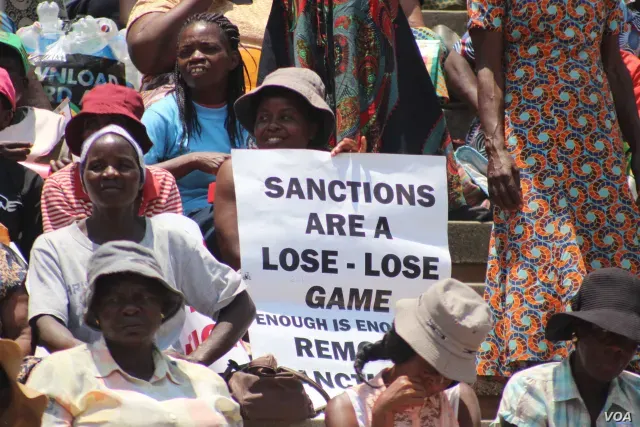
A major analysis of 152 countries found that unilateral sanctions were associated with mortality on a scale comparable to war, with children bearing the heaviest burden. The findings challenge the portrayal of sanctions as a humane alternative to military action, although the headline figure remains a statistical estimate rather than a count of individually documented deaths.
Economic sanctions leave no bomb craters, ruined apartment blocks or immediately visible battlefield casualties. Their effects arrive through less dramatic pathways: a hospital that cannot obtain replacement equipment, a pharmacy without essential medicines, a government unable to finance public health programmes, or a family whose income collapses as trade and access to foreign currency disappear.
The deaths that follow are rarely recorded as casualties of foreign policy. They appear instead in mortality statistics as deaths from malnutrition, infectious disease, untreated chronic illness, maternal complications and the progressive failure of health systems.
A major study published in The Lancet Global Health has attempted to count this largely invisible toll. Its findings suggest that unilateral economic sanctions, principally those imposed by the United States and European Union, were associated with approximately 38 million excess deaths worldwide between 1971 and 2021.
The figure is not a conventional body count. It is a cumulative estimate derived from a statistical model comparing mortality in sanctioned countries with the number of deaths researchers calculated would probably have occurred in the absence of sanctions. Even with that qualification, the scale of the result is extraordinary.
The peer reviewed study, written by economists Francisco Rodríguez, Silvio Rendón and Mark Weisbrot, examined sanctions episodes and age specific mortality data covering 152 countries over five decades. The researchers concluded that sanctions had “substantial adverse effects on public health”, with the strongest results associated with economic, unilateral and United States measures.
Their central estimate for the most recent decade examined, from 2012 through 2021, was that unilateral sanctions caused 564,258 excess deaths per year. The 95 percent confidence interval ranged from 367,838 to 760,677 deaths annually.
That central estimate exceeded the average annual number of people killed directly in battle during the same period, which the researchers placed at approximately 106,000. It was also comparable to broader estimates of total deaths caused by wars when civilian casualties are included.
Where the 38 million figure comes from
The figure of approximately 38 million deaths requires careful explanation because it was not the number placed at the centre of the study’s abstract.
The paper highlighted the estimate of 564,258 annual deaths during 2012 to 2021. Its supplementary results also charted estimated sanctions related mortality for every year from 1971 through 2021. Adding those annual central estimates produces a cumulative total of approximately 38 million deaths.
The calculation was subsequently highlighted by academics Jason Hickel and Dylan Sullivan and economist Omer Tayyab, who reported that US and EU unilateral sanctions were associated with 38 million deaths across the period. Their account said estimated annual deaths exceeded one million during some years in the 1990s and surpassed 800,000 in 2021.
The scientifically cautious description is therefore not that 38 million named and individually verified people were proven to have been killed by a particular government order. It is that the study’s statistical model associated unilateral sanctions with approximately 38 million excess deaths over the fifty year period.
This distinction matters, but it does not make the finding insignificant. Excess mortality is widely used in public health to measure deaths attributable to wars, epidemics, natural disasters and other events when direct counting is incomplete or impossible. Every estimate depends upon a counterfactual question: how many people would have died if the event had not occurred?
In this case, the researchers sought to answer that question across more than half a century of international economic coercion.
Children carried the greatest burden
The most disturbing finding concerned children. Deaths among children younger than five accounted for 51 percent of the total mortality attributed to sanctions across the study period.
When children aged up to 15 and adults between 60 and 80 were considered together, those groups represented 77 percent of estimated sanctions related deaths. The overwhelming burden therefore fell upon people generally outside the workforce and least able to influence the conduct of their governments.
The estimated effect was greatest among children younger than five, whose mortality was approximately 8.8 percent higher under sanctions, corresponding to the study’s estimate of 8.4 log points. Older people between 60 and 80 also experienced a significant rise.
The researchers found that the effect intensified as sanctions remained in place. For infant mortality, economic sanctions were associated with an increase of 5.9 log points during the first three years, 8.3 log points during years four to six and 10 log points after seven years or more.
This pattern is consistent with the gradual deterioration of an economy and its public services. A short restriction may be absorbed through reserves, alternative suppliers or emergency assistance. A prolonged sanctions regime can steadily exhaust those protections, eroding infrastructure, household savings, clinical capacity and access to imported goods.
The result is a form of cumulative damage in which the most vulnerable die first, while the connection between their deaths and the original foreign policy decision becomes increasingly obscured.
How the researchers investigated causation
Governments that are sanctioned frequently suffer from war, political instability, corruption, poverty or institutional breakdown. Any serious analysis must therefore confront an obvious question: did sanctions increase mortality, or were sanctions merely imposed upon countries where mortality was already rising for other reasons?
Rodríguez, Rendón and Weisbrot used several methods intended to separate the effects of sanctions from those competing explanations.
Their data came from the Global Sanctions Database, United Nations population and mortality estimates, the World Bank, the Penn World Table, UNESCO, the United Nations Development Programme and conflict data compiled by researchers in Uppsala and Oslo.
The models controlled for income per person, demographic dependency, rural population, expected years of female education, political institutions and involvement in civil or international war. Country effects were used to account for persistent national characteristics, while year effects captured global changes such as improvements in medical technology.
The researchers then applied four principal econometric approaches. Entropy balancing made sanctioned and unsanctioned observations more comparable. Event studies examined mortality before and after sanctions were imposed. Granger causality tests investigated whether sanctions preceded changes in death rates rather than following them. Instrumental variable models used differences in foreign policy alignment, measured through United Nations General Assembly voting, as an external source of variation in the likelihood of sanctions.
Mortality did not show a statistically significant rise during the three years before sanctions were imposed, according to the event study results. It increased during the years that followed, while longer sanctions episodes were generally associated with larger effects. The authors argued that this temporal pattern supported a causal interpretation rather than the simpler claim that sanctions and poor health merely occurred together.
The baseline results found significant mortality increases across all seven age groups examined. Economic and unilateral sanctions were associated with significant increases in at least six of the seven groups, with adolescents the exception.
United States sanctions produced the strongest results
The study examined measures imposed by the United States, European Union and United Nations, but its findings did not suggest that all sanctions regimes were equally harmful.
In models that considered the different sanctioning powers simultaneously, United States measures produced the clearest and most consistent mortality effects. US unilateral sanctions were statistically significant for six age groups. European Union unilateral sanctions were not independently significant for any age group in that particular specification.
The combined figure of 38 million should not, therefore, be interpreted as evidence that Washington and Brussels contributed equally to the estimated toll. The researchers concluded that United States sanctions appeared to be driving much of the adverse mortality effect.
They identified several possible reasons. The dominance of the dollar gives Washington exceptional influence over international payments, while American secondary sanctions can threaten companies, banks and individuals outside the United States with exclusion or penalties for dealing with a sanctioned target. This extraterritorial reach can turn a formal prohibition applying to one jurisdiction into a much wider financial blockade.
The euro and the size of the European market give the EU substantial power as well, although the study found weaker independent evidence for European sanctions once United States and United Nations measures were considered at the same time.
The researchers found no statistically significant mortality effect for UN sanctions. They warned, however, that this did not prove UN measures were harmless. Several estimates were positive but too uncertain to distinguish from zero, meaning the evidence could neither establish a clear effect nor rule out meaningful damage.
One possible explanation is that United Nations measures receive greater international scrutiny and have increasingly been designed with humanitarian protections. Another is that unilateral US and EU sanctions are sometimes intended to exert much broader pressure upon the economy and living conditions of the targeted state.
The machinery of deprivation
Sanctions do not need to prohibit food or medicine explicitly to obstruct access to either.
The study identified several pathways connecting economic restrictions to mortality. Sanctions can reduce exports and government revenue, leaving less money for hospitals, sanitation, vaccination and public health. They can deplete foreign currency needed to purchase medicines, medical equipment, food and fuel. They can also impede humanitarian organisations when banks, insurers, shipping companies and suppliers refuse transactions connected to a sanctioned country.
This practice is often described as overcompliance or financial derisking. A humanitarian transaction may be lawful on paper, yet still be rejected because a bank considers the legal and reputational risks too great. Delays, additional checks and the loss of correspondent banking relationships can make permitted trade prohibitively difficult or expensive.
The Office of the United Nations High Commissioner for Human Rights has documented concerns that overcompliance can obstruct access to medicines, even when medical products are formally exempt. Reports concerning Iran, for example, have described pharmaceutical companies stopping supplies of medicines and ingredients used to treat thalassaemia following the reimposition of United States sanctions, despite humanitarian exemptions.
Once a country is cut off from ordinary finance, almost every essential system becomes more fragile. Electricity shortages affect hospitals and water treatment. Currency depreciation makes imported goods unaffordable. Reduced income worsens nutrition. Skilled health workers leave. Preventable illnesses become fatal, but the resulting death certificate rarely contains the word “sanctions”.
Sanctions as an alternative to war
Sanctions are normally presented by the governments imposing them as a means of changing behaviour without using military force. They may be employed to deter aggression, disrupt weapons programmes, punish corruption, constrain armed groups or respond to human rights abuses.
The US Treasury describes sanctions as either comprehensive or selective measures using asset freezes and trade restrictions to pursue foreign policy and national security goals. The European Union similarly maintains that its restrictive measures are intended to be targeted and to minimise adverse humanitarian consequences.
Supporters argue that carefully designed restrictions can impose costs on political leaders, military industries, financiers and other responsible actors while avoiding the destruction of war. Targeted asset freezes, travel restrictions and arms embargoes are fundamentally different from a comprehensive blockade of an entire economy.
The Lancet study does not establish that every sanctions programme is unjustified, nor does it compare the human cost of each measure with the consequences of doing nothing. Sanctions imposed against an aggressor state, for example, may be intended to reduce its capacity to wage war and thereby prevent deaths elsewhere.
Its findings nevertheless challenge the assumption that economic coercion is inherently bloodless. A policy cannot be considered humane merely because its casualties are dispersed across hospitals and households rather than concentrated at the site of an explosion.
The United States government has itself acknowledged the danger. In its 2021 sanctions review, the Treasury said sanctions had become a tool of first resort after the attacks of September 11, 2001. It recommended that measures be tied to clear objectives, made reversible where possible and calibrated to reduce unintended economic, political and humanitarian harm. The review also called for expanded humanitarian exceptions and clearer guidance for legitimate aid.
The existence of such safeguards is important, but the study raises the question of whether exemptions are sufficient when the wider financial system has strong incentives to avoid sanctioned countries altogether.
A finding that must be read with care
The 38 million estimate is dramatic, but it should not be stripped of the limitations acknowledged by the researchers.
This was an observational study, not a controlled experiment. Countries cannot be randomly assigned to receive sanctions, and statistical methods cannot guarantee the complete removal of every hidden difference between sanctioned and unsanctioned states.
The results depend upon assumptions about unobserved confounding, the validity of the instrumental variables and the accuracy of international mortality data. Foreign policy alignment may influence the probability of sanctions, as the model assumes, but it may also correlate with domestic political or economic choices affecting health.
The authors tested alternative models, controls, mortality measures and time structures, and reported that the central relationship remained robust. Even so, they acknowledged that changing motives and methods of sanctions could limit the extent to which historical results predict the effects of present or future measures.
The estimate also aggregates very different countries and restrictions. A targeted travel ban, an asset freeze against named officials, a prohibition on financial transactions and a comprehensive trade embargo do not operate in the same way. Although the researchers separated economic, noneconomic, weapons, unilateral and multilateral sanctions, any global estimate necessarily compresses considerable variation.
The research was funded by the Center for Economic and Policy Research. Rodríguez and Rendón had received financial support from the organisation during the research phase, although the paper stated that the centre had no direct role in writing the manuscript or deciding to submit it. Rodríguez also disclosed that he owned the consultancy VenAnalytics, directed the nonprofit Oil for Venezuela and had served as an expert witness in litigation involving Venezuela.
Those disclosures do not invalidate the results, but they form part of the information readers should consider when assessing the work. The data and compiled research files were made publicly available to permit further examination and replication.
From invisible casualties to public accountability
The political significance of the study lies not only in its central estimate, but in its challenge to the moral categories through which sanctions are discussed.
Military action is expected to produce casualties, and governments are at least nominally required to consider proportionality, civilian protection and the likelihood of success. Economic sanctions are frequently discussed in administrative language involving designations, prohibited transactions, compliance and market access. This vocabulary can conceal consequences that are equally physical.
The study’s authors argued that evidence of deaths should be considered alongside the often limited ability of sanctions to achieve their declared goals. An editorial in The Lancet Global Health said the success rate of sanctions remained around 30 percent and called upon governments to monitor their full consequences, establish explicit exit mechanisms and ask whether the health toll could be justified.
Study coauthor Mark Weisbrot went further, describing sanctions as a lethal form of collective punishment whose violence was widely misunderstood because it was presented as a nonviolent alternative to military force.
There remains a legitimate debate about how governments should respond to aggression, weapons proliferation, corruption and grave human rights abuses when diplomacy fails and war would be catastrophic. The Lancet findings do not remove that dilemma. They make it harder, however, to pretend that sanctions avoid it.
If the study’s estimate is even broadly correct, unilateral sanctions have imposed a human cost measured not in isolated thousands but in tens of millions. Most of those estimated victims were not political leaders, military commanders or wealthy officials. They were children, older people and ordinary civilians whose vulnerability made them the first to suffer when economies and health systems were placed under sustained pressure.
Sanctions may be imposed without gunfire, but that does not mean they arrive without casualties. The central lesson of the research is that economic warfare must be judged by its human consequences, not by the absence of smoke over the battlefield.