
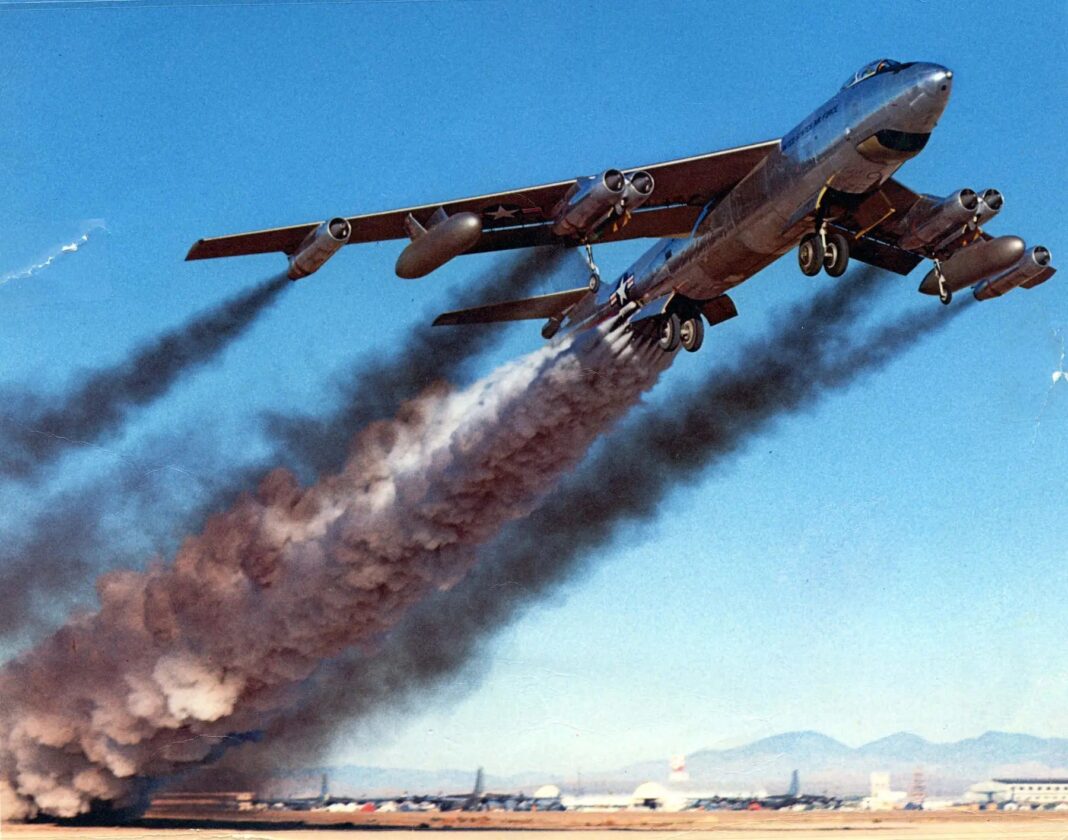

On 21 January 1968, a United States Air Force B-52 bomber carrying four hydrogen bombs crashed onto the frozen sea ice near Thule Air Base in northwest Greenland. The accident scattered radioactive material across Arctic ice and water, exposed hundreds of workers to contamination, and left unresolved questions about unrecovered nuclear components.
But the Thule crash was not merely a tragic accident.
It was the moment a long-running deception collapsed: proof that the United States had been operating nuclear weapons on Danish territory while Denmark publicly maintained a strict no-nuclear-weapons policy. Greenland paid the price, environmentally, politically, and humanly,for a lie sustained in Washington and Copenhagen.
Denmark’s Nuclear Ban,On Paper
Throughout the Cold War, Denmark officially prohibited the presence of nuclear weapons on its territory. The policy was presented domestically and internationally as a clear stance: Denmark would be a non-nuclear state, even while hosting NATO forces.
Greenland, though geographically remote, was constitutionally part of the Danish realm. Publicly, Danish governments insisted the nuclear ban applied there as well.
Privately, that position was fiction.
From the early Cold War onward, the United States treated Greenland as a strategic military asset,one it could arm with nuclear-capable systems while Denmark looked the other way. The Thule crash exposed that arrangement in the most undeniable way possible: radioactive debris scattered across Danish territory.
Nuclear Weapons in the Arctic Sky
The aircraft that crashed near Thule was part of Operation Chrome Dome, a Strategic Air Command programme that kept US bombers continuously airborne with live thermonuclear weapons. These patrols were designed to ensure an immediate nuclear strike capability against the Soviet Union.
The flights were routine. So routine that nuclear weapons regularly passed over Greenland’s ice without public knowledge or consent.
On the day of the crash, a malfunction in the B-52’s cabin heating system triggered a fire. The crew abandoned the aircraft. It continued briefly on autopilot before slamming into the sea ice at high speed.
The hydrogen bombs did not produce a nuclear detonation, but their conventional explosives detonated on impact. Plutonium, uranium, and radioactive debris were blasted into the Arctic environment.
Greenland, officially nuclear-free, was suddenly contaminated by nuclear weapons it was never supposed to host.
Poisoning the Ice
The crash site became one of the most contaminated areas in the Arctic. Radioactive particles embedded themselves in ice, snow, and seawater, spreading beyond the immediate impact zone.
The response was swift but secretive. The United States launched Operation Crested Ice, a massive cleanup operation involving thousands of workers, many of them Danish and Greenlandic civilians.
They shoveled radioactive snow by hand. They cut contaminated ice into blocks. They loaded it into steel drums for shipment to the United States.
Protective measures were inadequate. Radiation monitoring was inconsistent. Workers were repeatedly reassured that the risks were minimal.
Those assurances would later prove hollow.
The Workers Left Behind
In the years that followed, many cleanup workers developed cancers, blood disorders, and chronic illnesses. For decades, they fought for recognition and compensation.
Their claims were routinely dismissed. Causal links were questioned. Responsibility was deflected between governments.
Only much later did Danish authorities acknowledge failures in worker protection and offer limited compensation. By then, many of those exposed were already dead.
Greenlandic communities, who had no voice in the original decisions, were left to live with the environmental and health legacy.
A Cover-Up Between Allies
The political danger of the Thule crash lay not just in radiation, but in exposure.
Denmark’s nuclear ban had been violated. Either Danish authorities had been deceived by the United States,or they had knowingly allowed nuclear weapons on their territory while misleading parliament and the public.
Declassified documents later pointed to the latter. Danish officials were aware of US nuclear activity in Greenland and quietly accepted it in the name of alliance politics.
Publicly, the denials continued.
The Thule crash forced officials into damage control mode. Statements were carefully worded. Investigations were constrained. The focus shifted from accountability to containment, of both radiation and political fallout.
The Missing Weapon Question
The United States claimed that all four hydrogen bombs were destroyed and that all components were recovered. Yet internal reports and subsequent investigations raised doubts.
Some bomb components were never conclusively accounted for. Evidence suggested that parts of at least one weapon may have sunk into the seabed beneath the ice.
Further searches were halted.
If radioactive nuclear material remains in Greenland’s waters today, it does so because retrieving it was deemed politically inconvenient.
Ending Airborne Nuclear Patrols,Not Nuclear Secrecy
The Thule crash contributed to the end of Operation Chrome Dome later in 1968. Airborne nuclear patrols were finally recognised as too dangerous.
But the deeper lesson,that nuclear weapons had been deployed in violation of a host nation’s declared policy,was never fully reckoned with.
No senior officials were held accountable. No binding reforms followed. The secrecy endured.
Greenland as a Sacrificial Zone
The poisoning of Greenland did not happen in isolation. It was part of a broader pattern in which remote territories were treated as expendable buffers for great-power strategy.
Greenland was militarised without democratic consent. Its land was contaminated without public acknowledgment. Its workers were exposed without protection.
All while Denmark claimed a moral high ground it did not, in practice, uphold.
The Thule nuclear crash stripped away comforting illusions about Cold War nuclear policy. It revealed a system in which nuclear weapons were deployed secretly, environmental harm was minimised, and allied governments colluded to preserve appearances.
Greenland was officially nuclear-free. In reality, it was poisoned by nuclear weapons carried through its skies and smashed into its ice.
The radioactive debris may be buried beneath snow and sea, but the political contamination remains,an unresolved legacy of alliance loyalty placed above truth, law, and human life.