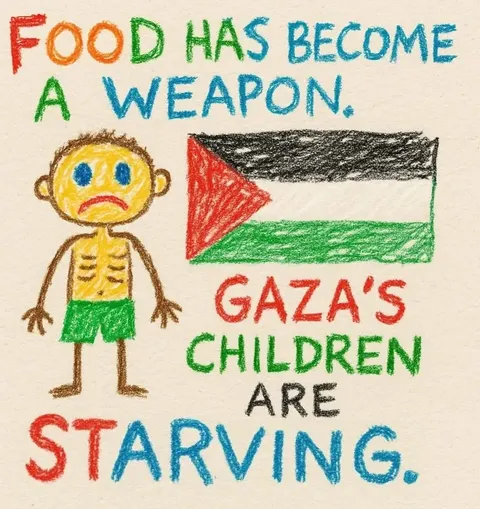
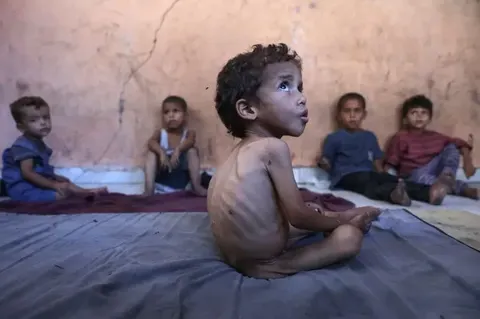
“A Disaster for Israel and the World”: John Mearsheimer and Dr. Fose Sidwa on Gaza’s Unfolding Genocide
As Israel’s military campaign in Gaza approaches its twenty-second month, the air is thick not only with the dust of bombed buildings but with mounting accusations of genocide that are growing harder for even Israel’s allies to ignore. Entire neighborhoods lie in rubble, hospitals are decimated, and the UN warns that famine may be imminent for over a million people.
For John Mearsheimer, professor of political science at the University of Chicago and one of America’s foremost strategic thinkers, the scale of destruction is more than a humanitarian tragedy—it is a geopolitical blunder of historic proportions.
“Would you want to live in Israel?” he asked in a recent address. “I’m not sure about that. You know, it’s the size of a postage stamp and you have this country, Iran, and we’re hypothesizing that it might have a couple nuclear weapons. This is not a good situation. If you look at this country, it does not have a bright future.”
October 7th and the Framing of a War
The war’s official Israeli narrative begins on October 7, 2023. In the early hours, militants from Hamas and allied groups breached the high-tech barrier separating Gaza from Israel, launching the deadliest single-day assault on Israeli soil in the state’s history. Israel’s government says 1,139 people were killed and over 200 taken hostage. Netanyahu’s office has alleged atrocities so grotesque they were designed to sear themselves into the global consciousness: beheaded men, raped women, burned infants.
In televised statements, Netanyahu likened the attack to the Holocaust, declaring that “Free Palestine” was a modern version of Hitler’s genocidal creed.
But Mearsheimer cautions that much of this narrative is constructed for political effect.
“There’s an abundance of evidence that these crimes he’s accusing Hamas of committing were not committed by Hamas. It’s part of the Israeli story designed to make what happened on October 7th look even worse.”
The more important question, he says, is why the attack occurred:
“The Palestinians were in a concentration camp, and they were breaking out of the concentration camp. According to international law, it was perfectly permissible for Hamas to attack Israel on October 7th. It was not permissible for them to kill civilians—and I am adamantly opposed to that—but Gaza is occupied territory.”
Timeline — From October 7th to Today
October 7, 2023 — Hamas-led assault kills 1,139 Israelis, over 200 taken hostage. Israel declares war.
Oct–Nov 2023 — Continuous Israeli bombardment of Gaza; over 10,000 Palestinians reported killed by mid-November.
Dec 2023 — First serious UN push for a ceasefire blocked by U.S. veto.
Jan 2024 — ICJ orders provisional measures for Israel to prevent acts of genocide.
Mar 2024 — Death toll surpasses 30,000 Palestinians; famine warnings issued.
May 2024 — Rafah offensive displaces hundreds of thousands.
Aug 2024 — UN estimates 1.4 million Gazans at risk of famine.
Nov 2024 — Casualties approach 50,000; Gaza health system collapses.
Feb 2025 — International recognition of Palestine accelerates; Israel rejects all peace frameworks.
Aug 2025 — War enters twenty-second month; death toll exceeds 60,000; UN warns Gaza could be uninhabitable “for generations.”
Gaza: An Open-Air Prison
Since 2007, Israel—backed by Egypt—has imposed a near-total blockade on Gaza’s 2.3 million residents, controlling its borders, airspace, and coastline. The UN and international human rights groups have repeatedly described the enclave as “an open-air prison.”
Before October 7th, 80% of Gaza’s population depended on humanitarian aid. Unemployment hovered around 50%. Water was often undrinkable; electricity was available for only a few hours a day.
For Mearsheimer, these were the conditions of a powder keg:
“Gaza is occupied territory… Netanyahu wants to make it look like what happened on October 7th was the second coming of the Holocaust. This is ludicrous. The idea that Palestinians were the equivalent of the Nazis and were going to do to the Israeli Jews what the Germans did to European Jewry is simply not a serious argument.”
From Ceasefire Calls to Ceasefire Breakdowns
International pressure for a ceasefire has mounted steadily since mid-November 2023. France, Britain, and Canada—all traditionally close to Israel—have publicly called for an end to hostilities. Behind closed doors, European diplomats are said to be pressing Washington to rein in its ally.
Mearsheimer believes these efforts, while significant, will not be decisive:
“The United Nations can’t do it. It doesn’t have troops of its own. No country in Europe can do it. The Russians and the Chinese are not going to do it. The Americans are joined at the hip with Israel… So it’s up to us to shut it down—which is another way of saying it’s up to Donald Trump.”
A Doctor’s Testimony: ‘Entirely Preventable’
In December, Dr. Fose Sidwa, an American trauma and critical care surgeon from Stockton, California, returned from his second medical mission to Gaza since the war began. His testimony to the UN Human Rights Council offered a chilling, first-hand account:
“I did not see or treat a single combatant during my five weeks in Gaza. My patients were six-year-olds with shrapnel in their hearts and bullets in their brains. Pregnant women whose pelvises had been obliterated and their fetuses cut in two while still in the womb.”
He accused the Israeli military of systematically dismantling Gaza’s health system:
“The medical system has not failed—it has been systematically dismantled through a sustained military campaign that willfully violated international humanitarian law. Civilians are now dying not just from constant air strikes, but from acute malnutrition, sepsis, exposure, and despair.”
Dr. Sidwa called it “a man-made catastrophe” and laid out a list of urgent measures:
- Immediate and permanent ceasefire, with a halt to all arms transfers to parties in the conflict.
- Reopening of all Gaza crossings and guaranteed medical evacuations to West Bank and East Jerusalem hospitals.
- Sustained humanitarian access for food, water, shelter, fuel, and medicine.
- Rejection of politicized aid mechanisms that bypass established UN relief agencies.
- Immediate release of all hostages and detained healthcare workers.
His warning was stark:
“If this council remains silent and fails to act now, that record will stand as a testament to a global failure to provide urgent care and to the collapse of our collective conscience.”
Gaza Death Toll and Displacement (Updated — UN OCHA & Gaza Health Ministry)
- Palestinian deaths: Over 60,000 (as of July 29, 2025)
- Injured: ~146,000–153,000
- Children killed: Estimated 22,000+
- Displaced: 1.9 million (over 80% of population)
- Homes destroyed: ~70% of all residential units
- Health facilities destroyed or inoperable: 84%
The Lobby and American Policy
For Mearsheimer, the United States is not merely complicit—it is indispensable to Israel’s war effort.
“The Israelis could not execute this genocide without us supporting them. If Trump decided he was going to stop it, he would really have to take off the gloves and go to war against the lobby… But so far, it looks like that’s not the case.”
He warns that the pro-Israel lobby’s influence in Washington is “already overexposed” and that its current tactics—“playing smashmouth politics”—are unsustainable in a democratic society. Yet, in the short term, that influence ensures that Washington will shield Israel from meaningful international consequences.
Demographics, Destabilization, and the Future
Inside “Greater Israel” today, Jews and Palestinians exist in near-parity—about 7.3 million each. For Mearsheimer, this demographic reality underpins the logic of Israel’s current campaign:
“They plan to ethnically cleanse Gaza. And because they’re having a devil of a time doing that, they’re executing a genocide—murdering people mainly for the purposes of driving them out. And if they can’t drive them out, they’ll kill them all.”
But even if this grim objective were achieved, he warns, it would not resolve Israel’s security dilemmas. Iran’s potential nuclear capabilities, the possibility of mass Jewish emigration from Israel, and the permanent moral stain of the war all threaten the state’s long-term viability.
“The world is going to mobilize against you. Maybe the U.S. government will protect you, but the consequences for your country are going to be horrific.”
Key Diplomatic Statements and Reactions
French President Emmanuel Macron (Feb 2025):
“The humanitarian situation in Gaza is catastrophic. We call for an immediate and lasting ceasefire, the release of all hostages, and the establishment of a credible path toward Palestinian statehood.”
UK Prime Minister Keir Starmer (Feb 2025):
“It is in Britain’s national interest, and in the interest of regional peace, that Gaza’s suffering ends. We must work toward a two-state solution, and that starts with ending this war.”
Canadian Prime Minister Justin Trudeau (Feb 2025):
“The images coming out of Gaza are heartbreaking. Canada supports an immediate ceasefire and unhindered humanitarian access.”
Israeli Prime Minister Benjamin Netanyahu (Response):
“'Free Palestine!' is just today’s version of 'Heil Hitler!'. They don’t want a Palestinian state—they want to destroy the Jewish state. Proposals for Palestinian statehood are rewarding murderers with the ultimate prize.”
U.S. Secretary of State (March 2025):
“The United States supports Israel’s right to self-defense. We urge Israel to minimize civilian harm and will continue to supply defensive aid.”
‘Real Trouble’ Ahead
Mearsheimer concludes with a sober prognosis:
“ISRAEL Is a highly aggressive state prone to violence. There’s no evidence that’s going to change. And I believe the situation with the lobby here in the United States is not sustainable over the long term. Israel is in real trouble.”
Dr. Sidwa’s closing plea—delivered not as an academic but as a witness—underscores the stakes:
“Preventing genocide means refusing to normalize these atrocities. It means refusing to dehumanize the Palestinians. We see now that this way of thinking has brought about a human dignity crisis with an entire people on the edge of survival.”
In the wreckage of Gaza and the corridors of Washington alike, the question remains: will those with the power to stop this war act, or will the conflict drag on until the damage—to Palestinians, to Israel, and to the credibility of the international order—is beyond repair?