Refuse and Face Prison, Obey and Risk Prosecution: Australia’s Gaza Ruling Puts IDF Soldiers on Notice
By recognising conscientious objection to service in Gaza as grounds for refugee protection, an Australian tribunal has exposed a devastating legal dilemma at the heart of Israel’s compulsory military system
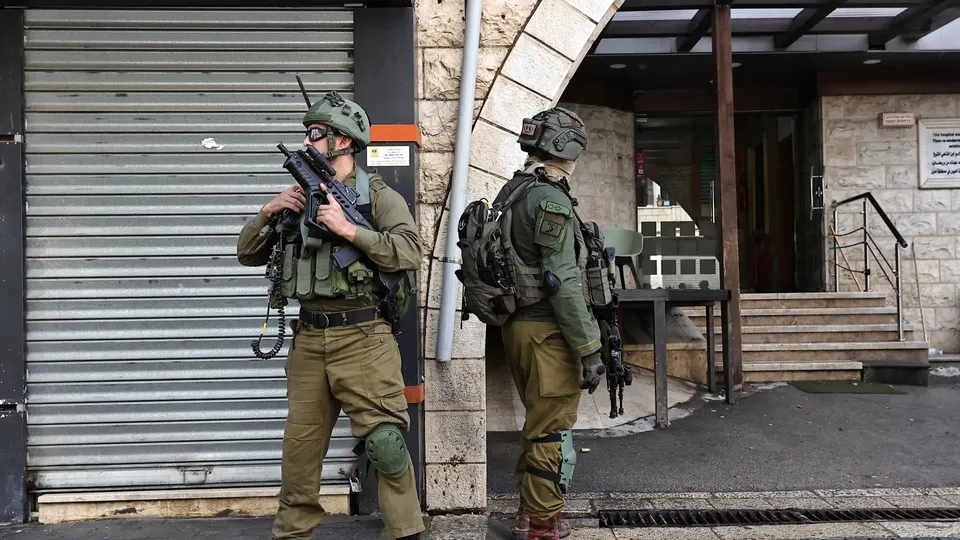
An Israeli citizen approaching the age of conscription may now confront an extraordinary choice. Refuse to serve in the Israel Defense Forces and risk imprisonment by the Israeli state, or obey and face the possibility of participating in conduct later investigated as a war crime, crime against humanity or act of genocide.
That is the disturbing implication of a landmark ruling by Australia’s Administrative Review Tribunal, which accepted that three Israeli siblings held a genuine fear that military service could force them to participate in violations of international humanitarian law in Gaza.
The ruling did not declare the IDF to be a criminal organisation. It did not find that every soldier sent to Gaza would commit a war crime, and it did not reach a final judicial conclusion that Israel has committed genocide. Criminal guilt was not the question before the tribunal.
Nevertheless, its reasoning is potentially momentous. For the first time in a widely reported Australian protection case, a government tribunal has accepted that the danger of being compelled into unlawful Israeli military conduct is credible enough to help establish a claim to refugee status.
The tribunal effectively recognised that refusing to participate in Israel’s operations in Gaza may amount to a protected political and conscientious position, while imprisonment for maintaining that position may constitute persecution by the Israeli state.
That conclusion places a new question before every Israeli conscript, reservist and dual national ordered into Gaza: if the commands received are unlawful, where does obedience end and personal criminal responsibility begin?
The case the tribunal accepted
The family at the centre of the case had lived in Australia for approximately a decade after arriving on the father’s working visa. When that visa expired, the family applied for protection in 2024.
Their original application was refused. On review, the family argued that they were unsafe in Israel because of rocket attacks and had lost confidence in the state’s ability to protect them.
The tribunal rejected that part of their case. It accepted that they could be injured or killed in an attack, but found that such harm would arise from the armed conflict rather than persecution directed at them for a reason protected by refugee law.
The decisive issue was different. Three of the family’s children had reached adulthood and faced compulsory military service if returned to Israel. They told the tribunal that they had agreed among themselves to refuse conscription because they believed they could be required to participate in breaches of international humanitarian law in Gaza.
The tribunal accepted that their convictions were genuinely held. It also accepted that they could face imprisonment of up to two years for refusing to serve.
Most importantly, the tribunal found that international proceedings and investigations provided credible support for their fears. It referred to the International Criminal Court warrants issued against Israeli Prime Minister Benjamin Netanyahu and former defence minister Yoav Gallant, as well as the conclusions of the UN Independent International Commission of Inquiry.
The tribunal concluded that there were “credible allegations” that Israeli operations had breached international humanitarian law and that Israel’s methods were not generally regarded internationally as proportionate to its asserted military objectives. It carefully added that it was not required to decide whether genocide had been committed and that those accused before the ICC retained the presumption of innocence.
The tribunal nevertheless found that imprisonment for refusing military service would cause the siblings serious harm. Their political opinion was an essential and significant reason for the threatened punishment, the danger came from the state itself, no part of Israel offered protection from it, and they could not reasonably be required to abandon beliefs fundamental to their consciences.
Those findings closely reflect section 5J of Australia’s Migration Act, which recognises a well founded fear where there is a real chance of serious, systematic and discriminatory harm for reasons that include political opinion. The legislation also says a person cannot be required to alter or conceal a fundamental political belief to escape persecution. The Australian legislation is available here.
The tribunal therefore set aside the original refusal and sent the application back for reconsideration. This distinction matters. The family was not simply handed visas by the tribunal, although the tribunal’s factual and legal findings substantially strengthen the case that Australia owes them protection. The published tribunal decision is available through AustLII, and the case was first reported in detail by Guardian Australia journalist Ben Doherty.
Why this is not an ordinary draft evasion case
International refugee law does not generally turn every draft evader into a refugee. States are ordinarily permitted to maintain armed forces, require national service and punish people who evade lawful conscription.
The exception arises when military service could involve participation in acts condemned internationally as contrary to the basic rules of human conduct.
The UN Refugee Agency’s longstanding guidance says punishment for draft evasion can amount to persecution where the military action with which a person would be associated has been condemned by the international community. Its more detailed military service guidelines recognise objections to both an unlawful conflict and unlawful methods of warfare. UNHCR’s military service guidelines explain the distinction.
This means the Australian tribunal did not invent a new principle. What is remarkable is its willingness to apply that principle to Israeli military service in Gaza.
Comparable European case law shows how far the reasoning could reach. In the case of EZ v Germany, the Court of Justice of the European Union considered a Syrian who had fled compulsory service. The court held that, when an armed force repeatedly and systematically commits international crimes and no genuine procedure exists for refusing service, there can be a strong presumption that punishment for refusal is connected to a protected political opinion.
European case law has also recognised that the risk is not limited to the person who pulls a trigger. Intelligence personnel, drivers, engineers, logistics staff and others may contribute directly or indirectly to military operations in which crimes are committed. The Court of Justice judgment can be read here.
The Australian decision could consequently influence protection claims in countries applying the Refugee Convention or similar national legislation. It is not binding on European, British, Canadian or New Zealand authorities, and it is unlikely to bind other Australian tribunal members as though it were a superior court judgment. It is a merits review decision based on the circumstances of one family.
It is, however, a published legal determination by an institution of a close Israeli ally. Other applicants and lawyers can now cite it as persuasive evidence that fear of participation in unlawful IDF conduct is neither fanciful nor merely ideological.
When official orders increase rather than remove liability
The most dangerous misconception for any soldier is that an official order automatically transfers responsibility to the commander who issued it.
International criminal law was deliberately constructed to prevent that defence.
Article 33 of the Rome Statute provides only a limited defence for superior orders. A person must have been legally required to obey, must not have known that the order was unlawful, and the order must not have been manifestly unlawful. Orders to commit genocide or crimes against humanity are expressly treated as manifestly unlawful. The Rome Statute is published by the ICC.
Customary humanitarian law similarly holds that combatants must disobey manifestly unlawful commands. The fact that an instruction came through an official chain of command does not convert the deliberate killing of civilians, torture, pillage, starvation or wanton destruction into lawful conduct.
Australian law reproduces substantially the same principle. Section 268.116 of the Commonwealth Criminal Code states that superior orders do not relieve a person of responsibility for genocide or crimes against humanity. A defence concerning a war crime is available only where the accused did not know the order was unlawful and the order was not manifestly unlawful.
The same legislation gives Australian courts extended geographical jurisdiction over genocide, crimes against humanity and war crimes, regardless of where the relevant conduct occurred. A prosecution under Division 268 requires the written consent of the attorney general, but an investigation can begin before that consent is obtained. Australia’s current Criminal Code is available here.
Official orders can therefore become evidence against both the commander and the subordinate. Written directives, operational maps, targeting files, radio communications, rules of engagement and unit briefings may help prove that destruction or killing formed part of an organised policy rather than an accidental or isolated departure from military discipline.
An order can establish knowledge, purpose and common design. Repetition can demonstrate that commanders were aware of the consequences. Reports from soldiers can show whether conduct was authorised, tolerated or encouraged. Attempts to conceal identities, destroy records or describe every casualty as a militant can provide further evidence of consciousness of wrongdoing.
Military legal approval does not provide absolute immunity either. A lawyer’s authorisation may be relevant to what a soldier honestly understood, but it cannot legalise a command that is plainly criminal on its face.
Israel’s own military tradition contains the “black flag” doctrine developed after the Kafr Qasim massacre. Under that doctrine, a manifestly illegal command carries a moral and legal warning so obvious that a soldier is required to refuse it. Israel’s General Staff orders also require compliance with the Geneva Conventions.
The dilemma is therefore not created by hostile foreign law. It exists within Israeli military law itself.
Does service in Gaza make someone a war criminal?
No responsible court could declare a person criminal merely because they wore an IDF uniform or entered Gaza.
A war crime is an individual offence. Prosecutors would need evidence that the accused committed, ordered, assisted or knowingly contributed to a specific crime. Different offences require proof of particular acts and states of mind. A conscript who performed an administrative role without knowledge of unlawful activity would not be in the same position as a commander who ordered civilian homes destroyed without military necessity.
It would therefore be legally unsound to say that every IDF soldier is “most likely” to become a war criminal.
The defensible conclusion is still extremely serious: service in an operation marked by repeated and credible allegations of systematic international crimes creates a foreseeable risk of personal criminal exposure, especially for personnel directly involved in targeting, demolitions, detention, displacement, restrictions on humanitarian relief or the use of lethal force against civilians.
The ICC found reasonable grounds to believe that Netanyahu and Gallant bore responsibility for the war crime of starvation as a method of warfare and for crimes against humanity including murder, persecution and other inhumane acts. These are allegations at the pretrial stage, not convictions, but the warrants remain part of the continuing ICC situation in Palestine. The ICC maintains the official case record here.
The International Court of Justice case brought by South Africa concerns Israel’s responsibility under the Genocide Convention rather than the guilt of individual soldiers. The case remains unresolved on its merits, with further written proceedings ordered in May 2026. Its provisional measures and continuing proceedings nevertheless form part of the international legal background against which individual knowledge may eventually be assessed. The ICJ case file remains active.
In September 2025, the independent UN Commission of Inquiry concluded that Israeli authorities and forces had committed four of the five acts listed in the Genocide Convention. In June 2026, it issued further findings alleging that genocidal and other atrocity crimes had continued, including through the deliberate targeting of Palestinian children. The commission is not a criminal court and does not speak for the entire United Nations, while Israel has rejected its conclusions as biased and false. Its reports nevertheless represent an extensive evidentiary record produced by a UN mandated investigative body. The Commission’s June 2026 findings are published by the UN human rights office.
Evidence from within the IDF has added to the danger. The Israeli veterans’ organisation Breaking the Silence has collected testimony describing designated “polygons” in which troops were ordered to destroy structures while establishing a wide perimeter inside Gaza. Soldiers described systematic demolition using bulldozers, explosives and mines, including destruction after areas had already come under Israeli control. Its report, The Perimeter, documents these accounts.
In June 2025, Israeli soldiers and officers told Haaretz that troops had been ordered to fire near aid distribution sites to disperse unarmed Palestinians who were not presenting an immediate threat. Israeli leaders strongly denied that deliberate attacks had been ordered and described the report as defamatory. The military nevertheless opened an examination of possible war crimes and later acknowledged that civilians had been harmed, saying new instructions had been issued. Reuters reported the military investigation.
Such allegations do not prove the guilt of every person in the units concerned. They do demonstrate why a conscientious conscript might genuinely fear that entry into the IDF could place them in a position where the commands of a superior conflict with international law.
The two doors of refugee law
The Australian ruling exposes another profound contradiction.
A person who refuses service before participating in alleged crimes may qualify for protection because Israel threatens to imprison them for their political and conscientious objection.
A person who obeys, participates in a war crime and later seeks protection may be excluded from refugee status altogether.
Article 1F of the Refugee Convention excludes people where there are serious reasons for considering that they committed war crimes, crimes against humanity or crimes against peace. Section 5H of Australia’s Migration Act contains a corresponding exclusion.
Refugee law therefore presents two very different doors. The conscientious objector may enter as someone protected from persecution. The alleged perpetrator may find the door closed because asylum cannot be used as protection from responsibility for international crimes.
This makes the Australian decision more than a judgment about three young adults. It sends a warning to serving personnel who possess a second nationality or expect to travel, work or settle abroad after their service. Military participation can follow a person across borders.
International accountability is already moving down the ranks
The risk is no longer confined to theoretical prosecution at The Hague.
Belgian authorities questioned two Israeli soldiers in 2025 after complaints alleged their involvement in Gaza crimes. The complaints were subsequently transmitted to the ICC. Brazilian proceedings have sought investigations of visiting soldiers. French authorities have opened investigations involving a Franco Israeli serviceman and other alleged crimes in Gaza.
The 2026 Universal Jurisdiction Annual Review records active proceedings concerning alleged offences in Gaza, including investigations based on the nationality of suspects or victims. The annual review documents the expanding use of national jurisdiction.
In Britain, the Metropolitan Police has withdrawn an earlier decision to close a referral alleging that British nationals committed war crimes while serving in the IDF. The July 2026 reversal requires the allegations to be reconsidered on a fuller evidential basis. No one identified in the referral has been convicted, but the reopening demonstrates that dual nationality no longer guarantees insulation from investigation. The Public Interest Law Centre describes the current position.
Australia now faces the same issue from both directions. Its tribunal has recognised the protection claim of Israelis refusing IDF service, while the Australian Federal Police is assessing a detailed complaint alleging war crimes by an Australian citizen who served in Gaza. That complaint includes allegations concerning the demolition of civilian property and relies on witness accounts, satellite imagery, soldiers’ statements and material posted online. The allegations remain unproven, but the AFP has confirmed that they were referred to investigators. The Australian investigation was reported in July 2026.
These cases reveal a growing international accountability system operating beneath the level of heads of government. The ICC may concentrate on those most responsible, while national authorities investigate commanders, dual nationals and individual soldiers within their jurisdiction.
For Gaza’s victims, this creates the possibility that evidence ignored or suppressed domestically can reappear years later in another country.
The implications for Israel
Israel could reduce the force of future asylum claims by creating a genuine, accessible and nonpunitive form of alternative service for people who object to participating in particular operations on legal or conscientious grounds.
It could also protect soldiers who report unlawful commands, establish independent investigations, preserve operational records and make clear that selective refusal of manifestly unlawful orders will not be treated as disloyalty.
Without those safeguards, future applicants may argue that the Australian tribunal’s reasoning applies to them. Reservists who have already received deployment orders may present stronger evidence than young people who have not yet been assigned. Soldiers who protested internally before deserting may be able to demonstrate the sincerity of their objection. Intelligence, engineering and logistics personnel may argue that indirect participation would still make them contributors to alleged crimes.
Every case would remain individual. Applicants would have to establish genuine beliefs, a real risk of conscription or recall, the likelihood of punishment, and the absence of a safe and lawful alternative. The Australian decision does not create automatic refugee status for all Israeli citizens.
It does, however, make it increasingly difficult to dismiss such claims as speculative.
A ruling larger than one family
The greatest significance of the decision lies in the way different branches of international law are beginning to reinforce one another.
The ICC asks whether particular individuals bear criminal responsibility. The ICJ considers the international responsibility of states. UN commissions collect and assess evidence. National police investigate crimes under domestic legislation. Refugee tribunals decide whether people can safely be returned to the states from which they fled.
These institutions use different legal tests and standards of proof. A finding that allegations are credible for refugee purposes is not a criminal conviction, and a provisional order is not a final genocide judgment.
Yet the findings accumulate. Each proceeding weakens the claim that concerns about Gaza are simply political rhetoric with no legal foundation. Each official record makes it harder for future defendants to argue that they could not have known their conduct was potentially unlawful.
The Australian tribunal has now added a striking principle to that developing record: fear of being forced to participate in Israeli violations in Gaza can be sufficiently genuine, objective and serious to engage the Refugee Convention.
That leaves Israel’s young conscripts facing an intolerable equation. The state may punish them for refusing to serve, but international law may punish them for obeying commands that cross the line into criminality.
The ruling does not declare that every IDF soldier will become a war criminal. Its implication is more precise and, in some respects, more devastating. When credible allegations of systematic crimes are public, when international courts and commissions have repeatedly intervened, and when soldiers themselves describe unlawful orders, obedience can no longer be presented as legally safe.
For every soldier entering Gaza, the words “I was only following orders” may ultimately provide neither moral absolution nor legal defence.