
Israel’s parliament has advanced a sweeping bill to permanently empower the government to shut down foreign media outlets without court oversight—prompting sharp warnings from press freedom groups and a rare public appeal from the editor-in-chief of Israel’s leading liberal newspaper, Haaretz.
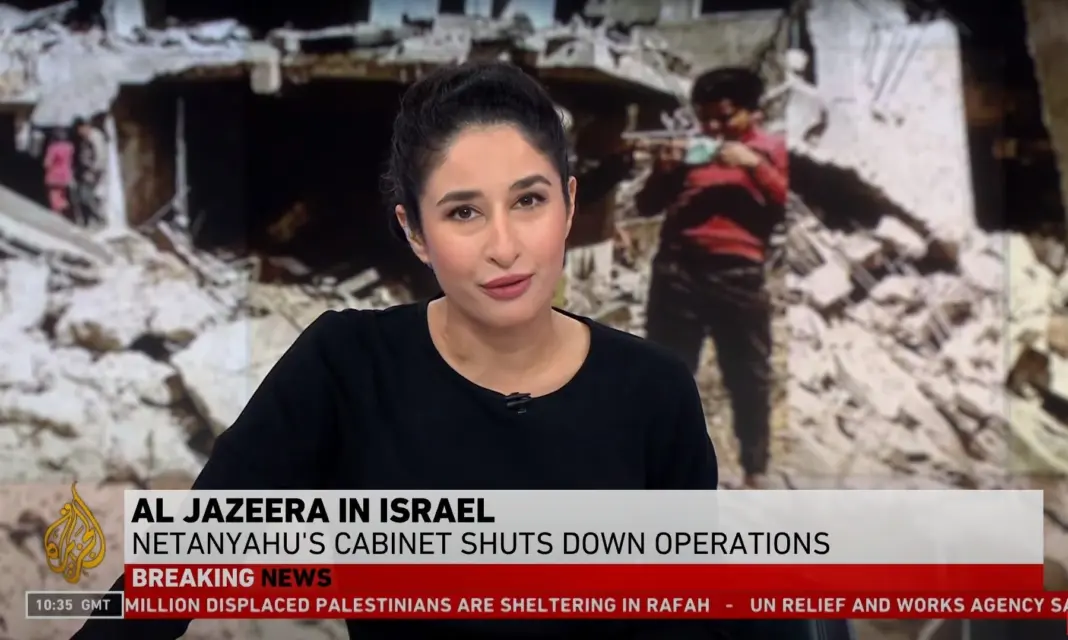
The legislation—known colloquially as the “Al Jazeera Law”—would replace earlier emergency regulations used to forcibly close Al Jazeera’s bureau in Israel. Under the permanent law, the government could shut media offices, block satellite signals, remove online content, disrupt transmissions, and restrict foreign reporting whenever authorities deem coverage harmful to “state security.”
The law also authorises Israel’s defence minister to take broad “technical measures,” including blocking websites and interfering with broadcast infrastructure.
Critics say the bill represents a major escalation in the government’s long-running campaign to limit critical coverage of the Gaza war, the occupation, and domestic political unrest. Supporters argue it protects national security during a time of heightened regional conflict.
A Press Under Siege: Haaretz Editor Issues Open Warning
In a striking move that underscored growing alarm within Israel’s media, Haaretz Editor-in-Chief Aluf Benn published an open letter to readers on 12 November—coinciding with the Knesset’s advancement of the bill—describing the moment as a “critical juncture for Israel and its free press.”
Benn wrote:
“Regional tensions are mounting, and the internal battle for the future and soul of Israel is only intensifying… Our reporting and opinions have not made Haaretz popular with the government, which has declared a boycott against us. But we are not deterred.”
He emphasised Haaretz’s commitment to reporting on the Gaza war from both sides of the enclave, documenting settler violence in the West Bank, and challenging Prime Minister Benjamin Netanyahu’s increasingly authoritarian tendencies.
The letter warns that liberal values, civil rights, and judicial independence are under “sustained threat,” and explicitly frames the newspaper’s mission as a bulwark against democratic erosion:
“We remain committed to defending liberal values and civil rights in a country where they are under sustained threat… even when it is politically unpopular.”
That Israel’s most prominent liberal publication felt compelled to issue a public defence of its right to exist is, analysts say, unprecedented in decades.
Government Boycott and Pressure Campaign Against Critical Media
The Netanyahu government has maintained an official boycott of Haaretz, refusing to provide interviews, access, or comment to the paper since early in the war. Ministers have repeatedly accused the publication of “undermining national morale” and “amplifying enemy narratives.”
The Al Jazeera Law would effectively give the same powers used against Al Jazeera to be used—at the government’s discretion—against any foreign outlet deemed unfavourable. Press freedom experts warn that Israeli reporters working with international organisations could be collateral targets.
A Deeper Internal Struggle: Haaretz Opinion Writer Issues Scathing Indictment
On the same day as Benn’s open letter, Haaretz published a blistering opinion column by Zvi Bar’el, titled “Israel and Its Evil Government Cannot Give Up on the War.”
Bar’el’s essay—already widely circulated in Israel and abroad—provides a stark moral critique of the government’s wartime psychology.
1. Addiction to War
Bar’el argues that Israel’s leaders have become “psychologically and politically addicted” to the Gaza war, unable to shift to diplomacy because their legitimacy depends on perpetual conflict.
“Israel cannot release itself from the war, even when continuation no longer serves life but perpetuates death.”
2. Hostage Politics as Fuel for Violence
Drawing on testimony from a relative of a hostage who was murdered in Gaza, Bar’el describes how personal grief has been harnessed by the state to justify ongoing operations—even when those operations endanger other hostages.
3. Erosion of Ethical Boundaries
The government’s insistence on “victory,” Bar’el writes, has obliterated moral distinctions between combatants and civilians, justice and vengeance.
4. An ‘Evil Government’ Driven by Survival
Bar’el uses “evil” not as religious condemnation but as political diagnosis: a state incapable of stopping the cycle of violence because doing so would expose its failures and threaten its survival.
5. Society Entrenched in Wartime Logic
Importantly, Bar’el argues this is not solely the government’s pathology. He suggests Israeli society itself has internalised a belief that security requires unending warfare, which media institutions reinforce—making dissenting voices like his a rare exception.
Press Freedom Groups: The Al Jazeera Law Is a Dangerous Turning Point
Journalist unions, international watchdogs, and civil-society organisations reacted swiftly to the bill’s advancement.
The Palestinian Journalists’ Syndicate called it:
“A blatant attempt to escalate crimes while hiding the truth from the world.”
Reporters Without Borders warned that the law could be used to target not just Al Jazeera, but any foreign or domestic outlet challenging official narratives of the war, settler expansion, or internal political disputes.
Human-rights groups emphasise that the law has no judicial checks, no requirement for evidence, and no mechanism for appeal—placing unprecedented power in the hands of the executive.
Supporters Say the Law Protects Israel During Wartime
The communications minister defended the bill, arguing that the temporary regulation used to shut down Al Jazeera earlier this year had expired:
“Israel cannot tolerate foreign propaganda channels endangering national security.”
Prime Minister Netanyahu’s coalition partners have framed the law as essential to preventing “psychological warfare” against Israel.
However, critics note that the government has used similar rhetoric to justify crackdowns on internal dissent, including the boycott of Haaretz.
A Shrinking Space for Dissent
The combination of:
- the Al Jazeera Law
- the government boycott of Haaretz
- escalating attacks on critical journalists
- narratives that equate dissent with disloyalty
- and the wartime political climate
has created what one senior media scholar described as “the most constrained press environment in Israel’s modern history.”
Haaretz’s decision to publish a public defence of its mission—and Bar’el’s sharp indictment of Israel’s “addiction to war”—underscores the growing internal alarm.
A Warning for Israel’s Democratic Future
Aluf Benn ended his letter with an appeal to readers to stand with the paper during what he called an “internal battle for the soul of Israel.”
Bar’el’s essay, meanwhile, suggests that unless Israel confronts its own moral paralysis, the war—and the repression surrounding it—may become permanent.
Against this backdrop, the Al Jazeera Law is not merely a media regulation bill.
It is a symbol of Israel’s widening democratic crisis, one in which war, censorship, and political survival are becoming deeply intertwined.