
In a nation consumed by the aftermath of its own actions in Gaza, the collapse of former Israel Defense Forces (IDF) Chief Legal Officer Major General Yifat Tomer-Yerushalmi has become more than a personal tragedy — it has become a national mirror.
Once the most powerful lawyer in the Israeli military and the first woman to head its legal system, Tomer-Yerushalmi now lies at the center of a scandal that exposes the moral implosion of Israel’s war establishment. After being discovered unconscious at Hatzuk Beach north of Tel Aviv, she was hospitalized and then released under house arrest following what authorities described as a possible suicide attempt — and what investigators now suspect may have been an attempt to destroy evidence.
The Fall of Israel’s Chief Military Lawyer
Tomer-Yerushalmi resigned on October 31, 2025, after admitting to authorizing the leak of a video showing Israeli soldiers abusing Palestinian detainees at the notorious Sde Teiman Detention Camp in the Negev desert.
The footage, filmed inside the military facility where hundreds of Gazans have been held without charge since the war’s escalation, showed detainees stripped, blindfolded, forced into stress positions, and surrounded by armed soldiers who mocked and filmed them.
One leaked clip — confirmed as authentic by Israeli media and cited in Great Reporter and Sky News investigations — appeared to show a Palestinian detainee being gang-raped behind riot shields by Israeli prison guards at Sde Teiman. The victim reportedly sustained catastrophic injuries, including a ruptured bowel and broken ribs, consistent with sexual torture.
The Guardian later reported that five reserve soldiers were charged with “aggravated abuse” of Palestinian prisoners, while rights groups accused Israeli authorities of deliberately avoiding the term “rape” in official documents to downplay the nature of the assault. The Great Reporter article, published on October 30, 2025, described the event as a “rape scandal the state tried to bury,” alleging a coordinated cover-up, threats to whistleblowers, and the banning of International Committee of the Red Cross access to the detention site.
The footage’s release reignited international outrage, with the United Nations Human Rights Council warning that sexual violence may be used systematically against Palestinian detainees as a form of humiliation. Israeli officials have neither confirmed nor denied the specific allegations, citing an ongoing investigation — but the images forced a reckoning.
The woman whose job had been to protect the army’s legal façade had instead become the instrument of its exposure. Her admission that she approved the release of the footage detonated her career. Critics called her a traitor; others hailed her as a whistleblower who could no longer bear complicity.
“She knew the legal system was part of the crime,” one former IDF legal officer told Haaretz. “Perhaps she believed the public deserved to see what was being done in its name.”
Days later, she vanished — leaving behind a country confronting its own reflection.
From Law to Lawlessness
As the Military Advocate General, Tomer-Yerushalmi’s job was to interpret the laws of war, advise commanders, and ensure “legal” cover for operations in Gaza. But after two years of airstrikes that killed over 70,000 Palestinians, displaced nearly two million, and triggered genocide proceedings at the International Court of Justice, her position became untenable.
“Law was being used as a weapon,” a former IDF prosecutor said. “We weren’t applying international law — we were retrofitting it to justify policy. The moral structure collapsed from the top down.”
The Sde Teiman footage was the breaking point. It proved that abuse and humiliation were not anomalies but symptoms of systemic decay. The woman meant to protect the army’s legal credibility had become the one to expose its corruption.
Under Guard, Under Suspicion
Following her disappearance, Tomer-Yerushalmi was arrested on Sunday night, November 2, after police found her near the Tel Aviv coastline. For several hours, she had been listed as missing, leading to fears she had taken her own life. Law enforcement officers could not locate her mobile phone, prompting suspicions that she had tried to stage a suicide while disposing of digital evidence related to the Sde Teiman leak.
A days-long search ensued, involving police divers, volunteers, and forensic teams combing Tel Aviv’s beachfront. Finally, on Friday morning, November 7, civilians recovered a mobile phone from the sea at Hatzuk Beach — confirmed to be hers.
That same morning, she was released from custody to ten days of house arrest upon posting a ₪20,000 (≈ $6,000) bail. A judge barred her from contacting anyone involved in the case for 55 days and placed her under investigation for fraud, breach of trust, obstruction of justice, and unlawful disclosure of classified material (Times of Israel, Nov 7–8, 2025).
While hospitalized, she was held under police supervision — an extraordinary measure that blurred the line between patient and suspect.
The IDF, seeking to contain institutional fallout, announced that the Personnel Directorate chief would assume temporary control of the Military Advocate General’s Corps, pending appointment of a successor.
The Mental Health of a Nation at War With Itself
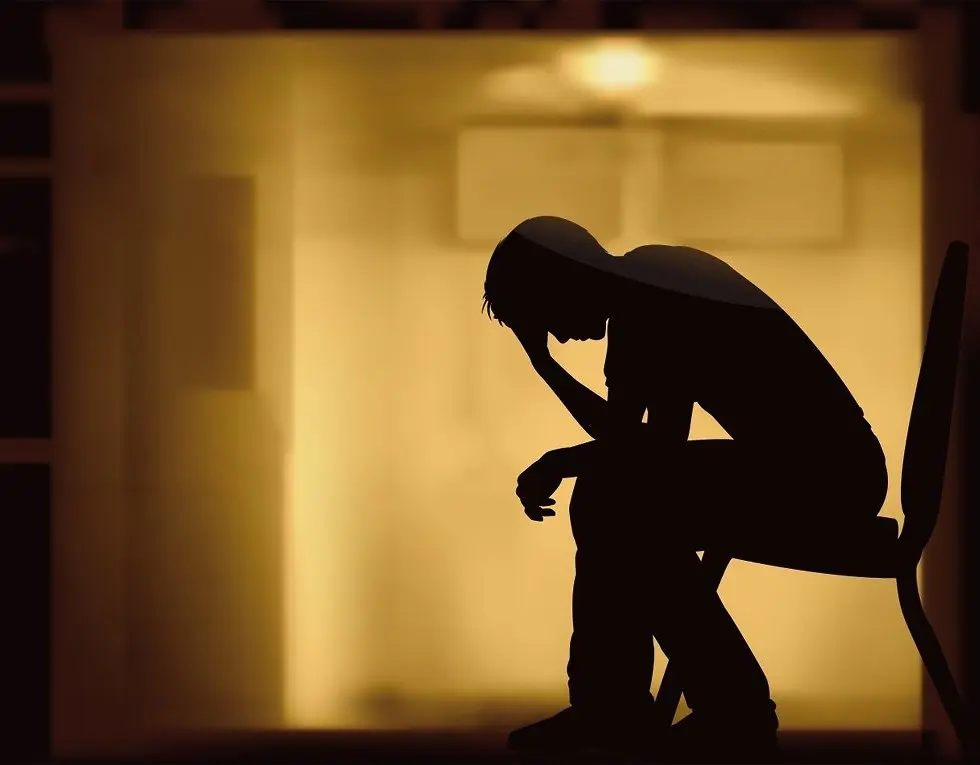
Tomer-Yerushalmi’s breakdown is not an isolated event but a reflection of something deeper: the psychological and moral disintegration of Israel’s war-era establishment. As evidence of atrocities piles up — hospitals bombed, civilians crushed beneath rubble, aid workers killed — the myth of Israel’s “moral army” has begun to collapse under its own contradictions.
Behind patriotic slogans and government propaganda, a quieter crisis has been unfolding — one of psychological collapse, moral dissonance, and self-destruction. Official figures confirm a surge in suicides among Israeli soldiers, record-high mental-health admissions, and soaring demand for psychiatric medication since the assault on Gaza began on October 7, 2023.
Polls now show record levels of distrust in both the government and the army. Soldiers and reservists have leaked testimonies describing orders to flatten entire neighborhoods, detain civilians en masse, and obstruct humanitarian relief.
“The dissonance is unbearable,” said journalist Oren Persico. “You grow up believing you serve the most ethical army in the world — then you see Gaza. Something inside breaks.”
Tomer-Yerushalmi’s apparent suicide attempt, he added, “is not only personal but national — the conscience of the state finally cracking.”
A Crisis the Government Cannot Bury
On the surface, the Ministry of Health insists there has been no official rise in suicides among the general population. But beneath that bureaucratic reassurance lies a different story.
In the armed forces — the institution most intimately tied to Israel’s war in Gaza — suicide deaths have reached their highest level in over a decade. According to the Knesset Research and Information Center, the IDF recorded 21 suicides in 2024, compared with 17 in 2023, 14 in 2022, and 11 in 2021 — a jump of roughly 50 percent in two years. Between January 2024 and July 2025, there were 36 soldier suicides and 279 attempts.
Nearly 78 percent of 2024 suicides were combat troops — almost double the prewar rate. IDF insiders describe it as a “psychological epidemic,” driven by exposure to extreme violence, guilt, and exhaustion.
Recent Examples of Soldier Suicides
In July 2025, a reservist who had served over 300 days in Gaza took his own life after telling family members about the “horrific scenes” he had witnessed — the seventh such death that month.
In August, a 28-year-old reservist officer was found dead in a forest near Tiberias; his death was ruled a suicide.
That same summer, another soldier, Daniel Edri, died by suicide after suffering from post-traumatic stress following tours in Gaza and Lebanon. His family said he had been tormented by visions of the dead and told them, “I can’t stop smelling the bodies.”
In September, a soldier from the Golani Brigade was found dead at a northern base, bringing the reported total of suicides among active troops that year to eighteen.
Post-Trauma and Moral Injury
Psychologists call it moral injury — the breakdown that occurs when individuals act against their own ethical code. In Israel, where soldiers are taught to see themselves as serving “the most moral army in the world,” the disconnect between ideology and reality has become unmanageable.
A military social worker described soldiers returning from Gaza with flashbacks of “entire neighborhoods destroyed, civilians buried alive, children screaming.” Many, she said, “could not reconcile what they had done with what they were told they were defending.”
The result is a surge in post-traumatic stress, depression, and suicidality — now straining Israel’s mental-health system to its limits.
Hospitals Overflowing, Helplines Flooded
At Israel’s largest hospitals, psychiatric wards are overflowing. One peer-reviewed study found psychiatric emergency-department visits jumped by 46% in the month after October 7. The national helpline ERAN received 3,500 calls on the day of the attacks alone — roughly seven times its usual weekend volume.
In the following months, the calls changed tone: from panic to despair, from fear to self-blame. “The share of suicide-related calls dipped immediately after October 7,” one study noted, “then rose again sharply as the war dragged on.”
A Nation on Sedatives
Israel’s healthcare providers report an unprecedented spike in demand for psychiatric drugs:
- +11% in psychiatric prescriptions (Haaretz)
- +30% in psychiatric-drug purchases (Meuhedet)
- +90% over-the-counter sedatives (Maccabi)
- 317% increase in short-term anti-anxiety medication (Jerusalem Post)
- Sedative misuse tripled — from 3.8% (2022) to 10.6% (Dec 2023), remaining near that level into 2025.
An Imploding System
The scale of distress has overwhelmed Israel’s fragile public mental-health system. The State Comptroller acknowledged a severe shortfall in psychiatric beds and staff, forcing the government to allocate an emergency ₪2.3 billion ($620 million USD) for expansion through 2025.
Yet vast numbers still go untreated. Among civilians displaced from southern and northern towns, only 11% accessed any mental-health service in the first six months of the war.
“The system is cracking,” said Dr. Yael Berda of Hebrew University. “You cannot bomb a population for a year and not expect the trauma to come back home.”
The Silent Rebellion of the Mind
While Israel’s leaders rally around slogans of unity and vengeance, their society is fragmenting under invisible pressure. The soldiers who carried out bombardments in Gaza are returning home haunted. The civilians who cheered them on are increasingly medicated, anxious, and despairing.
And those who question the war — including high-ranking figures like Tomer-Yerushalmi — are vilified as traitors.
“You cannot suppress conscience forever,” said one Tel Aviv psychiatrist. “At some point it breaks through — and it breaks people.”
The Weight of Guilt
“The IDF’s legal system was built on plausible deniability,” said Dr. Berda. “When that illusion breaks, so does the person maintaining it.”
By exposing the Sde Teiman video, Tomer-Yerushalmi shattered the façade of legality that sustained Israel’s self-image. Her case marks the first time in decades that a senior military lawyer has faced criminal prosecution for telling the truth.
Her story is the living embodiment of Israel’s contradiction: a state that claims moral superiority even as it criminalizes those who act on it.
The Empire of Self-Deception
When the military’s top lawyer collapses under the weight of conscience, it is not merely personal tragedy — it is institutional confession.
As one former Knesset member wrote in Maariv:
“We built a system that tells itself it is moral even as it bombs hospitals. Now that system is collapsing, because deep down, we all know the truth.”
Israel’s leaders can silence critics, imprison leakers, and suppress evidence. But they cannot silence conscience forever.
Tomer-Yerushalmi’s ordeal — from the courtroom to the seashore to her hospital bed — stands as a warning: no amount of power or patriotism can shield a nation from its own reflection.
For all the government’s insistence on victory, the reality is written in medical charts and suicide notes. Israelis cannot manage their conscience — and that truth, however buried, is the one war they are losing.