
More than 100 former senior diplomats accuse Israel of pursuing ethnic cleansing and urge Britain and France to impose trade restrictions, halt military cooperation and defend the possibility of an independent Palestinian state
More than 100 former British and French diplomats have issued an extraordinary joint appeal for decisive action against Israel, warning that Palestine is being erased while Western governments continue to rely on condemnations that carry few meaningful consequences.
The intervention brings together 52 former French diplomats and 50 former British ambassadors, including senior figures who served across the Middle East and represented their countries at the United Nations. Addressed to French President Emmanuel Macron and British Prime Minister Andy Burnham, the letter calls for trade restrictions, an end to arms transfers and military cooperation, and penalties against companies and individuals involved in Israeli settlements on occupied Palestinian land.
The signatories accuse the Israeli government of deliberately destroying the political and territorial foundations of a Palestinian state. They argue that recognition of Palestine by Britain and France in 2025 will become an empty diplomatic gesture unless it is followed by measures capable of changing Israeli policy.
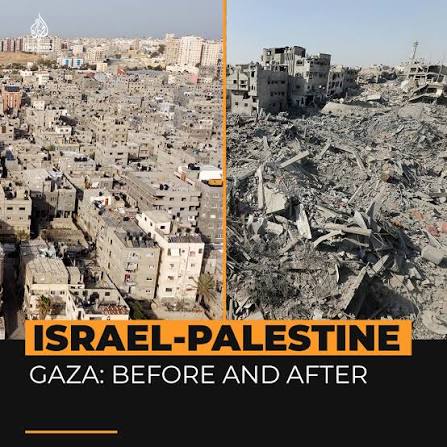
Their warning is stark. In Gaza, they say, approximately two million Palestinians have been confined to a fraction of an already devastated territory, while hunger, displacement, homelessness and shortages of medicine continue. Across East Jerusalem and the occupied West Bank, they describe home demolitions, land seizures and settler violence, carried out with the protection or acquiescence of Israeli forces, as a process of ethnic cleansing.
The letter also argues that the destruction has spread beyond Palestine, pointing to villages damaged or razed during Israeli military operations in Lebanon and Syria.
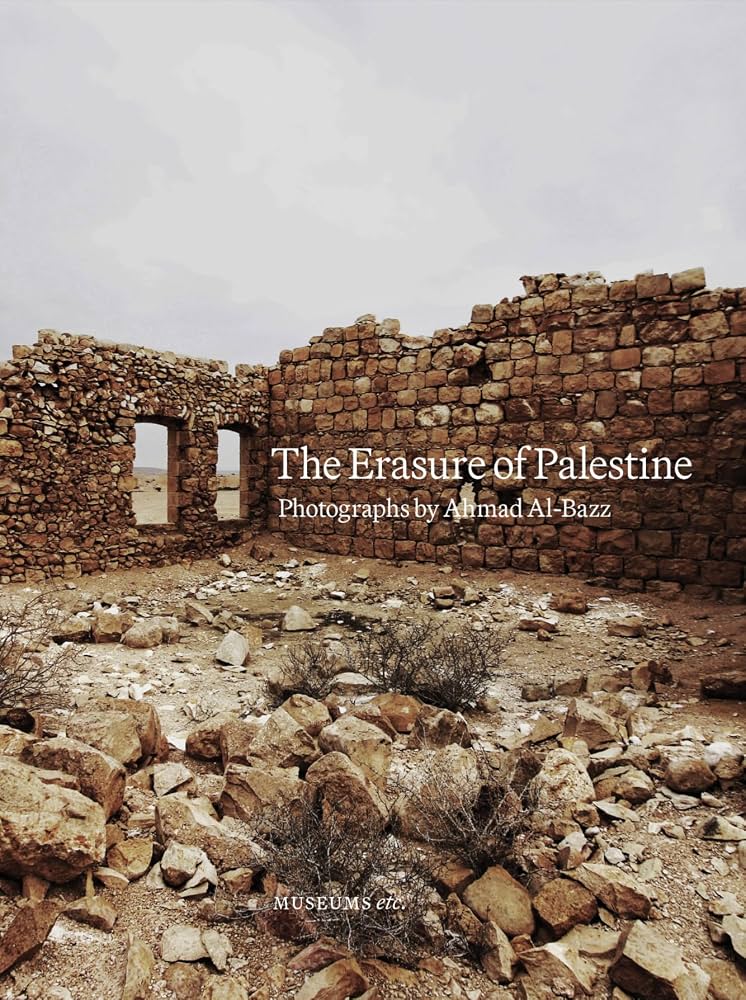
“Palestine is being erased before our eyes,” the diplomats declare, describing the continuing occupation and destruction as a stain on the conscience of humanity.
A challenge to Britain and France
The letter represents an unusually direct intervention by former members of two diplomatic establishments normally associated with cautious language and private persuasion.
Among the British signatories are Jeremy Greenstock and Emyr Jones Parry, both former British ambassadors to the United Nations, and Edward Chaplin, a former director of Middle East affairs at the Foreign Office. The French signatories include Patrice Paoli, a former Middle East director at the French foreign ministry, and Stanislas de Laboulaye, who previously served as France’s consul general in Jerusalem.
Many of the diplomats held senior positions in countries central to the region’s conflicts and diplomatic relationships, including Egypt, Iran, Bahrain, Israel, Syria, Turkey, Kuwait, Saudi Arabia and Qatar.
Their collective experience gives the letter particular significance. Its signatories are not speaking as campaigners unfamiliar with the conventions of international diplomacy, but as former officials who once represented British and French policy at its highest levels.
They argue that Britain and France carry a special responsibility because of the decisive roles both countries played in shaping the modern Middle East. Having formally recognised the State of Palestine in 2025, the two governments must now work together to defend equal rights for Israelis and Palestinians, they say.
Recognition alone, according to the letter, cannot safeguard Palestinian self determination while Israel continues expanding settlements, demolishing homes and fragmenting the territory on which a viable state would have to be established.
The diplomats accuse the Israeli government of demonstrating contempt for international law, decisions of the International Court of Justice and repeated United Nations Security Council resolutions. They say the purpose of their proposed measures is not merely to punish Israel, but to preserve what remains of the possibility of Palestinian independence.
E1 settlement brings crisis into focus
The letter was published only two days after Britain, France and nine other countries condemned Israel’s publication of construction tenders for the E1 settlement project in the occupied West Bank.
The latest proposal would allow the construction of approximately 1,200 homes in one of the most politically sensitive parts of the territory. Critics have long warned that settlement construction in the E1 corridor would sever Palestinian communities from one another, isolate East Jerusalem from much of the West Bank and make a geographically coherent Palestinian state increasingly difficult to establish.
The eleven governments warned that proceeding with the development would push Israel further away from peace and further damage its international standing. Their statement, however, did not contain a clear threat of governmental sanctions.
Instead, companies were cautioned against participating in the project because investment in an unlawful settlement could expose them to legal and reputational consequences.
British Foreign Secretary Ed Miliband described the tenders as a destructive threat to the viability of a two state solution. He subsequently summoned Daniela Grudsky Ekstein, the most senior Israeli diplomat currently serving in Britain, to explain the decision.
Israeli Foreign Minister Gideon Sa’ar responded defiantly, insisting that Israel would not remain passive. He argued that Jewish people had the right to live throughout Israel, comparing that claim with the right of British people to live throughout the United Kingdom.
The comparison is rejected by Palestinians and by critics of Israeli settlement policy, who point out that the West Bank, including East Jerusalem, is internationally regarded as occupied territory rather than sovereign Israeli land.
For the former diplomats, the E1 project is therefore not an isolated planning dispute. It is a test of whether Britain and France are prepared to impose consequences when Israeli actions contradict their stated support for Palestinian statehood.
Seven measures proposed against Israel
The letter sets out seven specific steps that Britain and France should take.
- Enforce international court decisionsBoth governments should uphold and act upon decisions issued by the International Court of Justice and the International Criminal Court. The diplomats argue that support for international law loses credibility when court findings are acknowledged rhetorically but ignored in practice.
- Suspend trade and partnership agreementsThe European Union should suspend its association agreement with Israel, while Britain should suspend the UK–Israel Trade and Partnership Agreement. The signatories say Israel’s conduct breaches the human rights provisions underpinning those relationships.
- End arms transfers and military cooperationArms transfers both to and from Israel should be suspended, together with all bilateral military cooperation. This would include a broader interruption of defence relationships rather than restrictions covering only selected weapons or licences.
- Guarantee unrestricted humanitarian accessIsrael should be required to permit unrestricted humanitarian assistance into Gaza. The relief effort should be led by the United Nations Relief and Works Agency, other United Nations bodies and established international non governmental organisations.The diplomats also demand access for international journalists, parliamentarians and diplomatic representatives. They say clear consequences must follow if Israel continues restricting humanitarian or independent access.
- Ban all trade connected with settlementsBritain and France should prohibit trade involving Israeli settlements in occupied Palestinian territory. The proposed ban would apply not only to goods produced in settlements but also to investment, insurance and other financial services supporting settlement activity.
- Penalise participation in E1 and other settlement projectsCompanies considering bids for construction or financing connected with E1 should be warned that participation could damage their commercial and financial interests in Britain and France. The same warning should apply to other settlement projects.
- Criminalise property purchases on occupied landBritish and French citizens should be prohibited from buying property built on land taken from Palestinians. Organisations financing Israeli settlements should also lose any charitable status they hold in Britain or France.
Taken together, these measures would mark a decisive break from the approach followed by successive European governments, which have repeatedly condemned settlement expansion while maintaining extensive trade, diplomatic and military relationships with Israel.
Gaza devastation condemned
The diplomats are careful to condemn the Hamas led attacks of 7 October 2023, describing the crimes committed that day as heinous. They nevertheless insist that those attacks cannot justify what they characterise as Israel’s systematic destruction of Gaza and its population.
According to the letter, roughly two million Palestinians remain restricted to approximately 30 per cent of Gaza’s devastated territory, many without adequate food, medicine or shelter. The diplomats also claim that more than 1,200 Palestinians have been killed since what they describe as the supposed ceasefire.
These figures and descriptions form part of the signatories’ case that the international community is witnessing not simply another temporary military escalation, but the destruction of the conditions required for Palestinian society to survive and recover.
They also reject Israeli Prime Minister Benjamin Netanyahu’s assertion that Israel must be prepared to live permanently by military force. Such an approach, they argue, is morally indefensible, damaging to Israel’s own long term security and incompatible with meaningful negotiation.
The letter warns that Israel’s actions have severely damaged its international image. A state cannot credibly present itself as democratic, the diplomats argue, while denying another people their land, rights and political freedom.
This conclusion reflects the widening divide between Israel and many of its traditional European supporters. Western governments continue to affirm Israel’s right to security, but former officials are increasingly arguing that this concern cannot provide unlimited protection from accountability for occupation, settlement construction or attacks on civilians.
Diplomacy stalls as Israel rejects US plan
The intervention comes as negotiations over Gaza remain deeply uncertain.
Much of the diplomacy surrounding the terms of an Israeli withdrawal has effectively been left to talks involving Israel and Jared Kushner, the son in law and envoy of US President Donald Trump. Israel has rejected the latest 15 point American led peace proposal for Gaza, prompting criticism from eight Muslim majority countries.
Those governments included the United Arab Emirates, widely regarded as Israel’s closest partner in the Muslim world. They warned that Israel’s conduct was undermining collective efforts to secure a just and lasting peace.
The dispute demonstrates the growing difficulty of reconciling Israeli military and political objectives with international proposals for Gaza’s future. It also raises questions about whether Washington can still deliver an agreement when the Israeli government rejects elements it considers incompatible with its security or territorial ambitions.
Within diplomatic circles, debate has also emerged over Netanyahu’s domestic political strategy ahead of elections scheduled for 27 October.
Some diplomats suspect that the Israeli prime minister may be using military and political provocations to invite foreign retaliation or confrontation, calculating that an external crisis could consolidate nationalist support and improve his electoral position.
That interpretation remains a matter of debate rather than an established fact. It nevertheless reflects the depth of concern about the relationship between Israeli domestic politics, regional military escalation and the future of Gaza and the West Bank.
Palestinian leadership also challenged
Although the letter concentrates on Israeli policy, it does not excuse the failures of Palestinian political institutions.
The diplomats say Palestinians must ensure that the state now recognised by more than two thirds of the international community becomes democratic and governed according to law, despite the conditions imposed by occupation.
They call for the political, administrative and economic reunification of Gaza and the West Bank, which have remained divided between rival authorities. They also describe the existing Palestinian leadership as unrepresentative and dysfunctional.
Palestinian elections expected in November must therefore produce genuine democratic renewal, the letter argues. Without representative institutions and accountable government, international recognition will not by itself create a functioning Palestinian state.
The diplomats nevertheless maintain that the immediate focus must remain on Israel because it possesses overwhelming military power and controls much of the territory, movement, infrastructure and economic life on which the Palestinian population depends.
Britain and France may be able to assist Palestinians in building democratic institutions, they say, but no institutional reform can succeed if Israeli policy continues to eliminate the land and political space necessary for statehood.
The end of consequence free condemnation
The central argument of the letter is that the period of consequence free condemnation must end.
For years, Britain, France and other European governments have criticised Israeli settlement expansion, affirmed their commitment to a two state solution and expressed concern over civilian suffering. Yet trade has continued, military relationships have largely been maintained and companies connected with settlement activity have rarely faced serious penalties.
The former diplomats are now calling for policy to match rhetoric.
Their proposals would transform recognition of Palestine from a symbolic diplomatic act into a programme of political and economic pressure. Suspending agreements, restricting arms transfers, banning settlement trade and prosecuting unlawful property transactions would demonstrate that violations carry measurable costs.
Whether Macron and Burnham are prepared to adopt such measures remains uncertain. Both governments must weigh domestic political pressures, relations with Washington, trade interests and the risk of confrontation with Israel.
The diplomats’ warning, however, leaves little room for further delay. They believe the territorial foundations of Palestine are disappearing through settlement construction, displacement and destruction, while the international community continues issuing statements that Israel has learned it can ignore.
If Britain and France still believe in Palestinian self determination, the letter argues, they must now defend it through action. Otherwise, their recognition of Palestine may stand not as the beginning of a new state, but as a diplomatic acknowledgement issued while that state was being erased.