
Fresh protests have targeted a Shas lawmaker, blocked major roads and disrupted an IDF recruitment event, while UNICEF says at least 21,500 Palestinian children have been reported killed in Gaza, including hundreds during the supposed ceasefire.
Hardline ultra-Orthodox protesters surrounded the car of a senior Shas lawmaker in Jerusalem on Saturday night, striking the vehicle and branding him a “murderer” as Israel’s bitter conflict over Haredi military conscription turned increasingly upon the community’s own political leadership.
The protesters, affiliated with the conservative Jerusalem Faction, targeted Knesset member Michael Malchieli after the weekly Torah lesson delivered by Shas spiritual leader Rabbi Yitzhak Yosef. Footage showed demonstrators surrounding Malchieli’s vehicle, banging upon it and shouting, “Malchieli is a murderer.”
Malchieli supports continued military deferments for full-time yeshiva students whose principal occupation is Torah study. However, he has said that he will not demand a collective exemption covering the entire ultra-Orthodox community, a position that has made him a target for opponents of any compromise over conscription.
Shas condemned the demonstrators as an “extremist, anarchist fringe group” and declared that no one would intimidate its lawmakers. The confrontation nevertheless demonstrated how a dispute once fought principally between Haredi parties, the courts and the Israeli military is now dividing the ultra-Orthodox political and religious establishment itself. The Jerusalem Post reported the incident on Sunday morning.
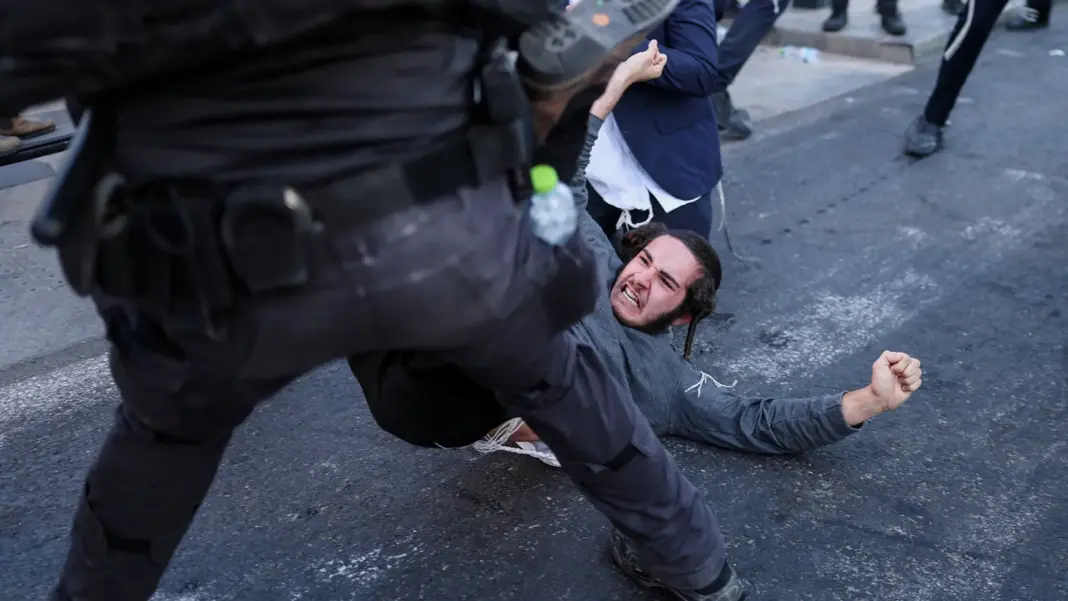
It followed another confrontation on August 12, when Haredi protesters blocked Route 4 outside Bnei Brak following the arrest of a yeshiva student accused of ignoring military orders. Some demonstrators wore yellow stars bearing the word “Haredi”, comparing their treatment to the persecution of Jews during the Holocaust, while others chanted the movement’s defining slogan: “We will die rather than enlist.”
One protester carried a sign declaring that it was better to die as a Jew than to “spiritually die in IDF camps”. Elsewhere along the blockade, a Haredi soldier was surrounded and abused before police escorted him to safety. The Times of Israel reported that the demonstration had been called by the Jerusalem Faction after the arrest of a draft-evading yeshiva student.
Only days earlier, protesters disrupted an August 4 conference in Jerusalem promoting specialised military programmes for ultra-Orthodox recruits. Organisers were kicked and spat upon, police were denounced as “Nazis” and former Brigadier General Ofer Winter was pursued through the street and called a “traitor to the Jewish nation”. Contemporary reporting described it as the latest violent confrontation over compulsory service.
Together, the incidents show that the Haredi revolt is no longer confined to occasional mass rallies. It has become a continuing campaign against draft enforcement, recruitment initiatives and even ultra-Orthodox politicians willing to contemplate a limited accommodation with the state.
The escalating resistance has also given new significance to testimony recorded earlier this year, when three ultra-Orthodox Jews explained why they believe military service poses an existential danger to their community.
“The reason we refuse military service is that we know the army is a place where a person loses his faith and becomes secular,” demonstrator Meir Matash said in a German-language television report recorded around a major anti-conscription rally in Jerusalem on January 6. “Whoever goes there comes back a different person. Faith is the most important thing to us, and we will never give it up.”
The report, attributed in the repost’s accompanying description to the German broadcaster n-tv, also visited Jerusalem Rabbi Benjamin Pappenheimer, an ultra-Orthodox religious leader who advises young men seeking to resist conscription. According to the report, his organisation receives dozens of calls each day from men who have been sent military notices.
His explanation placed the controversy inside a theological worldview that is almost entirely absent from the secular debate over personnel shortages.
“We are certain that this terrible war with Hamas in Gaza would not exist if the Jewish people as a whole observed the Torah,” Pappenheimer said. “God directs everything, not Trump, not Netanyahu or anyone else. We are not prepared to compromise. Not at all. We have a task: to sit, study Torah and do what God wants.”
For believers who hold this position, Torah study is not an escape from national responsibility. It is national service in its most essential form, providing spiritual protection that tanks, aircraft and soldiers cannot supply. From that perspective, removing young men from yeshivas does not strengthen Israel. It weakens the source of divine protection on which the country ultimately depends.
‘They Want to Break Our Community’
Another ultra-Orthodox protester, Chaim Hasar, rejected the argument that Israel’s armed forces urgently require tens of thousands of Haredi recruits.
“The army does not need the ultra-Orthodox at all,” he said. “They only want to compel us in order to break our religious community and make us conform to the rest of Israeli society.”
He then turned the accusation back upon secular Israelis. If more soldiers were required, he said, the state should draft people in Tel Aviv “who do not study Torah and only party”.
The contempt in that statement reflects the bitterness on both sides of the divide. Secular and national religious Israelis, including reservists repeatedly recalled for military duty, increasingly regard the Haredi exemption as an intolerable privilege. Many Haredim, however, see the army and the state institutions enforcing the draft as instruments of cultural assimilation.
The channel that reposted the report used still more charged language, referring to the Israel Defense Forces as an “army of destruction” and urging resistance to what it portrayed as the spiritual eradication of Haredi Judaism.
In this context, “destruction” refers principally to the feared destruction of religious identity, family life and obedience to rabbinic authority, although the rhetoric also carries an unmistakable denunciation of the army’s conduct in Gaza.
Such fears are not invented solely for the present political confrontation. The IDF is one of Israel’s most powerful integrating institutions. Young recruits from different backgrounds live together, serve under a common chain of command and encounter men and women whose beliefs and ways of life may be radically different from their own.
What many Israelis describe as national integration is precisely what conservative Haredi leaders fear.
Military authorities insist that service can be adapted to ultra-Orthodox religious requirements and have created specialised programmes and units. When the IDF announced a new wave of call-up notices in July 2025, it promised conditions that would respect the Haredi way of life.
Rabbinic opponents remain unconvinced, arguing that no administrative accommodation can remove the deeper danger of exposing young men to secular authority and culture.
The Army They Are Being Asked to Join
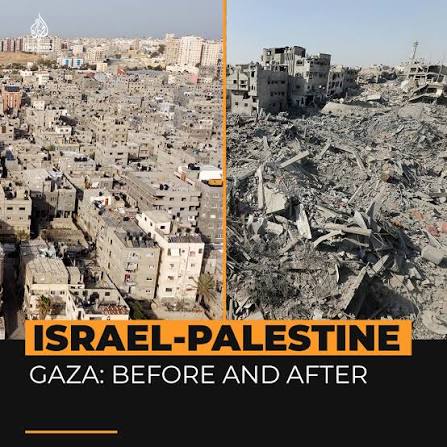
The argument is unfolding not in peacetime but against the background of Israel’s destruction of Gaza and an extraordinary civilian death toll.
On August 23, the day after protesters surrounded Malchieli’s vehicle, Israeli air strikes in Gaza killed at least two Palestinians, including a four-year-old boy, and wounded seven others, according to Palestinian health officials. Israel said it was examining the incidents and separately announced that it had killed a senior Hamas figure.
Reuters reported that more than 1,280 Palestinians had been killed since the United States-backed ceasefire took effect in October 2025, compared with four Israeli military fatalities during the same period.
Children have borne a staggering share of the violence. In September 2025, Save the Children said Israeli forces had killed more than 20,000 Palestinian children in Gaza during the first 23 months of the war, an average of at least one child every hour.
The toll continued to rise. A UNICEF humanitarian report recorded at least 21,500 children among more than 73,300 Palestinians reported killed by March 31, 2026. More than 41,000 children had also been reported injured, many with life-changing wounds.
Even the ceasefire did not bring safety. On August 6, UNICEF reported that at least 300 children had been killed in the 300 days since the ceasefire was announced on October 10, 2025, an average of one child every day.
Hundreds more were injured. UNICEF described the continuing deaths as evidence that the ceasefire was failing Gaza’s children.
Palestinian families, campaigners and a growing body of legal experts argue that the word “killed” is inadequate and that thousands of these children were murdered by Israeli forces rather than accidentally caught in combat.
That allegation gained further weight in June 2026 when an independent United Nations commission accused Israel of deliberately targeting children in Gaza and repeated its conclusion that Israeli authorities had committed genocide.
Israel rejected the findings as false and biased, denied deliberately attacking children and maintained that its operations were directed against Hamas. Associated Press reported that the commission documented alleged precision killings involving drones and snipers as well as attacks in which children were treated as military suspects.
The Haredi movement’s opposition to enlistment is rooted primarily in fears of secularisation rather than in organised solidarity with Palestinians. Even so, the channel’s description of the IDF as an “army of destruction” cannot be separated entirely from the army’s record in Gaza or from the question of what young Haredi recruits could be ordered to participate in.
From 400 Exemptions to a National Crisis
The present confrontation grew from a narrow arrangement established at Israel’s creation. David Ben-Gurion’s government allowed several hundred full-time yeshiva scholars to defer service under the principle known as torato omanuto, meaning “Torah study is his occupation”.
The concession was intended to help rebuild centres of religious scholarship devastated during the Holocaust.
What began as an exception for a small community expanded dramatically as the Haredi population grew and ultra-Orthodox political parties gained influence in successive coalition governments. Most Haredi men could continue renewing their deferments while studying until they reached the age at which they were no longer likely to be drafted.
That arrangement became progressively more difficult to defend. Israel’s High Court repeatedly found that blanket exemptions violated the principle of equality, but governments struggled to replace them with legislation capable of surviving both judicial scrutiny and coalition politics.
The decisive legal rupture came on June 25, 2024, when a nine-judge panel ruled unanimously that no legal framework remained under which the government could continue exempting Haredi yeshiva students.
The court ordered the state to begin applying the conscription law and said public funding could not continue for institutions whose students lacked lawful deferments. The ruling did not create a new draft obligation. It held that the existing law had to be enforced equally because the statutory basis for the special treatment had expired.
Reuters described the judgment as a major new strain on Prime Minister Benjamin Netanyahu’s governing alliance.
The army’s first efforts produced little compliance. By July 2025, the IDF said it would send 54,000 additional call-up notices to Haredi yeshiva students, after earlier recruitment efforts attracted only a small proportion of those summoned.
The military said extended operations in Gaza and across the region had increased pressure on serving troops and reservists. Reuters reported that religious leaders feared mixed, secular military environments would undermine Haredi identity.
The German report accompanying the January 2026 protest said a new proposal could affect about 88,000 ultra-Orthodox men. That figure should be treated as an estimate rather than a fixed quota.
By August, Israeli reporting placed the number of Haredi men aged 18 to 24 who were eligible for service but had not enlisted at approximately 72,000. The number receiving active orders has varied as the army has changed its recruitment and enforcement plans.
Roughly 13,000 Haredi men now reach conscription age each year, and fewer than one in ten enlist, according to recent Associated Press reporting.
The demographic direction makes the dispute more urgent. The Israel Democracy Institute estimated that the Haredi population reached approximately 1.45 million in 2025, or 14.3 per cent of Israel’s population.
Central Bureau of Statistics projections indicate that the share could reach 24.4 per cent by 2050. The institute’s 2026 analysis warned that the community’s growth will have major consequences for military service, education, employment and the public finances.
A Protest Marked by Death
The January 6 demonstration was organised by prominent rabbis and conservative Haredi groups, including figures associated with the Jerusalem Faction, a strongly anti-conscription movement.
The video description named senior religious leaders including Rabbis Zvi Friedman, Moshe Tzedakah, Moshe Sternbuch and Yaakov Meir Shechter. Contemporary reporting independently confirmed Tzedakah’s involvement and described participation by several Hasidic groups.
Organisers predicted tens of thousands would attend, while reporters at the scene described thousands filling Yirmiyahu Street and surrounding roads. The difference illustrates the difficulty of establishing precise crowd numbers at mass demonstrations, but not the scale of the disruption.
The Times of Israel reported that rabbis portrayed draft avoidance as a matter of life and death and stood beneath a banner declaring, “Better to die than transgress.”
The night ended in tragedy when a bus entered a crowd of protesters, killing a teenage boy and injuring others. The driver was detained and the circumstances were investigated.
The death intensified accusations that public hostility towards the Haredi community had created an atmosphere in which demonstrators’ lives were treated as expendable. Reuters reported that the incident occurred during the mass anti-conscription rally.
Protests have continued outside recruitment offices, prisons and government buildings. Some have ended in clashes with police, the use of water cannon, blocked roads and arrests. Demonstrators have also gathered in support of yeshiva students detained for ignoring orders.
The persistence of the movement shows that sending notices is far easier than turning legal eligibility into actual enlistment.
Parliament and Court Pull in Opposite Directions
The legal position has remained volatile. On July 14, 2026, the Knesset voted 58 to 54 for a temporary measure intended to prevent the arrest and prosecution of Haredi draft evaders.
The legislation would have protected tens of thousands of men until November 30 and extended the protection to some who became eligible after its passage.
The High Court froze the measure the following day and extended its injunction on July 28 while considering challenges to the law. No final judgment had been announced by August 23.
The Israel Democracy Institute said the measure undermined equality before the law by suspending enforcement for one population group, while Haredi legislators argued that arrests could ignite an even deeper social confrontation.
The Knesset also approved a measure elevating Torah study as a fundamental state value. Supporters hailed it as recognition that religious scholarship is central to Jewish national life. Critics said it was designed to build a constitutional shield around continued exemptions and secure Haredi political support.
Associated Press reported that military leaders objected that the measures failed to meet the army’s manpower needs and further damaged morale among those already serving.
This institutional tug of war places Netanyahu and Israel’s political system in an almost impossible position. Haredi parties have repeatedly made protection for yeshiva students a condition of their political support.
Opposition parties, military leaders and much of the Jewish public demand a more equal distribution of service. Any exemption broad enough to satisfy the rabbis risks being struck down by the court, while any law capable of meeting the court’s equality standard may be rejected by the religious leadership.
The dispute is also shaping Israel’s October 27 general election. Finance Minister Bezalel Smotrich has faced anger from national religious voters after supporting the temporary protection for Haredi draft evaders, even though he says ultra-Orthodox men should ultimately serve.
Reuters reported that the controversy could threaten his Religious Zionism party’s survival and complicate Netanyahu’s efforts to reconstruct a governing alliance after the vote.
Two Conceptions of Jewish Survival
The dispute is often presented as a contest between those willing to defend the country and those refusing to do so. That description captures the anger of soldiers and reservists, but it does not explain the depth of Haredi resistance.
The protesters in Jerusalem believe they are defending the Jewish people, not abandoning them. Their opponents believe that a rapidly growing community cannot claim the benefits of citizenship while transferring the danger and sacrifice of military service to everyone else.
Each side therefore sees the other not simply as mistaken, but as endangering the future of the state.
Haredi society is not monolithic. Some ultra-Orthodox men serve in the IDF, enter the workforce or support forms of civilian national service. There are also differences between Shas, United Torah Judaism, Hasidic courts, Lithuanian yeshiva communities and the more confrontational Jerusalem Faction.
Even so, the authority of senior rabbis remains decisive for large numbers of families, and a broad consensus against coercive conscription has survived repeated political attempts to divide or moderate it.
The rally’s most important testimony was therefore not its threat of mass disobedience but its explanation of what Haredim believe is at stake. When Matash said that whoever enters the army returns “a different person”, he reduced decades of legal judgments and coalition bargaining to the community’s central fear.
Israel can issue tens of thousands of draft notices, threaten sanctions and create religious military units. It can also pass temporary protections and declare Torah study a national value.
None of those measures resolves the underlying collision between two conceptions of Jewish survival: one built around the armed state and shared military duty, the other around Torah observance, religious separation and obedience to rabbinic authority.
As the Haredi share of the population grows, postponement becomes less sustainable. The question is no longer whether the exemption system created in 1948 can be restored in its old form.
It is whether Israel can impose a new settlement without producing the very internal rupture that both sides say they are trying to prevent.