

As weapons manufacturers presented systems promoted as combat proven, reporters asking about Gaza were ordered away, photographed and, in one case, allegedly threatened with police action. The confrontation raises deeper questions about Britain’s arms relationship with Israel and the limits of scrutiny inside the defence industry.
In the summer sunshine above Farnborough, pilots banked across the Hampshire sky while spectators watched one of the world’s most prestigious aviation displays. Inside the exhibition halls and private chalets below, however, a very different kind of activity was taking place. Executives, government representatives and military buyers were meeting behind closed doors, surrounded by drones, missiles, surveillance systems and promotional screens presenting the machinery of modern warfare as a commercial opportunity.
Among the exhibitors at the 2026 Farnborough International Airshow were Israel’s three largest arms manufacturers: Elbit Systems, Israel Aerospace Industries and Rafael Advanced Defense Systems. Their presence was commercially unremarkable within an event where defence companies accounted for roughly half of a record 1,600 exhibitors. Politically and morally, it was anything but routine.
The companies arrived in Britain after years in which their technologies had been used extensively by the Israeli military in Gaza. In September 2025, a United Nations Independent International Commission of Inquiry concluded that Israel had committed genocide against Palestinians in the territory. Israel categorically rejected the finding.
Against that background, journalists from Declassified UK went to Farnborough to ask what the companies were displaying, what business they were conducting and how they answered questions about weapons linked to civilian deaths.
The response, according to the outlet’s filmed report, ranged from silence and obstruction to photography of the media crews and an alleged threat to call the police.
Private companies are entitled to decline interviews, and access to corporate chalets can be restricted. The incidents at Farnborough went beyond a simple refusal to comment, however. Reporters who identified themselves, showed media credentials and asked questions in exhibition areas said they were treated as though the act of scrutiny itself were suspicious.
Elbit’s display and the ghosts of the Gaza aid convoy
The first confrontation took place at the stand of Elbit Systems UK, the British subsidiary of Israel’s largest arms manufacturer. A large screen displayed footage of drones and air to ground weapons, including images that Declassified said appeared to show a model resembling the Hermes aircraft used by the Israeli military in Gaza.
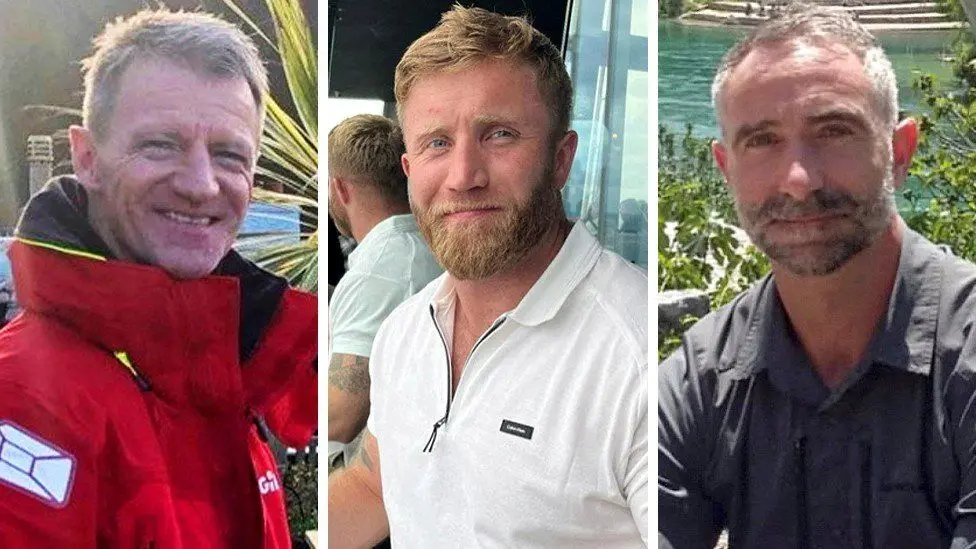
That imagery carried particular significance for British families. On 1 April 2024, Israeli strikes killed seven World Central Kitchen workers travelling in a clearly marked aid convoy after delivering food in Gaza. The dead included three British military veterans: John Chapman, James “Jim” Henderson and James Kirby. World Central Kitchen has described the seven victims as colleagues killed by Israeli military airstrikes.
The Israeli military acknowledged responsibility for the attack and described it as a grave error. Subsequent reporting identified a Hermes 450 drone as the aircraft involved, while the munition has been widely reported as a Rafael manufactured Spike missile. Questions about both the platform and the weapon therefore followed the Israeli companies into the Farnborough exhibition halls.
Three strikes against a coordinated aid convoy
The World Central Kitchen convoy had just completed a maritime aid operation and unloaded more than 100 tonnes of food at a warehouse in Deir al-Balah. According to the organisation’s account, its movements had been coordinated with the Israeli military and the vehicles were travelling through a designated deconflicted zone. Two were armoured cars carrying the World Central Kitchen logo, while the third was a less heavily protected vehicle.
Shortly after 10.30pm, the convoy was struck three times. Each vehicle was hit separately as the team attempted to escape along the approved route. Reporting on the attack indicated that survivors of the first strike transferred to another vehicle, which was then attacked. Those still alive attempted to continue in the final car before that vehicle was also struck.
The sequence has remained central to the families’ demand for answers. A single mistaken strike might be explained as a catastrophic identification failure. Three separate attacks against vehicles moving along the same coordinated route suggest that the convoy remained under sustained observation while the strikes continued.
The British victims had survived earlier wars before entering humanitarian work. John Chapman, 57, was a former Royal Marine and special forces veteran who had spent years working in dangerous environments. James “Jim” Henderson, 33, had served for six years in the Royal Marines. James Kirby, 47, was a British Army veteran who had served in Bosnia and Afghanistan. All three were working in security roles intended to protect aid workers and enable food deliveries to reach civilians.
Their professional histories make the official silence particularly difficult for their families. Chapman, Henderson and Kirby had been trained to recognise military danger, assess routes and operate under fire. They were not travelling unpredictably through an unknown battlefield. Their organisation had notified the Israeli military, their vehicles were clearly identified and their route had been approved.
Israel’s internal review found serious failures in communication, identification and compliance with operating procedures. Two officers were dismissed and several senior commanders were reprimanded. The review said personnel mistakenly believed armed Hamas operatives were travelling with the convoy, despite the fact that the suspected gunman had not left the warehouse with the World Central Kitchen vehicles.
World Central Kitchen said the disciplinary measures were important but insufficient and called for an independent investigation. No complete operational record, drone footage, targeting logs or testimony from the personnel involved has been made public. The families have therefore been left with an official conclusion that the attack was a mistake, but without the underlying evidence needed to understand how the same mistake continued across three separate strikes.
The RAF evidence Britain will not release
The British government may possess some of that evidence. An RAF Shadow R1 surveillance aircraft operating from RAF Akrotiri in Cyprus was flying over Gaza on 1 April 2024. The aircraft carries sophisticated sensors capable of collecting imagery and electronic intelligence across a wide area.
In response to a freedom of information request, the Ministry of Defence confirmed that it held video footage from the Shadow R1 flight that day. It refused to disclose the material, relying on national security and defence exemptions. Declassified UK first reported the existence of the footage in July 2024.
The existence of British held footage changes the nature of the controversy. Britain is not merely a foreign government asking Israel to explain the deaths of three of its citizens. Its own military surveillance operation may have recorded information capable of showing whether the convoy was being tracked, what happened between the three strikes and whether other aircraft or communications were visible to British sensors.
There is no publicly available evidence establishing exactly what the Shadow R1 captured, and surveillance of Gaza does not necessarily mean its cameras were directed at the convoy throughout the attack. That uncertainty is precisely why the footage is potentially important. Without independent examination, neither the families nor the public can know whether it supports Israel’s account, contradicts it or contains no useful imagery of the incident.
Parliamentary efforts to obtain answers have repeatedly reached the same wall. On 17 April 2024, Green MP Caroline Lucas asked whether ministers had discussed World Central Kitchen’s demand for an independent commission. The government replied that it had pressed Israel for a full and transparent investigation but did not commit Britain to supporting a separate inquiry.
Lucas subsequently asked ministers to assess the adequacy of the Israeli military investigation. Andrew Mitchell, then deputy foreign secretary, said the government was reviewing Israel’s findings and welcomed the suspension of two officers as a first step. The answer acknowledged failures in deconfliction and unacceptable conduct but did not establish an independent British process.
During a Commons debate on military cooperation with Israel in March 2025, MPs again raised the Shadow R1 material. They asked why the families of three British nationals, each of whom had served the country, were being denied access to possible evidence from a British aircraft operating above Gaza at the time.
Brendan O’Hara also questioned whether RAF surveillance missions were continuing and whether information collected during those flights had been shared with Israel. Defence minister Luke Pollard confirmed that surveillance continued but declined to discuss intelligence sharing on operational security grounds.
More than two years after the attack, Britain has not released the footage, initiated a public inquiry or provided the families with a definitive account of what its aircraft recorded. The refusal sits uneasily beside the government’s original demand for a full and urgent investigation. Britain continues to request transparency from Israel while withholding its own potential evidence from the victims’ relatives.
Declassified journalist Phil Miller introduced himself at Elbit’s stand and asked to speak to a senior company representative. He then questioned staff about the apparent drone footage, the killing of the British aid workers and whether displaying such systems was insensitive to their families.
The exchange closed down almost immediately. One representative said there was nothing the company could do that would satisfy the reporter and refused to answer further questions. Another told Miller to “walk away”. Staff also disputed his account of the drone used in the World Central Kitchen attack, calling him “very misinformed”, but did not offer an alternative explanation on camera.
Security personnel then moved the journalists away from the stand. Cameron Baillie, a reporter for The Canary, was also reportedly removed after asking about Elbit’s connection to the Gaza campaign.
The encounter exposed a contradiction at the centre of modern weapons marketing. Manufacturers often emphasise that their systems have been operationally tested, presenting battlefield experience as evidence of reliability. Yet when journalists ask what that operational history has meant for civilians, the same connection can suddenly become a subject that company representatives will not discuss.
Elbit Systems UK presents itself as a British defence technology company supplying the UK armed forces and its allies. Critics argue that this branding places distance between the subsidiary and its Israeli parent. At Farnborough, journalist Iain Overton said he saw personnel speaking Hebrew inside the company’s restricted area and questioned whether the division between the British operation and the wider Elbit group was as clear as the corporate presentation suggested.
That observation does not by itself establish how responsibility is divided between the companies. It does, however, underline why reporters were seeking answers. If the British subsidiary benefits from the parent group’s technology, expertise and reputation, questions about that group’s role in Gaza cannot simply be dismissed as irrelevant to its UK presence.
Told to search Google
The response at Israel Aerospace Industries, commonly known as IAI, was more confrontational. The Israeli state owned company had both a two storey chalet and a separate exhibition stand positioned near a UK government space display.
IAI manufactures satellites and civil aerospace technology, but it is also a major producer of military surveillance and weapons systems. Its Heron drone has been used extensively by the Israeli military. Declassified reported that IAI chief executive Boaz Levy had described the aircraft as playing a pivotal role in Israel’s Gaza operations. For Farnborough, the company promoted what it called operationally proven defence solutions for Europe.
When Miller asked whether he could enter the company’s chalet and speak to its representatives, staff refused. Asked where journalists could obtain information about the company, one representative repeatedly told him to search Google. Questions about IAI’s state ownership, its role in Gaza and the United Nations genocide finding went unanswered.
The reporters then noticed security personnel photographing their camera crew, despite the journalists being visibly identified as media. According to the filmed account, an IAI security representative followed them away from the chalet, demanded to inspect their press passes and said he wanted their names so that he could report them to the police.
Miller challenged him, asking what offence the journalists were alleged to have committed. The representative subsequently denied that he intended to report the journalist, despite the earlier exchange described by the crew.
Declassified later said a facial recognition check suggested that the guard resembled a person who had worked for Shin Bet, Israel’s domestic security service. The outlet did not name the man, and that identification has not been independently verified. It should therefore be treated as an allegation rather than an established fact.
Even without that claim, the recorded encounter raises serious questions. No allegation was made that the journalists had entered a prohibited area, threatened staff or interfered with equipment. Their stated activity was asking questions at a trade event to which they had been granted press access. Treating those questions as grounds for possible police involvement risks turning ordinary reporting into a security incident.
Rafael closes its doors
Rafael Advanced Defense Systems, another Israeli state owned arms company, maintained a private chalet at Farnborough. Rafael manufactures the Spike missile, the weapon widely believed to have been used in the World Central Kitchen attack.
Security staff prevented both Declassified and Iain Overton from entering the chalet. Overton said company personnel withdrew inside and filmed the journalists through the windows, leaving the reporters with the impression that they were being placed under surveillance.
He said representatives would not identify an official who could answer questions, explain what was being sold or discuss what contracts might emerge from the show. For Overton, the refusal pointed beyond the conduct of individual staff members to the relationship between the British government and Israeli arms manufacturers.
The essential question, he argued, was why companies connected to weapons used in Gaza were being permitted to market their products in Britain while avoiding meaningful public scrutiny. His description of open cheque books and busy private meetings captured the divide between the human reality of Gaza and the commercial atmosphere of the airshow.
Miller reported that many other exhibitors had been approachable and willing to speak. The aggressive reaction appeared, in his account, when journalists approached the Israeli companies and raised Gaza. That contrast made the encounters more striking: the reporters were not opposed to speaking with arms manufacturers as such, but found an unusually defensive response from the firms at the centre of the most politically contentious conflict represented at the show.
The army chief welcomed in Britain
Britain’s willingness to receive senior Israeli military figures provides another part of the background to the Farnborough controversy. On 25 November 2024, Lieutenant General Herzi Halevi, then chief of the Israeli general staff, travelled to Britain for meetings with British and international military leaders.
The World Central Kitchen strike had occurred under Halevi’s command seven months earlier. This does not establish that he personally authorised or knew about the attack in advance, but as chief of staff he held ultimate command responsibility for the military whose drone operators tracked and struck the convoy.
The visit came only days after the International Criminal Court issued arrest warrants for Israeli Prime Minister Benjamin Netanyahu and former defence minister Yoav Gallant. The warrants did not apply to Halevi, but their timing had placed Israeli political and military conduct under unprecedented international scrutiny.
Israel Hayom described Halevi’s wartime trip as unusual. He flew to Britain in the afternoon, met military chiefs from several countries and returned to Israel shortly after midnight. British officials said the discussions concerned Gaza, Lebanon and efforts to deescalate the regional conflict. Halevi also held a separate meeting with the attorney general.
The UK government subsequently confirmed that Halevi had been granted special mission immunity for the visit. Declassified reported that the temporary status protected him from arrest or legal process while in Britain. Granting that immunity did not amount to a judgment about criminal responsibility, and Halevi was not subject to an ICC warrant. Nevertheless, it reinforced the perception among campaigners that senior Israeli figures could expect official protection and high level access in Britain while Palestinian victims and the families of killed British aid workers struggled to secure evidence or an independent investigation.
The contrast is difficult to ignore. Britain kept its own surveillance footage from the World Central Kitchen families, but provided a protected visit to the general who commanded the Israeli military when their relatives were killed.
Britain’s history of frustrated war crimes cases
The argument over Halevi’s visit sits within a much longer history of British efforts to balance universal jurisdiction with diplomatic relations with Israel.
In September 2005, a British court issued an arrest warrant for retired Major General Doron Almog, the former head of Israel’s Southern Command. The warrant concerned allegations that he had ordered the demolition of 59 Palestinian homes in Gaza in 2002, an alleged grave breach of the Fourth Geneva Convention. Almog denied wrongdoing and maintained that his actions had been intended to prevent attacks and save lives.
Almog landed at Heathrow on an El Al aircraft but never passed through immigration. Israeli diplomats had learned of the warrant, and an Israeli military attaché boarded the aircraft and advised him to remain in his seat. After approximately two hours on the ground, the plane returned to Israel with Almog still aboard.
Documents later showed that Metropolitan Police officers had been waiting to arrest him. They did not board the aircraft partly because senior officers feared an armed confrontation involving El Al air marshals and security personnel. Lawyers representing Palestinian victims argued that police could lawfully have entered the aircraft or prevented its departure. Amnesty International condemned Britain’s failure to execute the warrant.
The case was a landmark use of universal jurisdiction, the principle allowing national courts to investigate certain grave international crimes regardless of where they were committed. It also demonstrated how quickly the mechanism could be defeated when legal duties collided with diplomatic and security concerns.
In 2009, a British court issued another warrant involving Tzipi Livni, Israel’s former foreign minister, over allegations connected to the Gaza war of 2008 and 2009. Livni cancelled her planned visit. In 2011, Britain amended the law so that the consent of the Director of Public Prosecutions was required before a privately initiated arrest warrant could be issued for universal jurisdiction offences.
Supporters of the reform said it prevented weak or politically motivated applications from disrupting diplomatic visits. Human rights organisations argued that it inserted an executive gatekeeper into a process that had previously allowed a judge to assess the evidence independently.
From Almog remaining aboard an aircraft in 2005 to Halevi receiving special mission immunity in 2024, the history helps explain why critics approach official assurances about accountability with scepticism. The issue is not whether every allegation should automatically result in arrest. It is whether Britain’s legal and political structures permit credible allegations to be tested without diplomatic considerations deciding the outcome in advance.
From black screens in Paris to open doors in Britain
The decision to admit the companies was especially controversial because of what had happened at the Paris Air Show one year earlier. In June 2025, French authorities ordered four principal Israeli company stands to be screened from view after the exhibitors reportedly refused instructions to remove offensive or kinetic weapons from display. Elbit, Rafael and IAI were among the affected companies, together with UVision. Large black partitions were erected around their stands.
Israel condemned the French action as discriminatory and commercially motivated. France’s position, however, reflected growing political concern about the Gaza war and the public promotion of offensive weapons connected to it. At Farnborough, the same companies were once again able to present their products and conduct meetings at one of Europe’s most important aerospace events.
The contrast matters because trade exhibitions do more than display technology. They create legitimacy, connect manufacturers with officials and buyers, and help transform wartime systems into export products. A drone used over Gaza can appear months later on a promotional screen in England, separated from the people who lived beneath it and presented through the language of endurance, precision and operational success.
Fifty more US fighter jets
Less than three months before the Farnborough exhibition, Israel approved a major expansion of its combat aircraft fleet. On 3 May 2026, its Ministerial Committee on Procurement authorised plans for a fourth squadron of Lockheed Martin F-35 stealth fighters and a second squadron of Boeing F-15IA aircraft, the Israeli version of the F-15EX.
The proposed acquisition covers another 25 F-35Is and 25 F-15IAs. If the agreements are completed, Israel will eventually operate 100 F-35s and 50 of the new F-15IA variant. The F-35 total would give a country of approximately ten million people one of the largest fleets of the stealth aircraft outside the United States.
The announcement was not an isolated purchase. Israel had already received 48 of the first 50 F-35s it ordered, with the final two expected during the summer of 2026. A third squadron of 25 aircraft, ordered in 2023 for approximately $3 billion and financed through US security assistance, is due to begin arriving from 2027. The latest decision would add a fourth squadron.
Israel also agreed to acquire an initial 25 F-15IAs, with deliveries expected to begin in 2031, and retained an option for 25 more. The May approval activated the political process for that second batch. Unlike the stealth focused F-35, the F-15IA is designed to carry a far heavier weapons load over long distances. Used together, the two aircraft give Israel a combination of penetration, surveillance, electronic warfare and large scale strike capacity.
Aerospace Global News reported that the expansion could require the rapid absorption of dozens of aircraft and the construction of extensive supporting infrastructure. The approvals followed the joint American and Israeli air campaign against Iran and came shortly before fixed price options held with Boeing and Lockheed Martin were reportedly due to expire.
Israeli officials presented the purchase as essential to preserving air superiority and preparing for future regional threats. A Reuters report on the approval said the two squadrons formed part of a wider 350 billion shekel, or approximately $119 billion, programme intended to strengthen the Israeli military over the next decade. Final agreements with the United States still had to be completed.
The scale of the expansion is inseparable from American financial and political support. Under the existing memorandum of understanding, Washington provides Israel with a baseline of $3.8 billion in annual security assistance through 2028, including $500 million for missile defence. The 2023 F-35 squadron was funded by that assistance, as was the initial F-15IA acquisition package. Negotiations are expected over a successor framework extending towards 2038.
The relationship also reaches directly into the Israeli company confronted by journalists at Farnborough. Less than two weeks after the new squadrons were approved, Israel’s defence ministry awarded Elbit Systems a $34 million contract to develop external fuel tanks intended to increase the range and endurance of Israeli F-35s. Elbit was therefore not merely exhibiting unrelated drone technology in Britain; it was participating in the expansion and adaptation of the same air force whose operations in Gaza the reporters were asking about.
The timing casts the Farnborough encounters in a wider light. While journalists were being ordered away from Israeli company stands, the country’s armed forces were preparing to absorb another 50 advanced American combat aircraft. The commercial meetings inside the chalets formed part of an international military network extending far beyond the three Israeli firms, encompassing Lockheed Martin, Boeing, the United States government and the multinational F-35 supply chain.
This commercial normalisation has accelerated even as governments have expressed concern about possible violations of international law. In September 2024, the British government suspended around 30 of approximately 350 arms export licences to Israel after concluding there was a clear risk that certain items could be used in serious violations of international humanitarian law. The affected categories included components for military aircraft, helicopters and drones, as well as equipment used for ground targeting. Government data published in February 2026 said six further licences had subsequently been suspended or amended as new information emerged.
The decision was never a comprehensive arms embargo. Licences for items judged not to be connected to operations in Gaza remained in force, while the government preserved an exception for components entering the global F-35 programme, despite Israel being a possible end user. Ministers argued that suspending British components from the multinational programme would threaten the entire supply chain and affect aircraft operated by the UK, the United States and other allies.
Israel’s plan to increase its F-35 fleet to 100 aircraft gives that exception added significance. British components are generally supplied into a shared international production pool rather than sent directly for a particular Israeli aircraft. As the House of Commons Library has explained, ministers argued that it was not possible to suspend transfers to Israel through the pooled programme without affecting the entire F-35 supply chain.
The structure makes it difficult to isolate Israel as an end user, but it also means the UK cannot guarantee that British manufactured parts will not support the growing Israeli fleet. A policy presented as protection for a multinational programme can therefore continue providing material support for aircraft used by Israel across Gaza and the wider region.
The direction of trade in the other direction has expanded dramatically. An Action on Armed Violence analysis of United Nations trade data found that the value of Israeli arms, ammunition and related parts imported by Britain increased by more than 10,500 per cent between 2023 and 2025, rising from $74,517 to almost $8 million.
Import and export figures measure different flows and should not be conflated. Together, however, they show that Britain’s military relationship with Israel continued despite the limited export suspensions and the growing legal and political controversy surrounding Gaza.
Britain dismantles a system for monitoring violations
The institutional capacity to examine that relationship was weakened shortly before the Farnborough show. In April 2026, the Foreign Office closed its specialist international humanitarian law cell, which had monitored potential violations by Israel in Gaza and, later, Lebanon.
The closure formed part of departmental cuts and a wider restructuring rather than a publicly declared change in policy towards Israel. Its practical consequences nevertheless alarmed human rights organisations, civil servants and a cross party group of MPs.
The decision also ended Foreign Office funding for the Conflict and Security Monitoring Project operated by the Centre for Information Resilience. The project maintained an open source database containing approximately 26,000 verified incidents across Israel, the occupied Palestinian territories and Lebanon dating from 7 October 2023.
The database was more than a collection of social media posts. Investigators used geolocation, satellite imagery, video verification, time matching and comparisons between multiple sources to document attacks and identify patterns. British embassies and diplomatic teams reportedly used the project for rapid assessments following major incidents.
According to reporting on the closure, the evidence also informed official analysis of whether suspended arms export licences to Israel should remain suspended and whether attacks raised concerns about proportionality or other requirements of international humanitarian law. The head of a Metropolitan Police war crimes team was reported to have stressed the database’s value when potential criminal allegations were assessed.
The closure therefore carried direct relevance to the issues visible at Farnborough. Britain was continuing to import Israeli military goods, preserving the F-35 supply chain exception and hosting Israeli weapons manufacturers while reducing dedicated capacity to monitor the conduct that should inform those policies.
When MPs challenged the decision, the government said the work of the specialist cell would be absorbed by another Foreign Office team. That assurance did not resolve questions about the loss of funding for the external monitoring project or continued access to its 26,000 verified incidents. Staff representatives said they had not been shown a detailed plan explaining which specialist functions would continue or how reduced teams would absorb them.
There is no evidence that the unit was closed specifically to shield Israel, visiting officials or British ministers from investigation. The stated explanation was financial pressure and restructuring. Yet the effect of removing specialist staff and access to a large verified evidence archive may be the same regardless of motive: fewer analysts maintaining timelines, fewer institutional records and less capacity to compare individual attacks across a wider pattern.
That matters in cases such as the World Central Kitchen convoy. Accountability for a disputed military attack rarely depends upon one image or statement. It is built through the preservation of flight records, communications, surveillance material, witness testimony, operational orders and patterns of similar conduct. When states reduce the infrastructure that gathers and retains such evidence, future investigation becomes more difficult.
The loss of monitoring capacity also sharpens questions about the Shadow R1 footage. Britain has evidence from the night three of its citizens were killed but refuses to disclose it. At the same time, a government supported programme for preserving thousands of other verified incidents has lost its funding. Together, those decisions create the appearance of a state moving away from documentation at the very moment its defence relationship with Israel is expanding.
War as a commercial advantage
The financial context is equally stark. Data from the Stockholm International Peace Research Institute showed that the combined arms revenues of Elbit, IAI and Rafael rose by 15 per cent in 2023 to $13.6 billion, their highest level recorded at that time. Demand linked to the Gaza war contributed to the increase.
The phrase “combat proven” has long occupied a powerful place in Israel’s defence exports. It reassures prospective buyers that a product has been used under real battlefield conditions rather than tested only in simulation. For Palestinians, that sales language has another meaning: occupied territory and densely populated Gaza have become environments in which surveillance, targeting and weapons systems are developed, demonstrated and refined.
At Farnborough, that unresolved moral divide sat behind every exchange. The companies could point to performance, military necessity and technological innovation. Journalists were asking about the people at the other end of those systems, including British veterans killed while delivering food.
Campaign Against Arms Trade spokesperson Kirsten Bayes said the companies were implicated in the killing and maiming of Palestinian children documented by the United Nations inquiry. She described them as “suffering profiteers” and said Britain should not host them.
The companies and Israel reject accusations that their operations amount to genocide or that legitimate defence sales should be treated as complicity in crimes. Arms manufacturers also commonly argue that decisions about how weapons are used belong to governments and military commanders rather than producers. Those arguments deserve to be heard and examined, which makes the refusal to engage with journalists all the more consequential.
A first test for a new prime minister
The Farnborough confrontation occurred as Andy Burnham entered Downing Street, becoming prime minister on 20 July. Declassified noted that Burnham had said Labour’s response to Gaza was too slow and that the party got important elements of its position wrong. His arrival now turns that admission into a test of policy.
The question is no longer confined to whether Britain should approve particular exports to Israel. It also concerns government procurement from Israeli companies, official cooperation with their British subsidiaries, their access to major UK trade events and the standards of transparency expected when state linked arms manufacturers seek business on British soil.
Farnborough International Airshow was approached for comment by Declassified, but no response was included in the outlet’s report at the time of publication. The Israeli companies were given opportunities to respond during the filmed encounters. Elbit representatives disputed the journalists’ claims before ending the exchange, while IAI and Rafael personnel declined substantive comment.
In one sense, the scenes at Farnborough lasted only minutes: a reporter ordered away from a display, a camera raised behind a chalet window and a security representative following journalists along a road. In another, they captured the central problem of the arms trade during the Gaza war.
The weapons are displayed in public, but their consequences are kept at a distance. Their battlefield record is invoked when it strengthens a sales pitch, then treated as an unacceptable subject when the questions become difficult. Inside the airshow, military technology was presented as innovation and opportunity. The journalists who tried to reconnect it with the dead were treated as the problem.