
The Israeli Defense Forces (IDF) have declared that Palestinians evacuated from Northern Gaza will not be allowed to return. The unprecedented move has fueled accusations of ethnic cleansing and calls for a global arms embargo on Israel as investigations into potential war crimes continue.
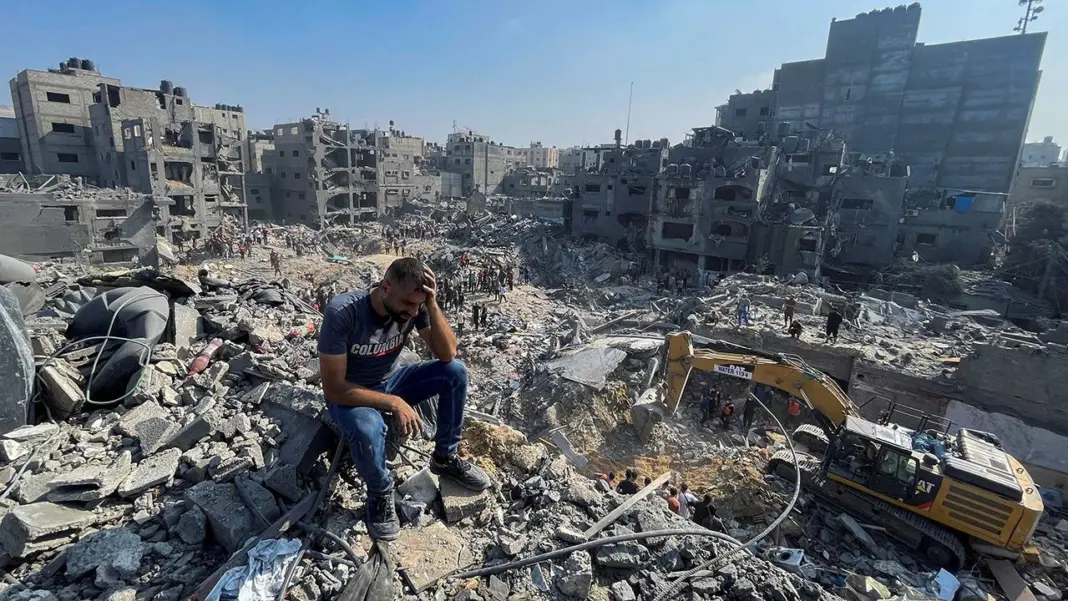
In a sweeping policy change, the IDF has announced that Palestinians forcibly evacuated from Northern Gaza will not be permitted to return, effectively making the displacement permanent. Brigadier General Iik Cohen confirmed through Israeli media that the evacuation of Northern Gaza is intended to be final and that humanitarian aid to the area would be restricted. According to Cohen, the decision stems from a belief that there are “no civilians left” in the evacuated region. This assertion, however, has been disputed by human rights organizations and international monitors, who point out that the hundreds of thousands of Gazans living there face severe humanitarian implications from this action and a risk of widespread civilian casualties.
International Legal Implications and Accusations of Ethnic Cleansing
The IDF’s policy barring the return of Palestinian residents to Northern Gaza has intensified concerns of ethnic cleansing, a severe violation of international law. Ethnic cleansing — the deliberate, forced, and often permanent removal of an ethnic group from a territory — is recognized as a crime against humanity and is prohibited under the Fourth Geneva Convention. The International Criminal Court (ICC) and the International Court of Justice (ICJ) are actively investigating Israel’s actions in Gaza and the West Bank, examining whether the IDF’s actions meet the criteria for war crimes, which include ethnic cleansing, forced displacement, and civilian targeting.
The ICC is currently assessing evidence to determine whether Israeli officials could be held individually responsible for alleged atrocities. In parallel, the ICJ is reviewing Israel’s actions for their adherence to international legal standards regarding the protection of civilians during armed conflict. Should either court conclude that Israel’s policies constitute war crimes, it could result in landmark legal action and add further weight to calls for international intervention.
Global Demand for a Ceasefire and Arms Embargo on Israel
The IDF’s declaration comes as international pressure mounts to halt the escalating violence in Gaza. A coalition of 52 nations, led by the Organization of Islamic Cooperation (OIC) and the Arab League, has submitted a formal request to the United Nations, calling for an immediate suspension of arms transfers to Israel. The coalition’s letter to the UN Secretary-General and the Presidents of the General Assembly and Security Council invokes General Assembly Resolution ES-10/24 and past advisory opinions from the ICJ. These legal foundations support a global call for states to suspend arms shipments if they are likely to be used in occupied territories, where violations of international humanitarian law may occur.
“This initiative is grounded in international law, and our call is clear: no arms should be provided where there are grounds to believe they may be used in the occupied territories,” a coalition representative stated in a recent press conference. The letter underscores the need to protect civilians and end the occupation of Palestinian territories, warning that continued militarization risks exacerbating a conflict with potentially catastrophic regional consequences.
BRICS Joins Calls for Ceasefire and Humanitarian Protection
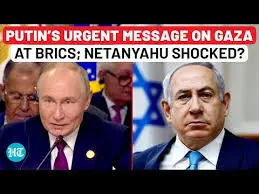
Echoing the coalition’s plea, the BRICS organization — comprising Brazil, Russia, India, China, and South Africa — has issued its own call for an immediate ceasefire in Gaza. In a recent summit, BRICS leaders expressed deep concern over the humanitarian crisis and urged both sides to respect international law, particularly concerning civilian protection and the prevention of forced displacement. The BRICS declaration highlighted the potential for the Gaza crisis to destabilize the wider Middle East, with leaders advocating for international pressure to bring about a ceasefire and prevent further loss of life.
A recent report from Great Reporter praised the BRICS statement, describing it as a significant diplomatic shift. “The BRICS bloc is increasingly positioning itself as a counterbalance to Western reluctance to intervene decisively in Gaza,” the report stated. Analysts suggest this approach may compel Western powers to reconsider their strategies and offer broader support for a peaceful resolution.
Humanitarian Crisis and Media Criticism
The coalition’s letter further highlights the severe humanitarian toll in Gaza, particularly affecting women and children. Ambassador Mansour, representing Palestine, emphasized that recent restrictions imposed by Israel have interrupted essential services, including polio inoculations for children — a crucial public health service provided by the United Nations Relief and Works Agency (UNRWA), which Israel is attempting to dismantle. Mansour described the situation as a “genocide within a genocide,” adding that the continued restriction of humanitarian aid only exacerbates the crisis facing Gaza’s residents.
Israeli newspaper Haaretz has openly criticized the Israeli government’s actions in Gaza, labeling them as a calculated effort to displace Palestinian residents permanently. In a series of editorials, Haaretz argued that the policy aims to alter Gaza’s demographic landscape and entrench Israeli military control over the region. The publication accuses Prime Minister Benjamin Netanyahu’s administration of orchestrating what it calls “a campaign of ethnic cleansing.” It points to widespread destruction and the IDF’s stated policy as evidence of a strategic, rather than incidental, effort to displace civilians and prevent their return.
Legal Pathways and Potential Consequences
With the ICC and ICJ investigations underway, international legal experts emphasize that if sufficient evidence is found, charges against key Israeli officials could be brought. Such actions would be unprecedented and reinforce calls from global advocacy groups for a ceasefire and for Israel to reverse its restrictive policies on displaced Palestinians’ right to return. The ICC’s involvement, especially, underscores the gravity with which the international community views the situation and reflects a growing consensus that there must be legal accountability for actions in Gaza.
International Response and Continuing Advocacy
The coalition of 52 countries, supported by BRICS and regional organizations, continues to advocate for an end to the conflict and a return to stability in Gaza. As the crisis unfolds, coalition leaders have vowed to use every diplomatic channel to advance accountability measures and ensure adherence to international humanitarian laws. With growing global support, including commitments from nations in Europe, Africa, and Latin America, the coalition is optimistic that sustained diplomatic pressure will lead to actionable resolutions that prioritize civilian protection and aim to end the occupation of Palestinian territories.
A coalition representative underscored the urgency of the situation, stating, “It is a humanitarian and moral imperative to ensure that future generations can live in peace, free from the fear of displacement and violence.” The coalition and BRICS leaders alike have expressed their commitment to seek justice for Palestinians through the United Nations and international courts until these rights are fully realized and a pathway to peace is secured.
As the international community watches closely, the ongoing investigations, ceasefire demands, and calls for an arms embargo against Israel are converging into what many see as a critical turning point in the Israeli-Palestinian conflict.