
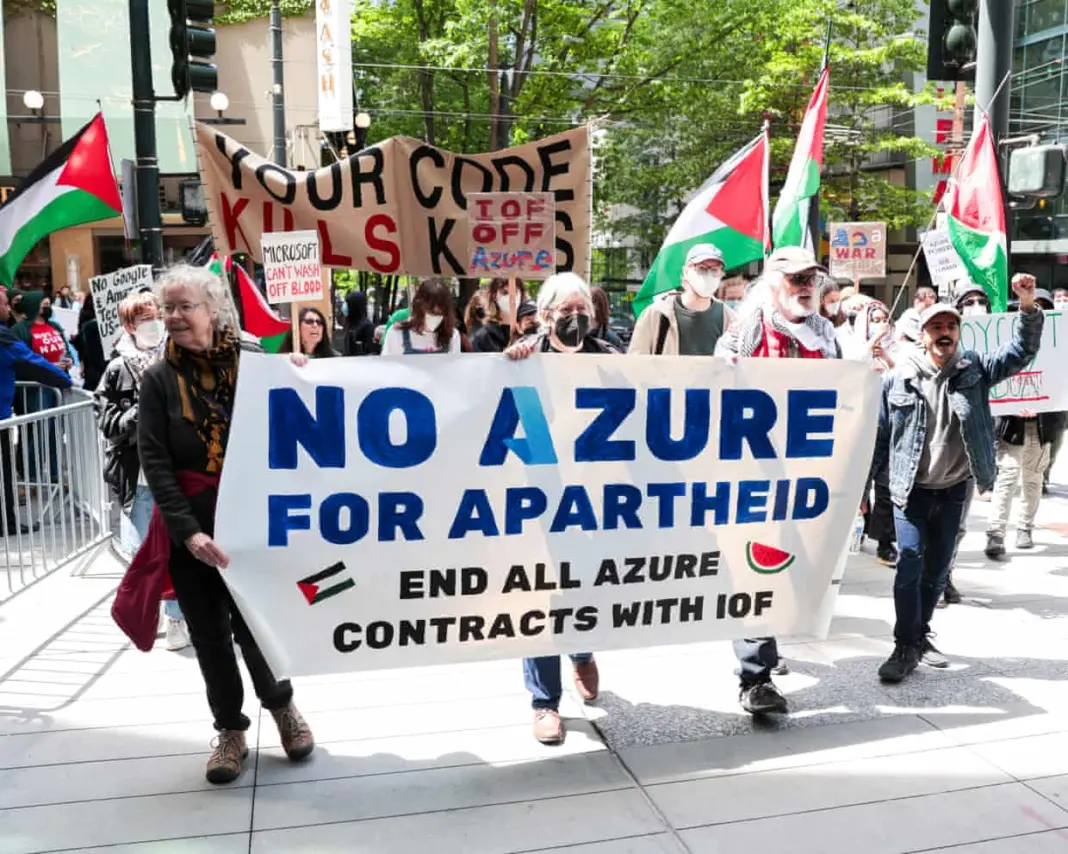

Microsoft is facing mounting international scrutiny after reports emerged that the company removed the head of its Israeli branch and several senior officials following an internal investigation into the use of Microsoft cloud and artificial intelligence technologies by Israeli military intelligence agencies during the Gaza war.
According to reports published in Israeli media outlets Globes and Ynet, Microsoft Israel General Manager Alon Haimovich departed the company after global executives in the United States launched a confidential review into the branch’s relationship with Israeli security agencies, including Unit 8200, Israel’s elite signals intelligence division. The reports indicated that several additional senior officials were also dismissed or reassigned as part of the fallout.
The controversy stems from investigations published by The Guardian, +972 Magazine, and Local Call, which alleged that Israeli intelligence agencies were using Microsoft Azure cloud infrastructure and AI systems to process vast amounts of surveillance data connected to Palestinians in Gaza and the occupied territories.
According to those investigations, Unit 8200 dramatically expanded its use of commercial cloud infrastructure following the events of October 7, 2023. The reports alleged that Microsoft systems were used to store intercepted phone calls, metadata, geolocation information, and intelligence profiles related to Palestinians in Gaza. One report claimed Israeli intelligence databases processed “millions of communications every day” using cloud-based AI analysis tools.
A joint investigation by +972 Magazine and Local Call quoted one Israeli intelligence source as saying:
“The cloud gave us endless storage. Before, there were limits. Now there are almost none.”
Another source reportedly described the intelligence expansion after October 7 as:
“A crazy amount of material. We are collecting everything.”
The investigations alleged that artificial intelligence tools were used to assist analysts in sorting intercepted communications and identifying patterns of behavior, associations, locations, and potential targets inside Gaza.
The reports intensified global concern over the growing integration of commercial AI systems into military operations, particularly in densely populated civilian environments where the margin for error can have catastrophic consequences.
According to Ynet, Microsoft executives in the United States became increasingly alarmed that operations linked to the Israeli branch could expose the company to serious legal and regulatory risks in Europe, especially if sensitive surveillance data connected to Palestinians was processed or hosted through Azure infrastructure located in EU jurisdictions.
The concern reportedly centered on European privacy law, including the EU’s General Data Protection Regulation (GDPR), as well as emerging European AI governance legislation that imposes stricter accountability standards on high-risk artificial intelligence systems.
Some reports alleged that Israeli intelligence data connected to Gaza operations may have been routed through or stored in Microsoft data centers in Ireland and the Netherlands. If accurate, legal experts warn the issue could raise significant jurisdictional questions about wartime surveillance, data transfers, and corporate liability under European law.
Neither Microsoft nor Israeli authorities have publicly confirmed the exact technical architecture involved.
Microsoft acknowledged that it conducted internal reviews concerning the use of its technologies by Israeli government agencies. In a statement cited by international media, the company said it was committed to ensuring its technologies were used “in ways that are consistent with our terms of service and AI ethics principles.”
The company has not publicly disclosed the full findings of the investigation, nor formally confirmed the reasons for Haimovich’s departure. However, reports later emerged that Microsoft restricted or suspended certain Azure and AI-related services connected to Unit 8200 after determining that some activities may have violated company rules regarding mass surveillance.
If confirmed, the decision would represent one of the first major instances of a leading American cloud provider limiting services associated with Israeli military intelligence operations during the Gaza war.
The scandal has unfolded against the backdrop of Israel’s devastating military campaign in Gaza, which has resulted in catastrophic civilian destruction and mounting allegations of war crimes.
According to figures from the Gaza Health Ministry, more than 50,000 Palestinians have been killed since October 2023, with tens of thousands more injured and large parts of Gaza’s civilian infrastructure destroyed. UN officials have repeatedly warned of mass displacement, famine conditions, and the collapse of the territory’s healthcare system.
Human rights organizations including Amnesty International and Human Rights Watch have accused Israel of carrying out unlawful attacks and collective punishment against the civilian population. Israel denies allegations of war crimes and insists its military operations are directed against Hamas and other armed groups.
The growing role of artificial intelligence in warfare has become a central issue in the debate surrounding Gaza. Israeli military officials have openly acknowledged using AI-assisted targeting systems during the conflict. Investigations by +972 Magazine previously revealed the existence of AI systems known as “Lavender” and “Where’s Daddy?”, which allegedly assisted in identifying bombing targets and tracking suspected militants to family homes.
One Israeli intelligence officer quoted by +972 described the process bluntly:
“The machine did it coldly. And that made it easier.”
Another source said human personnel often functioned as little more than a “rubber stamp” for AI-generated targeting recommendations.
The reports generated international alarm among legal scholars and AI ethicists, who warned that machine-assisted warfare risks accelerating civilian casualties while reducing meaningful human oversight in lethal decision-making.
The controversy has also sparked growing unrest inside major technology companies themselves. Microsoft employees have staged internal protests and signed petitions demanding greater transparency regarding military contracts and the use of AI technologies in conflict zones.
Similar protests have emerged at Google and Amazon over Project Nimbus, a multi-billion-dollar cloud computing contract providing services to the Israeli government and military.
Critics argue that cloud providers can no longer claim neutrality when their infrastructure forms part of military intelligence architecture.
“The era when tech companies could pretend they were passive platforms is over,” one European digital rights researcher told The Guardian. “Cloud infrastructure is now part of the battlespace.”
The affair also reflects growing geopolitical tensions between Silicon Valley firms, European regulators, and human rights campaigners over the future of AI governance.
Under the EU AI Act, which is gradually coming into force across Europe, companies involved in high-risk AI applications may face stricter obligations surrounding transparency, accountability, auditing, and human rights compliance. Legal experts suggest wartime intelligence systems could become a future test case for how those regulations are enforced.
For Microsoft, the crisis threatens reputational damage at a time when the company is aggressively positioning itself as a global leader in artificial intelligence through its partnership with OpenAI and the rapid expansion of Azure AI services worldwide.
The reported removal of senior Microsoft Israel executives therefore represents far more than an internal corporate reshuffle. It signals a growing recognition across the technology industry that AI systems, cloud infrastructure, and data platforms are no longer politically neutral tools, but central components in the conduct of modern warfare.
As scrutiny intensifies, the Gaza conflict may ultimately become one of the defining legal and ethical battlegrounds over the role of private technology corporations in twenty-first century war.