A Supreme International Crime: Dozens Killed as the United States Seizes Venezuela’s President
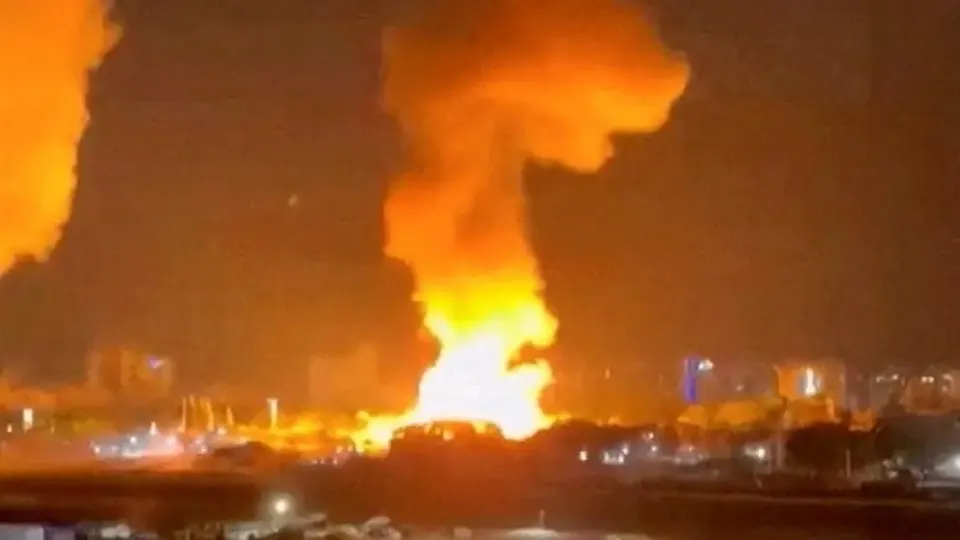
More than eighty people are believed to have been killed when United States forces stormed Caracas in the early hours of January 3 to seize Venezuelan president Nicolás Maduro in a lightning military operation that legal scholars across multiple continents are now describing as a textbook case of illegal aggression.
Among the dead were at least 32 Cuban military and intelligence officers stationed in Venezuela under a bilateral security agreement, along with Venezuelan soldiers, security personnel and civilians caught in the air strikes and ground assaults that preceded the abduction. Radar stations, air-defence sites, command centres and ammunition depots were hit in waves as U.S. aircraft and special forces carved a corridor into the capital.
The raid was conducted without United Nations authorisation – and, extraordinarily, without the approval or even the prior knowledge of the U.S. Congress, which under the American constitution holds the sole power to authorise war. Lawmakers from both parties later confirmed they had not been briefed or consulted before U.S. forces crossed into Venezuelan territory and began killing foreign troops and Venezuelan soldiers.
That double breach – of international law abroad and constitutional law at home – has left the operation widely characterised by jurists as not a military mission but an act of armed gangsterism, carried out outside every system designed to restrain power.
Under the UN Charter, the use of force inside another sovereign state is illegal except in self-defence or with Security Council approval. Neither condition applied.
Under customary international law, a sitting head of state is inviolable, immune from arrest, kidnapping or seizure by foreign powers regardless of alleged crimes.
Under the Rome Statute of the International Criminal Court, the cross-border assault itself may constitute the crime of aggression – the gravest offence in international law.
In one operation, the United States violated all three.
“An Act of War”
As explosions echoed across Caracas, Maduro appeared on state television shortly before his capture, calling the strikes “an attack against the sovereignty of Venezuela” and accusing Washington of attempting to impose regime change by force.
Senior Venezuelan military officers issued statements describing the raid as “an act of war”, insisting that the country remained under foreign attack even after the president was removed. Though an interim leadership later sought dialogue with Washington, no Venezuelan constitutional body authorised foreign troops to operate on its soil – a fact that under international law alone renders the incursion unlawful.
“We Will Run the Country”
From Washington, the tone was not defensive. It was imperial.
Donald Trump, who ordered the raid, announced that the United States would now “run Venezuela” until a new political order was installed.
“The United States of America has successfully carried out a large-scale strike,” Trump told reporters. “And we will run the country until such time as we can do a safe, proper and judicious transition.”
He warned Venezuela’s interim leadership that non-compliance would bring consequences “bigger” than those suffered by the captured president.
What made the declaration even more extraordinary was that it was issued without any congressional authorisation at all. In constitutional terms, the United States had just launched a full-scale overseas military operation without legal authority at home – the domestic mirror of the international law breach unfolding abroad.
War Secretary Pete Hegseth made the doctrine explicit.
“It means we set the terms,” Hegseth said. “President Trump sets the terms. We’re gonna control what happens next because of this brave decision.”
The language was not that of extradition or due process. It was the language of conquest.
The Hidden Prize: Russian Weapons
Behind the political drama lies another, more explosive dimension.
In the months before the raid, Russia had delivered a surge of advanced air-defence systems to Venezuela, including:
• S-300VM (Antey-2500) long-range missile batteries
• Buk-M2 medium-range surface-to-air systems
• Pantsir-S1 missile-gun platforms
• Su-30MKV fighter jets armed with Russian air-to-air missiles
Some of these systems were destroyed in the opening U.S. strikes. Others may now sit intact inside bases under U.S. or U.S.-aligned control.
For American military intelligence, the value is extraordinary: live Russian radar, missile guidance software, electronic-warfare suites and command networks – the same technologies Russia fields against NATO.
But legally, the implications are incendiary.
Under the laws of war, the seizure of enemy weapons is permitted only in a lawful armed conflict. In a war of aggression, however, captured military equipment is not legitimate booty – it is evidence of a crime.
Because the United States launched this operation without UN approval and without any self-defence justification, every Russian missile battery struck and every system seized was taken in the course of an illegal use of force. In effect, Washington may now be analysing a rival nuclear power’s strategic technology not as a belligerent in a lawful war, but as the perpetrator of one.
A Precedent the World Was Built to Prevent
Never before has a nuclear-armed democracy abducted the sitting president of another sovereign state, killed dozens of foreign troops, destroyed its air-defence network, and then announced it would govern the country – all without UN authorisation or domestic legislative approval.
If this action stands, international lawyers warn, it collapses the post-1945 order itself. The system created after World War II was designed to prevent exactly this: powerful states removing governments by force while claiming legal righteousness.
Today it is Venezuela. By the same logic, tomorrow it could be anyone.