
Israel is operating a “de facto state policy of organised and widespread torture,” according to a new UN Committee Against Torture (CAT) review, marking one of the most severe UN indictments of an allied state in decades. The findings — covering the period since the Gaza war began on 7 October 2023 — paint a comprehensive picture of torture, abuse, arbitrary detention and impunity across Israel’s detention system, particularly against Palestinians including children.
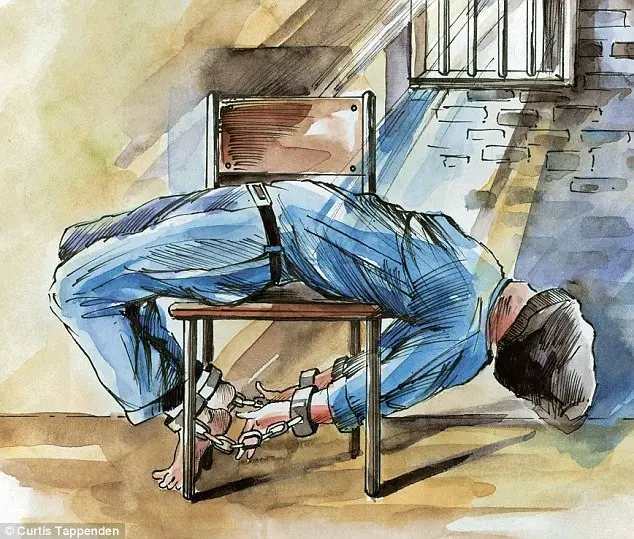
The report, released Friday, details evidence of beatings, electrocution, waterboarding, dog attacks, sexual violence and enforced stress positions, along with conditions so physically destructive that restraints have reportedly led to amputation. Detainees described being forced to mimic animals, urinated on, denied medical care and prevented from seeing families for months at a time.
The UN committee, composed of ten independent experts, states that the scale and consistency of abuse — compounded by the absence of prosecutions — indicates not isolated misconduct but a structural system that normalises torture.
Thousands Held Without Trial — Children Included
A key area of concern is Israel’s extensive use of administrative detention — incarceration without charge or trial — under its unlawful combatants law. As of late September, 3,474 Palestinians were held in administrative detention. The UN report highlights not only adults, but the “high proportion of children” held on security grounds — sometimes below the legal age of criminal responsibility, which Israel sets at 12.
Security-classified children are kept in solitary confinement, denied education, and often prevented from seeing their families. UN investigators have urged Israel to end solitary confinement for minors altogether, calling current practice a violation of international law.
The committee warns that taken as a whole — the arrests, the interrogations, the detention conditions — the daily reality imposed on Palestinians “may amount to torture” under international legal definitions.
75 Palestinian Prisoners Dead — No One Prosecuted
Between the start of the Gaza war and August 2025, at least 75 Palestinian detainees died in Israeli custody — an “abnormally high” toll, the UN notes, affecting only Palestinians. Despite this spike in deaths, not a single Israeli official has been held accountable.
Israel’s government insists conditions are lawful and safe, and representatives from the foreign ministry, justice ministry and prison service briefed the UN to argue oversight mechanisms function adequately. Yet during the two-year period reviewed, Israel’s interrogation watchdog pursued no torture-related prosecutions, despite extensive allegations.
The committee identified only one conviction — the seven-month sentence of a soldier who violently beat bound prisoners with fists, baton and rifle. The sentence, the report states, “does not reflect the severity of the offence.”
A Warfront Video Echoes the Pattern: Two Men, Hands Up, Then Shot
The UN findings coincided with a separate incident that has shaken global observers. Video circulating online shows two Palestinians — Youssef Asasa and Mahmoud Abdallah — crawling from a building in Jenin, hands raised, lifting their shirts to show they are unarmed. Israeli border police detain them briefly. A bearded officer kicks them, signals toward the building — and seconds later, both men are shot and killed at near-point-blank range.
Three officers were questioned and released within 24 hours, instructed only not to discuss the case publicly. Their justification — that they felt endangered and the detainees resisted — is not visible on video. For human rights lawyers, the moment has become emblematic: detention, then death, followed by institutional protection.
The UN report suggests such incidents are not aberrations but the logical consequence of a system without accountability.
Israel Is a Signatory to the Convention Against Torture — But Enforcement Fails
Israel ratified the UN Convention Against Torture in 1991, legally obligating it to prevent and prosecute torture. The CAT review concludes that for Palestinians — whether in interrogation rooms, prisons or under military occupation — this obligation is routinely violated.
The committee urges Israel to:
- End administrative detention without charge
- Prohibit solitary confinement of children
- Guarantee medical access and family communication
- Investigate deaths in custody
- Prosecute interrogators and commanders responsible for abuse
No such commitments have yet been announced.
A Turning Point — or A Familiar Warning Unanswered?
For decades, UN bodies and rights groups have documented ill-treatment of Palestinians. What sets this report apart is scale, forensic detail, and the explicit identification of torture as state policy. If unchallenged, the findings may have implications for international law, ICC proceedings and the future of Israel’s military alliances.
Inside prisons, the situation remains largely sealed off — voices heard only through testimony smuggled out or spoken by survivors upon release. To them, this UN report represents something rare: recognition.
Whether recognition becomes accountability remains the unresolved — and urgent — question.