
On a quiet morning in September 2024, before the day’s shelling began to shake the outskirts of Nuseirat, 67-year-old Abdulaziz Jouda pushed his bicycle north toward a small olive grove. He knew the route was dangerous — it ran alongside the Netzarim Corridor, then controlled by Israeli forces and designated a “red zone” where soldiers often fired without warning. But the olives were ready, and in Gaza the harvest comes whether it is safe or not.
His friend, 64-year-old farmer Jabr Musleh, went with him. They hoped to fill a few sacks and return before the tanks stirred.
They never returned at all.
A local journalist, Ahmed Allouh — himself killed by an Israeli airstrike three months later — watched the two men enter the grove. Soon after, he heard two tank shells fired toward the same patch of trees. The bombardment continued so intensely he couldn’t check if the men had survived.
By evening, neither family had heard anything. Their calls went unanswered. The night passed in dread.
At first light, when the shelling eased enough to move, relatives hurried to the grove. They found Musleh’s body. Nearby lay Jouda’s bicycle, his phone, and his bag. But Jouda himself had vanished — not killed, not confirmed alive, simply absorbed into the widening void of Gaza’s missing.
A month later, the grove had been bulldozed flat. No trace of him remained.
Human rights groups contacted the Israeli military to ask whether he was detained. His name appeared nowhere.
“He has disappeared into nothing,” his daughter Ola told me. “We don’t have a grave. We don’t have a body. We don’t have an answer.”
A devastation too large to count
Today, Gaza’s death toll is no longer merely a number but a crisis of accounting. The Gaza Ministry of Health, via UN OCHA, reports more than 65,419 Palestinians killed since 7 October 2023 — a figure that would be staggering in any war, let alone one fought in a sealed strip of land where nearly half the population are children.
But the real toll is almost certainly far higher.
A Lancet study on trauma mortality estimated 64,260 violent deaths in the period it analysed — a number that broadly matches Gaza’s official count but represents only direct violent deaths, not those who died from hunger, dehydration, infection, untreated wounds, childbirth without medical care, or the collapse of Gaza’s entire health system.
A separate Lancet letter in July 2024 warned that when indirect deaths are factored in, the true human toll could ultimately exceed 186,000 people — more than three times the official count.
Meanwhile, the missing remain a catastrophe within a catastrophe. UN figures put the number at over 11,000, but modelling studies and human rights groups suggest a far broader range: 15,000 to 38,000 people, many of them crushed under rubble, buried in unmarked graves, or detained out of sight. Save the Children estimates up to 21,000 children alone are missing — lost in the fog of war.
This is the statistical black hole in which families like the Joudas now live.
BY THE NUMBERS: Gaza’s Dead, Missing & Detained
Confirmed Deaths
- 65,419 killed since 7 October 2023
- 167,160 injured
Estimated Final Death Toll
- 186,000+ projected deaths once indirect causes (hunger, disease, untreated injuries) are included
Missing Persons
- 11,000+ officially listed missing
- 15,000–38,000 estimated missing overall
- Up to 21,000 children missing, buried, detained or unaccounted for
Unidentified Bodies
- 285 bodies returned during ceasefire
- Only 86 identified
- Hundreds buried unnamed in Deir al-Balah
Detention & Disappearance
- 2,214 Gazans held under Israel’s Unlawful Combatants Law — indefinite detention without charge
- 3,600 Palestinians classified as forcibly disappeared detainees
- 9,100+ Palestinians imprisoned overall
- 3,544 held without trial under administrative detention
- At least 98 Palestinians known to have died in Israeli custody since the war began
The dead, the unidentified, and the impossible task of knowing
Even when bodies are recovered, they often cannot be named. Gaza has no functioning DNA lab, no dental records, almost no medical archives. Hospitals struggle to refrigerate bodies, let alone identify them. Families move from morgue to morgue hunting for a face they recognise.
The International Committee of the Red Cross has received 13,500 tracing requests, but cannot test samples or confirm matches.
During the ceasefire, Israel returned 285 bodies without names, belongings, or death records. Only 86 could be identified. The rest were buried as unknowns.
International law expert Yahya Muhareb told me this violates the Geneva Conventions: “Israel did not stop giving names because it couldn’t. It stopped because it wouldn’t.”
Several of the returned bodies bore gunshot wounds to the back of the head and injuries consistent with torture, according to Dr. Ahmed Dahir, director of forensic medicine at Nasser Hospital.
But without names, no one can say who they were — or who is still waiting for them.
A sister searching crowds for two brothers
Among Gaza’s missing is 32-year-old father of four Shawqi Al-Helu, who vanished on 29 October 2023 while trying to collect food near the Zikim Crossing — an area where hunger regularly met gunfire.
“He hated going there,” his sister Laila said. “But the children were hungry.”
Israeli troops fired on the waiting crowd, killing at least six people that day. Shawqi never returned home.
The family combed morgues. Rumours mushroomed. Someone claimed to have seen him alive in the south; others insisted he’d been taken to a prison. The ICRC checked lists and told the family Israel had not registered him.
When the family fled their home months later, Shawqi’s wife packed some of his clothes, hoping to give them back to him.
He did not appear in the prisoner exchange.
Laila has already buried one brother — Mohammed, killed while trying to buy food in December 2023.
“Since the ceasefire, I stare at faces in the street,” she told me. “Every man who looks like either of them, I follow. The war is over — so why haven’t they come back?”
Buried without names
During the heaviest bombardments, civilians often acted as undertakers.
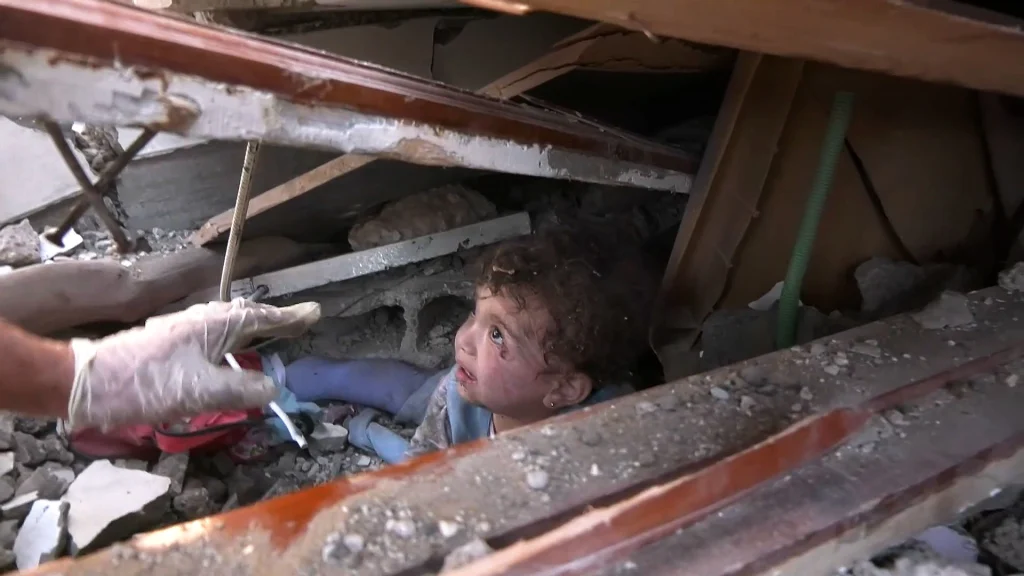
In Tal al-Hawa, Mohammad Imad recalls the night of 23 December 2023. Bombs fell so close he could taste plaster dust inside his shelter. Neighbours screamed under rubble, but no one could reach them.
At dawn, he climbed over ruins and found the remains of more than twenty people.
“A head here, a leg there,” he said. “We buried them in a hole in the street with our hands.”
Dogs later dug the pit open. Airstrikes forced Imad to flee. Months later, he heard the bodies had been moved — but by whom, and to where, no one knew.
“I still dream about it,” he said. “The images don’t go away.”
The disappeared prisoners
There is a third category of missing Palestinians: those taken alive.
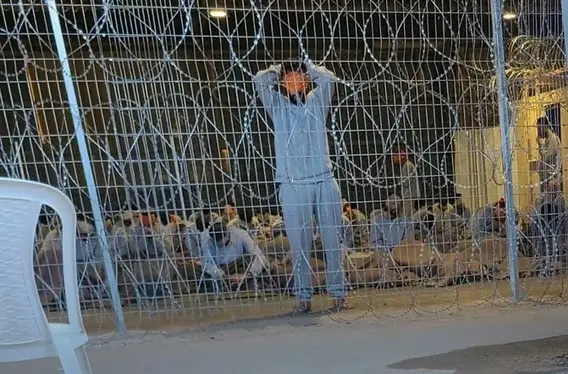
Rights groups estimate at least 2,214 Gazans are currently detained under Israel’s Unlawful Combatants Law, which allows indefinite detention without charge or trial. Families are rarely notified. Access to lawyers is limited or nonexistent.
Another 3,600 Palestinians are classified as forcibly disappeared detainees — people believed to be in Israeli custody but whose whereabouts and status are unknown.
In total, Israel holds more than 9,100 Palestinian prisoners, including 3,544 under administrative detention — imprisonment without formal charges.
Leaked Israeli military data shows only one in four Gazan detainees is classified by Israel as a fighter. The majority are civilians.
At least 98 Palestinians have died in Israeli custody since October 2023, according to Physicians for Human Rights–Israel.
For the families of Gaza’s missing, this is the cruel spiral of uncertainty: a loved one may be under rubble, buried unnamed, or still alive somewhere inside Israel’s vast detention system.
There is no mechanism to find out.
A war that refuses to end
The ceasefire may have silenced the bombs, but it has not ended the war for the families of Gaza’s missing. There is no DNA testing, no systematic exhumation, no transparent prisoner registry, no functional investigative machinery.
Grief has nowhere to go.
People cannot bury what they cannot find. They cannot move on without a body, a death certificate, or a grave. The war’s front lines have shifted, but its wounds remain open.
And so Laila walks through the streets, scanning crowds, searching faces, refusing to let go of the hope she fears is disappearing.
“If the war is really over,” she asks, “then where are they?”