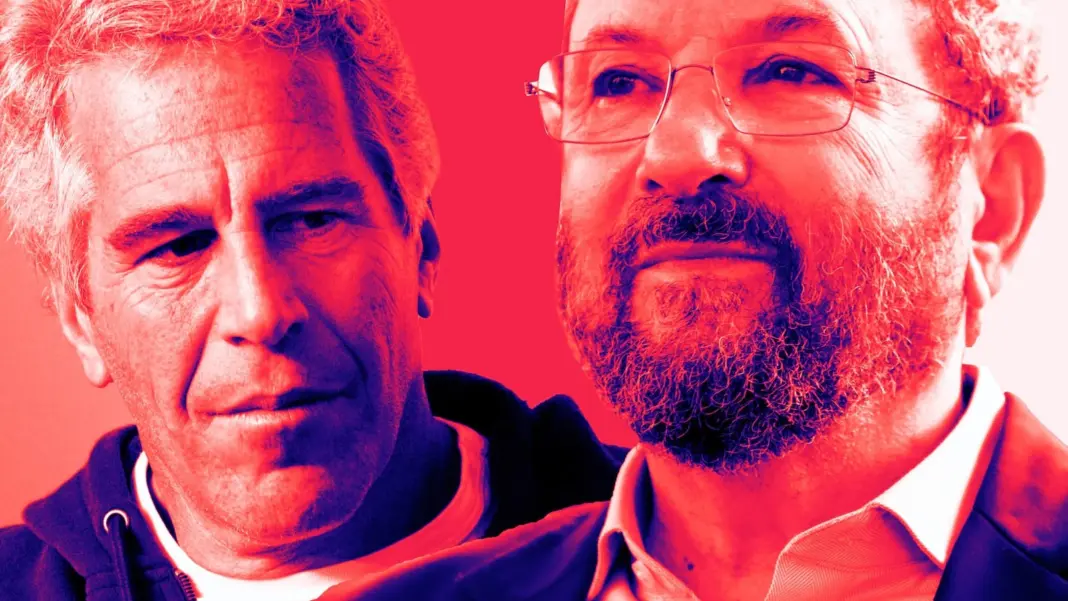

A vast trove of emails allegedly belonging to former Israeli Prime Minister Ehud Barak has begun to cast new light on one of the murkiest elite networks of recent history — the circle surrounding Jeffrey Epstein.
More than 100,000 messages and attachments, spanning nearly a decade from 2007 to 2016, were released online in August after a breach claimed by the “Handala” hacking group and mirrored by the transparency collective Distributed Denial of Secrets.
The cache is still being authenticated. But what has surfaced so far appears to detail a pattern of social and financial contact between Barak and Epstein that persisted long after Epstein’s 2008 sex-crime conviction. It contradicts Barak’s later claims that he knew little about Epstein’s misconduct — and raises new questions about how Israel’s most decorated soldier, a former head of military intelligence and prime minister, could continue to orbit a man the world already knew was a predator.
Island visits and disputed denials
The most striking passages concern Barak’s travel to Epstein’s private Caribbean retreat, Little St. James. In a January 2014 exchange, Barak wrote that he was “still trying to arrange that the security guys will not come with us to the island.” Later that year, in a note of thanks, he praised Epstein’s “hospitality” and described the property as a “great, impressive island.”
These disclosures go to the heart of Barak’s credibility. In 2019, when Epstein was arrested again, Barak insisted he knew little about the financier’s misconduct and that his own contact had been limited to business opportunities. Yet the leaked emails show him receiving articles about the allegations years earlier. If accurate, those messages undercut his public stance that Epstein’s crimes only became known to him late in the saga.
Barak was not alone in his entanglement. The archive appears to tie in other elites, including Britain’s Prince Andrew. In one 2015 message, Epstein cites “Andrew” as the source of intelligence about Chinese business risks, to which Barak replies, “The prince?” Epstein answers: “Yes.” The exchange suggests Andrew’s ties to Epstein lasted far longer than he admitted publicly, undermining his own claim that contact ceased in 2010.
A controversial trip to Israel
One episode that stands out in the wider Epstein timeline is his extraordinary 2008 visit to Israel. After pleading guilty in Florida to soliciting a minor for prostitution — a conviction that should have grounded him — Epstein was somehow allowed to leave the United States and travel abroad before reporting to jail. He went to Israel, citing “business interests,” and returned before beginning his 13-month sentence.
Legal experts at the time expressed astonishment. Standard practice in felony cases is the immediate surrender of a passport to prevent flight risk. Epstein’s ability to travel internationally, even after admitting guilt, highlighted the extraordinary leniency he enjoyed. Some commentators speculated that his ties to Israeli intelligence or powerful political figures like Barak might explain such unusual latitude, though no direct evidence has surfaced. Still, the Israel trip remains one of the most glaring anomalies in Epstein’s legal saga — a reminder that he operated under rules that did not apply to ordinary defendants.
Business ventures: from Reporty to Carbyne
Beyond the island visits, the leaked emails depict Epstein functioning as a fixer for Barak, nudging him toward investors, opening doors in Silicon Valley, and even making introductions in Russia and China. Much of this activity appears tied to one particular venture: an Israeli emergency communications startup called Reporty, later rebranded Carbyne.
Barak invested about $1 million in the firm in 2015 through a vehicle partly bankrolled by Epstein. Carbyne marketed itself as a cutting-edge upgrade to emergency call centers, integrating location data, live video and metadata streams. For governments seeking to modernize, it was an alluring pitch.
The company’s trajectory carried it swiftly into the orbit of U.S. tech royalty. In 2018, Peter Thiel’s Founders Fund joined a $15 million funding round. Subsequent rounds in 2021 and 2025 kept the money flowing. Today, Carbyne systems are used in municipalities across the United States — from local sheriff’s offices to major metropolitan 911 call centers. Advocates say the technology can save lives by providing dispatchers with instant video feeds and GPS coordinates.
But critics warn of hidden risks. Carbyne’s servers process data in the cloud, raising fears that sensitive information — location histories, audio recordings, even live video from citizens’ smartphones — could be misused or accessed by foreign intelligence agencies. Several of Carbyne’s early executives came directly from Israel’s cyber-intelligence Unit 8200, the rough equivalent of America’s NSA. Civil liberties groups have called for greater scrutiny of how and where the software is deployed, and whether U.S. citizens’ emergency calls might be quietly swept into international intelligence pipelines.
That Epstein was an early investor, channeled through Barak, only deepens the discomfort. What was a convicted sex offender doing bankrolling a surveillance-tech company marketed to governments? And why was his role initially obscured in the investment structure?
Photographs, royals, and elite normalization
The Carbyne connection was not Barak’s only tie to Epstein-linked money. Between 2004 and 2006, the Wexner Foundation — where Epstein once served as a trustee — paid him roughly $2.3 million for two studies, one of which was never completed. In 2020, the foundation said Epstein had no role in the decision, but the association has lingered.
Images published in 2019 placed Barak entering Epstein’s Manhattan townhouse with his face partly obscured. At first, he threatened lawsuits against the Daily Mail, calling the reports false. Later he conceded it was him, but claimed he had been there only “for lunch or chat.” The denial, walk-back and eventual concession set the stage for how the leaked correspondence would be read: not as isolated incidents, but as part of a longer pattern of proximity.

The Barak emails also dovetail with the ongoing controversy surrounding Britain’s Prince Andrew. Other leaked caches, including financial regulator documents, already suggested Andrew was in contact with Epstein after 2010. The Barak correspondence, with its casual reference to “Andrew” as a source of information, is yet another blow to the prince’s public narrative.
Why it matters now
For Barak, a decorated former soldier and Israel’s tenth prime minister, the emails pose uncomfortable questions of judgment. Why continue social visits to Epstein’s island years after his conviction? Why accept his capital to underwrite a surveillance-tech startup? And why present himself later as an unwitting participant who knew little of Epstein’s history?
The answers remain elusive, partly because the leak itself is still under review. While journalists have quoted extensively from the archive, independent forensic authentication of the full cache is still pending. Until that process is complete, every new excerpt must be treated with caution. Yet many of the details already fit into a larger puzzle built from photographs, business filings, court disclosures, and public records — enough to make outright dismissal difficult.
Carbyne’s rise is one reason the story matters beyond the realm of scandal. The company’s software now routes emergency calls in U.S. cities. For citizens, that means a convicted sex offender — funneled through a former Israeli prime minister — played a role in seeding the very technology used to connect them with police and paramedics. Privacy advocates say this demands scrutiny. Governments may not have known the origins of the capital that funded the firm’s early years. But they now must reckon with the implications of deploying its tools.
The Barak emails, whether in full or in part, are a reminder that the Epstein scandal was never just about one man’s crimes. It was about the circles that tolerated, excused, and benefited from him — and what they reveal about the structures of power we live under.
Chronology of key events
- 2004–2006 — Wexner Foundation pays Ehud Barak around $2.3m for research; Epstein is a trustee at the time.
- 2008 — Epstein pleads guilty in Florida, but before serving time is allowed to travel to Israel — a highly unusual privilege in a felony case. Begins 13-month sentence later that year.
- 2014–2016 — Emails allegedly show Barak arranging travel to Epstein’s island and thanking him for “great, impressive” hospitality.
- 2015 — Barak invests in Reporty (later Carbyne) via a vehicle partly funded by Epstein.
- 2016 — Photographs place Barak entering Epstein’s Manhattan townhouse.
- 2018 — Carbyne raises $15m in a round that includes Peter Thiel’s Founders Fund.
- 2019 — Epstein arrested again; Barak insists he knew little of Epstein’s past. Prince Andrew tells the BBC he cut ties in 2010.
- 2020 — Wexner Foundation clarifies its payments to Barak.
- 2021 and 2025 — Carbyne raises further rounds of capital as it expands into U.S. municipal markets.
- August 2025 — Handala hackers claim Barak email breach; DDoSecrets hosts archive; media begin reporting details.