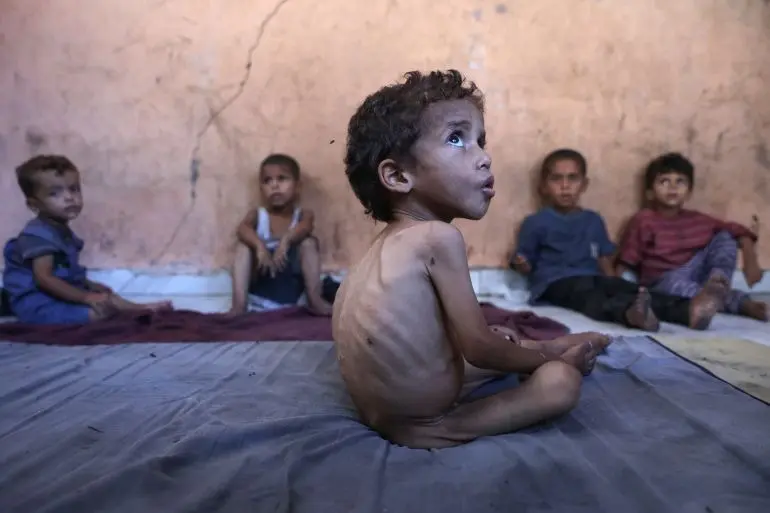

Ten Palestinian teenage boys have been released after enduring nearly a month of harrowing detention by Israeli forces near a Gaza aid distribution zone—only to return emaciated, injured, and psychologically scarred. Their accounts offer a chilling glimpse into what human rights organizations have dubbed one of the most abusive military detention regimes in modern history.
On July 24, 2025, Israeli authorities released ten boys aged between 14 and 17 who were detained in late June near the al‑Shakoush area of Rafah, adjacent to a Gaza Humanitarian Foundation (GHF) aid distribution site. Their release was facilitated by the International Committee of the Red Cross (ICRC), which transported the teenagers to Nasser Hospital in Khan Younis for emergency medical treatment. Hospital staff found the boys suffering from deep exhaustion, bruises, and signs of malnourishment and trauma—both physical and psychological.
“They came back broken,” said Dr. Saeed Al-Masri, a trauma specialist at Nasser Hospital. “Some of them had trouble standing. They were not only starved but terrorized.”
Aid as a Trap
The al‑Shakoush site, once intended as a lifeline for desperate civilians, has instead become synonymous with peril. The area has seen repeated chaos, shootings, and military roundups. Since the GHF initiative launched in late May 2025—ostensibly supported by both U.S. and Israeli authorities—hundreds of Palestinians have been arrested near aid lines, with children often swept up without explanation. Rights groups have criticized the program as a thinly veiled system of bait and control.
According to one of the released teenagers, the aid site “was a trap.”
“We thought it was safe,” he whispered from his hospital bed. “But soldiers came and took us. They blindfolded me, tied my hands. I don’t know how many days passed.”
His testimony is just one of many that now draw a straight line from aid zone detentions to Israel’s notorious desert prison: Sde Teiman.
Inside Sde Teiman: “Worse Than Guantánamo”
Sde Teiman, a former military base turned detention center in Israel’s Negev desert, has come under global scrutiny for its brutal practices. Operational since December 2023, it houses thousands of Gazan detainees, most of them held under Israel’s “Unlawful Combatants Law.” This framework permits detention without charge, legal counsel, or court oversight for up to 45 days—or longer, indefinitely, with renewed administrative orders.
Conditions of Dehumanization
Detainees—teenagers included—are routinely:
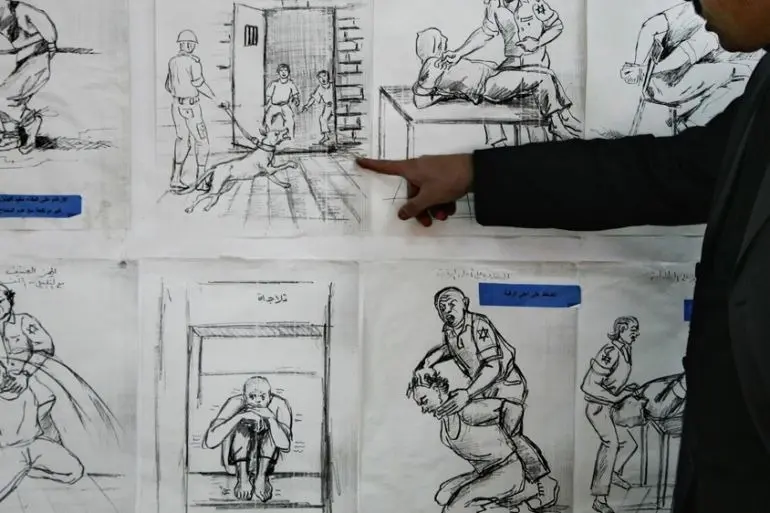
- Blindfolded, shackled, and forced to sit silently for hours or days,
- Fed meager rations consisting of dry bread, a sliver of cheese, or half a cucumber,
- Strapped into adult diapers and prohibited from using toilets,
- Fed through straws and not permitted to speak or move,
- Held in open-air cages on concrete floors with thin mats, exposed to extreme heat.
Medical professionals and former detainees describe an environment of systematic torture, including beatings, electric shocks, and prolonged stress positions. One of the most disturbing practices documented is sexual torture, often using objects or weapons.
Survivors Speak: Accounts of Torture and Assault
Ibrahim Salem, held for 52 days:
“They raped people—boys, old men—with rods, metal sticks, even animals. One guy came back torn apart inside. Most of us will come out with rectal injuries. It was routine.”
Salem described daily beatings and sexual assaults committed by both male and female soldiers. He said children were not spared. “They [the soldiers] laughed while doing it,” he added.
Walid Khalili, a 27-year-old paramedic:
“They hung me by chains from the ceiling. They electrocuted me. They made me confess things I never did. They showed me pictures of my family and said they’d arrest my sisters next.”
Khalili spent 20 days in Sde Teiman. He recounted seeing one prisoner die of a suspected heart attack after being denied medical help. Others had limbs amputated due to circulation loss caused by zip-tie restraints.
A Shadow Hospital with No Ethics
Inside Sde Teiman is a military-run field hospital, which detainees and medical watchdogs say serves more as a triage center for abuse victims than a care facility. Many detainees report being operated on without anesthesia, or left untreated for fractures, lacerations, and internal injuries.
A whistleblower doctor described detainees:
“Strapped down, unconscious, defecating in diapers, fed through tubes. No documentation, no rights.”
These conditions violate both Israeli law and international standards, but repeated calls for investigations have been stonewalled by military officials. An Israeli Supreme Court petition challenging the detention camp’s practices has been met with fierce resistance from the country’s far-right factions.
Legal Black Hole for Children
Children under 18 detained at Sde Teiman are offered no juvenile protections. International observers believe Israel is violating the Convention on the Rights of the Child, to which it is a signatory.
One 14-year-old boy released in May told a UN panel:
“They put cigarettes out on my arms. They hit my face with boots. I couldn’t see anything for days.”
The recently released teens from Rafah have not yet all spoken publicly, but doctors say their injuries match these prior testimonies.
Calls for Justice Mount
Multiple international organizations have raised alarm:
- The UN Office of the High Commissioner for Human Rights (OHCHR) called Sde Teiman a potential crime scene.
- Amnesty International and Physicians for Human Rights–Israel have filed demands for access and independent investigation.
- Save the Children issued a statement on July 2 calling aid zones like al‑Shakoush “death traps,” citing that children were killed or injured in over half of fatal incidents during aid distributions.
Despite growing international outrage, Israeli military officials continue to defend the detentions as “necessary for national security.”
Returning to Ashes
Back in Khan Younis, the ten released teenagers are slowly recovering—at least physically. Their futures remain uncertain. Most have lost family members, homes, and any illusion of protection from international law.
Dr. Al-Masri offered a sobering reflection:
“They may have survived Sde Teiman, but this trauma will stay with them forever. The world must decide if these are the values it stands for.”
As Gaza descends deeper into humanitarian collapse, these boys now serve as living testimony to a detention regime that, critics say, shames not only Israel but the international institutions that have failed to stop it.