
Athena Rayburn told the Security Council that modest improvements in food access cannot be presented as success while Palestinians remain trapped, aid agencies are obstructed and Israeli attacks continue. A separate investigation into the Board’s charter, finances and security plans raises a further question: who stands to control, police and profit from Gaza’s reconstruction?
The head of an alliance representing more than 100 international humanitarian and development organisations has delivered a devastating assessment of Donald Trump’s Board of Peace, telling the United Nations Security Council that the body is failing Gaza and helping to entrench, rather than end, Israeli control of the territory.
Athena Rayburn, Executive Director of the Association of International Development Agencies, known as AIDA, challenged diplomats in New York to look beyond truck counts, aid tonnage and carefully selected measures of humanitarian improvement. The real test, she argued, is whether Palestinians are safe, whether aid agencies can operate without political coercion and whether the international framework is moving Gaza towards self-determination and an end to Israel’s unlawful presence.
By those standards, she said, the verdict was inescapable.
“The Board of Peace is failing.”
Rayburn’s testimony dealt primarily with what the new order has meant on the ground. A separate investigation by More Perfect Union, presented by host and producer Salwa Shameem, examined who designed that order, how its money is controlled and which private financial and security interests orbit it. The investigation argues that Gaza has become a testing ground for a system in which peacekeeping, aid and reconstruction can be placed in the hands of investors and contractors with limited public accountability.
The evidence does not establish that members of the Board have awarded themselves reconstruction contracts, and More Perfect Union explicitly acknowledged that no such deals involving the figures it examined had been formalised. It does, however, reveal an extraordinary concentration of public authority and private financial power. Read alongside Rayburn’s description of blocked aid, lethal force and shrinking humanitarian space, it shifts the central question from whether the Board can rebuild Gaza to who will control Gaza while it is being rebuilt.
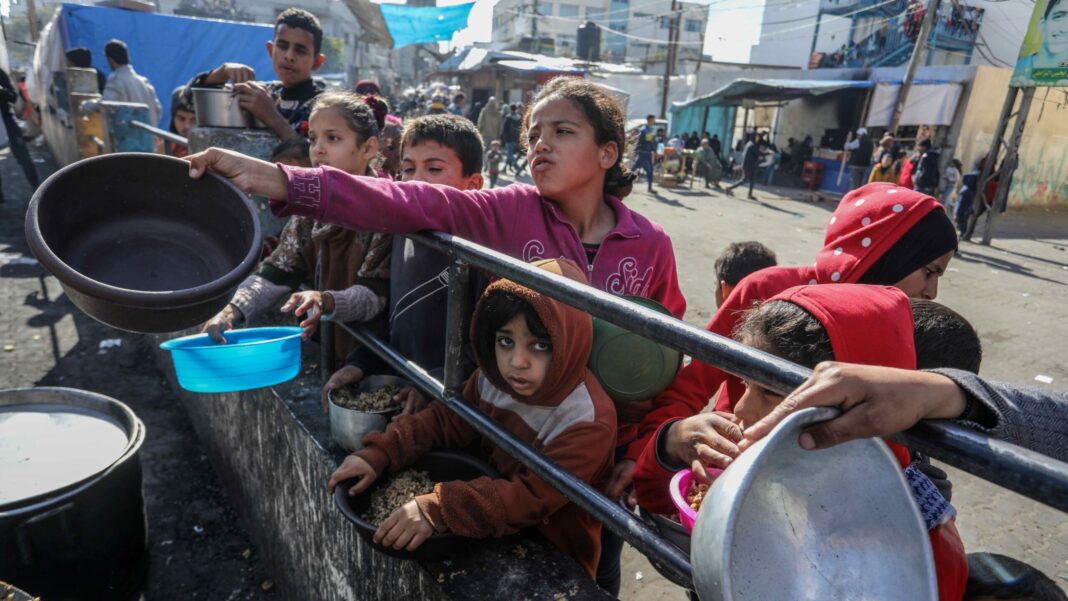
Rayburn’s intervention at the Council’s 26 August meeting cut through the language of diplomatic progress that has surrounded the ceasefire announced in October 2025. Although food availability has improved and the immediate threat of famine has receded, she warned that this could not be celebrated while Palestinians were still being killed by airstrikes, shelling and gunfire.
“It is a disturbing marker of progress to celebrate that a child that may no longer be at imminent risk of starving to death may still be killed at any moment,” she said, adding that surviving children could carry the physical and psychological consequences of hunger, destruction and deprivation for the rest of their lives.
At the scale inflicted on Gaza, Rayburn warned, those consequences would be felt for generations.
A ceasefire that has not delivered safety
The latest humanitarian figures lend considerable weight to Rayburn’s warning. According to an OCHA situation report published on 29 August, 47 Palestinians were reported killed and 176 injured between 12 and 26 August. Citing Gaza’s Ministry of Health, which operates under the territory’s de facto authorities, OCHA said the reported toll since the ceasefire was announced on 10 October 2025 had reached 1,303 dead and 4,336 injured. These are attributed figures and have not been independently verified by the United Nations.
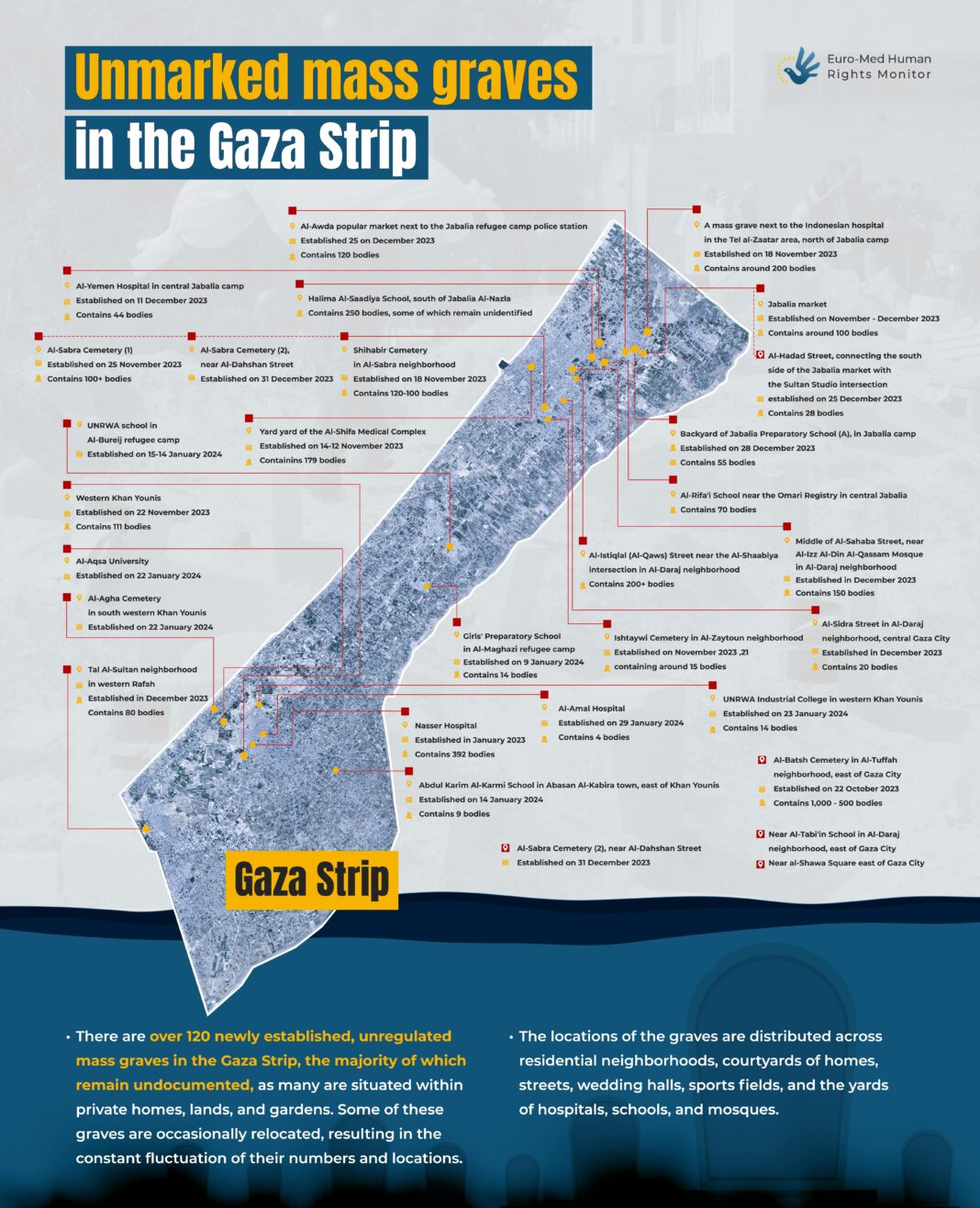
UNICEF had already reported a stark measure of the continuing danger. In the first 300 days after the ceasefire announcement, at least 300 children were reportedly killed, an average of one child each day. Families were crowded into roughly one third of the Gaza Strip, the agency said, living among unsafe shelters, rubble, accumulated waste, damaged sanitation systems and contaminated water.
The violence has also struck the infrastructure meant to keep civilians alive. OCHA reported that airstrikes on 23 and 24 August damaged United Nations and humanitarian warehouses in Deir al Balah. Nutrition supplies intended for children, pregnant women and breastfeeding mothers were rendered unusable at one facility, while damage to a UNICEF supported water well and desalination plant disrupted safe drinking water for more than 4,000 people.
Around two thirds of Gaza remain inaccessible or subject to severe restrictions, according to the United Nations. An estimated 1.98 million people, representing 94 per cent of the population, require shelter assistance or essential household items, while 58 per cent face critical or catastrophic shelter needs. Against that reality, Rayburn said, a reduction in hunger cannot be used as a substitute for protection.
“This is not success,” she told the Council. What is required is sustained humanitarian access, restoration of basic services, meaningful recovery and conditions in which people can begin to live, rather than merely trying to survive another 24 hours.
What the Board of Peace promised
The Board of Peace emerged from President Trump’s plan for Gaza and was endorsed by the Security Council through Resolution 2803 in November 2025. The resolution passed with 13 votes in favour, while China and Russia abstained. It welcomed the Board as a transitional administration responsible for coordinating reconstruction and authorised it to establish a temporary International Stabilization Force. Russia warned at the time that the Council was granting enormous authority to mechanisms whose practical details remained unclear, according to the United Nations account of the vote.
The White House subsequently announced that the body would operate under Trump’s chairmanship, with former United Nations envoy Nickolay Mladenov serving as High Representative for Gaza. The structure also includes the National Committee for the Administration of Gaza, headed by Palestinian technocrat Ali Sha’ath, and a proposed stabilization force intended to support demilitarisation, security and reconstruction.
For Rayburn, however, the mere creation of institutions is not evidence that those institutions are working. She said the relevant measure was whether the Board, the stabilization force and the Palestinian administrative committee were providing immediate protection, relief and safety, while moving Gaza towards the legal and political destination already identified by international law.
That destination, she argued, is the end of Israel’s unlawful presence and the realisation of the Palestinian people’s right to self-determination. Her formulation reflected the International Court of Justice’s July 2024 advisory opinion, which found Israel’s continued presence in the Occupied Palestinian Territory unlawful and said it must be brought to an end as rapidly as possible.
Instead, Rayburn accused the Board of allowing Palestinian rights to become subordinate to what she described as the “far-reaching, capricious and arbitrary requirements” of the occupying power.
A charter written around one man
The Board’s formal rules explain why its accountability has become such a central concern. Its official charter does not confine the institution to Gaza. It gives the body a mission to promote stability and governance in any “areas affected or threatened by conflict”, while making no mention of Gaza or Palestinians at all.
Membership is by invitation of the chairman. States ordinarily receive three year terms, but that limit does not apply to a state contributing more than $1 billion during its first year. Decisions of the Board are subject to the chairman’s approval, and he can veto decisions of the Executive Board at any time. The charter names Trump as the inaugural chairman without setting a fixed term. His replacement is contemplated only if he resigns voluntarily or becomes incapacitated, and the successor is to be designated by him.
The same document allows the Board to create and dissolve subsidiary bodies, open bank accounts and receive or disburse public and private funds. It gives the chairman final authority to interpret the charter and permits the Board’s mandate to be renewed or dissolved at his discretion. Although a Palestinian technocratic committee has been created to administer Gaza, the charter itself guarantees Palestinians no seat, vote or veto within the institution that controls the larger political and financial architecture.
The result is not a conventional multilateral body governed by equal states, treaty based checks or an independent secretariat. It is a chairman-centred organisation in which Trump controls entry, tenure, interpretation and the ultimate validity of decisions. More Perfect Union’s investigation argues that this design turns peace from a public obligation into a privately directed platform. Even without accepting that conclusion in full, the charter leaves unusually few institutional checks on the person at its centre.
Billions pledged, but the official fund stood empty
The struggle over power is matched by uncertainty over money. The World Bank says Gaza’s recovery and reconstruction needs exceed $67 billion. It established the Gaza Reconstruction and Development Fund to receive donor contributions, but describes itself as a limited trustee. Once money is transferred, the fund’s governing body, a legally independent entity, is responsible for decisions and implementation; the Bank says it has no decision-making role.
In May, the Financial Times reported that the World Bank fund still had a zero balance, despite $7 billion in commitments announced by participating states and a separate $10 billion pledge from the United States. According to the newspaper, some money had instead been paid into a JPMorgan account used by the Board and not subject to the same independent transparency requirements. No reconstruction contracts had been issued at that point.
A delayed transfer is not by itself proof that funds have been misused. Pledges frequently take time to become cash, and an operational account can have legitimate administrative purposes. The deeper concern is that a body able to hold public and private money, create subsidiaries and operate accounts under a chairman with broad personal authority has not offered the public a clear, consolidated account of what has been received, where it is held, who authorises expenditure and what conflict safeguards apply. A Carnegie Endowment analysis warned that the World Bank’s pass-through role does not, on its own, resolve those questions or give Palestinians meaningful control over reconstruction finance.
Gaza presented as an investment proposition
At the Board’s inaugural meeting in February, Marc Rowan, the chief executive of private equity giant Apollo Global Management and a member of the Board’s executive structure, presented Gaza in the language of an asset portfolio. In a public transcript of the meeting, he valued the coastline at $50 billion, rebuilt housing at more than $30 billion and infrastructure at more than $30 billion. In total, he said, Gaza contained $115 billion in value that “just needs to be unlocked and financed”.
Reconstruction plainly requires enormous investment, and putting a value on housing or infrastructure is not evidence of corruption. Yet the vocabulary matters in a territory whose inhabitants have endured mass displacement and whose political future remains unresolved. It invites a question largely absent from the presentation: who owns the value to be unlocked, who chooses the projects and whether Palestinians will be rights-bearing decision makers or merely the intended beneficiaries of assets managed by others.
More Perfect Union traced that concern through a network of pre-existing commercial relationships around three prominent figures: Rowan, Trump’s son-in-law Jared Kushner and special envoy Steve Witkoff. Kushner’s Affinity Partners grew to $4.8 billion in assets after a $1.5 billion injection from Qatar’s investment authority and an Abu Dhabi fund, on top of an earlier $2 billion commitment from Saudi Arabia’s Public Investment Fund, Reuters reported.
Affinity also invested in Israel’s Phoenix Financial. After selling part of its holding in July 2026, it still owned 7.4 per cent and remained the company’s largest single shareholder, according to Globes. Phoenix and Apollo had already announced an investment partnership of up to $2 billion. Human rights researchers have separately said Phoenix holds shares in companies named in a United Nations database for activities connected to Israeli settlements; that is an allegation about companies in its portfolio, not a finding that Phoenix itself appears in the database.
Witkoff’s private real estate group has also done business with Apollo, including a reported $100 million refinancing in 2025. He co-founded World Liberty Financial with members of the Trump family before entering government. In 2025, the company’s USD1 stablecoin was selected for a $2 billion investment by Abu Dhabi backed MGX into Binance, Reuters reported. The White House later said Witkoff was taking steps to divest from his financial interests, while members of his family remained active in the business, according to a separate Reuters report.
These links create potential conflicts and an appearance problem; they do not prove that Kushner, Rowan or Witkoff has used the Board to obtain a contract or personal return. No evidence cited by More Perfect Union showed that any of the three had formalised a Gaza deal through the Board. The public-interest question is whether such relationships are being disclosed and managed under enforceable rules before billions of dollars in reconstruction work begin, not after benefits have already been distributed.
Hunger improves, but dependence remains
There has been measurable progress in food access since the October ceasefire, but the improvement is both incomplete and fragile. A July 2026 assessment from UNICEF, the World Food Programme and the Food and Agriculture Organization estimated that 1.4 million people, or 67 per cent of Gaza’s population, were still experiencing crisis or worse levels of acute food insecurity. That was down from 1.6 million people at the end of 2025, while approximately 212,000 remained in emergency conditions.
The same assessment warned that 74,000 children were expected to require treatment for acute malnutrition during the following year, alongside about 25,000 pregnant and breastfeeding women requiring nutritional support. It attributed the improvement largely to the expansion of humanitarian food and nutrition programmes, while warning that funding shortfalls, the continued closure of all but one cargo crossing and restrictions on farmland, fishing and agricultural imports could quickly reverse the gains.
That is why Rayburn rejected aid volume as the defining measure of success. Regardless of the number of trucks or pallets entering the territory, she said, the international community had normalised a system in which roughly two million people remained trapped and dependent upon assistance controlled and restricted by the same state that had created the scarcity.
The damage also reaches beyond acute hunger. A Gaza nutrition survey released by UNICEF in August found that 12.2 per cent of children under five were stunted, meaning approximately one in eight had suffered impaired growth. Although acute malnutrition had fallen, the survey warned that stunting can cause lifelong and irreversible cognitive and developmental harm.
Rayburn’s argument was therefore not that increased food deliveries were meaningless. It was that keeping people barely alive, without freedom, security or a path to recovery, could not reasonably be described as peace.
“Deliver and stay silent”
The most detailed part of Rayburn’s testimony concerned Israel’s treatment of international aid organisations. She said more than 30 respected organisations had been deregistered under the Board’s watch, despite their proven ability to work in some of the world’s most complex emergencies.
The dispute dates to a new Israeli registration system introduced in March 2025. United Nations agencies and humanitarian organisations warned that the rules required international NGOs to surrender sensitive personal information about Palestinian employees and exposed them to exclusion for criticising Israeli government policy. By July 2025, Israeli authorities had rejected repeated requests from 29 NGOs to send supplies into Gaza on the basis that they were “not authorised”, according to an OCHA statement by the Humanitarian Country Team.
Israel’s own published registration guidelines allow applications to be refused or registrations revoked on numerous grounds, including support for boycotts, participation in what the government calls delegitimisation campaigns, or support for legal proceedings against Israeli security personnel in foreign or international courts. The document also states that its list of considerations is not exhaustive.
Rayburn said the message delivered during discussions between NGOs and Israeli authorities in 2025 was unmistakable: “Deliver and stay silent, or your delivery will not be enabled at all.”
She told the Council that international NGOs account for more than half of active health partners, provide more than 100,000 general clinical consultations each month and carry much of the burden of Gaza’s shelter response. They also support the inpatient treatment system for children suffering the most dangerous forms of malnutrition.
Those claims are consistent with the scale of operations documented by the Humanitarian Country Team before the deregistrations took effect. In December 2025, it reported that 44 of Gaza’s 80 active health partners were international NGOs, that the organisations supported all five stabilisation centres treating children with life threatening malnutrition and that they had implemented 74 per cent of shelter and essential item activities since the beginning of that year. The United Nations warned that no other part of the relief system could immediately absorb their workload.
Rayburn said she had personally placed evidence of that operational dependence before Israeli officials on several occasions, including in meetings attended by permanent members of the Security Council. Israel therefore understood the likely consequences of deregistration, she argued, before proceeding with the policy.
Scissors, wheelchairs, engine oil and onions
Rayburn then described a bureaucracy of obstruction extending into the most ordinary items required to sustain life and run an emergency operation. She said Israeli authorities continued to reject medical supplies classified as having a possible dual use, including scissors, crutches, wheelchairs and prosthetic limbs. Specialist international medical staff were still being refused entry, while restrictions on engine oil had driven its price to as much as 45 times the normal level.
Fresh produce had also been refused. Watermelons and onions, she said, were rejected because they did not fall within a humanitarian entry policy that had never been fully published or made available to the organisations expected to follow it.
These restrictions have practical consequences across every part of the response. The latest OCHA report said shortages of medicines, dialysis supplies, laboratory reagents and oxygen equipment were threatening health services. It also recorded that approximately 10 UNRWA vehicles remained out of service because lubricants were unavailable, while explicitly calling for restrictions on engine oil, spare parts and agricultural inputs to be eased.
Rayburn further accused Israel of moving the supposedly fixed yellow ceasefire line almost daily, progressively shrinking the area in which Palestinian civilians and aid agencies could operate. She said the movement of the line had caused humanitarian organisations to lose access to at least 85 facilities, including water points, schools and health clinics.
The effect, she argued, was to preserve decisive Israeli control over the territory while the Board of Peace supplied an international structure around it. The Board had “done nothing to wrest control of the Gaza Strip” from Israel and had instead functioned to further entrench its unlawful presence, she said.
Rayburn grounded her challenge in Article 59 of the Fourth Geneva Convention. The provision requires an occupying power to agree to and facilitate relief schemes when an occupied population is inadequately supplied. The International Committee of the Red Cross’s explanation of the law makes clear that such relief may be delivered by states or impartial humanitarian organisations.
“Humanitarian assistance by its nature cannot be conditioned,” Rayburn said.
From “New Gaza” to a controlled pilot near Rafah
The contrast between the Board’s investment vision and the present reality is visible in the fate of its first proposed development. The sweeping promise of a “New Gaza” has narrowed, at least initially, to a pilot settlement near Rafah, inside an area under Israeli military control. Reuters reported in July that the Board was planning a humanitarian zone intended to demonstrate its security and reconstruction model.
Subsequent reporting described temporary accommodation in portable units or cabins for as many as 50,000 people, alongside basic services and a security system involving screened Palestinian police backed by the International Stabilization Force. The National reported that prospective residents would be vetted and that the scheme had been approved as a pilot before expansion elsewhere in Gaza.
The Board presents the project as a practical way to move families out of tents, establish security and begin reconstruction while wider political negotiations continue. Critics see a different risk: a population channelled into controlled enclaves, with movement and eligibility determined by external authorities before Palestinians have secured either sovereignty or a right to return to their own neighbourhoods. A Carnegie analysis warned that rebuilding in Israeli-held territory could consolidate displacement and divide residents according to security classifications.
That is the context behind Rayburn’s pointed reference to “planned communities” in southern Gaza. Her concern was not simply whether the cabins would be adequate. It was whether an ostensibly humanitarian project might establish a durable system for deciding where Palestinians may live, who is admitted and who carries weapons around them.
The contractors return
The answer may include private security companies. More Perfect Union’s investigation revisited the Gaza Humanitarian Foundation, the US and Israeli backed distribution system that operated outside the established United Nations aid network during 2025. Its sites used Safe Reach Solutions for logistics and UG Solutions for armed security. Reuters reported that Safe Reach was backed by Chicago private equity firm McNally Capital and led by former CIA officer Phil Reilly, while UG recruited armed American veterans for work in Gaza.
The system became synonymous with danger around food distribution points. Two US contractors told the Associated Press that live ammunition, stun grenades and pepper spray were used as Palestinians sought aid, sometimes when there was no apparent threat. The Gaza Humanitarian Foundation and UG Solutions rejected claims that their personnel deliberately or indiscriminately fired on civilians. United Nations experts nevertheless called for the mechanism to be dismantled, saying people had been killed and injured while trying to obtain food and that aid delivery had been militarised, according to an OHCHR statement.
The foundation closed in November 2025, but the private security model did not disappear. In February 2026, Reuters reported that UG Solutions had proposed a role supporting the Board of Peace’s security system, that the proposal had been received positively and that the company was advertising and recruiting for potential jobs. A proposal is not a contract, and the reporting did not establish that UG had been hired. It did show that a company associated with the most controversial aid operation of the war was actively positioning itself for the next phase.
Morgan Lerette, a former US Army soldier who later worked for Blackwater in Iraq, told More Perfect Union that this was precisely the danger of substituting a contractor for a public peacekeeping institution. A private military company answers first to its contract, he argued, and its personnel may be forced to make life-and-death decisions in a legal grey zone without the command accountability expected of a state military.
Blackwater’s history gives that warning weight. In the 2007 Nisour Square killings in Baghdad, US prosecutors established that Blackwater guards had killed 14 unarmed civilians and wounded 20. The US Department of Justice described the attack as an unprovoked shooting on civilians. The company later changed ownership and name, but Nisour Square remains a defining example of what can happen when heavily armed commercial personnel exercise public force amid weak jurisdiction and divided chains of command.
The analogy has limits. UG Solutions is not Blackwater, and no evidence establishes that the Board intends to reproduce the rules under which Blackwater operated in Iraq. The lesson is institutional: when security is outsourced, the public needs to know who sets the rules of engagement, which court has jurisdiction, who investigates civilian harm and whether the people being policed have any route to a remedy.
Immunity before accountability
Those questions became sharper in June when The Guardian reported on a draft Board of Peace resolution that proposed extensive immunity in Gaza for Board members, personnel, the stabilization force and contractors. The reported language covered protection from arrest and detention and immunity from legal proceedings for acts performed in an official capacity.
The draft had not been adopted in the form reported, and its effect outside Gaza remained unclear. It would therefore be wrong to say that private contractors already possess blanket immunity or that the proposal could automatically displace the jurisdiction of an international court. The Board’s charter does, however, separately commit the institution and its personnel to privileges and immunities to be arranged with host jurisdictions. The breadth of any final agreement will determine whether accountability is real or merely promised.
The dispute also sits beside a wider US campaign against the International Criminal Court. Secretary of State Marco Rubio has imposed sanctions on court officials over investigations involving Israel, and the ICC’s president said in August that Washington was pursuing an unprecedented effort to obstruct the court, Reuters reported. That campaign is legally distinct from the Board’s immunity proposal, and there is no evidence that the two were drafted as a single plan. Together, however, they heighten concern that the new security structure could be built faster than any credible mechanism for investigating it.
This is the strongest point of connection between Rayburn’s testimony and More Perfect Union’s investigation. Rayburn described a system in which Israeli authorities can obstruct impartial organisations, block essential goods and repeatedly alter the space available to civilians. The investigation asks what happens if that same environment is layered with chairman-controlled finance, investor-led reconstruction and armed contractors whose legal exposure has not been clearly defined.
The Board, Israel and the United States push back
Rayburn’s condemnation was not the only account presented to the Council. Mladenov defended the new 15 point roadmap as a historic opportunity, saying Hamas and other armed factions had agreed to surrender their weapons and transfer civilian and security authority to a Palestinian transitional administration recognised by the United Nations. He described the principle as one authority, one law and one weapon, with each phase dependent on verified performance rather than a fixed timetable.
In the Board’s telling, the choice is between a demilitarised Gaza that can be rebuilt and reconnected to the world, or a return to Israeli reoccupation and recurring war. Mladenov said he had not heard a credible alternative.
Yet the Board’s own representative also criticised Israeli conduct. He questioned continued strikes that were not responses to immediate threats and called Israel’s restrictions on adequate shelter unacceptable as winter approached. His remarks revealed that even the body established to implement Trump’s plan recognised serious Israeli actions as an obstacle to its success.
Israel’s Deputy Permanent Representative, Noa Furman, told the Council that Hamas must disarm before the plan could succeed. She said food entering Gaza exceeded United Nations humanitarian requirements and that Israel had created a working group with the Board to improve supplies of food, medical equipment, shelter materials and sanitation items.
United States Ambassador Mike Waltz criticised Rayburn for failing to address Hamas’s treatment of Palestinians while focusing her attack on the Board and Israel. He pointed to the release of the remaining hostages, increased aid deliveries, Hamas’s stated acceptance of disarmament and an Israeli military pullback as evidence of progress. The competing presentations were reported from the Council chamber on 27 August.
Those defences do not answer Rayburn’s central charge. If the Board claims credit for increased aid and the easing of famine conditions, she said, it must also accept responsibility for the killings, deregistrations, blocked medical supplies and movement restrictions occurring under its authority. It cannot claim the positive developments while treating continued violations as somebody else’s failure.
“The Board of Peace is either responsible for all developments, good and bad, or none of them,” she told the Council.
A demand that the Security Council see Gaza for itself
Rayburn closed by turning responsibility back onto the 15 members of the Security Council. In authorising the Board of Peace, she said, the Council had not surrendered its primary responsibility under the United Nations Charter, nor suspended the international legal order within which that responsibility must be exercised.
She asked whether Council members truly understood the trajectory on the ground, why humanitarian organisations were still pleading for engine oil and fresh produce almost a year into the ceasefire, and what purpose would be served by “planned communities” being constructed in southern Gaza under the Board’s mandate. She also asked whether those communities were compatible with the obligation to protect fundamental Palestinian rights.
If diplomats could not answer those questions with confidence, Rayburn said, they should not simply accept AIDA’s assessment. They should use their powers of inquiry and travel to Gaza themselves.
“Let the reality on the ground, the facts, our colleagues and Palestinians speak to you themselves,” she said. “We are here, and we are ready to receive you.”
Her challenge exposed the widening gulf between the institutional language of transition and the daily experience of Palestinians. The Board of Peace presents itself as the mechanism that ended the war and opened the way to reconstruction. Rayburn described a population still confined and attacked, an aid system held at breaking point and an occupying power whose control has not been displaced by the new international machinery.
More Perfect Union’s reporting adds a second gulf, between public responsibility and private power. The institution directing the transition is governed by a charter that concentrates authority in Trump; its official World Bank fund stood empty while money was reported elsewhere; its most visible reconstruction pitch valued Gaza as an investment asset; and private contractors connected to a discredited aid model have sought roles in its security system. None of that proves a completed scheme to profit from Gaza. It does establish the conditions in which conflicts of interest, opaque spending and weak accountability could become structural rather than exceptional.
That makes Palestinian agency the decisive test. Gaza’s residents are not raw material for an investment plan, a population to be sorted into controlled communities or beneficiaries whose rights can be postponed until investors and security planners have finished their work. Reconstruction worthy of the name would place them at the centre of decisions about land, housing, policing and public money, with enforceable legal protections and transparent oversight.
The dispute is ultimately about the meaning of peace. If it means fewer people facing immediate starvation while civilians remain exposed to lethal force, deprivation and permanent displacement, the Board can point to limited gains. If it means protection, rights, accountable government, recovery and freedom from occupation, Rayburn’s verdict before the Security Council remains the harder one to escape.
“The Board of Peace is failing.”