
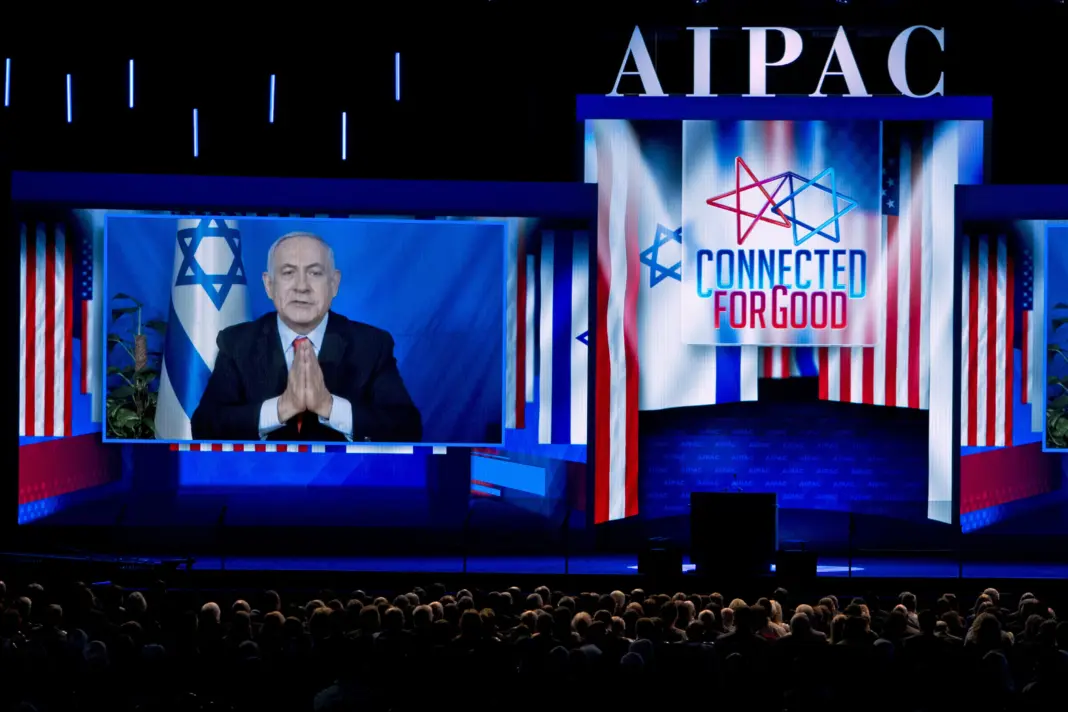

While support for Israel among Americans has fallen sharply since the war in Gaza began, dozens of members of the United States Congress have continued accepting lavish, all-expenses-paid trips to Israel funded by a powerful affiliate of the pro-Israel lobby. New disclosures reveal millions of dollars have been spent flying lawmakers and congressional staff across the Atlantic, placing them in luxury hotels, arranging private briefings with Israeli officials and military contractors, and introducing them to some of the country’s most controversial political figures.
The trips, organized by the American Israel Education Foundation (AIEF), a charitable affiliate of the American Israel Public Affairs Committee (AIPAC), have long been a fixture of Washington politics. Yet the latest revelations arrive at a time when Israel faces mounting international criticism over its conduct in Gaza and increasing accusations of genocide from human rights organizations, legal scholars and international institutions.
According to congressional ethics filings reviewed by The Guardian, at least 78 members of Congress, including 26 Democrats and 52 Republicans, participated in AIEF-sponsored delegations to Israel following the October 7 attacks of 2023. The organization reportedly spent more than $4.2 million on these trips, averaging over $26,000 per participant. Several lawmakers took multiple visits during this period.
For critics, the optics are striking.
As Gaza descended into one of the most devastating conflicts in modern Middle Eastern history, American politicians were being hosted at luxury hotels, dining in upscale restaurants, touring military facilities and receiving carefully curated briefings from Israeli officials and advocates of settlement expansion.
Among those attending multiple trips were veteran Democratic lawmakers including Steny Hoyer, Greg Landsman and Brad Schneider. Ethics records show some trips exceeded $40,000 in value when family members accompanied lawmakers. Schneider’s trip with his wife reportedly cost more than $44,000.
The AIPAC Connection
Although AIEF operates as a separate nonprofit organization, its relationship with AIPAC has long drawn scrutiny. The arrangement allows the lobbying giant to fund congressional travel indirectly while complying with federal restrictions that prohibit lobbying organizations from directly financing overseas trips for public officials.
The foundation shares infrastructure with AIPAC and has been described by critics as an extension of the lobbying network’s broader influence operation in Washington. Previous reporting showed that in 2019 alone AIEF funded 129 congressional trips costing more than $2.3 million.
Stephen Walt, professor of international relations at Harvard University and a longtime analyst of the Israel lobby’s influence on U.S. foreign policy, argued that participation in such delegations sends an important signal.
“These trips have been a standard tool for building support for Israel on Capitol Hill,” Walt observed. Agreeing to participate, he suggested, functions as a political litmus test demonstrating support for Israel and alignment with influential donors.
AIEF rejects suggestions that the trips serve as lobbying exercises. The organization says the missions are educational, providing participants with a broad understanding of the U.S.-Israel relationship, regional security concerns and opportunities for peace.
Luxury Tours During War
One of the most controversial aspects of the disclosures is the timing.
Congressional travel to Israel briefly paused after the October 7 attacks but resumed in March 2024, while the war in Gaza was still raging. Subsequent delegations continued through 2025 and into 2026, even as civilian casualties mounted and humanitarian agencies warned of catastrophe.
An August 2025 delegation involving at least 15 Democratic lawmakers illustrates the nature of these trips.
Participants included Wesley Bell, George Latimer, Eugene Vindman and Gil Cisneros. Bell and Latimer had both benefited from substantial support from AIPAC’s Super PAC during their election campaigns, which helped defeat progressive incumbents Cori Bush and Jamaal Bowman.
During the visit, lawmakers met Israeli Prime Minister Benjamin Netanyahu, opposition leader Yair Lapid and U.S. Ambassador Mike Huckabee. They stayed at the prestigious King David Hotel in Jerusalem and the luxury Magdala Hotel in Galilee. The itinerary included visits to defense contractor facilities and archaeological sites in occupied East Jerusalem linked to controversial settlement organizations.
One featured speaker was Tal Becker, Israel’s lead legal representative defending the country against genocide allegations before the International Court of Justice. Another excursion took lawmakers to the City of David archaeological complex, operated by the settler organization Elad, which has been accused of using archaeology to advance Jewish settlement expansion in Palestinian neighborhoods.
The delegation arrived at a pivotal moment. During the trip, Israel’s security cabinet approved plans for a full military reoccupation of Gaza City. Within days of the lawmakers’ departure, UN-backed food security monitors confirmed famine conditions in Gaza.
Settlements and Annexation
Some of the trips included visits to occupied Palestinian territory and meetings with politicians advocating permanent annexation of the West Bank.
In February 2025, congressional staffers received briefings in the settlement of Alfei Menashe, located beyond the Green Line in territory regarded as occupied under international law. The settlement itself has been the subject of longstanding legal and diplomatic controversy.
Another delegation heard from Israeli parliamentarian Ohad Tal of the Religious Zionist Party, which supports the annexation of Palestinian territories and is closely associated with Finance Minister Bezalel Smotrich’s settlement expansion agenda.
Critics argue that such encounters provide American lawmakers with a highly selective view of the conflict while exposing them to some of the most hardline voices in Israeli politics.
Public Opinion Moves in the Opposite Direction
The continued popularity of these trips among elected officials contrasts sharply with changing public sentiment.
Recent polling found that approximately eight in ten Democrats and Democratic-leaning independents now hold unfavorable views of Israel. Among Americans overall, roughly six in ten express similar opinions.
The growing gap between voters and elected representatives has become increasingly visible inside the Democratic Party, where grassroots activists have mounted campaigns against AIPAC-backed candidates and criticized lawmakers for accepting financial and political support from pro-Israel organizations.
Although AIPAC remains one of the most powerful lobbying forces in Washington, recent electoral contests suggest its influence may be facing new challenges. Progressive candidates have become increasingly willing to criticize the organization publicly, while growing opposition to Israeli policies has transformed what was once a bipartisan consensus into one of the most contentious issues in American politics.
Continuity Amid Controversy
For observers such as Walt, the latest disclosures reveal less about a new phenomenon than the endurance of an old one.
The congressional delegations, he argues, represent continuity rather than change. Yet the environment in which they operate has altered dramatically. Israel’s political system has moved further to the right, settlement expansion continues, and the war in Gaza has generated unprecedented international criticism.
As a result, maintaining traditional levels of support is becoming increasingly difficult.
The trips continue. The luxury accommodations remain. The meetings with Israeli officials persist. But beyond the carefully managed itineraries, a growing number of American voters are asking whether their elected representatives are seeing the full picture of a conflict that has reshaped global perceptions of Israel and transformed the political landscape surrounding one of Washington’s most influential lobbying networks.