
When a multi-billion dollar Silicon Valley merger was announced in 2024, most coverage focused on the price tag. Palo Alto Networks, one of the largest cybersecurity companies in the world, acquired Israeli firm CyberArk for $25 billion in a deal hailed as a triumph of the tech sector. But behind the headlines was a story few were willing to explore: both companies were founded and led by veterans of Israel’s elite cyber-intelligence unit, Unit 8200.
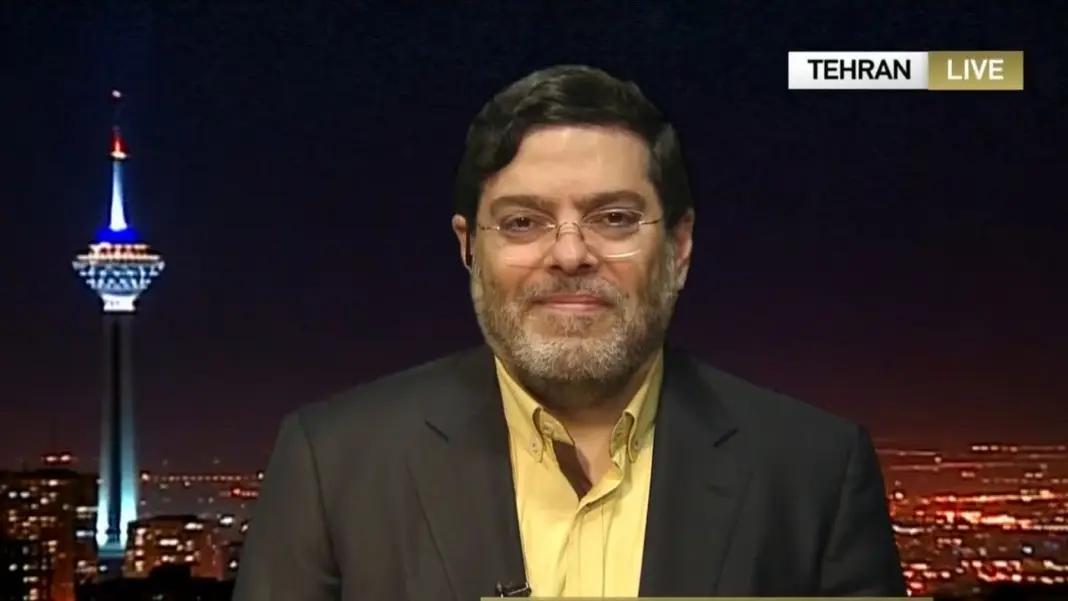
For journalist Murtaza Hussain of Dropside News, the acquisition was not an isolated case. His investigation, recently featured on Al Jazeera’s podcast The Take, uncovered a vast and under-examined network of former Israeli intelligence officers embedded deep within the American tech industry.
“We documented more than 1,400 Israeli intelligence veterans working in U.S. tech firms,” Hussain explained. “Of those, about 900 came directly from Unit 8200. These aren’t entry-level engineers—they’re in mid- to senior-level roles, in companies that control everything from cloud computing to data security.”
From Military Surveillance to Silicon Valley
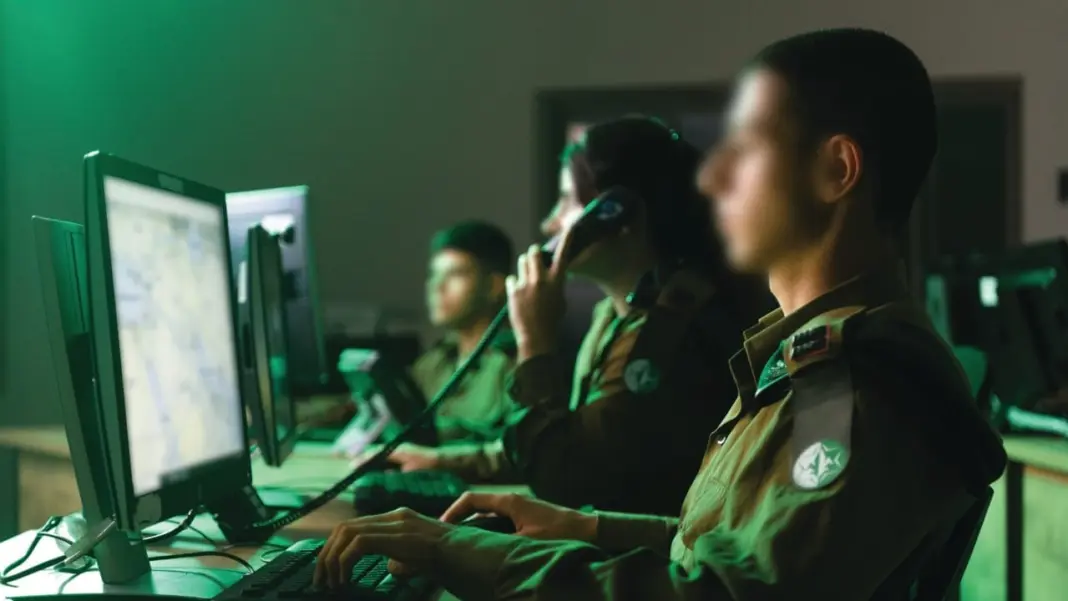
Unit 8200, often described as Israel’s equivalent of the U.S. National Security Agency (NSA), specializes in signals intelligence, mass surveillance, and cyber operations. Its recruits are carefully selected from a young age—identified in middle and high schools for their aptitude in technology, funneled into the unit during mandatory military service, and trained in cutting-edge digital warfare.
“The Israeli state grooms its brightest youth into this unit,” Hussain said. “Instead of serving in the infantry, they’re put into surveillance and cyberwarfare roles. They come out with skills honed not in classrooms but on real operations against Palestinians, Lebanese, Iranians, and other targets.”
After military service, many of these operatives transition into Israel’s booming cybersecurity sector. Startups founded by Unit 8200 alumni often become magnets for foreign investment or takeover. In turn, these companies funnel talent into American giants such as Microsoft, Google, Amazon, and, most prominently, Palo Alto Networks.
Microsoft’s Hidden Role
Perhaps the most striking finding in Hussain’s database was the sheer concentration of Unit 8200 veterans inside Microsoft. More than 250 former members are publicly identified as working for the company, with some holding influential engineering and leadership roles.
This connection goes beyond personnel. Reports suggest that Microsoft has directly partnered with Unit 8200 to build out its cloud infrastructure—technology now believed to underpin Israel’s military surveillance and AI-driven targeting systems in Gaza.
“Microsoft’s customized cloud services allow the Israeli military to store, analyze, and query massive amounts of intercepted data—Palestinian phone calls, texts, emails,” Hussain noted. “That infrastructure makes widescale surveillance and even targeted killing operations possible. Without it, the Israeli military would be far more constrained.”
Microsoft has declined detailed comment, though it has promised a “formal review” of allegations after inquiries by The Guardian.
Gaza as a Testing Ground
The rise of Israel as a “cyber superpower” is no accident. Former Prime Minister Benjamin Netanyahu openly declared his ambition for Israel to become one of the world’s top five cybersecurity powers—a goal he claimed had been achieved.
The Gaza Strip has become one of the key testing grounds for these technologies. AI-driven targeting systems, designed and refined by Unit 8200, have played a central role in the ongoing war. While officials claim the programs improve accuracy, human rights observers argue that they have instead legitimized mass destruction by cloaking indiscriminate strikes in the veneer of algorithmic precision.
“What you’re seeing is AI rubber-stamping targeting decisions,” Hussain said. “It’s marketed as surgical, but in practice it enables indiscriminate bombing, all justified under the guise of technological sophistication.”
For Palestinians, the consequences are catastrophic. AI systems generate mass target lists, producing a scale of destruction unseen in previous wars. For the tech companies that provide the backbone—cloud services, data centers, analytics software—the ethical questions are largely absent. Profit, not accountability, drives the partnership.
The Risks at Home
The ethical implications abroad are grave. But Hussain warns that the risks also extend to Americans who depend on these very same companies for data security.
“Imagine you’re a U.S. bank using Palo Alto Networks to secure sensitive data,” he said. “The people running the cybersecurity may have direct or indirect ties to a foreign intelligence service. If we were talking about Russian or Chinese intelligence veterans, everyone would immediately grasp the danger. But because it’s Israel, those alarms are muted.”
The concern is not that every former intelligence officer is actively engaged in espionage. Most are simply pursuing lucrative careers in tech. But the structure of Israeli military service creates a “moral hazard”: most remain reservists, potentially subject to recall. And as history has shown, intelligence officers rarely leave their past behind entirely.
In times of crisis, whether military conflict or national emergency, loyalties can be tested. Access to sensitive corporate or personal data could become a tool of state power—used in ways that bypass American law and privacy protections.
A Precedent of Espionage
Skeptics may argue that Israel is a close U.S. ally, unlike adversaries such as Russia or China. Yet history tells a more complicated story.
The most infamous case came in the 1980s, when Jonathan Pollard, a U.S. Navy analyst, was convicted of passing top-secret documents to Israel—a breach so severe that some intelligence officials say the full damage is still unknown. More recently, Israel’s cyber firms have been implicated in selling spyware like Pegasus, used by governments worldwide to surveil journalists, activists, and dissidents.
The CIA has reportedly ranked Israel among the top counterintelligence threats to the United States, citing both government espionage and corporate theft of trade secrets.
“These concerns aren’t hypothetical,” Hussain stressed. “There’s a long record of Israeli espionage inside the U.S., both at the government level and in corporate contexts.”
Surveillance Capitalism Meets Spycraft
The integration of Unit 8200 veterans into Silicon Valley coincides with a broader global phenomenon: the rise of surveillance capitalism, where data has become the most valuable commodity.
Google and Facebook already pioneered models that monetize user behavior and personal information. What makes the Israeli case different is that the pipeline begins in a military-intelligence environment. Skills developed through monitoring Palestinians or Iranian communications are later applied to consumer technologies, blurring the line between civilian applications and state surveillance.
The effect is twofold:
- Economic power. Billions of dollars in acquisitions and venture capital flow from Silicon Valley into Tel Aviv, enriching former intelligence officers and entrenching their influence in the global tech sector.
- Political power. These networks help shape the culture of the industry itself. Once a hub of liberal counterculture, Silicon Valley has gradually shifted toward a worldview more aligned with security-state priorities.
“The people coming into leadership roles are veterans of an intelligence apparatus,” Hussain observed. “It’s inevitable that their worldview filters into the culture of these companies.”
What Could Go Wrong?
So far, the risks are mostly theoretical. But experts caution that surveillance technologies have a way of exceeding their original mandate.
The NSA’s warrantless wiretapping, exposed by Edward Snowden, began as a counterterrorism tool after 9/11 before morphing into a vast global monitoring apparatus. East Germany’s Stasi once relied on informal cooperation from citizens working in private industry to expand its domestic spying network.
The danger, Hussain argues, is that the same patterns could emerge again. “When there’s an emergency, whether real or manufactured, people with access to sensitive data can be pressured to hand it over. The temptation is strong. And by then, it’s too late to put safeguards back in place.”
The Invisible Threat
The true scale of this penetration remains unknown. Hussain’s database relies only on self-disclosed résumés and LinkedIn profiles. The real number of Unit 8200 veterans working in U.S. tech could be far larger.
“It’s one of those issues where you don’t realize it’s a problem until it’s too late,” Hussain warned. “By the time you understand the scope, the damage may already be done.”
For now, the marriage between foreign intelligence and American big tech remains largely unscrutinized. Yet as the digital infrastructure of daily life—from banking to communication to healthcare—becomes ever more dependent on these firms, the stakes grow higher.
“This isn’t just about Israel or Palestine,” Hussain said. “It’s about the future of privacy, freedom of speech, and the kind of surveillance society we are building. Anyone who cares about core democratic values should be paying attention.”