


More than 100 former ambassadors and senior officials have urged Britain and France to turn recognition of Palestine into concrete action, calling for trade restrictions, an arms embargo and penalties against businesses involved in Israeli settlements.
More than 100 former British and French diplomats have issued an extraordinary joint appeal for action against Israel, warning that Palestine is being “erased” while Western governments continue to rely on declarations that have failed to halt the destruction of Gaza or the expansion of Israeli settlements across the occupied West Bank.
In a letter addressed to French President Emmanuel Macron and British Prime Minister Andy Burnham, 102 former ambassadors and senior diplomatic figures, comprising 52 French signatories and 50 British signatories, accuse the Israeli government of pursuing policies that amount to ethnic cleansing. They argue that Britain and France must now use their economic, military and diplomatic influence to defend Palestinian self determination and preserve what remains of the possibility of an independent Palestinian state.
The intervention is significant not only because of the number of signatories, but also because many of them served in the Middle East at the highest levels of government. The British names include former United Nations envoys Jeremy Greenstock and Emyr Jones Parry, as well as Edward Chaplin, a former Foreign Office director for the Middle East. French signatories include Patrice Paoli, a former Middle East director at the French foreign ministry, and Stanislas de Laboulaye, a former consul general in Jerusalem.
Collectively, the signatories represent decades of experience in Israel, Egypt, Iran, Bahrain, Syria, Turkey, Kuwait, Saudi Arabia, Qatar and the United Nations. Their message is that conventional diplomatic warnings have reached the limits of their usefulness and that the conduct of the Israeli government now requires consequences.
The letter was shared with The Guardian and Le Monde at a moment of renewed concern about the E1 settlement project, a plan for Israeli construction on strategically important occupied land east of Jerusalem. The former diplomats say that if Britain and France are serious about the Palestinian state they formally recognised in 2025, they must act before Israeli settlement expansion makes that state physically impossible.
Recognition without enforcement
The decision by Britain and France to recognise Palestine in 2025 was presented as a major diplomatic change. Recognition acknowledged that Palestinians possess a right to national sovereignty and that statehood should not remain indefinitely dependent on Israeli consent.
The former diplomats argue, however, that recognition has little practical meaning if Israel is permitted to continue reshaping the land on which a Palestinian state would have to exist. In their assessment, the Israeli government is not merely delaying a negotiated settlement. It is systematically destroying its territorial and political foundations.
Britain and France also carry a particular historical responsibility, the letter says, because of the decisive roles both states played in the creation of the modern Middle East. The signatories call on the two governments to make common cause around what they describe as the region’s central fault line: equal rights for Israelis and Palestinians.
As permanent members of the United Nations Security Council, both countries have repeatedly declared their commitment to international law and to holding those responsible for war crimes and crimes against humanity to account. The former diplomats argue that this commitment must be applied consistently in Palestine if London and Paris are to answer accusations that international law is enforced selectively, with adversaries punished while allied governments are protected from meaningful consequences.
That formulation moves the argument beyond the familiar language of negotiations, confidence building and an eventual two state settlement. It places the emphasis on rights, legal obligations and the widening gap between Western governments’ stated support for Palestinian statehood and their reluctance to impose meaningful costs on an Israeli government working to prevent it.
According to the letter, recognition must now be made real through urgent measures that protect the Palestinian right to self determination. The diplomats accuse the Israeli government of displaying contempt for international law, rulings of the International Court of Justice and repeated United Nations Security Council resolutions.
Their criticism is unusually direct for a group made up of former officials trained in the guarded language of diplomacy. They condemn the crimes committed by Hamas on 7 October 2023, but insist that those attacks cannot justify what they describe as Israel’s systematic destruction of Gaza and its population.
They also reject Prime Minister Benjamin Netanyahu’s assertion that Israel must live by the sword, calling that approach morally wrong and strategically self defeating. In their view, permanent war does not guarantee Israeli security. It destroys the space for negotiation, deepens Israel’s isolation and undermines its claim to democratic legitimacy.
The letter argues that a state cannot credibly present itself as democratic while depriving another people of their land and fundamental rights. The signatories say this contradiction has changed international perceptions of Israel, particularly as images of devastation, hunger, displacement and settlement violence continue to emerge from the occupied Palestinian territories.
Gaza confined, hungry and largely closed to the world
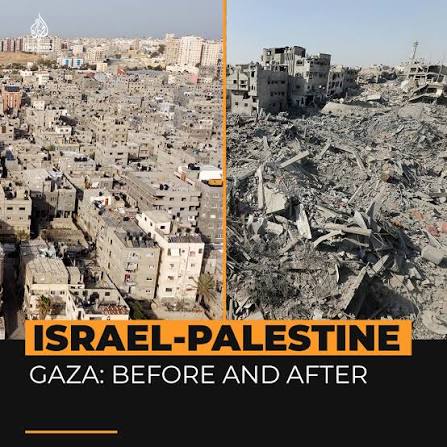
The former diplomats describe approximately two million Palestinians in Gaza as being confined to 30 per cent of a devastated territory, with inadequate food, medicine and shelter. They say more than 1,200 Palestinians have been killed since the ceasefire announced in October 2025, a figure they cite as evidence that the supposed reduction in hostilities has not provided meaningful security for the civilian population.
Their demands reflect the severity of that assessment. They call for unrestricted humanitarian access under the leadership of the United Nations Relief and Works Agency, other United Nations bodies and international non governmental organisations. Crucially, they say that obstruction should carry consequences rather than produce another round of expressions of concern.
The signatories also demand access for journalists, diplomats and parliamentarians. Israel’s restrictions on independent entry into Gaza have made international scrutiny more difficult and have left Palestinian reporters carrying much of the burden of documenting the war, often while confronting displacement, hunger, bereavement and the risk of death themselves.
Diplomacy over an Israeli withdrawal from Gaza has meanwhile been largely channelled through negotiations involving Israel and Jared Kushner, US President Donald Trump’s son in law and envoy. Israel has rejected the latest 15 point, United States led peace plan for Gaza, prompting criticism from eight Muslim majority countries, including the United Arab Emirates, widely regarded as Israel’s closest partner in the Arab world.
Those governments said Israel’s actions were fundamentally undermining collective efforts to secure a just and lasting peace. The dispute illustrates how the war in Gaza has placed increasing strain on the regional diplomatic arrangements that Israel and the United States had hoped to expand.
Among diplomats, an additional question has emerged over Netanyahu’s political strategy. With Israeli elections due on 27 October, some officials have debated whether military and political provocations are intended to draw foreign governments into retaliatory measures that Netanyahu could then use domestically, presenting outside pressure as an attack on Israel rather than a response to his government’s policies.
That possibility creates a dilemma for foreign capitals, but the former diplomats’ letter rejects the idea that fear of strengthening Netanyahu politically should become an excuse for inaction. Their position is that allowing violations to continue without penalty has already failed, while the human and territorial consequences for Palestinians are becoming irreversible.
E1 and the threatened division of the West Bank
The joint intervention appeared two days after Britain, France and nine other countries condemned Israel’s publication of construction tenders for the E1 settlement project. The proposed development includes 1,200 homes in a strategically sensitive area of the occupied West Bank.
Opponents of E1 warn that it would sever territorial continuity between Palestinian areas, isolate East Jerusalem from the rest of the West Bank and further undermine the creation of a viable Palestinian state. The diplomats describe the project as a red line because it would entrench a geographical reality fundamentally incompatible with the statehood Britain and France say they support.
The statement issued by the 11 governments warned that construction would move Israel further from peace and damage its international standing. It did not, however, announce penalties. Its most concrete element was a warning that companies taking part in the project could face legal and reputational risks because the settlement would be built on occupied land and regarded as unlawful under international law.
British Foreign Secretary Ed Miliband called the tenders a destructive threat to the viability of a two state settlement. He also summoned Daniela Grudsky Ekstein, the most senior Israeli diplomat then serving in Britain, to register the government’s objection.
Israeli Foreign Minister Gideon Sa’ar responded defiantly. He said Israel would not remain passive and argued that Jewish people had a right to live throughout Israel in the same way that British people had a right to live throughout the United Kingdom.
The comparison avoids the central legal issue raised by Britain, France and the former diplomats: the E1 area is not internationally recognised as sovereign Israeli territory. It lies in the occupied West Bank, where the transfer of an occupying power’s civilian population and the seizure of land have long been at the centre of international legal condemnation.
For the letter’s signatories, another diplomatic rebuke is therefore inadequate. They want London and Paris to deter companies, investors and financial institutions from taking part in E1 or any other settlement project by warning that their wider interests in Britain and France would suffer.
Seven measures intended to impose a cost
The former diplomats propose seven specific actions that would transform British and French policy from protest into pressure.
First, they call on both governments to uphold the decisions of the International Court of Justice and the International Criminal Court. The demand challenges the selective application of international law and insists that rulings concerning Israel and the occupied Palestinian territories be treated with the same seriousness as those involving other conflicts.
Second, they want the European Union to suspend its association agreement with Israel and Britain to suspend its trade and partnership agreement. Both relationships contain human rights provisions, and the signatories argue that continued preferential trade in the face of grave abuses renders those clauses meaningless.
Third, they demand the suspension of arms transfers in both directions, together with all bilateral military cooperation. This would cover not only weapons or components supplied to Israel, but also Israeli military goods, technology and services purchased by Britain and France.
Fourth, they call for unrestricted humanitarian access to Gaza, directed by UNRWA, other United Nations agencies and international relief organisations. They also want entry for reporters, elected representatives and diplomats, backed by defined consequences if Israel refuses to comply.
Fifth, the letter urges a comprehensive ban on trade with Israeli settlements. This would include goods as well as investment, insurance and other financial services, addressing the commercial infrastructure that allows settlements to expand and become economically entrenched.
Sixth, the diplomats want a direct warning issued to companies considering bids connected with E1 or other settlement construction and financing. Participation, they say, should damage those companies’ commercial and institutional interests in Britain and France.
Seventh, they propose making it a criminal offence for British and French citizens to purchase property on land taken from Palestinians. They also call for the removal of charitable status from organisations that finance Israeli settlements, closing a route through which tax advantaged donations may support projects established on occupied land.
Taken together, these measures would mark a decisive break with the policy followed by successive Western governments. For years, settlement expansion, demolitions and attacks by settlers have been condemned rhetorically while Israel has continued to receive military cooperation, favourable trade arrangements and diplomatic protection.
The letter’s central argument is that this gap between words and consequences has helped produce the present crisis. If breaches of international law carry no material cost, condemnation becomes part of the political background rather than a deterrent.
Allegations of ethnic cleansing beyond Gaza
The former diplomats’ warning extends beyond the destruction of Gaza. They point to Palestinian home demolitions and escalating settler violence in East Jerusalem and across the West Bank, alleging that Israeli soldiers and police have enabled or tolerated attacks that are forcing Palestinians from their land.
They describe this process as ethnic cleansing and say that Palestine is disappearing in full view of the international community. The phrase “erased before our eyes” captures the urgency of their appeal: a warning that the map is being changed more quickly than diplomacy can respond.
The letter also connects Israeli military policy in the occupied Palestinian territories with destruction elsewhere in the region. It says the policy of occupation and devastation has extended into Lebanon, where many villages have been razed, and into Syria. The signatories call the resulting destruction a stain on humanity’s conscience and argue that Britain and France have both the capacity and the responsibility to intervene politically.
Their position reflects a growing belief among former officials that the crisis can no longer be treated as a series of isolated disputes over individual military operations or settlement announcements. Gaza, East Jerusalem, the West Bank, Lebanon and Syria are presented as connected arenas in a wider policy based on military dominance, territorial control and the denial of meaningful Palestinian sovereignty.
Palestinian democracy must also be renewed
Although the letter focuses overwhelmingly on Israeli power and Western responsibility, it does not give Palestinian political institutions a free pass. The diplomats say the Palestinian state already recognised by more than two thirds of the world must be democratic and governed by law even while it remains under occupation.
They call for Gaza and the West Bank to be reunited politically, administratively and economically, reversing years of division that have weakened Palestinian representation and made coherent governance increasingly difficult. They describe the existing Palestinian leadership as unrepresentative and dysfunctional and say the elections scheduled for November must deliver genuine democratic renewal.
This criticism is important because the letter’s signatories are not arguing that recognition alone resolves questions of Palestinian governance, representation or accountability. Their case is that Palestinians must be able to reform their political institutions while also being protected from an Israeli policy designed to ensure that no sovereign Palestinian state can emerge.
The imbalance of power remains central. Britain and France can encourage democratic reform, institutional reconstruction and political reconciliation among Palestinians, but the diplomats argue that the immediate focus must remain on Israel’s determination to prevent Palestinian statehood altogether.
A test of whether Western policy is changing
The letter leaves Macron and Burnham with a direct political challenge. Their governments have already recognised Palestine, condemned settlement expansion and invoked international law. The question is whether they are prepared to defend those positions when doing so requires a confrontation with Israel and possible costs to trade, military cooperation and diplomatic relations.
For decades, British and French policy has combined support for a negotiated Palestinian state with continued relations that help sustain the status quo. The former diplomats are now arguing that the status quo is not static. Every demolished home, expanded settlement, displaced family and new road dividing Palestinian communities changes the conditions under which any future negotiation would take place.
E1 has therefore become more than another settlement dispute. It is a measure of whether recognition of Palestine has altered Western policy in practice. If construction proceeds while trade, investment and military cooperation continue as before, recognition risks becoming a declaration attached to a state whose land is being steadily fragmented.
The diplomats’ appeal is ultimately a warning about time. They believe Britain and France still possess tools capable of influencing Israeli calculations, but that those tools will lose their relevance if Palestinian territorial continuity is destroyed and Gaza is left permanently devastated.
Their demand is not for another statement of concern. It is for international law to be enforced through trade policy, arms restrictions, financial regulation, diplomatic access and individual accountability. Whether Macron and Burnham accept that argument may determine whether the recognition of Palestine is remembered as the beginning of a serious policy shift or as a symbolic gesture made while the foundations of Palestinian statehood were removed.
The Israeli embassy in London was approached for comment on the former diplomats’ letter.