


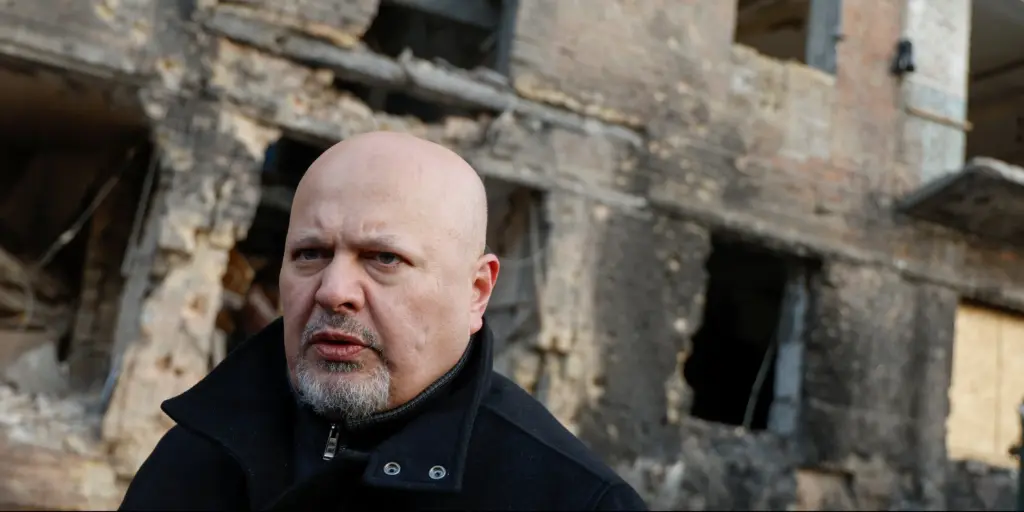
The removal of the International Criminal Court’s chief prosecutor followed serious allegations that demanded investigation. It also handed Israel and the United States an opportunity to discredit the arrest warrants against Benjamin Netanyahu and pressure the court’s next prosecutor into retreating from the Palestine investigation.
Some institutional failures unfold not through scandal but procedure, with acts of sabotage dressed up in the language of good faith inquiry and accountability. By the time the consequences become visible, the political objective may already have been achieved.
That was the warning issued by former European Union foreign policy chief Josep Borrell as the International Criminal Court moved towards deciding the future of its chief prosecutor, Karim Khan. The decision has now been taken. On 24 July, the Assembly of States Parties, representing the ICC’s 125 member countries, voted by 82 votes to remove Khan, with 13 states opposing dismissal, 15 abstaining and the remaining members absent.
It was the first removal of a serving prosecutor in the ICC’s 24 year history. The Assembly declared that Khan had committed “serious misconduct and a serious breach of duty” following allegations involving a junior lawyer in his office. Khan denies all wrongdoing and says he will challenge the legality and fairness of the process. His removal took effect immediately, although there is no clear internal appeal mechanism. Reuters reported that the election of a successor is unlikely to be completed before 2027.
The Assembly acted under Article 46 of the Rome Statute, the provision governing the removal of elected court officials. The formal decision resolved Khan’s employment, but it did not settle the argument over the process used to reach that outcome or the pressure surrounding it.
Francesca Albanese, the United Nations special rapporteur on human rights in the occupied Palestinian territories, described the removal in an interview released by Double Down News after the 24 July vote as a potential turning point in the erosion of international law. “This is the beginning of the end of the rule of law system,” she said. “This is extremely scary.”
Middle East Eye editor in chief David Hearst reached a similarly severe conclusion in commentary published on 27 July as part of The David Hearst Podcast. He argued that the dismissal represented the culmination of an 18 month Israeli led campaign which gathered force after Khan moved against Netanyahu and Gallant. Hearst’s account goes further than the findings made public by the ICC, but it draws attention to a political struggle that cannot be explained by the misconduct case alone.
In Israel, the outcome was greeted not simply as the removal of an official accused of misconduct, but as a political victory over the court itself.
Prime Minister Benjamin Netanyahu, who remains the subject of an ICC arrest warrant, called Khan a “con job” during an appearance on Fox News. He claimed the prosecutor had pursued charges against Israeli leaders to distract attention from the allegations against him. Israel’s ambassador to the United Nations, Danny Danon, similarly argued that Khan had used Israel as a scapegoat and that his removal discredited the case against Netanyahu.
The celebration exposed what is really at stake. Israel is seeking to transform the fall of one prosecutor into the collapse of the judicial case against its political and military leadership.
That conclusion does not follow in law. Khan applied for the warrants, but three ICC judges independently examined the evidence and issued them. His removal does not cancel their decisions, and the court has confirmed that only judges can withdraw an active warrant.
The danger is therefore not that the warrants disappeared with Khan. They did not. The greater danger is that the United States and Israel will use the scandal to intimidate the court’s member states, shape the selection of Khan’s successor and gradually force the Palestine investigation into paralysis.
A serious complaint inside a political war
The allegations against Khan must not be trivialised. A court established to prosecute war crimes, crimes against humanity and sexual violence cannot demand accountability from governments while failing to protect its own employees from alleged abuses of power.
The case became public in October 2024, although concerns had been reported internally earlier that year. The complainant, identified publicly only by the first name Sarah, has alleged that Khan subjected her to an escalating pattern of touching, groping and other sexual conduct without consent during an extended period in which she worked closely with him.
Speaking publicly for the first time in a July 2026 interview with CNN, she argued that the extreme power disparity between the court’s chief prosecutor and a junior employee made genuine consent impossible. She also rejected suggestions that she had acted on behalf of Israel or another outside power. Khan denies that any sexual relationship, consensual or otherwise, took place.
A confidential investigation conducted over approximately 18 months by the United Nations Office of Internal Oversight Services reportedly found a factual basis for the allegations and concluded that witness accounts lent support to the complainant. However, a separate panel of three external judges, after reviewing thousands of pages of evidence, unanimously determined that the material was insufficient to establish misconduct beyond a reasonable doubt.
According to reporting by Le Monde, the judges criticised the investigators for failing to provide structured factual findings, a reasoned analysis of the evidence or a properly articulated assessment of witness credibility. They concluded that the file contained two irreconcilable accounts and that the evidence did not allow them to determine where the truth lay. The judicial panel nevertheless acknowledged that alleged victims can continue to behave professionally towards an abuser, particularly within a hierarchical workplace.
The ICC’s executive bureau subsequently reached a different conclusion. In June, it found that Khan had engaged in an inappropriate sexual relationship with a subordinate, suspended him and recommended his removal. Member states then settled the matter through a secret diplomatic vote.
This collision between an inconclusive judicial assessment, an investigative report containing factual allegations and a final political decision is central to Borrell’s warning. The argument is not that Khan should have been protected from investigation. It is that the court improvised a procedure in which different bodies applied different standards, while most of the evidence and reasoning remained secret.
Critics also questioned why the bureau appointed an external judicial panel only to depart from its conclusion. Khan’s lawyers objected to procedural changes made while the case was under way, including the replacement of an anticipated two stage voting process with a single ballot. They said the American sanctions prevented him from travelling to the New York session and that he was denied a proper opportunity to answer the case ultimately used to remove him.
Khan’s lawyers say he was not permitted to address the Assembly formally before the vote and that the decision was unsupported by a properly reasoned legal finding. The Assembly president maintains that his rights were respected and that the investigation produced sufficient evidence to justify removal.
There is also no public evidence that Israel invented the allegations or recruited the complainant. The ICC’s governing body said it found no evidence that she had been manipulated by intelligence agencies. The woman herself has emphatically rejected that suggestion, while a second woman has made separate allegations concerning Khan’s behaviour earlier in his career. The Guardian’s account of the removal stresses both the seriousness of the allegations and the absence of evidence that the complainant was acting for a foreign power.
Legal scholars Rebecca Hamilton and Alex Whiting have gone further, arguing that assertions that Israel fabricated the case are unsupported and that the decisive vote should be understood as a response to serious workplace allegations. They maintain that Khan and his lawyers had extensive opportunities to challenge the evidence, and they cite the Palestinian mission in The Hague, which said the decision was not a proxy vote on any investigation before the court. Their analysis nevertheless acknowledges that the process was improvised, poorly communicated and conducted while Washington was trying to dismantle the ICC.
Human Rights Watch has likewise stressed that the ICC must hold itself to the highest workplace standards and maintain credible mechanisms for people reporting harassment or sexual violence. Albanese did not dispute that principle. She told Double Down News that the allegations were very serious and should be dealt with properly, while arguing that the sensationalised public environment was disrespectful to both the complainant and the accused.
These distinctions matter. Political exploitation of an allegation is not proof that the allegation was manufactured. It is entirely possible to take the complainant seriously, conclude that Khan could no longer lead the prosecutor’s office and still recognise that Israel and the United States are using his removal to attack cases that were approved by independent judges.
Indeed, Washington’s reaction makes that exploitation unmistakable. After Khan was dismissed, the US State Department welcomed his removal but described him as only “one small cog” in an institution it called irredeemably corrupt. It declared that the vote would have no effect on its campaign to dismantle the court.
The objective was therefore never confined to Khan.
Israel’s campaign began long before the allegation
The political context cannot be separated from a documented Israeli campaign against the ICC that began almost a decade before Khan’s removal.
The confrontation intensified after Palestine joined the court in 2015, giving the ICC territorial jurisdiction over alleged crimes committed in Gaza, the West Bank and East Jerusalem, regardless of the nationality of the suspected perpetrator. Israel and the United States are not parties to the Rome Statute, but that does not prevent the court from investigating alleged crimes committed on the territory of a member state.
A joint investigation by The Guardian, the Israeli publication +972 Magazine and the Hebrew language outlet Local Call reported that Israeli intelligence agencies had conducted a nine year operation to surveil, hack, pressure and allegedly threaten ICC officials and Palestinian organisations working with the court.
The investigation drew on interviews with more than two dozen current and former intelligence officers, government officials, diplomats, lawyers and ICC personnel. It reported that Israeli agencies intercepted communications involving Khan and his predecessor, Fatou Bensouda, giving Netanyahu’s government advance knowledge of the prosecutor’s intentions.
Netanyahu was described by one intelligence source as “obsessed” with information about the court. Mossad, Shin Bet, military intelligence and Unit 8200 were all alleged to have participated in the wider operation. Israel denied the accusations, while the Israeli military said it had not conducted surveillance against the ICC. The ICC itself confirmed that hostile national intelligence agencies had targeted the court and that additional security measures had been introduced.
The most disturbing allegations concerned former Mossad director Yossi Cohen, a close Netanyahu ally who was accused of personally pressuring and threatening Bensouda while she considered opening the Palestine investigation. Intelligence gathered against Palestinian human rights organisations was also reportedly used in attempts to discredit evidence reaching The Hague.
This campaign was not a temporary response to the present Gaza war. It began because the ICC represented something Israeli leaders had previously managed to avoid: a judicial body capable of attaching personal criminal liability to ministers, commanders and senior officials.
According to the joint investigation, Israeli officials discussed a coordinated struggle against the ICC with the first Trump administration in 2020. Washington subsequently imposed sanctions on Bensouda and another senior court official. Those measures were lifted by President Joe Biden, but the strategy returned with much greater force when Donald Trump returned to the White House.
Israel’s reported lobbying operation
The earlier intelligence campaign forms the background to new reports that Israel also worked directly to secure Khan’s removal.
Foreign Minister Gideon Sa’ar called the decision overdue and demanded that the warrants against Netanyahu and Gallant be revoked. Israeli media subsequently cited an unnamed official who said Sa’ar had supervised a dedicated task force and an intensive diplomatic effort aimed at ICC member states. Journalist Guy Azriel reported the claim after the vote, while The New Arab and Middle East Eye described the alleged lobbying operation.
The ballot was secret, so the effect of that campaign upon individual governments cannot be established from the result. The reports also do not prove that the misconduct allegations were invented or that the complainant was manipulated. They show something more limited but still important: a government whose leaders were wanted by the court had an obvious interest in the prosecutor’s removal and reportedly devoted state resources to achieving it.
Hearst alleged that the pressure went further, claiming that a Mossad team travelled to The Hague to intimidate Khan, that messages were relayed through a British lawyer and that an anonymous channel circulated details of the misconduct allegations. These are serious claims which have not been established by a court or confirmed through the ICC’s disciplinary findings. Their plausibility will be judged in part against the independently documented history of Israeli surveillance and pressure directed at Bensouda, Khan and Palestinian organisations communicating with the court.
Albanese contrasted Israel’s celebrations with the response from Russia. Khan also obtained a warrant for President Vladimir Putin, yet Moscow’s hostility did not produce the same public spectacle surrounding the prosecutor’s dismissal. In her view, the contrast showed that Israeli officials understood the vote as a political victory, whatever disciplinary grounds member states relied upon.
“Target Israel and we will target you”
The pressure on Khan became explicit in April 2024, as reports circulated that the prosecutor was preparing applications against senior Israeli leaders.
Twelve Republican senators, including Marco Rubio, Mitch McConnell, Tom Cotton and Ted Cruz, sent Khan a letter warning that action against Israel would lead to retaliation against the prosecutor, his employees and their families.
“Target Israel and we will target you,” the senators wrote. The letter threatened sanctions, the termination of American support for the court and entry bans against ICC personnel and their relatives. It ended with the warning: “You have been warned.” The letter was first published by Zeteo on 6 May 2024.
Democratic Senator Chris Van Hollen compared the language to mafia intimidation. Albanese made the same comparison in her interview, arguing that threats against judges, prosecutors, employees and their relatives would be recognised as coercion if made by almost any other actor.
Rubio is now the United States secretary of state and the threat has become government policy.
The chronology surrounding Khan’s warrant application has been fiercely contested. Khan was informed on 2 May 2024 that misconduct allegations had been raised against him. On 20 May, he announced that he was seeking warrants against Netanyahu, then defence minister Yoav Gallant and the Hamas leaders Yahya Sinwar, Ismail Haniyeh and Mohammed Deif. The applications alleged crimes arising from the Hamas led attacks of 7 October 2023 and Israel’s subsequent assault on Gaza.
Israel argues that this timing shows Khan accelerated the applications to protect himself. However, The Wall Street Journal subsequently reported that Khan had already informed US State Department officials in March 2024, before the allegations surfaced, that he intended to pursue warrants against Israeli leaders. That does not resolve the misconduct case, but it significantly weakens Netanyahu’s claim that the entire prosecution was invented as a response to it. The Journal’s investigation described both the accusations and the pressure already being applied to Khan over Gaza.
More importantly, Khan could not issue the warrants himself. On 21 November 2024, three judges concluded that there were reasonable grounds to believe Netanyahu and Gallant bore criminal responsibility for alleged war crimes and crimes against humanity.
The judges cited alleged acts including murder, persecution, other inhumane treatment and starvation as a method of warfare. They said the deprivation of food, water, electricity, fuel and medical supplies had created conditions of life that resulted in civilian deaths, including the deaths of children from malnutrition and dehydration. Israel rejects the court’s jurisdiction and denies committing war crimes. The judicial findings and Israel’s response were detailed by Reuters when the warrants were issued.
The warrants were therefore judicial decisions based on evidence submitted by an entire prosecution team. Treating them as Khan’s personal creation is politically convenient, but legally false.
The inclusion of leaders from both Israel and Hamas was also significant. Albanese argued that Khan could not reasonably be accused of pursuing a one sided process when his office sought warrants against figures from both parties in the same announcement. Critics accused him of creating a false moral equivalence, while supporters said he was applying one body of law to all alleged perpetrators.
Albanese has nevertheless criticised the court for failing to move further against other Israeli officials. She argued that Finance Minister Bezalel Smotrich and National Security Minister Itamar Ben-Gvir should face investigation over alleged war crimes, crimes against humanity and possible genocide. Middle East Eye reported in 2025 that applications concerning the two ministers had been prepared but not submitted, a claim the court has not publicly confirmed. Their absence from the current docket has contributed to fears that political pressure was constraining the investigation even before Khan’s removal.
Washington turns Israel’s threat into policy
In February 2025, Trump issued an executive order imposing sanctions on Khan and authorising further measures against anyone assisting ICC proceedings involving American citizens or nationals of allied countries.
The order explicitly accused the court of taking “illegitimate and baseless actions” against the United States and “our close ally Israel”. It demanded that American allies oppose ICC proceedings against Israel and declared the court’s investigations an extraordinary threat to US national security and foreign policy. The wording of the order leaves no doubt that protecting Israeli officials was one of its central purposes.
The sanctions eventually encompassed Khan, his two deputies and eight judges. Their consequences extended far beyond frozen assets or an inability to travel to the United States. Sanctioned officials reported losing bank accounts, credit cards, email services and access to technology platforms. Family members were affected, while European banks and multinational companies frequently complied with the American restrictions even when no direct US transaction was involved.
Judges described being unable to use Google, Amazon, Apple, PayPal, Airbnb and other basic services. Some relatives lost visas or access to accounts despite having no connection to the court. The Guardian reported that the measures effectively turned judges and prosecutors into financial and technological outcasts.
On 13 July 2026, days before the vote on Khan, Rubio published a Wall Street Journal commentary entitled “Why We’re Dismantling the International Criminal Court.” The State Department simultaneously announced a campaign intended to “systematically disable” the court’s ability to operate. Options reportedly under consideration included additional sanctions, visa restrictions and pressure upon countries receiving American military or law enforcement assistance.
That timing cannot be ignored. Nor can Washington’s statement after Khan’s removal that the campaign would continue unchanged.
If the United States had merely wanted the ICC to address misconduct within its leadership, Khan’s dismissal would have represented a successful act of institutional accountability. Instead, Washington immediately confirmed that removing him was only one stage in a much larger offensive.
Francesca Albanese and the personal cost of sanctions
Albanese has experienced the same sanctions machinery at first hand. The United States designated her in July 2025 after she urged the ICC to consider whether corporate executives and private companies could bear responsibility for alleged international crimes connected to Israel’s occupation and military operations. Rubio accused her of conducting political and economic warfare against the United States and Israel.
In May 2026, a federal judge temporarily blocked the measures on free speech grounds and the Treasury removed Albanese from its sanctions list. The respite lasted only a week. After an appeals court intervened, the Treasury reinstated her designation on 27 May.
Albanese told Double Down News that the decision had effectively cut her off from the financial system. She said she could not reliably receive or make payments, access earnings or obtain health insurance. The consequences were particularly personal because she had lived in the United States, held assets there and was the mother of an American citizen.
The designation also creates risks for anyone within United States jurisdiction who transacts with her. Banks, universities, charities, publishers, insurers and technology companies may therefore avoid contact even when no criminal charge has been brought. Its reach demonstrates how a sanctions order can impose punishment through private infrastructure without a trial.
Albanese said the message to investigators was unmistakable: “Don’t touch Israel. Don’t touch the US. Don’t touch us.” In her account, the measures imposed upon her, Khan, the deputy prosecutors and the judges were not isolated penalties but a warning to the entire international justice system.
Netanyahu tries to put the warrants on trial
Netanyahu is now using Khan’s downfall to reverse the position of accused and accuser.
Rather than answering the evidence in The Hague, the Israeli government argues that misconduct allegations against one prosecutor invalidate the court, its judges and the investigation of Israel’s conduct in Gaza.
Israel has already attempted to persuade the ICC to withdraw the Netanyahu and Gallant warrants and suspend the wider Palestine investigation. Judges rejected that request in July 2025, ruling that the warrants would remain active while Israel’s jurisdictional challenge was considered. Two judges involved in rejecting Israel’s application were among those sanctioned by Washington. Reuters reported that the sanctions represented unprecedented retaliation against members of an international tribunal.
The argument that Khan’s removal automatically discredits the warrants also ignores the collective nature of an international prosecution. Investigators collected the material, lawyers prepared the applications and judges assessed whether the evidentiary threshold had been met. Removing the prosecutor does not erase that work any more than the resignation or misconduct of a national prosecutor automatically cancels every indictment approved by a court.
Netanyahu nevertheless has powerful reasons to promote that narrative. The warrant restricts his movement across the ICC’s member states and places Israel’s conduct in Gaza within a criminal law framework. It also establishes a precedent that leaders of Western supported states can be subjected to the same legal mechanisms previously applied to African leaders, Vladimir Putin, Rodrigo Duterte and others considered politically expendable by Western governments.
The Palestine investigation is therefore the ultimate test of whether the ICC applies law universally or only against leaders who lack powerful friends.
The warrants have outlived their author
Public reaction also suggests that the warrants have acquired a political life independent of Khan. A YouGov survey conducted on 23 July among 7,219 American adults found that 46 per cent thought United States authorities should arrest Netanyahu if he entered the country, while 28 per cent opposed arrest and 27 per cent were unsure. Support for arrest was therefore the largest single response.
New York Mayor Zohran Mamdani has called Netanyahu a war criminal who should face arrest, while acknowledging that the city lacks the legal authority to execute an ICC warrant and that the United States is not a party to the Rome Statute. He called upon the federal government to act. President Trump responded that Netanyahu would not be arrested on American soil.
London Mayor Sadiq Khan has similarly said Netanyahu is not welcome in the British capital and that he would urge the government led by Andy Burnham to enforce the warrant if the Israeli prime minister visited. Israel rejects the allegations and maintains that its military campaign is directed against Hamas rather than Gaza’s civilian population.
Opinion polling and statements by city leaders do not resolve the legal questions, but they undermine the claim that the warrants existed only because of Karim Khan’s personal ambition. They have become part of a broader dispute over whether allied governments will apply international criminal law when it reaches a leader they have spent years protecting.
The struggle now moves to Khan’s successor
Khan’s deputies, Nazhat Shameen Khan and Mame Mandiaye Niang, will continue running the prosecutor’s office while member states design an election process. The search will take place under the threat that any candidate who continues the Palestine investigation may face American sanctions, financial exclusion and personal retaliation.
One international law professor asked Reuters who would accept the position knowing that US sanctions could follow automatically. The European Union, the Netherlands and Japan have issued statements supporting the court, but they have announced few practical protections for its officials. Reuters described the succession process as a test of whether member states can sustain the court during its most serious institutional crisis.
The risk is not necessarily that a new prosecutor will formally abandon the Palestine investigation on the first day. Institutional retreat usually happens more quietly.
Budgets can be restricted, staff reassigned and investigations slowed. Applications for additional warrants can remain indefinitely under review. Cooperation with Palestinian organisations can be reduced, particularly when those organisations themselves face sanctions, raids or technology restrictions. The Netanyahu and Gallant warrants may remain technically active while the wider investigation is allowed to enter hibernation.
Justice Info quoted international law experts warning that Khan’s removal could become the greatest setback in the court’s history for cases involving major powers and their allies. It also reported concerns about apparent Israeli lobbying among member states during the final stages of the disciplinary process, although the scale and effect of any such campaign have not been independently established. The publication concluded that the handling of the Palestine investigation will now determine whether the court retains credibility.
If the next prosecutor withdraws the warrants, abandons possible cases against other Israeli officials or accepts that nationals of powerful states outside the court are effectively untouchable, Washington and Netanyahu will have achieved their objective without formally abolishing the ICC.
A British front in the rule of law crisis
Albanese extended her criticism to Britain, where the boundaries of terrorism law have increasingly been applied to Palestine solidarity activism.
The British government proscribed Palestine Action in July 2025 under the Terrorism Act 2000, placing a direct action network known primarily for damaging property on the same legal list as organisations associated with mass violence. The government argues that Palestine Action’s campaign caused serious damage to property, sought to influence policy and crossed the statutory threshold from criminal direct action into terrorism.
United Nations human rights officials called the ban a disturbing misuse of counter terrorism law and warned that conduct intended to damage property, without an intention to kill or injure people, should not be treated as terrorism. The Court of Appeal nevertheless upheld the proscription in June 2026 after an earlier High Court ruling had found the ban unlawful.
The controversy has moved beyond membership of the organisation. In June 2026, a judge imposed prison sentences totalling 22 years and four months upon four activists convicted over a raid on an Elbit Systems facility in Bristol. The action caused approximately £1.2 million in damage, and one defendant was also convicted of causing grievous bodily harm after a police officer’s spine was fractured during a confrontation.
The defendants had been convicted of criminal damage rather than a terrorism offence, but the judge found a terrorist connection at sentencing because the raid was intended to shut down the factory, influence government policy and advance a political cause. That finding increased the severity of the punishment. Amnesty International warned that treating criminal damage as terrorism created a dangerous and disproportionate precedent for protest.
Five other activists convicted of damaging a Barclays branch in Burnley now face the possibility of a similar designation at sentencing, despite terrorism not forming part of the charges considered by their jury. The defendants said they targeted the bank over its financial relationship with Elbit Systems, while prosecutors maintain that the political purpose and intention to influence policy created a terrorist connection.
Albanese did not deny that property was damaged or that criminal and civil law could address it. Her objection was to the expansion of terrorism law into property offences and political protest, particularly when activists said they were trying to interrupt the supply of weapons alleged to be used against civilians.
Britain’s role in the pressure on Khan has also attracted scrutiny. Middle East Eye reported that former foreign secretary David Cameron warned the prosecutor in 2024 that Britain could withdraw from and defund the ICC if warrants were pursued against Israeli leaders. The Foreign Office denied that Cameron made threats, although it acknowledged that a telephone conversation took place.
The publication later reported that the government led by Keir Starmer told Khan before the removal vote that it would not support his continuation as prosecutor and declined his requests for ministerial meetings. The ballot was secret, so Britain’s vote has not been officially confirmed. Hearst cited both episodes as evidence that successive British governments withdrew practical support from a British prosecutor when his work threatened a close ally.
The arrival of Burnham’s government creates an opportunity to change course, but its policy towards the Palestine Action proscription, the Netanyahu warrant and American sanctions against the ICC remains uncertain. For Albanese, the British cases belong to the same wider crisis: governments that proclaim commitment to a rules based international order are narrowing the space available to courts, lawyers, journalists and activists when legal rules threaten Israel.
Europe can no longer defend the court with statements
European governments helped create the ICC and routinely present it as a foundation of the international legal order. They supported its warrant against Putin and demanded cooperation with the court over Ukraine. Their response became markedly less certain when the same institution issued warrants against Israeli leaders.
Borrell previously warned that European states could not pick and choose which ICC decisions they respected. That principle is now being tested not only by the Netanyahu warrant but by American sanctions intended to make the court practically inoperable.
Le Monde reported that Britain, Germany, Canada and Guatemala aligned against Khan during the internal dispute, while some diplomats believed his removal might appease Washington and prevent further sanctions. If states voted on that calculation, rather than solely on the evidence and institutional interests of the court, the precedent is deeply troubling.
Former prosecutor Fatou Bensouda has called for the European Union to activate a blocking statute protecting ICC personnel and organisations from American measures. She has also urged member states to establish protected banking channels, legal defence mechanisms and safeguards for officials and their families. Bensouda warned that qualified lawyers may refuse to serve at the court if the position carries the risk of financial ruin.
These are no longer theoretical concerns. The United States has openly announced that it intends to dismantle the court, while Israel has a documented history of surveillance, intimidation and political pressure directed against its investigations.
Europe must therefore do more than issue statements about judicial independence. It must protect the court’s financial and technological operations, shield its personnel from extraterritorial sanctions, guarantee sufficient resources for the Palestine investigation and insist that the selection of the next prosecutor is not governed by a private understanding that Israel is to be left alone.
Defending the court does not require defending Khan
The ICC should never require alleged victims of workplace abuse to remain silent in order to protect its reputation. Khan was not entitled to immunity from investigation because he pursued Netanyahu, just as Netanyahu is not entitled to immunity because Israel rejects the court’s jurisdiction.
Defending international justice does not require pretending that Khan was indispensable or that the allegations against him were invented. It requires defending two principles simultaneously: the right of employees to report misconduct without intimidation, and the right of courts to investigate powerful states without their officials being sanctioned, surveilled or threatened.
The most responsible conclusion is therefore also the most uncomfortable. Khan may have become unable to continue as prosecutor, while Israel and the United States may still be exploiting his removal to weaken the institution and escape legal scrutiny.
The evidence for that wider campaign is not speculative. Israel has fought the Palestine investigation since 2015. Its intelligence agencies have been accused of targeting ICC personnel. American senators threatened Khan and his family. Trump imposed the promised sanctions. Rubio then announced that Washington was dismantling the court, and the State Department confirmed after Khan’s removal that its campaign would continue.
The decisive question is no longer whether Karim Khan returns to office. It is whether the investigation he advanced survives his departure.
Hearst argued that the Netanyahu and Gallant warrants will define Khan’s historical legacy because they represent the most serious international attempt to attach individual criminal liability to Israel’s highest office holders for alleged crimes against Palestinians. The warrants did not produce a trial, end the war or compel states to enforce the court’s authority, but they changed the legal and political status of a sitting Israeli prime minister and a recently serving defence minister.
Albanese’s warning about the beginning of the end of the rule of law will ultimately be tested by what happens to those cases. If a complaint of workplace abuse is addressed while the judicial work continues, the ICC may show that internal accountability and external independence can coexist. If the dismissal becomes the pretext for abandoning Palestine, it will show that powerful states can convert an institutional scandal into immunity for their allies.
If the ICC continues pursuing evidence in Palestine, protects the existing warrants and applies the same law to Israeli leaders that it applies to Russian, African and Asian suspects, Khan’s removal can remain an internal accountability decision rather than an institutional surrender.
If the investigation slows, the warrants are withdrawn or the next prosecutor quietly accepts that Washington’s allies are beyond reach, then the rules will have been rewritten.
The court will still exist in The Hague, its judges will continue wearing their robes and European governments will continue praising international law. Yet its most important promise, that no individual is beyond justice because of political or military power, will have been hollowed out from within.
That is the outcome Netanyahu is celebrating, and it is the outcome the court’s member states must now prevent.