


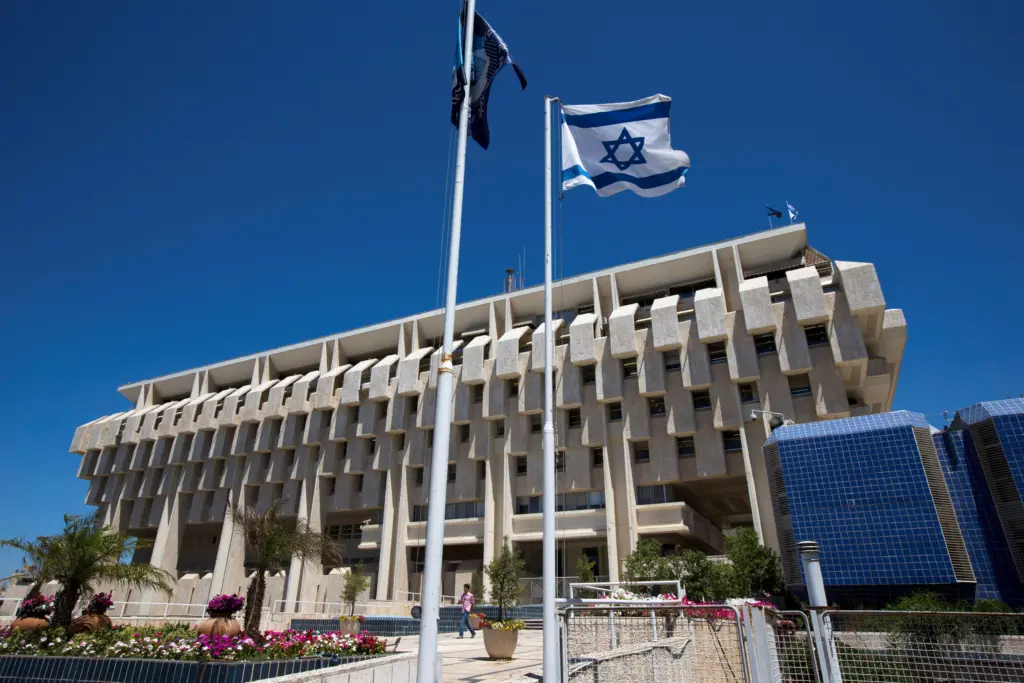
Nearly three years into a multi-front war, Israel’s own central bank has put a figure on it: around $205 billion. By the government’s own account, that money has not bought a single one of the war’s stated strategic aims.
The total, reported by the Times of Israel’s Hebrew-language arm and drawn from Bank of Israel data, is more than 17 per cent of Israel’s gross domestic product. It is a fiscal reckoning for Israel first of all – and a smaller but still substantial bill for the United States, which has rushed roughly $26 billion in weapons and equipment to Israel since October 2023 with little effective congressional oversight.
Where the money went
Bank of Israel Governor Amir Yaron – a technocrat, not a political campaigner – set out the scale of it in April 2026. ‘The total cost of the series of interconnected regional conflicts that began with Hamas’s attack on Israel on October 7, 2023 stood at 405 billion shekels ($138 billion) as of late April,’ he said. ‘That’s a huge figure, more than 17 per cent of GDP.’ By the middle of 2026 the running total had climbed towards 700 billion shekels, or roughly $205 billion.
The figure comes from a report by Nir Goldberg published on Zman Yisrael, the Hebrew-language arm of the Times of Israel, drawing on Bank of Israel accounts. It breaks down as follows. Direct government expenditure accounts for more than $118 billion, of which defence spending makes up some $71.2 billion, civilian costs such as evacuations and emergency services $16.7 billion, compensation to businesses and individuals $9.6 billion, and additional interest on war borrowing $5.5 billion. On top of that sits the value of the weapons, ammunition and equipment supplied by the United States since October 2023, put at around $26 billion. The remainder is economic: lost output across the Israeli economy reached roughly $51.9 billion through the end of 2025, a figure the report projects could exceed $58.6 billion once 2026 is counted. Taken together – Israeli public spending, American hardware and foregone production – the strands come to nearly $205 billion.
American weapons, minimal oversight
It is worth being precise about whose money this is, because the distinction matters and because critics will seize on any blurring of it. The overwhelming bulk of the $205 billion is Israel’s own – its government’s direct spending and the output its economy has forgone. The American contribution to this particular war, as valued in the report, is the roughly $26 billion in weapons and equipment delivered since October 2023. That sits on top of the standing commitment under the 2019–2028 Memorandum of Understanding, which guarantees Israel $3.8 billion a year, or $38 billion across the decade.
The cumulative figure is its own indictment. Since 1948 the United States has given Israel more foreign aid than any other country on earth – upward of $300 billion in today’s money, by the Council on Foreign Relations’ reckoning, the overwhelming majority of it military, with no other recipient anywhere close. To set the scale of this single war against that, Israel’s own $205 billion bill is equivalent to roughly two-thirds of everything Washington has sent it in seventy-eight years. The two are not even bound by a mutual defence treaty; Israel is a ‘major non-NATO ally’, gifted and sold the most advanced American weapons while Washington retains little leverage over how they are used. And it has piled more on for this war specifically – the Costs of War project at Brown University puts direct US military aid at $21.7 billion between October 2023 and September 2025, rising to as much as $33.77 billion once associated regional operations are counted, much of it rushed through expedited channels that bypassed the usual scrutiny.
Critics point to the Leahy Law, which bars US military assistance to foreign units credibly accused of gross human rights violations. Yet Congress has never successfully blocked a weapons sale to Israel, and an investigation by the Guardian found that successive administrations used special mechanisms to shield the transfers from domestic human rights law. American taxpayers are helping to underwrite a war that, by Israel’s own admission, has failed to secure its stated objectives – and they have no say in the military decisions their money supports.
Tax rises and cuts to public services
The Bank of Israel and the Finance Ministry have both warned that the cost is unsustainable. Tamar Levy-Boneh, deputy head of budgets at the Finance Ministry, cautioned against what she called a ‘trauma economy’ – a national security culture so shaken by the failures of 7 October that it demands endless, unchecked funding. ‘The security establishment must learn to meet its needs in a way that does not undermine the standard of living and must assume its share of responsibility,’ she said.
Yaron echoed the alarm. ‘Nobody likes to pay taxes,’ he said. ‘But looking ahead, we need to ask ourselves how we manage, on the one hand, a budget that finances security needs and on the other hand directs budgets for expenditure that support the engines of future economic growth.’ Lowering the debt-to-GDP ratio alongside high defence spending, he added, ‘will require budgetary adjustments that also include cuts in spending that don’t support growth, and therefore the government needs to increase the revenue side.’ In plainer terms: higher taxes and cuts to healthcare, education and infrastructure to pay for a war that has not achieved its goals.
Not one war aim achieved
The war’s stated aims were unambiguous: destroying Hamas, returning all hostages, restoring security to the north and the south. By June 2026 none of them had been met. Hamas still administers the internal life of Gaza, however shattered its infrastructure. Captives remained in Gaza until they were returned through negotiated exchanges. The Lebanese border has been repeatedly inflamed, and the war against Iran in early 2026 left that programme, by most accounts, no further from the threshold than before.
In May 2025 Prime Minister Benjamin Netanyahu declared ‘absolute victory.’ Yet only 38.3 per cent of Israelis told pollsters there was a ‘very high’ or ‘fairly high’ likelihood of achieving it – a public that broadly supports the war’s aims but openly distrusts its government to deliver them. Professor Esteban Klor of the Hebrew University of Jerusalem argues that Israelis are paying twice: first through the decline in social spending and public investment – education, infrastructure and the health system all suffering – and second through the lasting drag on economic growth.
Why the October operation happened
The operation of 7 October 2023 did not come from nowhere. Hamas framed Operation Al-Aqsa Flood in part as an attempt to force the release of the thousands of Palestinians held by Israel without charge, among them children – a stated rationale that sits alongside the attack’s character as an assault that – by the IDF’s own investigation, Israel’s social-security records and independent reporting – killed roughly 1,200 people, the substantial majority of them civilians, alongside several hundred soldiers and police. Whatever weight one gives that framing, the grievance it invoked has not eased since. If anything it has sharpened.
The detainees
As of 2026, Israel holds somewhere in the region of 9,000 to 11,000 Palestinians in detention, according to figures compiled by B’Tselem, HaMoked, Addameer and Al-Haq – more than double the number held before October 2023. A large proportion are held without charge or trial, whether under administrative detention orders that can be renewed indefinitely on secret evidence, or under the Incarceration of Unlawful Combatants Law applied to detainees from Gaza. Among them are men, women, children and medical staff seized inside Gaza. Defence for Children International–Palestine reported that, at the end of 2025, 51 per cent of detained Palestinian children were being held in administrative detention – the highest proportion since the group began monitoring in 2008.
Torture, starvation and sexual violence: the UN findings
Several United Nations bodies have documented the treatment of Palestinian detainees in detail. The UN Special Committee on Israeli Practices concluded in 2025 that ‘the use of torture and other cruel, inhuman or degrading treatment or punishment, including sexual violence, is a systematic practice of the Israeli army and security forces, and is widespread in Israeli prisons and military detention camps.’
Its account was graphic. ‘The methods read as a playbook of how to try to humiliate, derogate, and strike fear into the hearts of individuals,’ the committee found; ‘first comes sexual harassment, inappropriate touching of private parts, then sexual abuse, then the threat of rape, and then rape itself, including gang rape, and often with foreign objects such as sticks and batons, against men, women, and even children.’
The UN Special Rapporteur on torture, Alice Jill Edwards, warned in 2026 that emergency measures introduced after 7 October 2023 had exposed Palestinian detainees to torture, potentially unlawful deaths, incommunicado detention and degrading conditions. The UN Human Rights Office has documented Palestinians dying in Israeli detention since the war began, and a UN Commission found that sexual violence and torture have come to form part of Israeli forces’ standard operating procedures towards Palestinians.
Denied lawyers and the Red Cross
The International Committee of the Red Cross has said that access to Palestinian detainees inside Israel remained refused, following a blanket ban imposed after 7 October 2023. In June 2026 Israel’s High Court of Justice annulled that ban, finding it was not supported by Israeli or international law; Justice Daphne Barak-Erez wrote that the situation had been hard to countenance. For nearly three years, though, Palestinian detainees were held incommunicado – no lawyers, no Red Cross, and no way for families to learn their fate. The Association for Civil Rights in Israel said it had received horrific testimony about the abuse, violence and starvation of Palestinian prisoners.
The hostages: returned by deal, not by force
The story that military pressure brought Israel’s hostages home is not borne out. The returns came through negotiated exchanges, not through force – and Israeli operations have themselves killed captives.
The case of the Bibas family is the most contested, and the wrong place to anchor the argument. In February 2025 a ceasefire deal returned the father, Yarden Bibas, alive. His wife Shiri and their two young sons – Ariel, aged four, and Kfir, the youngest hostage taken on 7 October at nine months old – were not. Hamas has maintained throughout that the three were killed in an Israeli airstrike. Israel’s military says forensic examination showed the boys were murdered by their captors in November 2023, the bodies later mutilated to simulate blast injuries, and that it shared that evidence with international partners. Neither side has made its underlying evidence public.
Far firmer ground is the conduct of Israel’s own forces, beginning on 7 October itself. A July 2024 investigation by Haaretz – corroborated since by Australia’s ABC and referenced by the UN Commission of Inquiry – found that Israeli commanders invoked the Hannibal Directive, the order to use force to stop a captive being taken even at the cost of the captive’s life, at several points that day. It traced an order at 7.18am, ‘Hannibal at Erez’, and an instruction around midday that ‘not a single vehicle can return to Gaza’ – a command that, by the army’s own admission, could not distinguish a car carrying kidnapped Israelis from any other. At the house of Pessi Cohen in Kibbutz Be’eri, where fourteen hostages were held, a commander ordered a tank to fire on the building even at the cost of civilian lives; thirteen of those inside were killed. Standard accounts place at least fourteen Israeli civilians among those killed by Israeli fire that day, though the true number is unknown, since no autopsies were conducted to establish cause of death. Haaretz itself would say only that ‘many of the kidnapped people were at risk, exposed to Israeli gunfire, even if they were not the target’. One retired air force colonel called it ‘a mass Hannibal’.
The same danger ran through the war that followed. In 2025 the Israeli outlet Ynet published an investigation reporting that both the government and the military understand army attacks place hostages at grave risk and have already caused deaths. A senior intelligence source told the outlet that ‘the manoeuvre kills captives, not theoretically, it actually kills them,’ and cited a November 2023 airstrike that killed three hostages alongside a senior Hamas commander; the source said his main task had become to save the hostages, mainly from Israel’s own fire. Hamas has said 33 Israeli captives were killed by Israeli military operations; the Israeli army has confirmed that at least 44 hostages died in captivity.
Confident claims and closed ground
A word is needed on how these figures should be read, because the party that controls most of the evidence has a documented habit of asserting more than it can show, and of barring anyone who might check. In the days after 7 October an IDF officer told the broadcaster i24NEWS that forty babies had been beheaded at Kfar Aza; the claim travelled the world before Israel’s own foreign ministry conceded it could not confirm any such number. Two infants are known to have died in the attack, one shot and one in hospital shortly after birth. The initial toll of 1,400 ‘murdered by Hamas’ was quietly revised down to around 1,200 once it emerged that some of the unidentified bodies were probably Palestinian fighters. A senior search-and-rescue officer’s account of personally carrying a decapitated baby could not be substantiated by the journalists he had told it to. On the question of Israelis killed by Israeli fire on 7 October, the army’s own position was that an inquiry would ‘not be morally sound’.
The same pattern – a confident public claim about an unknown, followed by a refusal to let it be tested – runs through the figures that matter most to this war. Israel has barred foreign correspondents from entering Gaza independently for nearly three years, admitting them only on supervised military embeds. It legislated UNRWA out of the territory and has refused the agency’s international staff entry since January 2025. It denied the International Committee of the Red Cross access to Palestinian detainees until its own High Court struck the ban down in June 2026. And where its forces stand accused of wrongdoing, the standard response has been to announce that the army is investigating itself – an exercise that, more often than not, produces no published finding at all.
The effect is to make independent verification all but impossible precisely where it is most needed: the full toll of the dead in Gaza, including the thousands believed still buried under the rubble; the share of them Israel classes as combatants rather than civilians; the cause of death of hostages killed under bombardment; and the fate of detainees who have died behind a door the Red Cross was not allowed through. Where the ground is sealed and the investigator is also the accused, the honest course is to treat confident official claims with caution and to say plainly what cannot be known – not to adopt the version of the only party permitted to gather the evidence.
Genocide: the scholars and the state
While the Israeli government rejects the charge of genocide, the International Association of Genocide Scholars – the leading professional body in the field – passed a resolution on 31 August 2025, current as of 28 July, determining otherwise. It found that Israeli government and military actions amounted to ‘systematic and widespread crimes against humanity, war crimes and genocide.’
Citing official UN estimates available at the time, the resolution recorded more than 59,000 Palestinian adults and children killed and more than 143,000 injured. It noted, separately, that Israel had ‘killed or injured more than 50,000 children’ – a point the scholars tied to a joint declaration by six states, including the United Kingdom, in the International Court of Justice case of The Gambia v Myanmar, which held that the targeting of children indicates an intention to destroy a group at least in part. It found that nearly all of Gaza’s 2.3 million people had been displaced repeatedly and that more than 90 per cent of housing had been demolished. It catalogued the deliberate destruction of agricultural land, food warehouses and bakeries, and the statements of Israeli leaders who called Palestinians ‘human animals’ and spoke of inflicting ‘maximum damage’, of ‘flattening Gaza’ and turning it into ‘hell’. And it recalled that on 21 November 2024 the International Criminal Court issued arrest warrants for Netanyahu and former Defence Minister Yoav Gallant for the starvation of civilians, directing attacks against civilians, murder and persecution.
What the war bought
For its $205 billion, by mid-2026, the tally was grim and still climbing. By the Gaza Health Ministry’s count, more than 73,000 Palestinians had been killed – a figure an Israeli military official accepted, for the first time, in January 2026 – the majority of them women and children, with independent studies published in the Lancet placing the true toll higher still. More than 170,000 had been injured, many maimed for life. Nearly all of Gaza’s 2.3 million people had been displaced, often repeatedly. More than 90 per cent of housing lay in ruins. A starving population had been subjected to deliberate food deprivation; a generation of children had been traumatised, and many orphaned.
Set against that, the strategic ledger reads as failure. No hostages were freed by military means; the successful returns came through negotiation. Hamas’s political leadership was not dismantled. The northern border was not pacified. Iran was not deterred – on the contrary, thanks to Israel’s actions it is now 10 times more powerful than it was before, and vastly wealthier. Israel’s credit rating was downgraded and its debt has climbed steeply. And somewhere between nine and eleven thousand Palestinians remain in detention, a large share without charge, subject by UN account to systematic torture, starvation and sexual violence, for much of the war without access to a lawyer or the Red Cross.
The uncounted costs
The Bank of Israel’s $205 billion is, on its own terms, conservative. It excludes uncompensated private-sector losses, the long-term human-capital cost of death, disability, post-traumatic stress and emigration, the full price of replenishing advanced munitions over the coming decade, and the indirect drag of regional trade disruption. As Yaron put it, the economic consequences are far-reaching and continue to leave a significant mark on activity.
A strategic and financial reckoning
After nearly three years, the picture Israel’s own institutions now describe is bleak on every axis. The hostages were not brought home by force. Hamas is not destroyed. The north is not secure. Iran is not deterred. And the economy is carrying its deepest war-driven strain in a generation.
For the first time, the world’s leading body of genocide scholars has formally determined that the methods used to wage this war amount to genocide. Congress keeps appropriating, the weapons keep flowing, and the death toll in Gaza keeps rising. But the Bank of Israel’s own ledgers now confirm what critics have argued for years: this war has been not only a moral catastrophe but a financial one – a defeat that its government continues to present as a victory.